Reading analog clocks Worksheets for Ages 4-6
4 filtered results
-
From - To
Introduce your young learners to the essential skill of telling time with our "Reading Analog Clocks Worksheets for Ages 4-6". Designed with engaging visuals and simple exercises, these worksheets help children understand hour and minute hands while building a strong foundation for future math success. Perfect for preschool and kindergarten students, our worksheets blend fun and education, ensuring that kids remain interested and challenged as they learn to read an analog clock. Equip your child with the tools they need to confidently tell time, boost their cognitive abilities, and succeed in the classroom with these expert-created resources.
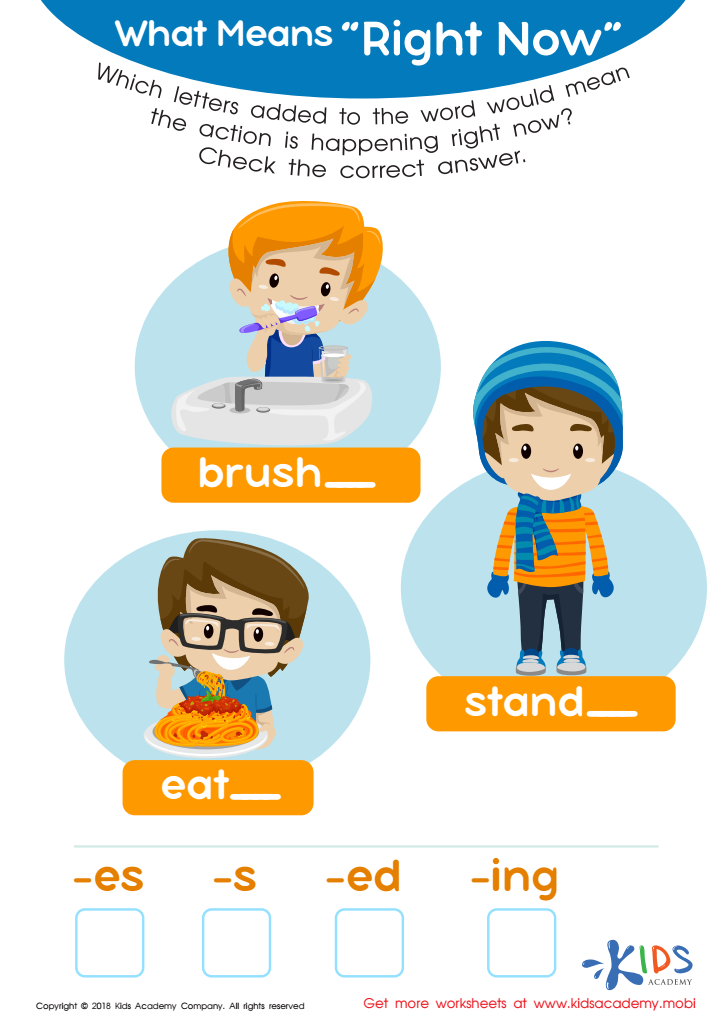
What Means "Right Now" Worksheet
 Assign to My Students
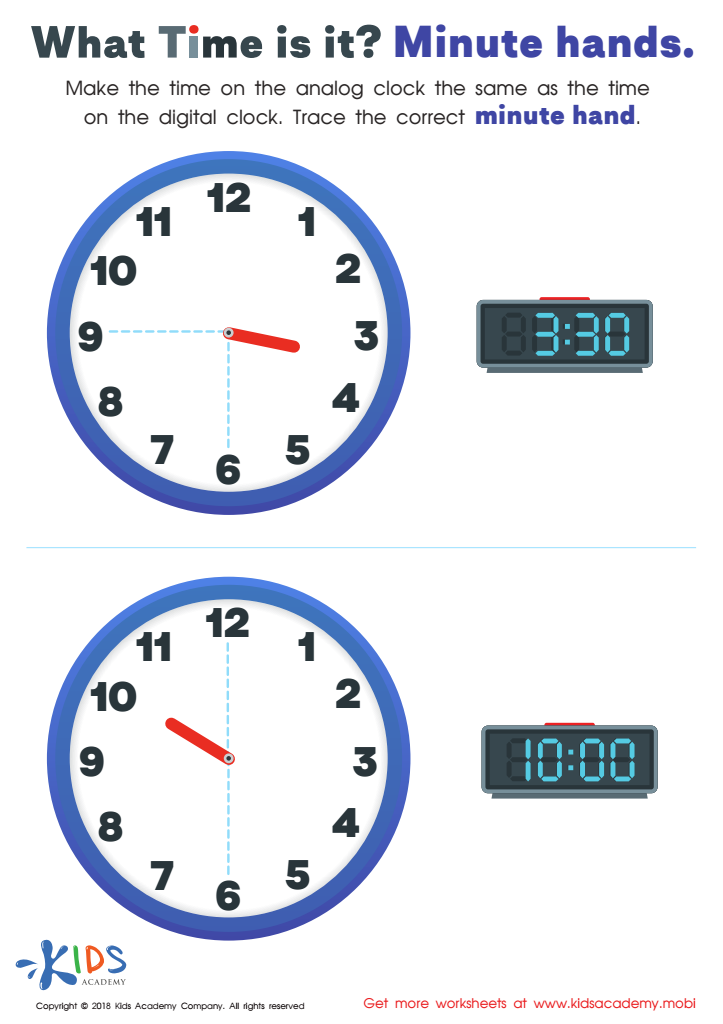
What Time Is it? Minute Hands Worksheet
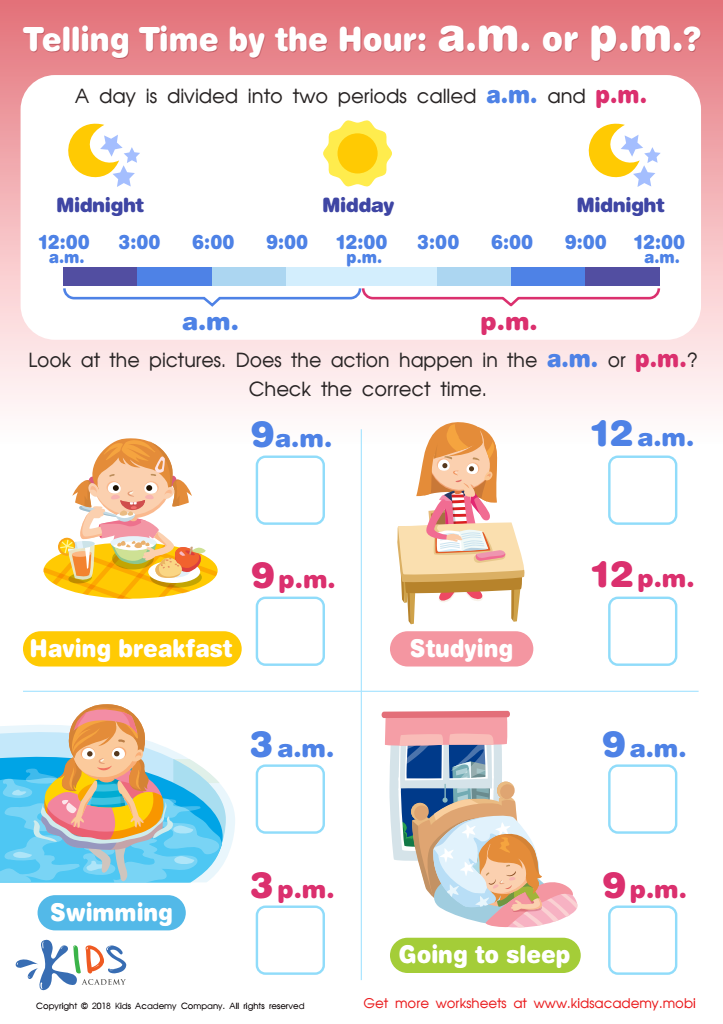
Tilling Time by the Hour: a.m. or p.m.? Worksheet
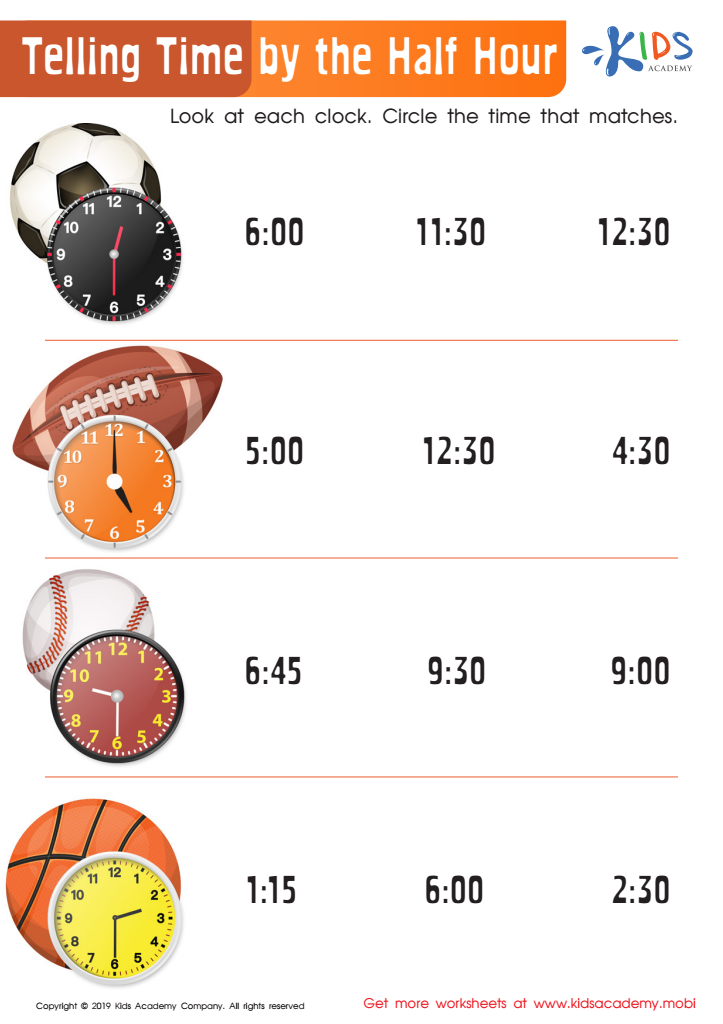
Telling Time by the Half Hour Worksheet






Teaching young children to read analog clocks is crucial for several developmental reasons. Firstly, it strengthens their cognitive skills by encouraging them to understand abstract concepts like time, which involves numerical awareness, sequencing, and problem-solving. By grasping the concept of time, children can better organize their day, improving their time management as they grow older.
Secondly, it boosts fine motor skills and hand-eye coordination since children often need to move clock hands on educational toys or worksheets. Understanding analog clocks also enhances their ability to read and interpret different time-related symbols and layouts, aiding overall literacy and numeracy skills.
Knowing how to tell time on an analog clock instills a sense of responsibility and routine. Children can independently track their daily activities like meals, playtime, and bedtimes, promoting self-discipline. Furthermore, many traditional and real-world settings, such as school schedules and public transportation, still use analog clocks, so this skill is essential for everyday functioning.
Involving parents in teaching this skill helps strengthen the parent-child bond through interactive learning, whereas teachers can integrate this fundamental skill into broader educational activities. Overall, learning to read analog clocks equips children with practical life skills, setting a foundation for their future academic and personal success.








