Sound-letter correlation Worksheets for Ages 4-6
4 filtered results
-
From - To
Discover our engaging Sound-Letter Correlation Worksheets designed specifically for children aged 4-6. These fun, printable activities help young learners connect sounds with their corresponding letters, enhancing early reading skills. Tailored for preschool and kindergarten levels, our worksheets offer a variety of exercises, including tracing, matching, and coloring to maintain interest and promote learning through play. As children explore phonics, they build a strong foundation for literacy, boosting their confidence and readiness for future academic success. Perfect for home or classroom use, our resources are essential tools for any early grade teacher looking to foster a love for language in their students!
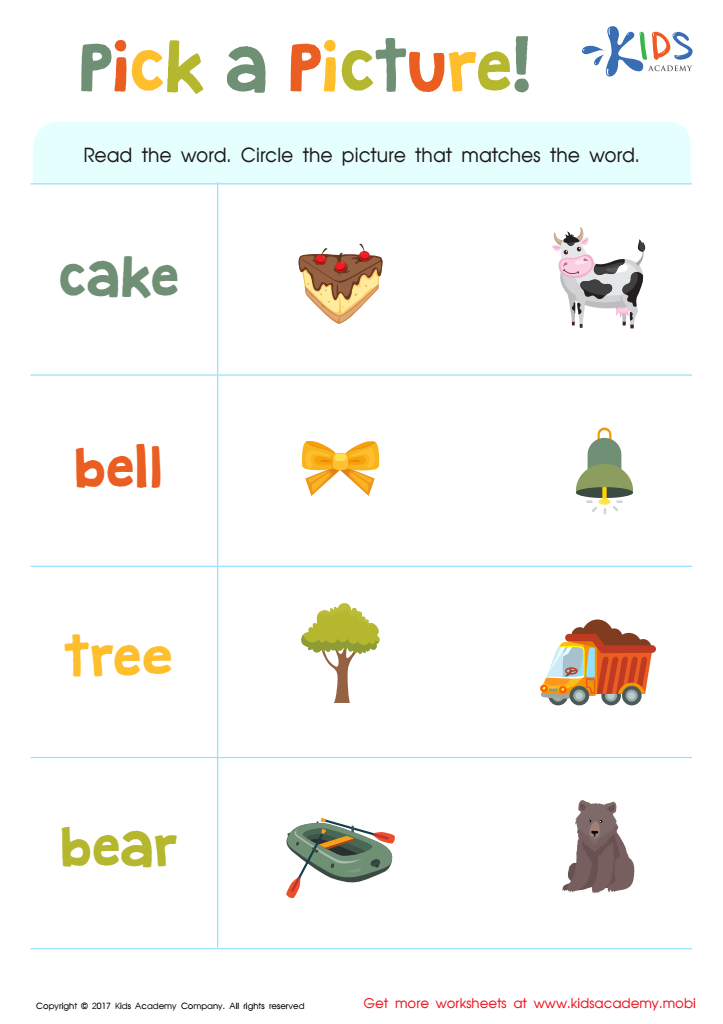
Pick a Picture Word Recognition Worksheet
 Assign to My Students
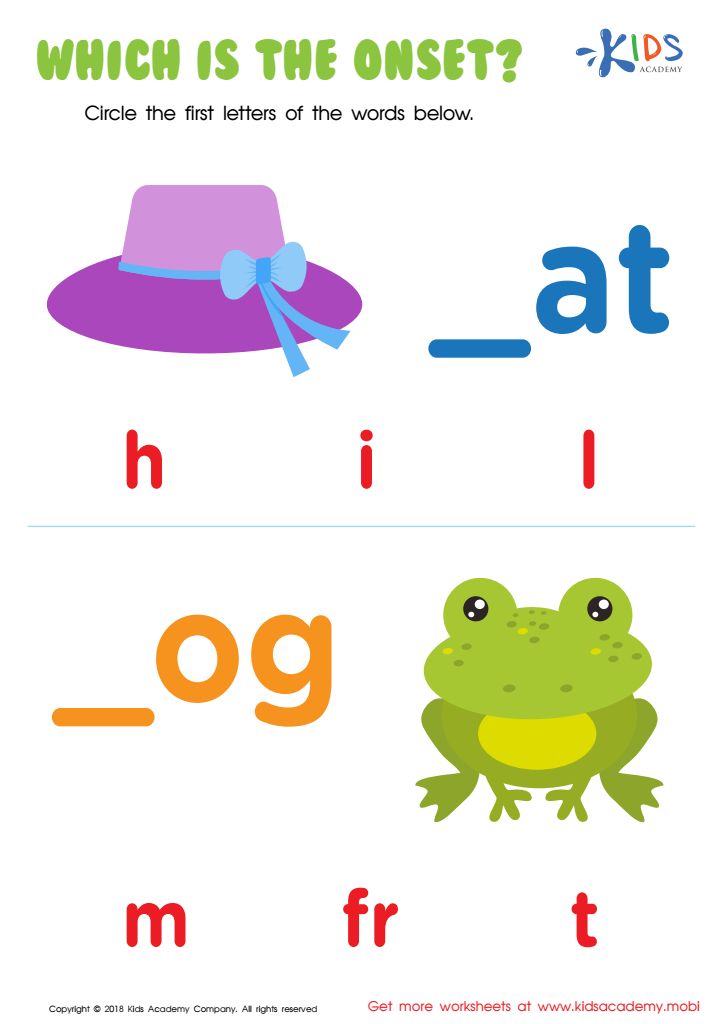
Which Is the Onset? Worksheet
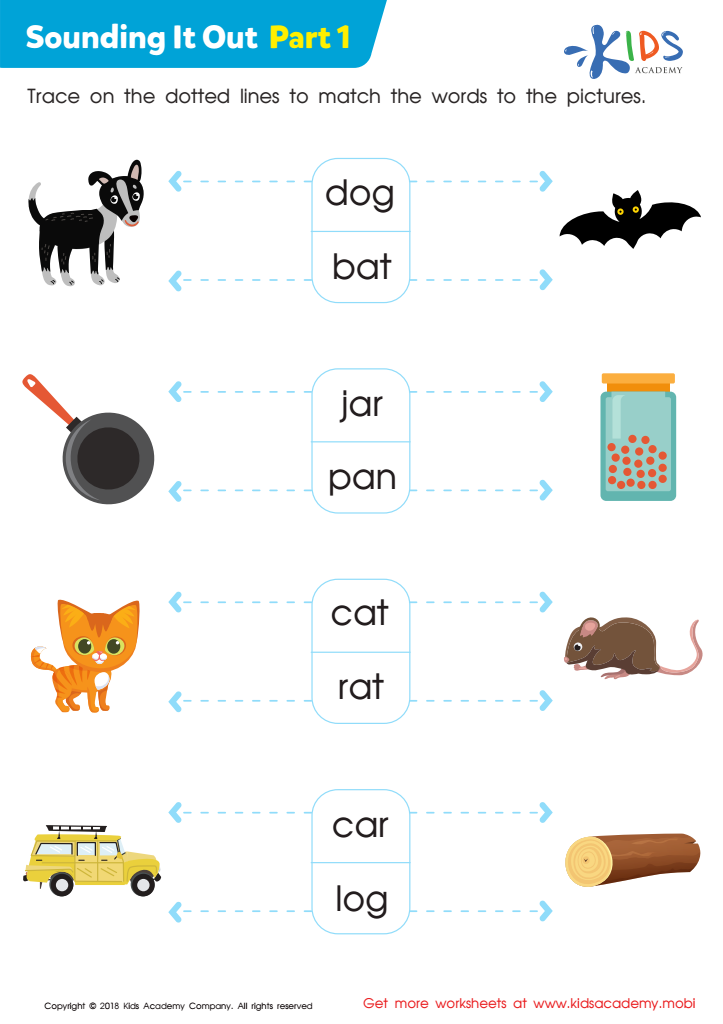
Sounding it Out: Part 1 Worksheet
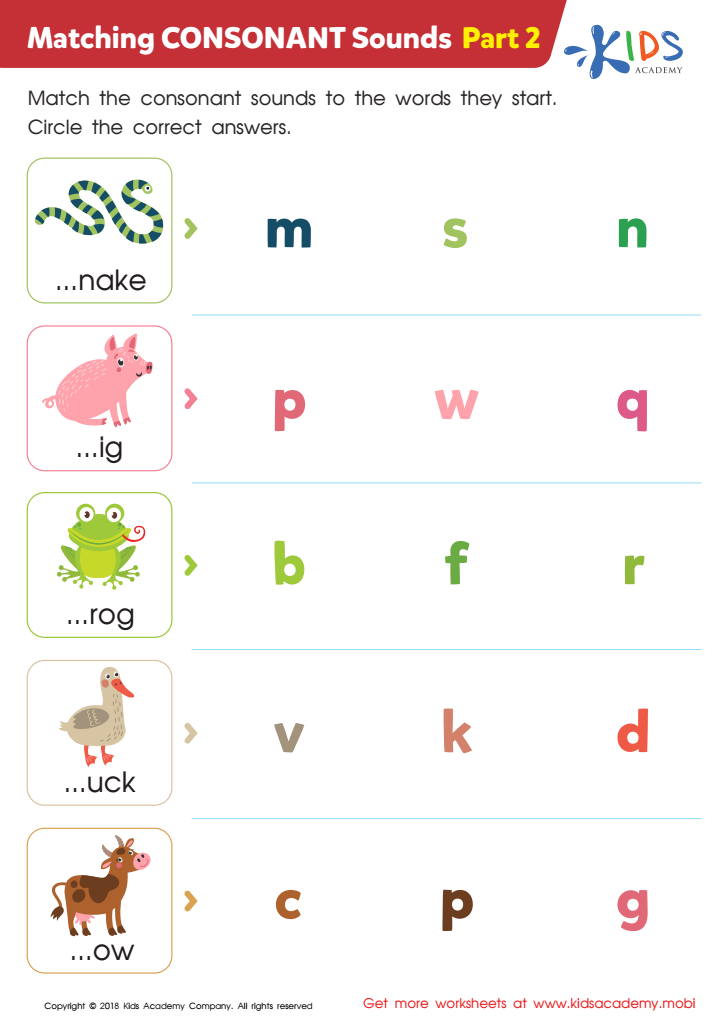
Matching Consonant Sounds: Part 2 Worksheet


.jpg)


Sound-letter correlation, or phonics, is crucial for children ages 4-6 as it forms the foundation for reading and writing. At this developmental stage, children are particularly receptive to learning sounds that letters and letter combinations represent, enabling them to decode words and make sense of written text. When parents and teachers prioritize sound-letter correlation, they empower children to approach reading with confidence, enhancing their literacy skills early on.
Understanding these correlations also promotes phonemic awareness, allowing children to manipulate sounds and recognize patterns in language, which is critical for fluent reading. Furthermore, it fosters an appreciation for words, encouraging a lifelong love of reading. This foundational skill is essential not only for academic success but also for effective communication.
Engaging children in activities that build sound-letter connections—such as singing alphabet songs, playing rhyming games, or using phonics apps—makes learning enjoyable and effective. When parents and teachers collaborate in this early education phase, they create a supportive learning environment that can significantly influence a child's attitude towards literacy. In summary, caring about sound-letter correlation paves the way for reading success, boosts self-esteem, and helps children develop essential communication skills necessary for future academic and life challenges.








