Synonym identification Worksheets for Ages 4-6
3 filtered results
-
From - To
Discover engaging Synonym Identification Worksheets designed specifically for children aged 4-6. These interactive worksheets foster vocabulary development and enhance language skills through fun activities. Our resources encourage young learners to explore words with similar meanings, promoting comprehension and verbal expression. Each worksheet features delightful illustrations and simple instructions, making it easy for kids to identify synonyms while enjoying the learning process. Perfect for home or classroom use, these worksheets support early literacy and cognitive growth. Start your child’s journey to becoming a confident communicator today with our thoughtfully created synonym activities! Download now for hours of fun and learning!
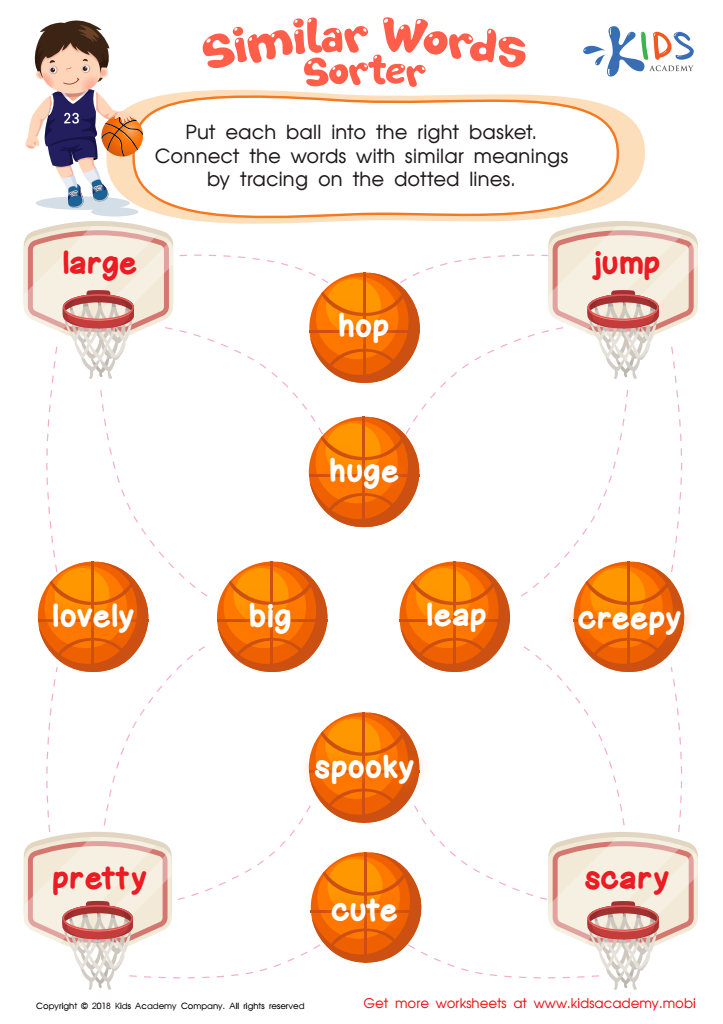
Similar Words Worksheet
 Assign to My Students
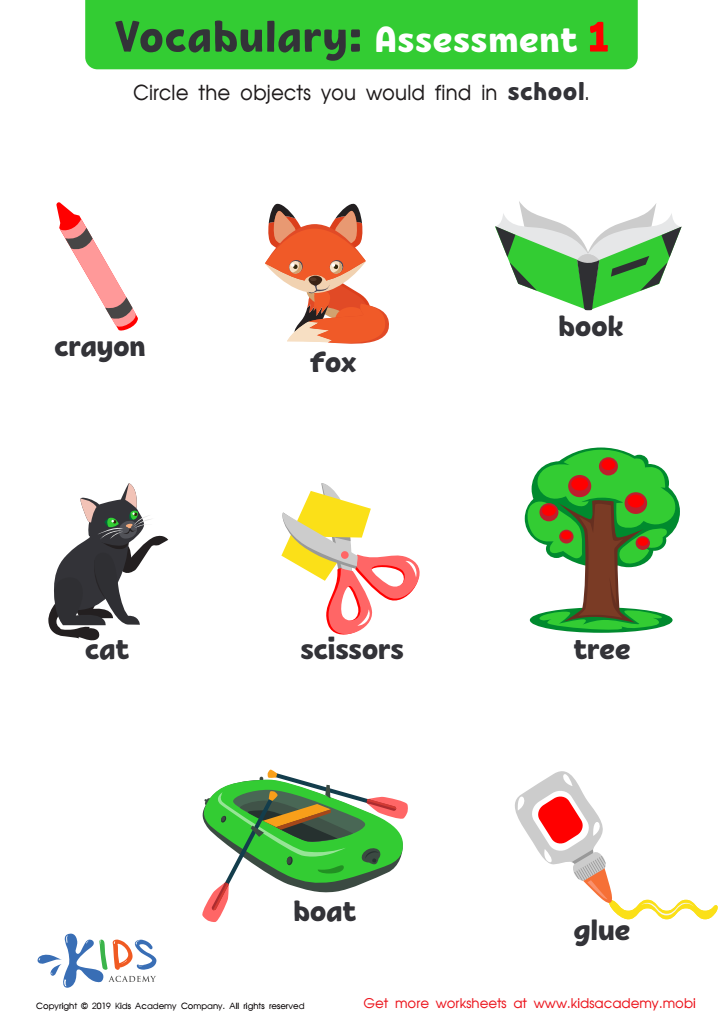
Vocabulary: Assessment 1 Worksheet
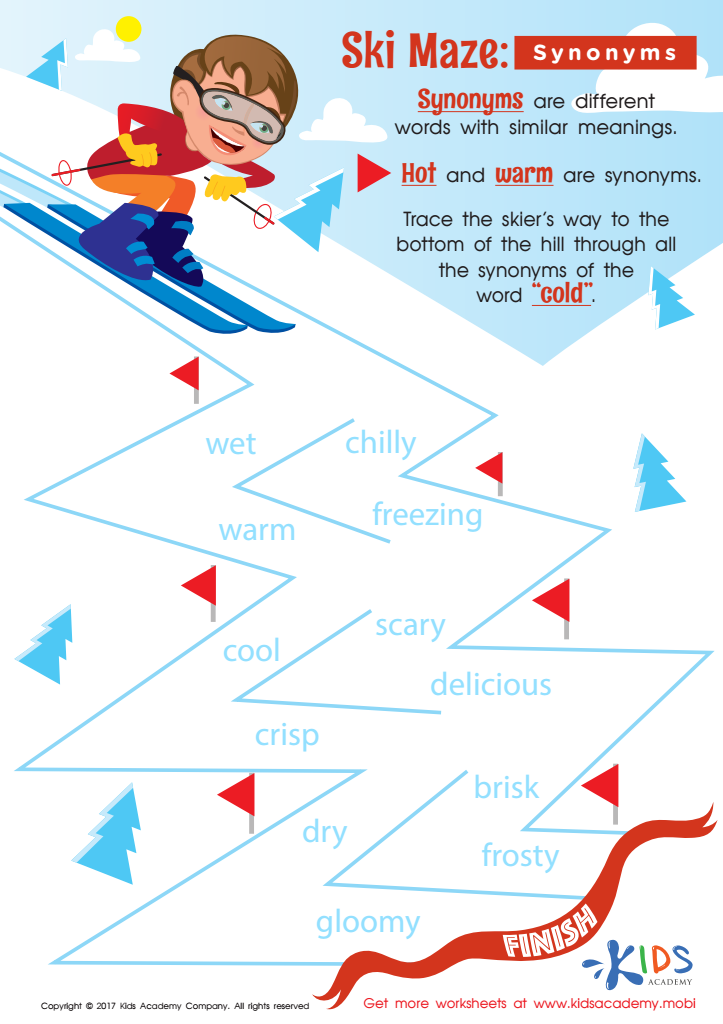
Free Printable Synonym Worksheet






Parents and teachers of children aged 4-6 should prioritize synonym identification because it significantly enhances language development and literacy skills. At this stage, early learners are beginning to build their vocabulary, and recognizing synonyms helps them understand the richness of language.
By learning that words may have similar meanings, children develop a more nuanced understanding of language, which can aid in reading comprehension and effective communication. This skill fosters critical thinking as they analyze words and their meanings in context. Furthermore, engaging with synonyms can make learning more fun and interactive; activities like games or storytelling using different synonyms can enhance engagement and foster a love for language.
Additionally, synonym identification strengthens spelling and writing skills, as children can express themselves in various ways, making their writing more interesting and varied. Overall, nurturing synonym identification lays a solid foundation for literacy that will benefit children throughout their academic journey. It also encourages creative expression and boosts confidence in language use, setting the stage for lifelong effective communication skills. By focusing on this essential skill at an early age, parents and teachers can support children's overall cognitive and emotional development.








