Time recognition Worksheets for Ages 4-6
3 filtered results
-
From - To
Discover our Time Recognition Worksheets designed specifically for children aged 4-6. These engaging and interactive worksheets help young learners grasp the foundational concepts of telling time. With brightly colored clocks, simple exercises, and fun activities, kids can practice identifying hours and minutes. The worksheets are crafted to develop early math skills, improve attention to detail, and enhance cognitive development. Ideal for both parents and educators, these resources make learning time interesting and enjoyable. Start your child's journey to time mastery today with our expertly designed time recognition worksheets!
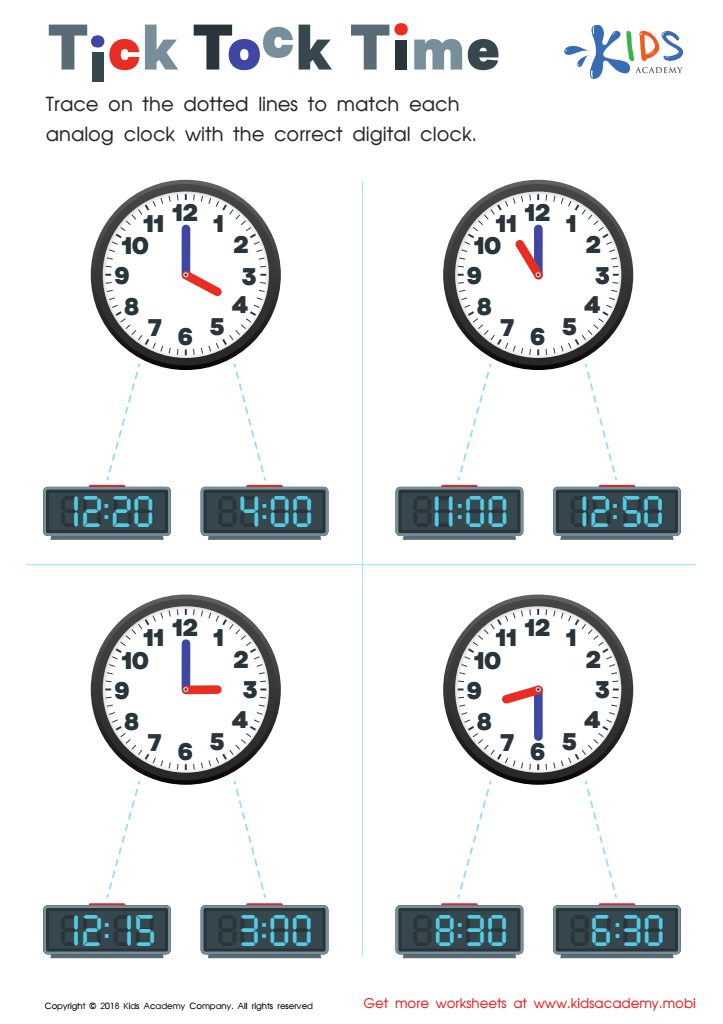
Tick Tock Time Worksheet
 Assign to My Students
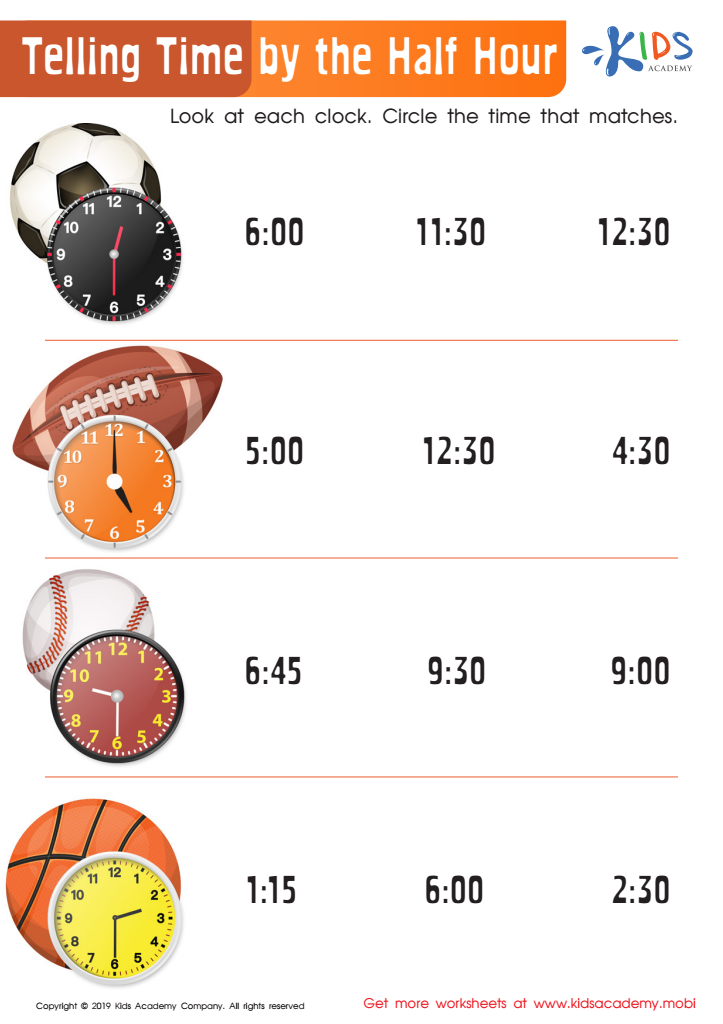
Telling Time by the Half Hour Worksheet
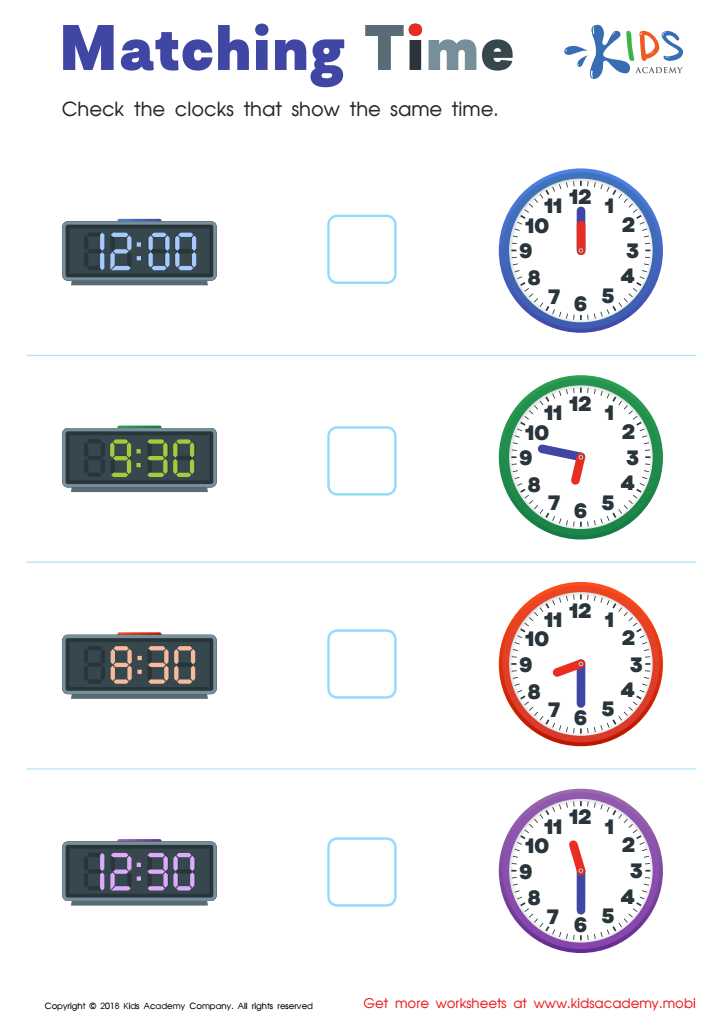
Matching Time Worksheet




%20(1).jpg)



Time recognition is an essential skill for children aged 4-6, and parents and teachers have crucial roles in its development. At these early stages of growth, understanding time helps children cultivate a sense of order and routine, fundamental for fostering a structured and predictable environment, vital for young minds. Recognizing and adhering to timelines aid in nurturing their responsibility and punctuality, core values that influence academic success and aspects of daily life as they grow.
Additionally, time recognition enhances cognitive development. Through learning to tell time, children improve their mathematical skills, as it involves recognizing numbers and understanding sequences. It also boosts fine motor skills, particularly when using analog clocks, as children read the minute and hour hands.
Moreover, understanding time promotes better time management and planning skills. It helps children grasp how long activities take, leading to better decisions and improved efficiency in tasks, fostering independence.
Lastly, knowing how to recognize time builds confidence. When children can comprehend durations and successfully follow timed routines like school schedules, recreational periods, and meal times independently, they develop self-esteem and a succeeding sense of achievement. Hence, investing in teaching time recognition at an early age sets a groundwork for life-long skills and punctual habits.








