Understanding comparisons Worksheets for Ages 4-6
5 filtered results
-
From - To
"Understanding Comparisons Worksheets for Ages 4-6" are innovative educational tools designed to enhance your child's cognitive development. Perfect for preschoolers and kindergarteners, these worksheets help young learners grasp the basics of comparing sizes, quantities, and more. Engaging activities and colorful illustrations make learning fun and effective. As kids practice comparing objects, they develop crucial skills such as critical thinking, problem-solving, and early math abilities. Tailored for your little one’s unique learning pace, these worksheets support both classroom and at-home learning, preparing children for a bright academic future. Unlock your child’s potential with our thoughtfully crafted comparison activities.
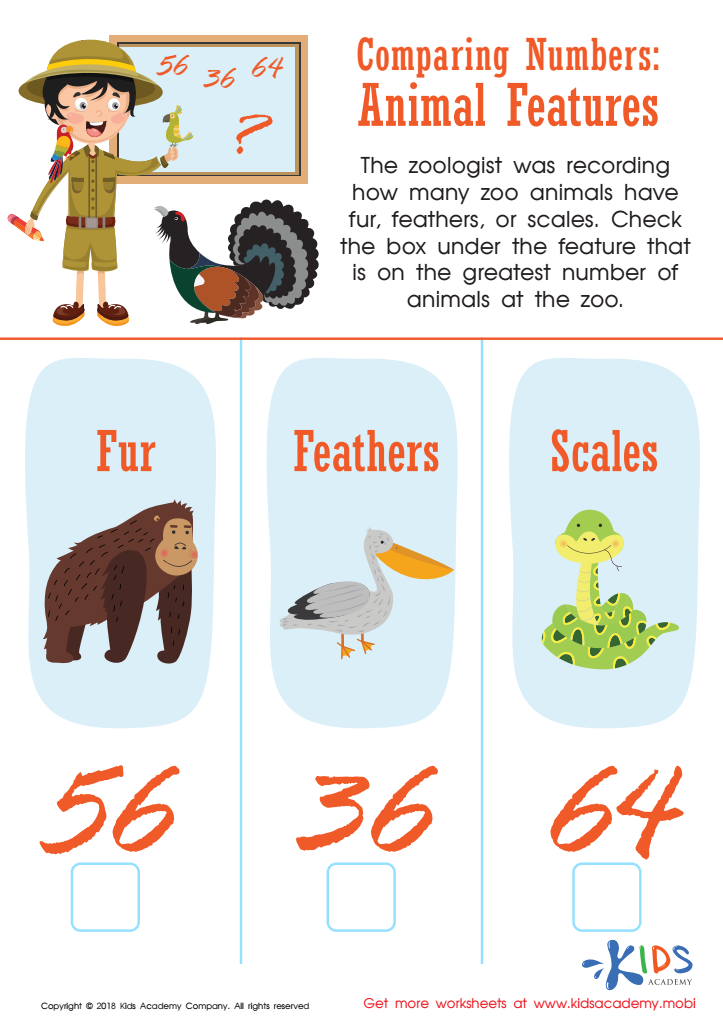
Animal Features Worksheet
 Assign to My Students
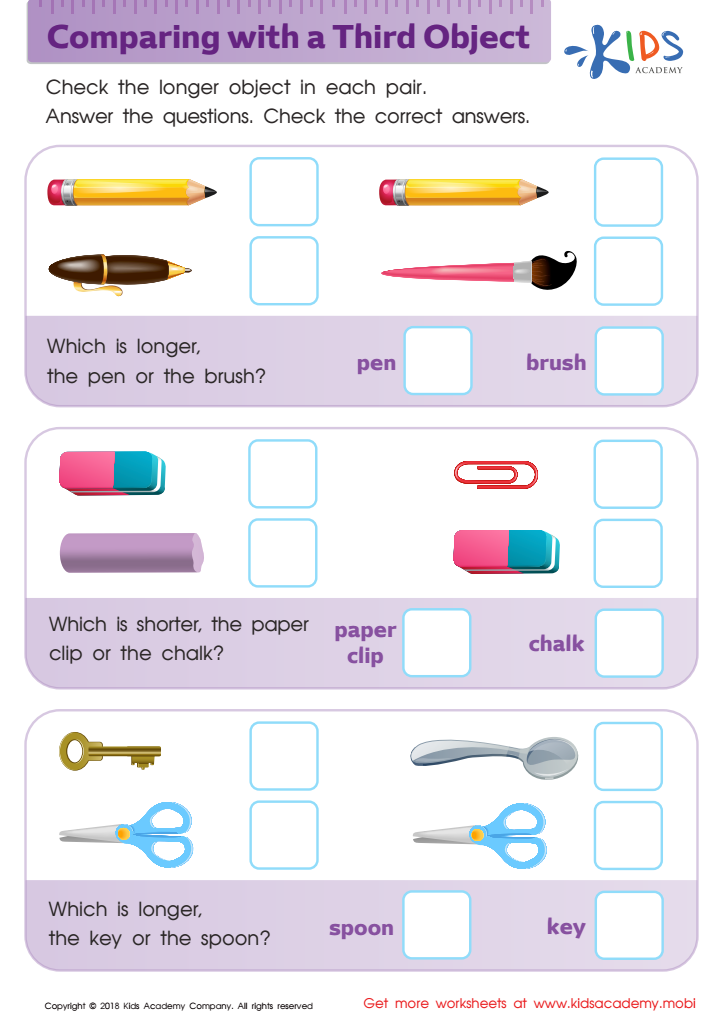
Comparing with a Third Object Worksheet
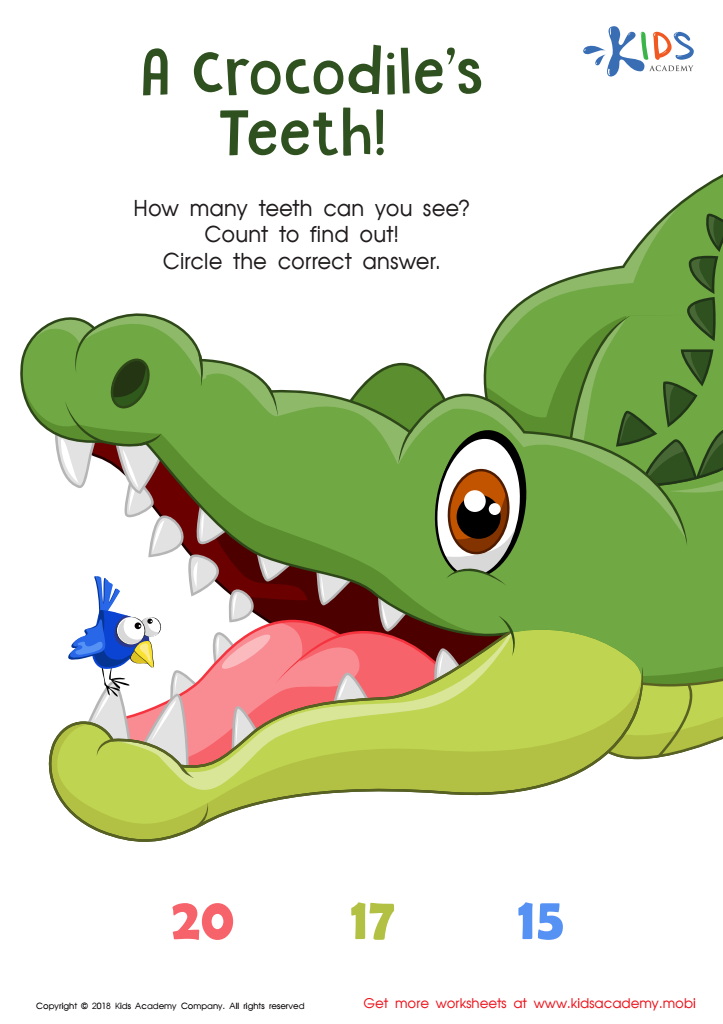
A Crocodile's Teeth Worksheet
Matching: Classifying Toys by Size Worksheet
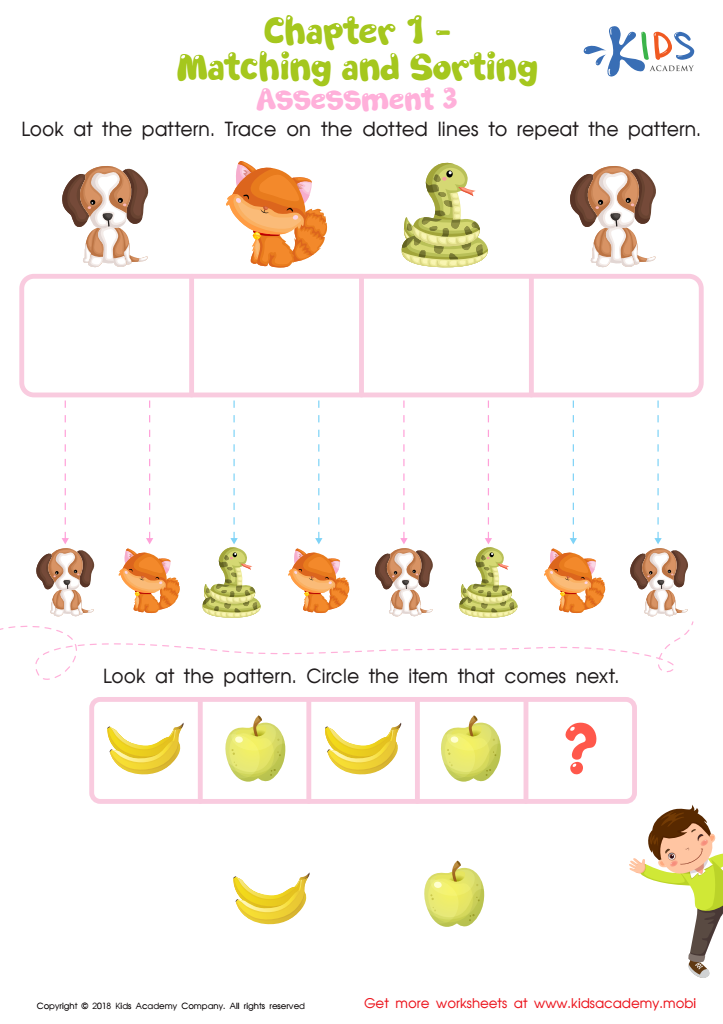
Matching and Sorting for Preschool: Assessment 3 Worksheet







Understanding comparisons is a vital cognitive milestone for children aged 4-6, and parents or teachers should place a special emphasis on developing this skill. Comparisons help young learners grasp the fundamentals of mathematics, language, and logical reasoning, all of which are foundational for their academic journey and everyday life.
First, mastering comparisons like "bigger vs. smaller," "taller vs. shorter," or "more vs. less" provides children with the basic concepts needed to tackle mathematics. Understanding these differences helps in recognizing patterns, sorting objects, and eventually learning numbers and basic arithmetic. These skills are critical stepping stones toward more complex math skills.
Second, comparisons enhance linguistic abilities. When children learn to compare objects, they are simultaneously acquiring new vocabulary and the intricate connections between words and meanings. This builds a richer language base, supporting better reading comprehension and effective communication.
Lastly, developing comparison skills improves logical reasoning. Recognizing relationships and differences nurtures critical thinking, allowing children to make sense of the world around them. These skills are not only crucial for academic success but are instrumental in everyday decision-making, problem-solving, and social interactions.
In essence, fostering comparison skills in early childhood equips children with essential tools to navigate a variety of learning domains and life situations, laying down a strong foundation for future success.








