Understanding life cycles Worksheets for Ages 4-6
4 filtered results
-
From - To
Introduce young learners to the wonders of nature with our "Understanding Life Cycles Worksheets for Ages 4-6." These engaging and educational activities are designed to help children grasp the stages of various life cycles, from butterflies and frogs to plants. Through colorful illustrations and easy-to-follow exercises, kids will develop a foundational understanding of growth, change, and the natural world around them. Perfect for classroom use or homeschooling, these worksheets foster curiosity and enhance early science skills in a fun and interactive way. Start your child’s educational journey with our comprehensive life cycle materials today!
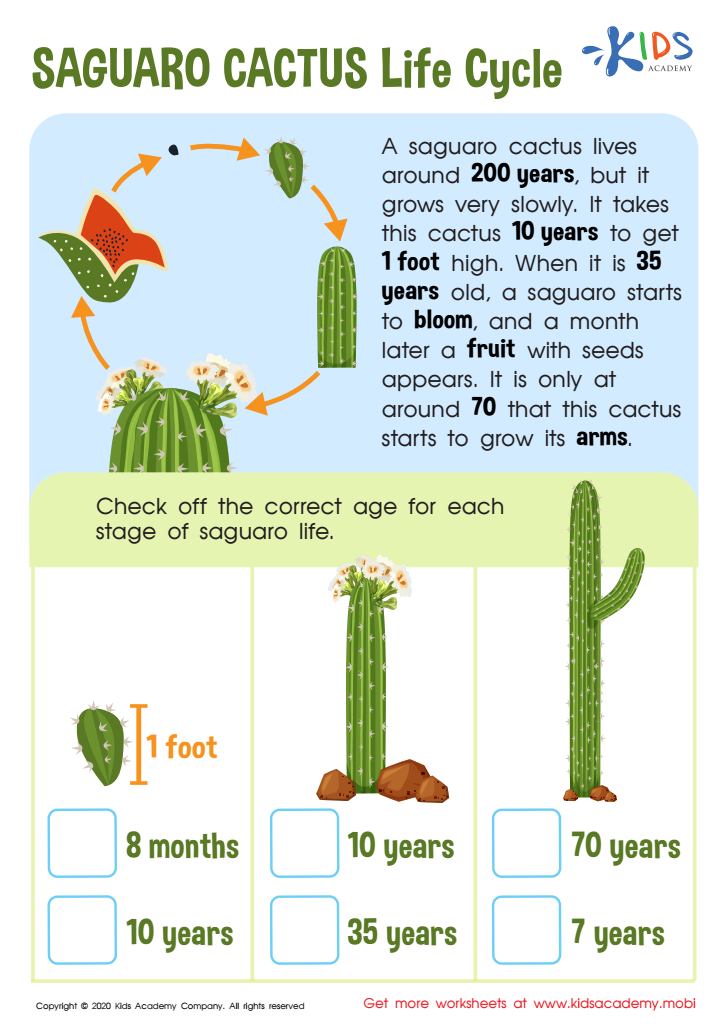
Saguaro Cactus Life Cycle Worksheet
 Assign to My Students
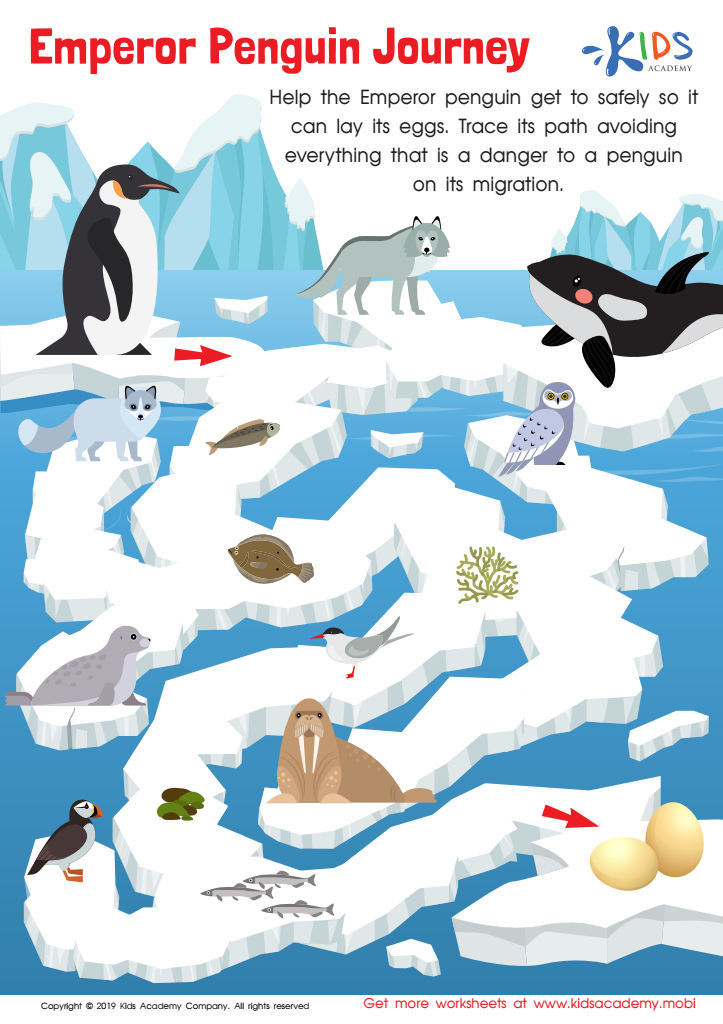
Emperor Penguin Journey Worksheet
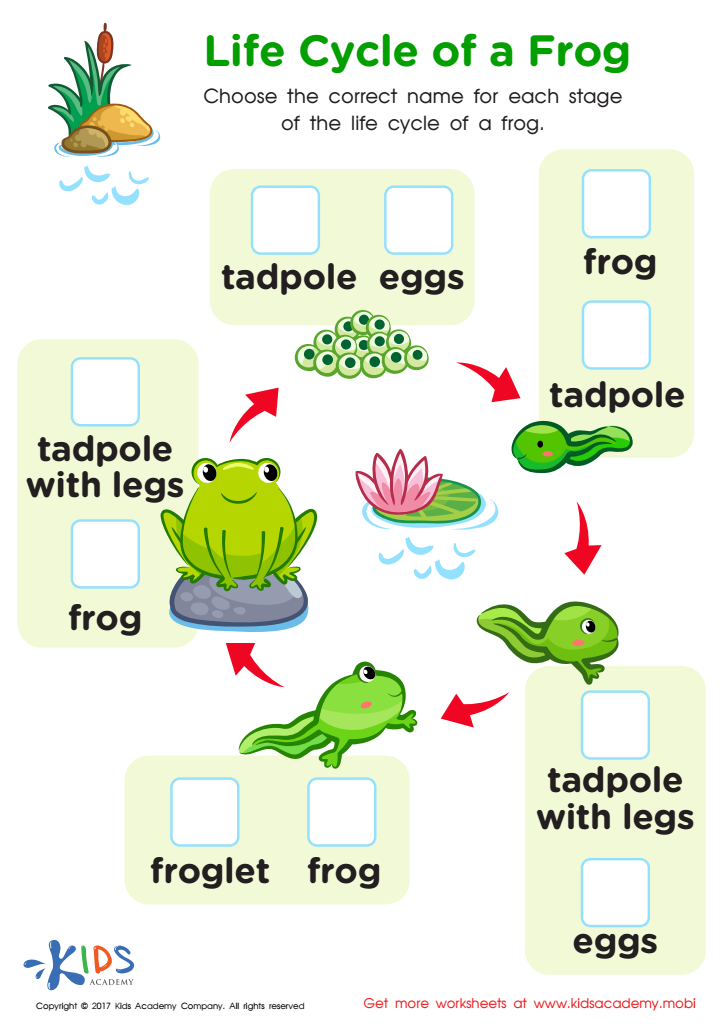
Life Cycle Frog Printable
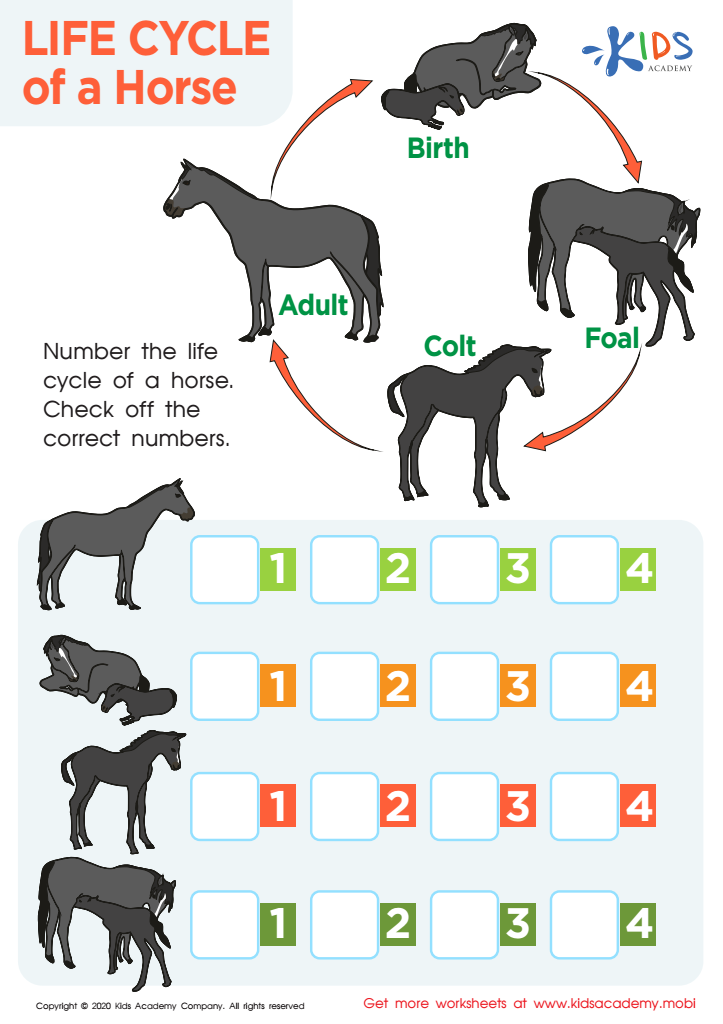
Life Cycle of a Horse Worksheet





Understanding life cycles for children aged 4-6 is essential for several reasons. At this age, children are naturally curious about the world around them and eager to explore new concepts. Life cycles, such as those of plants, butterflies, frogs, and even humans, provide an excellent framework for explaining growth, change, and the passage of time.
Firstly, learning about life cycles nurtures a child's sense of wonder and curiosity. It helps them observe and understand the natural patterns that make up our world. Secondly, it fosters scientific thinking. By studying life cycles, children begin to grasp important biological concepts, such as growth, development, reproduction, and death, in a concrete way.
Moreover, this knowledge contributes to emotional and social growth. Understanding that processes like birth, growth, and death are natural can help children manage their emotions around these events. This can be particularly poignant when dealing with the loss of a pet or the birth of a sibling.
Finally, it lays the foundation for environmental stewardship. When children appreciate the interdependence within life cycles, they are more likely to respect living things and the environment. This early education empowers them to make thoughtful decisions about conservation and sustainability as they grow older.
In summary, by engaging children in learning about life cycles, parents and teachers help build a foundation for curiosity, scientific literacy, emotional understanding, and environmental responsibility.








