
Understanding photosynthesis Worksheets for Ages 4-6
3 filtered results
Difficulty Level
Grade
Age
-
From - To
Subject
Activity
Standards
Introduce your little learners to the fascinating world of photosynthesis with our engaging worksheets designed for ages 4-6. These printable resources help young minds explore how plants make their food using sunlight, water, and air. Fun activities, colorful illustrations, and simple explanations will ignite curiosity and make complex concepts accessible. Ideal for early education settings, parents, or homeschooling, our worksheets encourage creativity and understanding through interactive learning. Foster a love for nature and science while developing essential foundational skills. Get started today to inspire your child's journey in understanding the vital process that sustains life on Earth!
Favorites
With answer key
Interactive
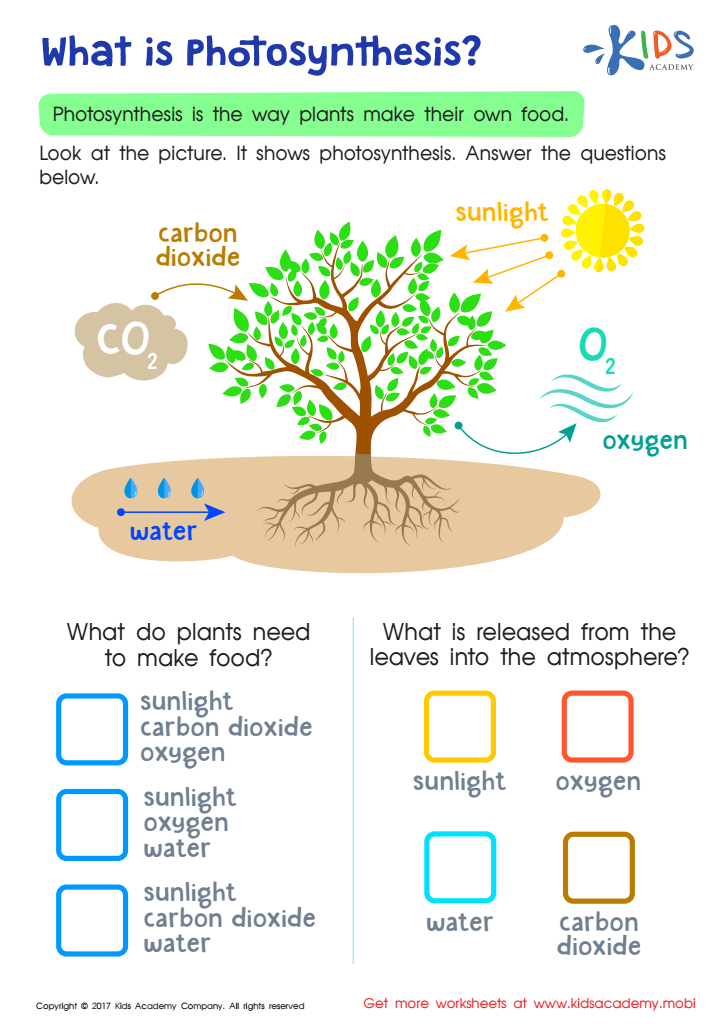
What is Photosynthesis Printable
Plants need to eat too; they make their own food from the air. Introduce them to photosynthesis with this fun worksheet!
 Assign to My Students
What is Photosynthesis Printable
Worksheet
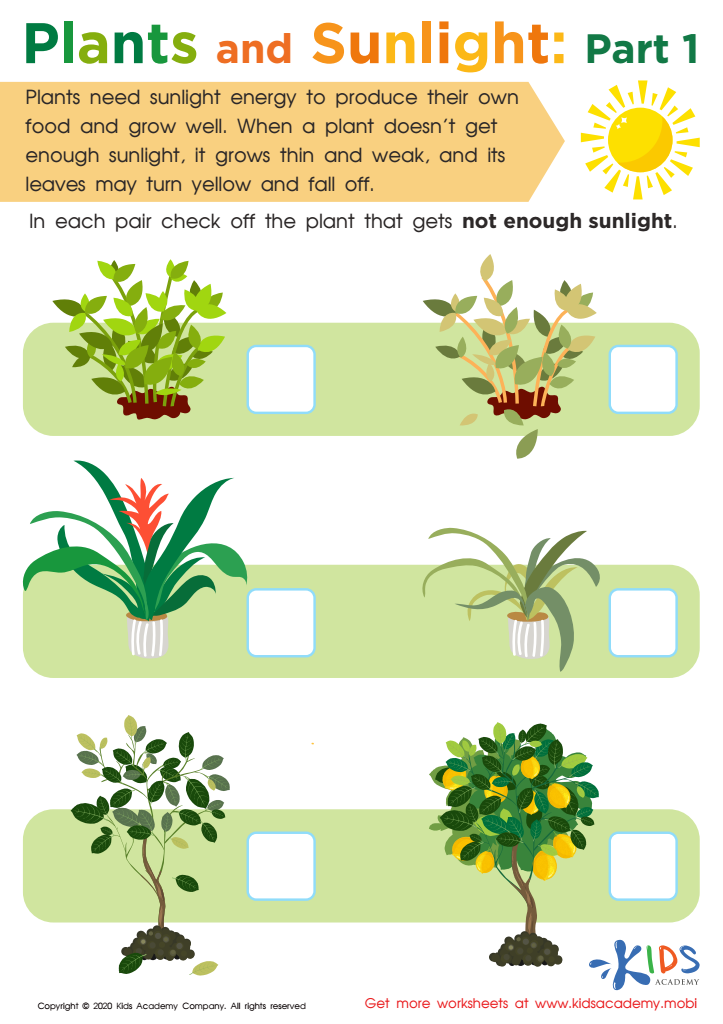
Plants and Sunlight: Part 1 Worksheet
Plants need the sun to grow big and strong, just as much as they need water. Without sunlight, plants can’t grow or flower. Use this worksheet to teach your child the importance of sun for plants. Have them read the passage and analyze the pictures to determine which plants are struggling due to lack of sunlight.
Plants and Sunlight: Part 1 Worksheet
Worksheet
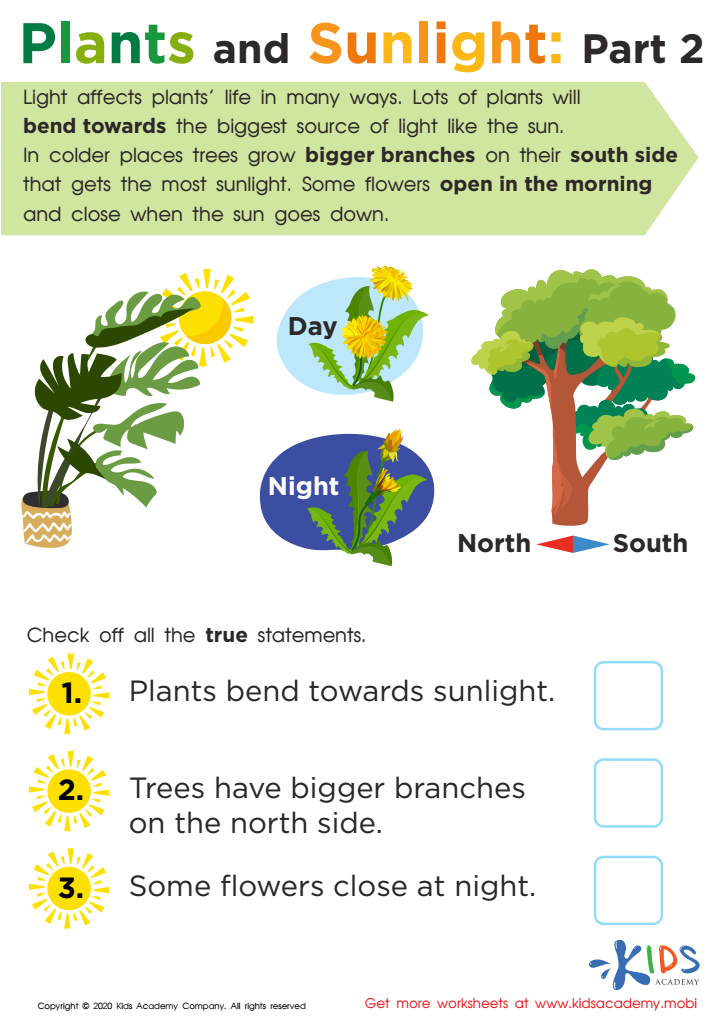
Plants and Sunlight: Part 2 Worksheet
Place a houseplant near the window and observe how it bends to get more sunlight! The sun's effects on plants and trees are amazing - flowers opening and closing, trees growing stronger branches on the south side. Let your child learn with this free Kids Academy printable science worksheet!
Plants and Sunlight: Part 2 Worksheet
Worksheet
Join Kids Academy for Free
Who is primarily going to use this learning content?







Understanding photosynthesis is vital for children aged 4-6 as it lays the groundwork for their appreciation of nature and science. At this age, children are naturally curious about the world around them; introducing them to concepts like photosynthesis can foster a sense of wonder about how plants grow and thrive.
Teaching young children about photosynthesis can encourage early environmental awareness. Understandably, they may not grasp all the biological complexities, but foundational knowledge—like the idea that plants need sunlight, air, and water to live—can be conveyed through simple activities, such as watering plants or observing leaves. This helps children appreciate the interdependence between plants and animals, including humans.
Furthermore, integrating hands-on learning activities can enhance cognitive skills and promote exploration. For instance, using colorful visuals, interactive stories, or gardening projects can make this scientific principle engaging.
Ultimately, helping young learners understand the basics of photosynthesis supports critical thinking, nurtures an appreciation for living things, and instills values of care and responsibility toward the environment—skills that are essential as they grow and face larger ecological challenges. By fostering curiosity and understanding, teachers and parents equip children with an early grasp of the natural world’s wonders.








