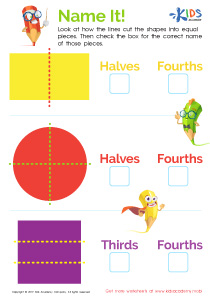
Matching skills 2D Shapes Worksheets for Ages 4-6
5 filtered results
-
From - To
Enhance your child's understanding of 2D shapes with our engaging Matching Skills Worksheets, designed specifically for ages 4-6. These worksheets offer a fun and interactive way for young learners to identify and connect various shapes, reinforcing essential math skills. Each activity is tailored to help children recognize geometric patterns while developing fine motor skills and critical thinking. Our vibrant and visually appealing worksheets make learning enjoyable, ensuring that little ones are excited to practice. Perfect for home or classroom use, these resources will boost your child's confidence in math through play-based learning. Download and watch their skills soar!
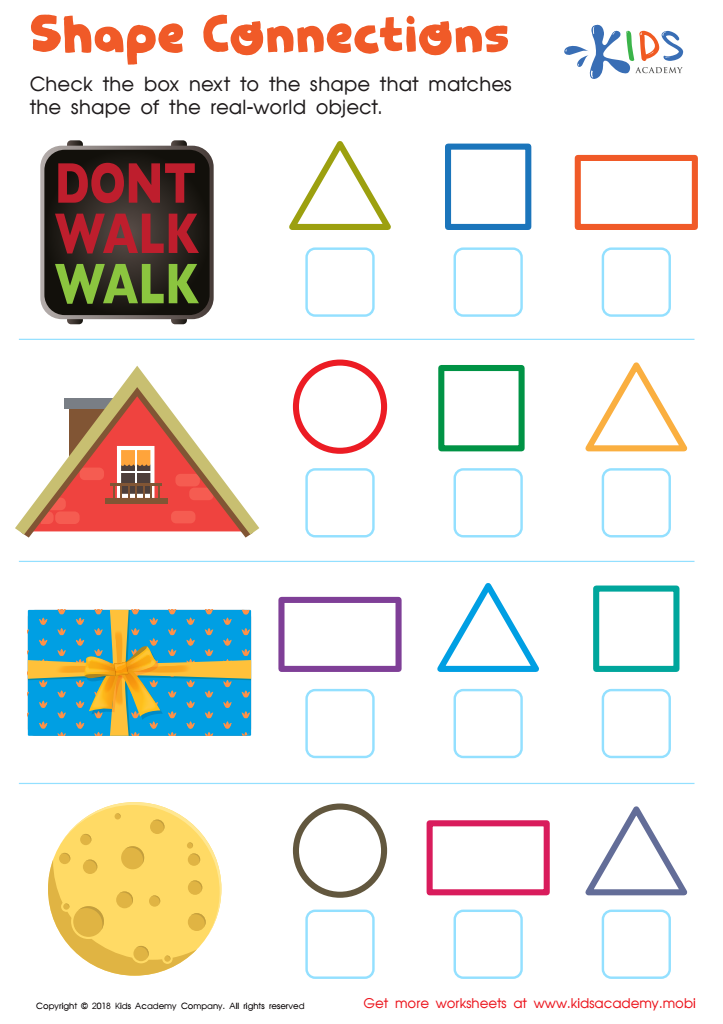
Shape Connections Worksheet
 Assign to My Students


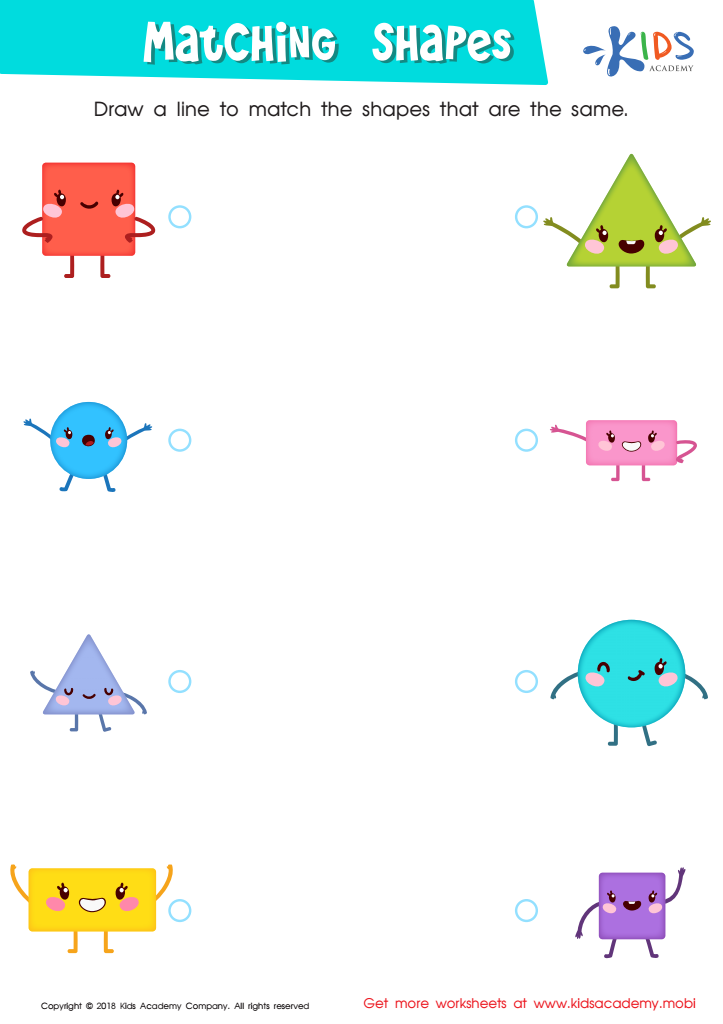
Matching Shapes Worksheet
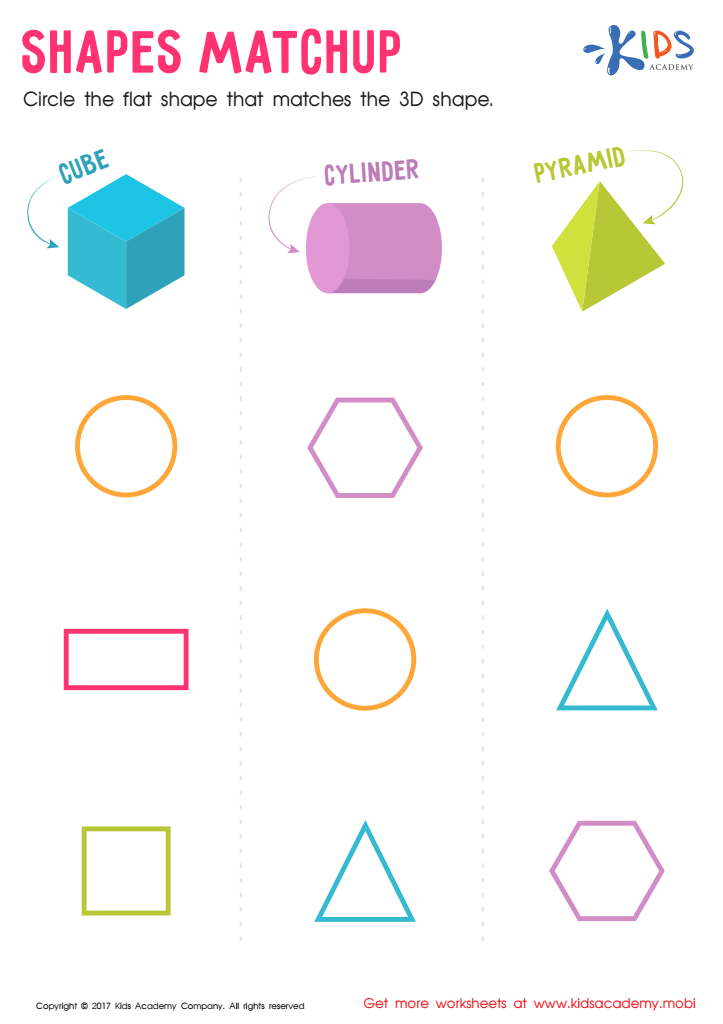
Shapes Matchup Worksheet
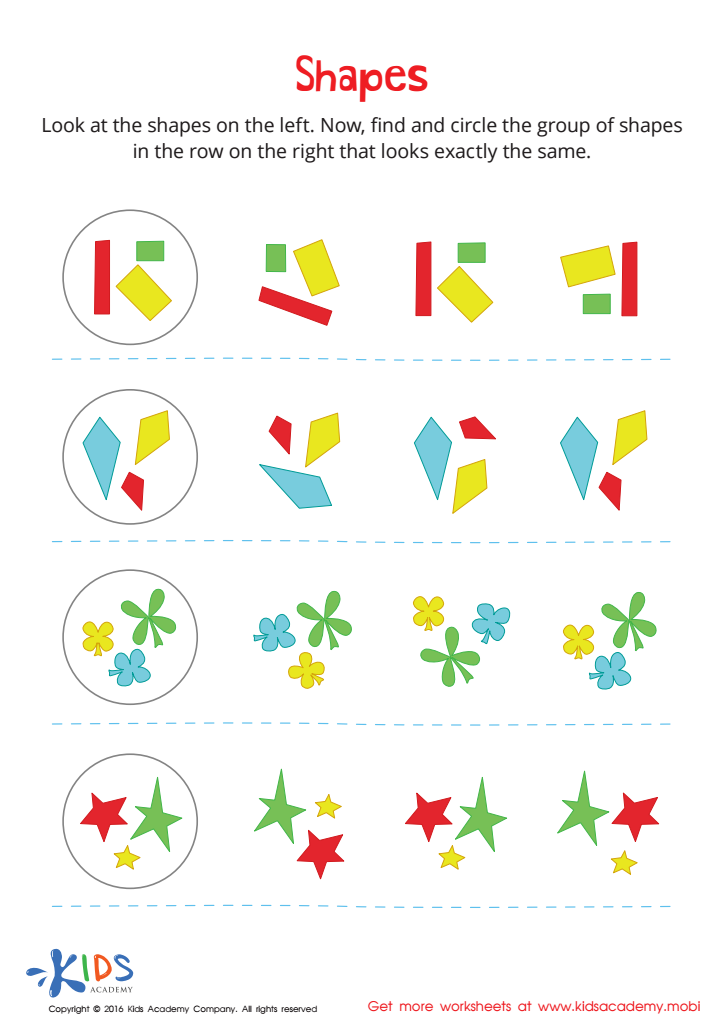
Shapes Worksheet
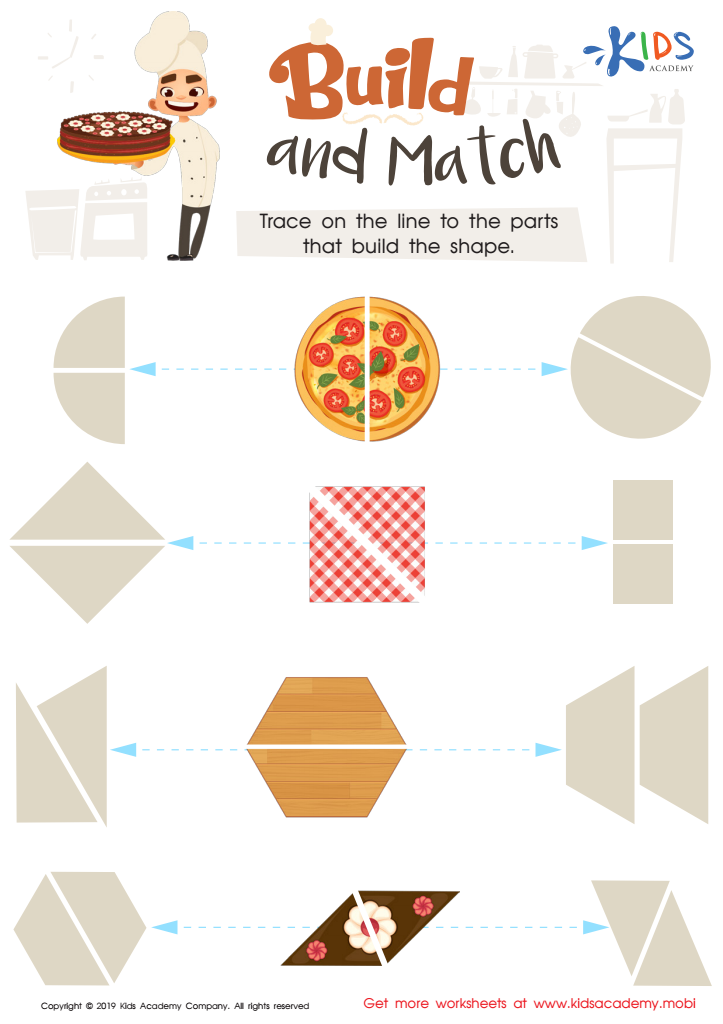
Build and Match Worksheet








Matching skills involving 2D shapes are crucial for children aged 4-6 as they lay the foundation for cognitive development. Engaging with shapes enhances children’s visual perception and strengthens their ability to differentiate between various forms, promoting critical thinking skills essential for problem-solving. By recognizing, naming, and matching shapes, children enhance their vocabulary and improve communication skills.
Moreover, matching 2D shapes fosters early mathematical understanding. It introduces concepts such as symmetry, angles, and spatial awareness, all of which are key building blocks for more complex mathematical ideas they will encounter later on. This foundational knowledge can nurture a positive attitude towards math, making future learning experiences more enjoyable.
Beyond cognitive skills, these activities also encourage fine motor development as children manipulate shapes, improving hand-eye coordination. Additionally, matching games can be a great way to boost social skills, as children can engage in cooperative play with peers or adults, learning to share resources and take turns.
In essence, when parents and teachers prioritize shape matching, they support holistic development, ensuring children are better prepared for academic success and everyday problem-solving as they grow. Engaging with shapes provides a rich, playful context for learning, making it both educational and enjoyable.