Visual discrimination 2D Shapes Worksheets for Ages 4-6
4 filtered results
-
From - To
Discover an engaging collection of Visual Discrimination 2D Shapes Worksheets designed specifically for children ages 4-6. These interactive worksheets help young learners enhance their ability to identify, compare, and differentiate various 2D shapes through fun activities. By practicing with our vibrant and age-appropriate exercises, kids will develop essential visual skills and strengthen their geometric understanding, all while enjoying the learning process. Perfect for home or classroom use, our worksheets provide a valuable resource for early math education. Empower your preschoolers with the tools they need to recognize shapes and boost their confidence in math! Start exploring today!
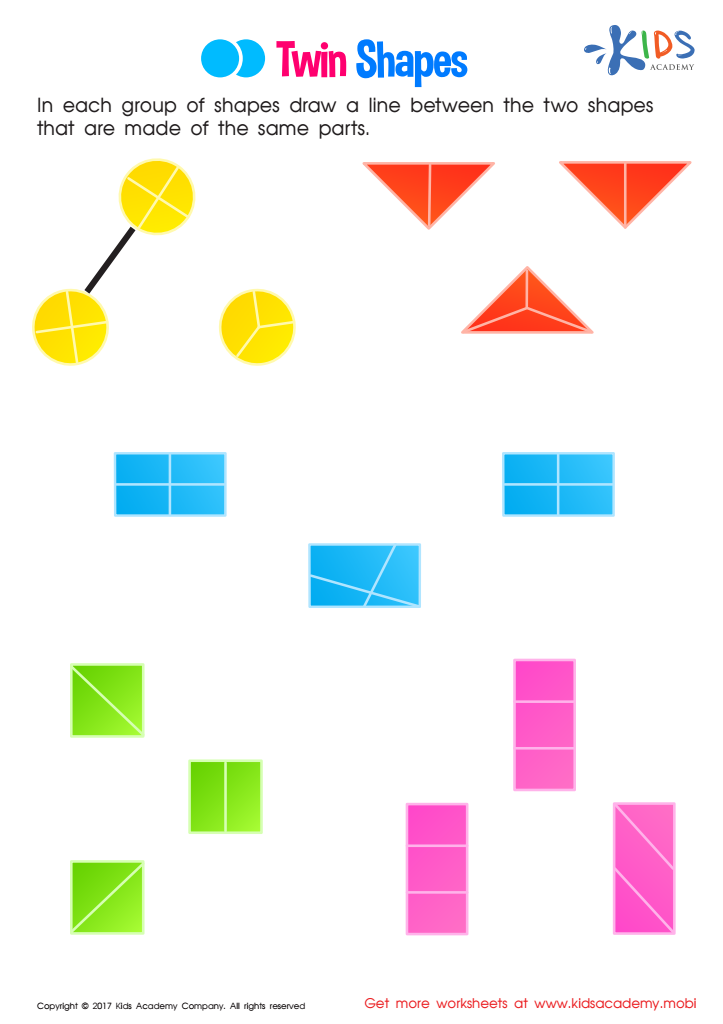
Twin Shapes Worksheet
 Assign to My Students











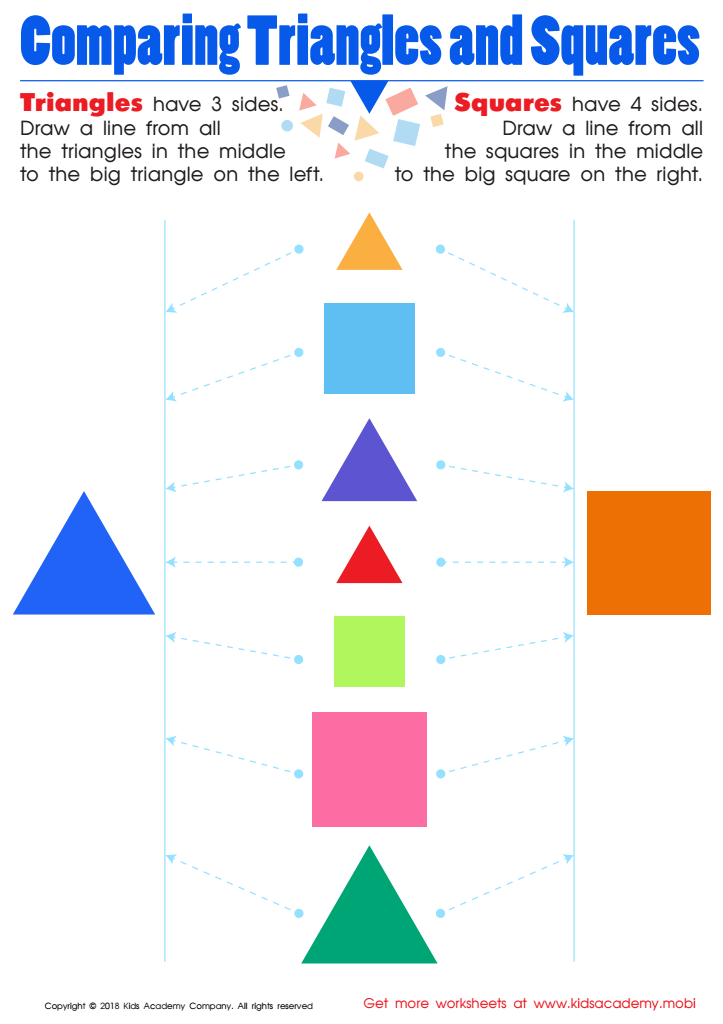
Comparing Triangles Squares Worksheet
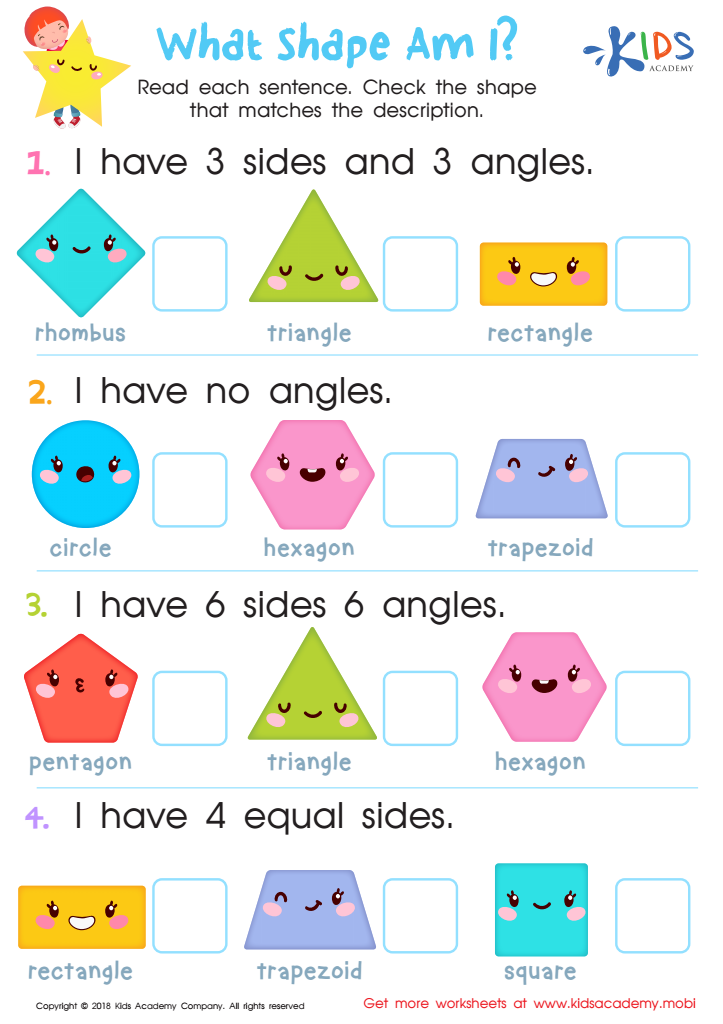
What Shape Am I? Worksheet
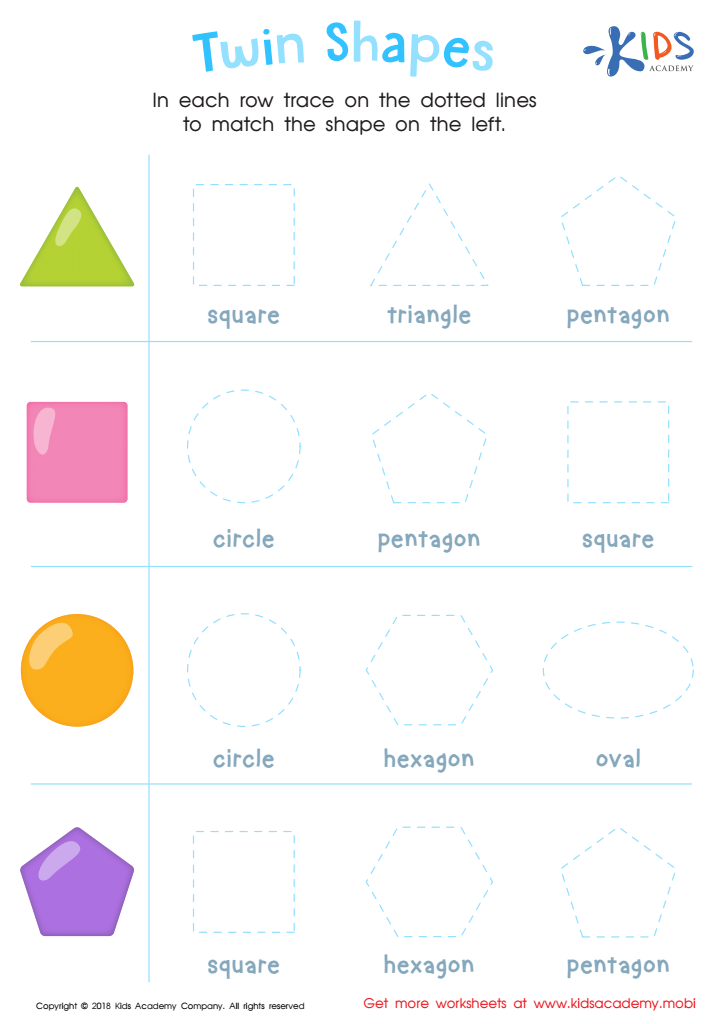
Twin Shapes Dot-to-Dot Worksheet








Visual discrimination of 2D shapes is crucial for children aged 4-6 as it forms the foundation for their cognitive development and future learning. This skill encompasses the ability to notice similarities and differences among shapes, which is essential not only in mathematics but also in literacy and everyday problem-solving. By identifying various shapes like circles, squares, and triangles, children enhance their pattern recognition skills, which are vital in both math (understanding geometry) and reading (recognizing letters and words).
Moreover, developing visual discrimination enhances fine motor skills, as children often engage in activities like tracing, cutting, and building with shapes. These activities promote hand-eye coordination essential for writing and other tasks.
Additionally, supporting children in mastering shape recognition can boost their confidence and foster a sense of accomplishment, encouraging a positive attitude towards learning. Parents and teachers can incorporate shape recognition into playful activities, such as games or art projects, making learning enjoyable and engaging.
By prioritizing visual discrimination of 2D shapes, parents and teachers can provide children with crucial tools that will support their academic journeys, laying the groundwork for more complex concepts as they grow older.








