Filters

78 filtered results

Clear all filters
Favorites
With answer key
Interactive

78 filtered results

Difficulty Level

Grade


Check out this FREE Trial Lesson on Adding Up to 5 for age 4-6!

T

Favorites
With answer key
Interactive
  • 4-6
  • Addition skills
  • Adding Up to 5
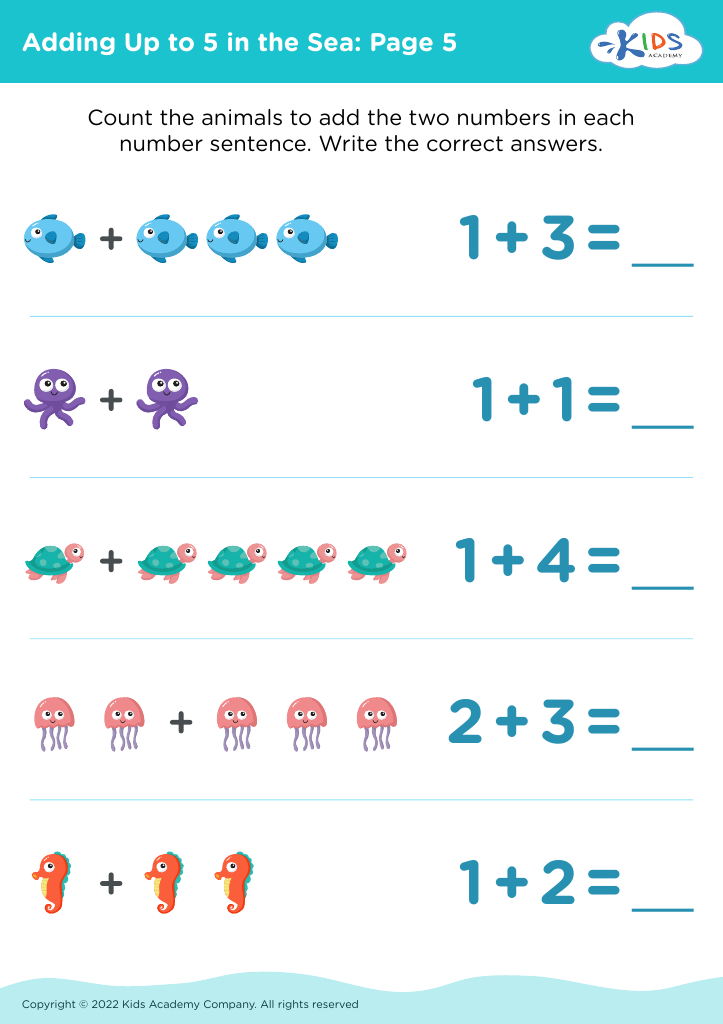
Adding Up to 5 in the Sea: Page 5

Adding Up to 5 in the Sea: Page 5

Adding Up to 5 in the Sea: Page 5
Worksheet
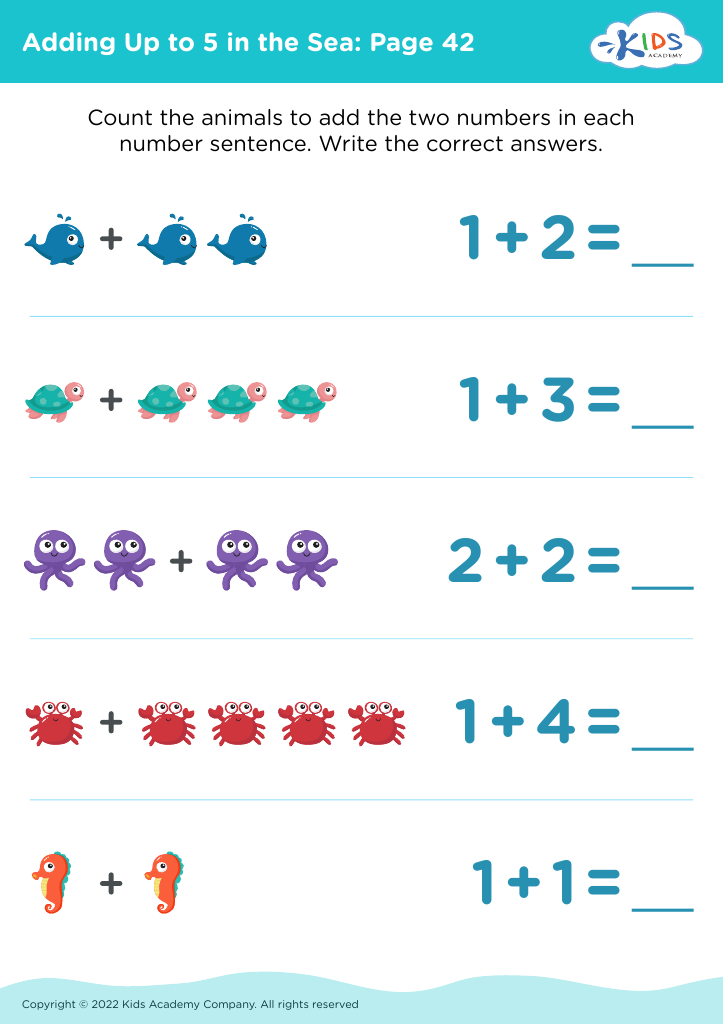
Adding Up to 5 in the Sea: Page 42
Worksheet
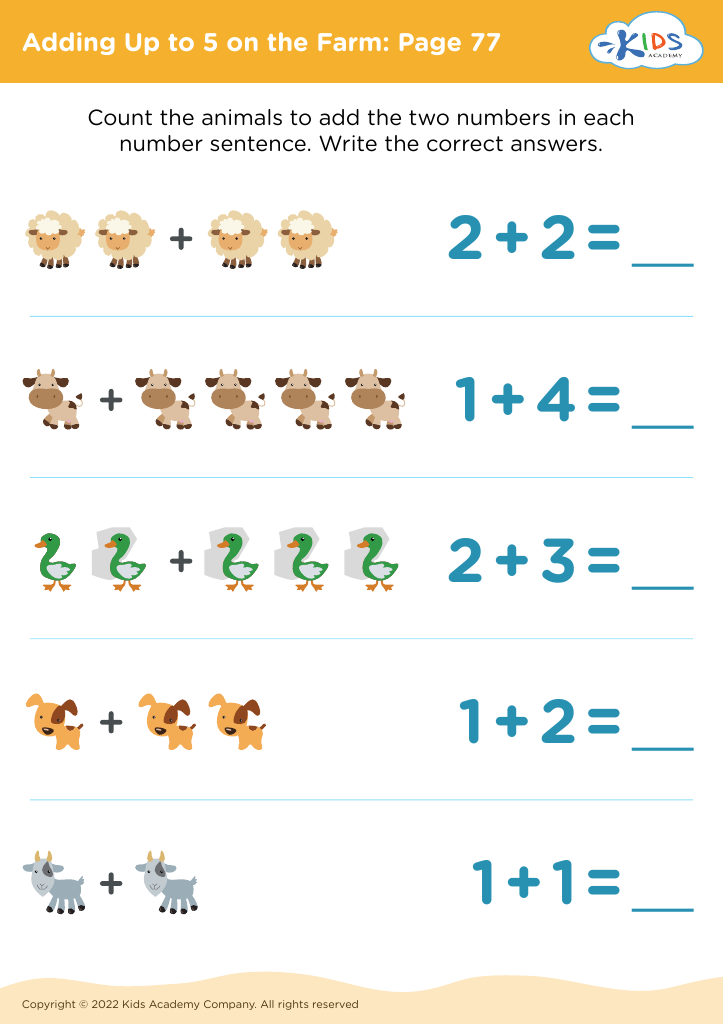
Adding Up to 5 on the Farm: Page 77
Worksheet
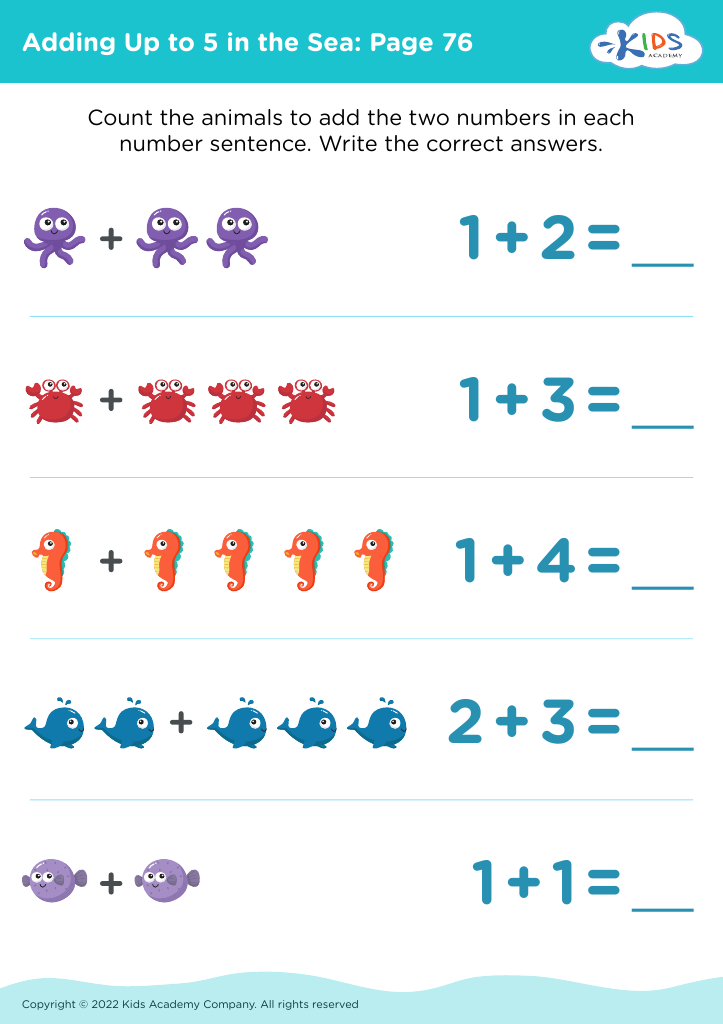
Adding Up to 5 in the Sea: Page 76
Worksheet
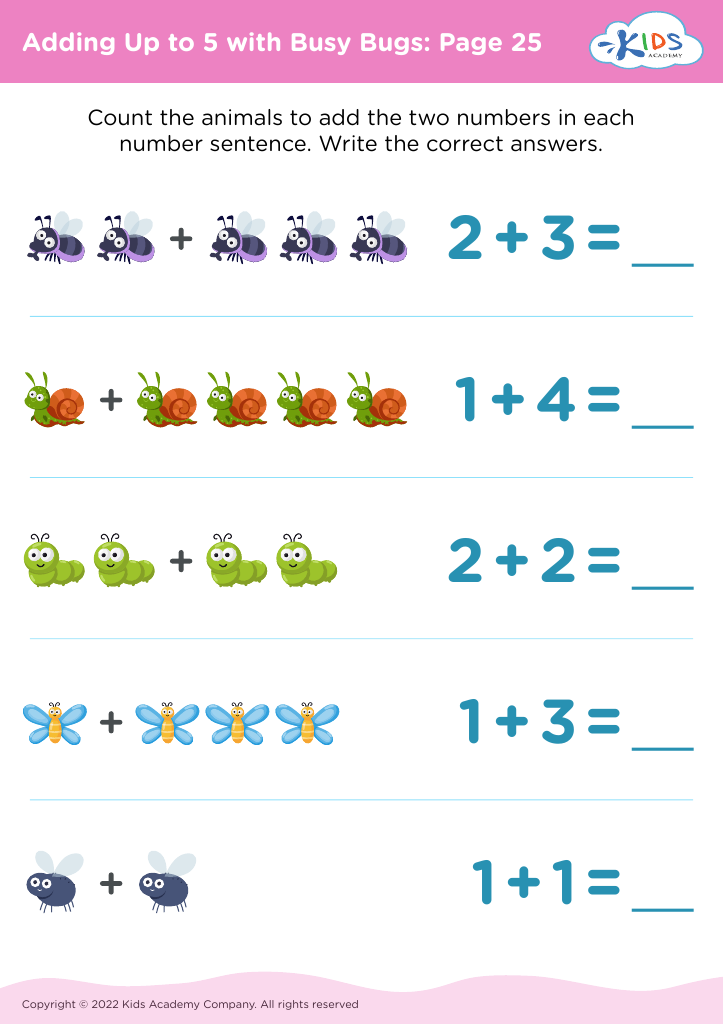
Adding Up to 5 with Busy Bugs: Page 25
Worksheet
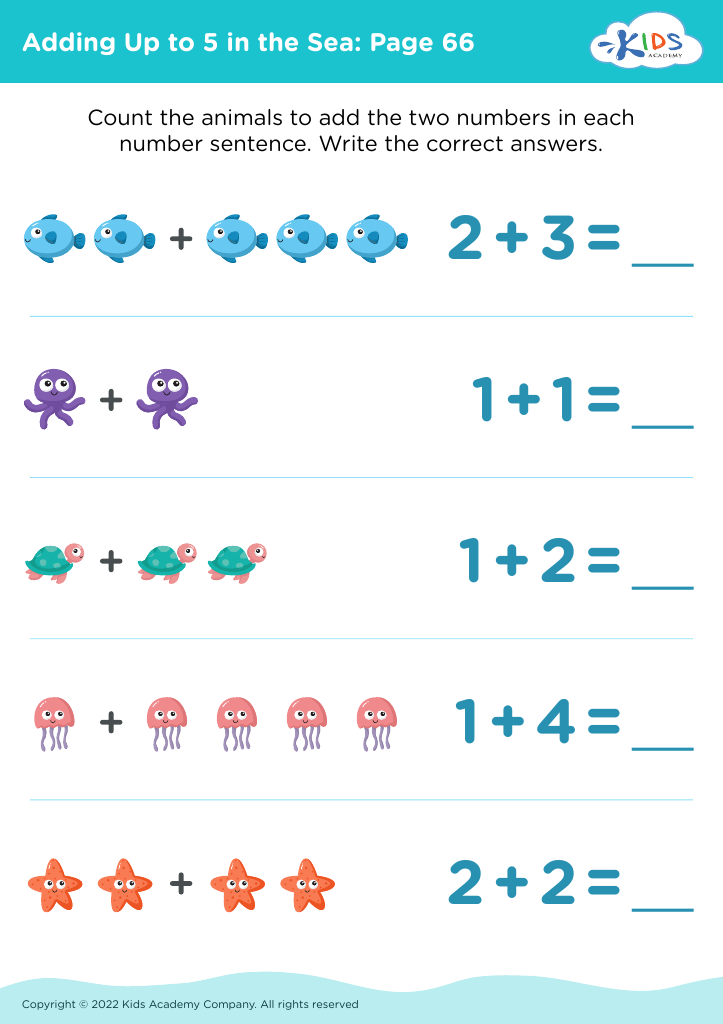
Adding Up to 5 in the Sea: Page 66
Worksheet
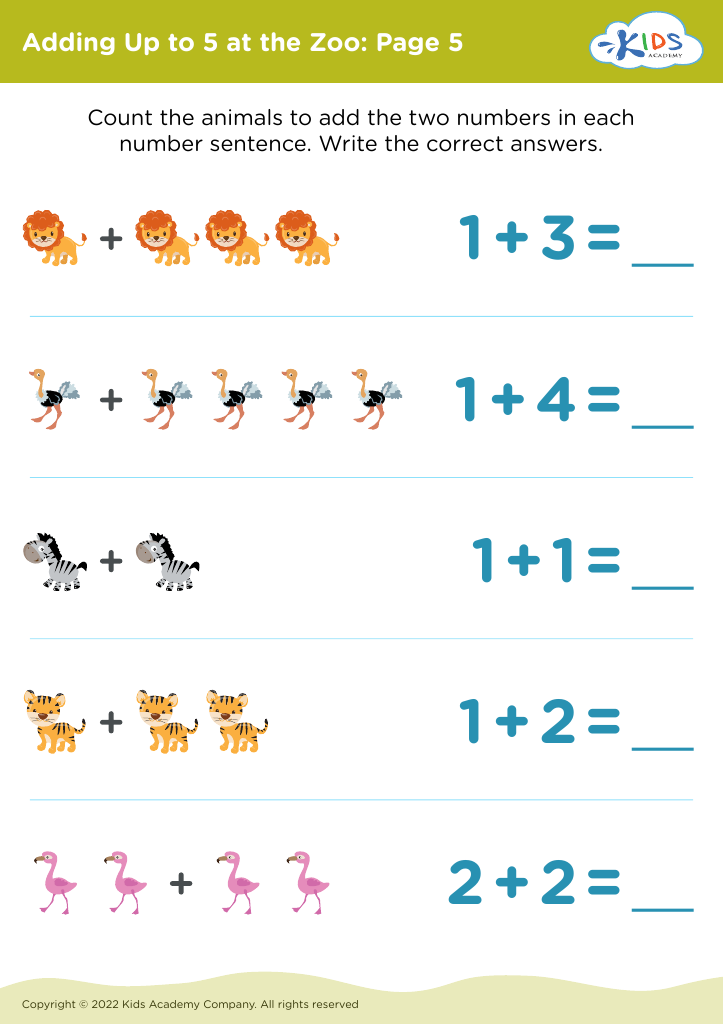
Adding Up to 5 at the Zoo: Page 5

Adding Up to 5 at the Zoo: Page 5

Adding Up to 5 at the Zoo: Page 5
Worksheet
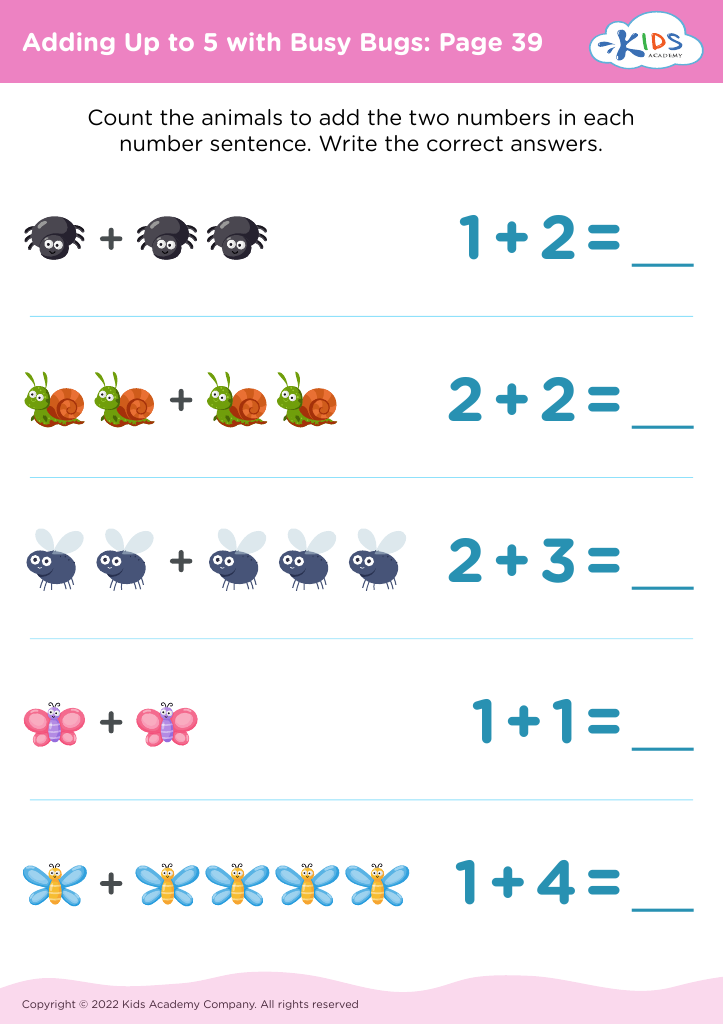
Adding Up to 5 with Busy Bugs: Page 39
Worksheet
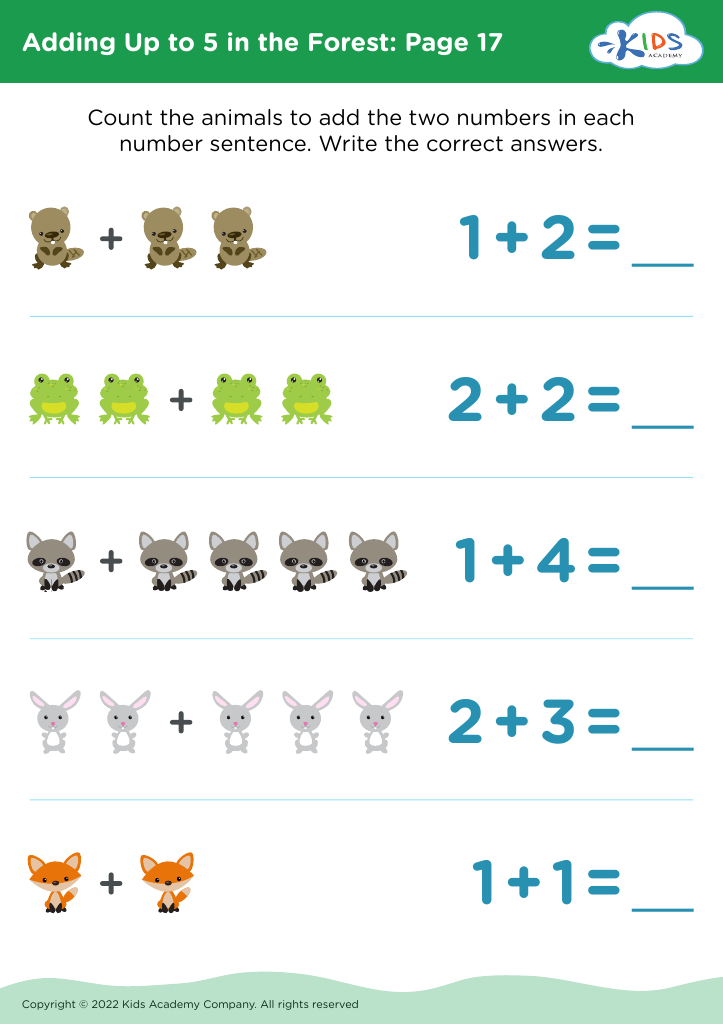
Adding Up to 5 in the Forest: Page 17
Worksheet
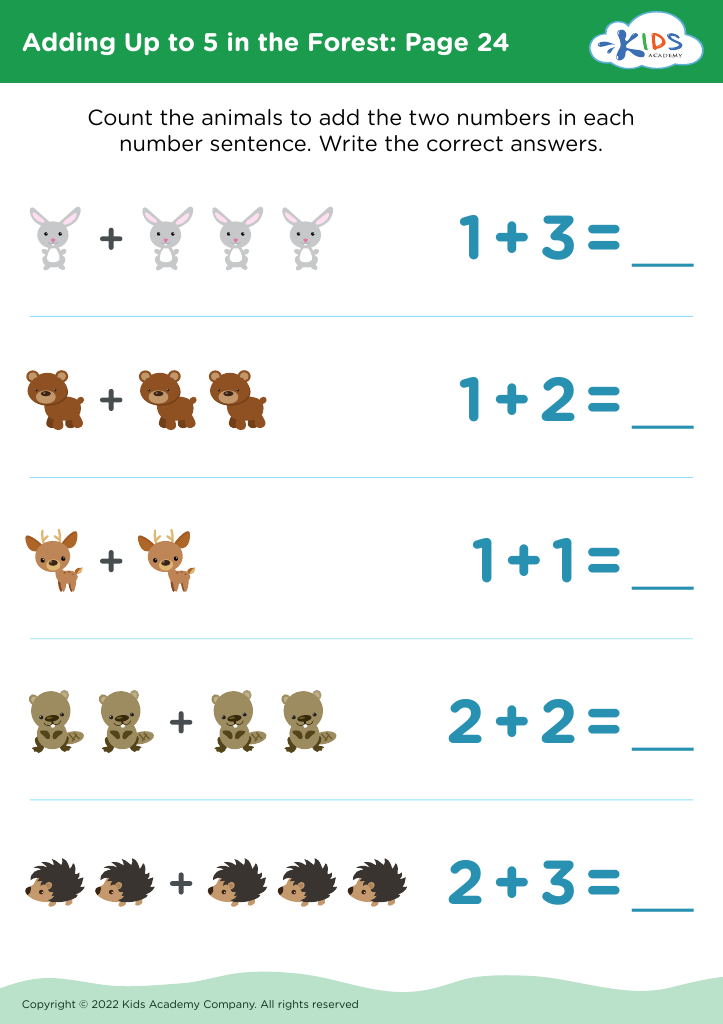
Adding Up to 5 in the Forest: Page 24
Worksheet
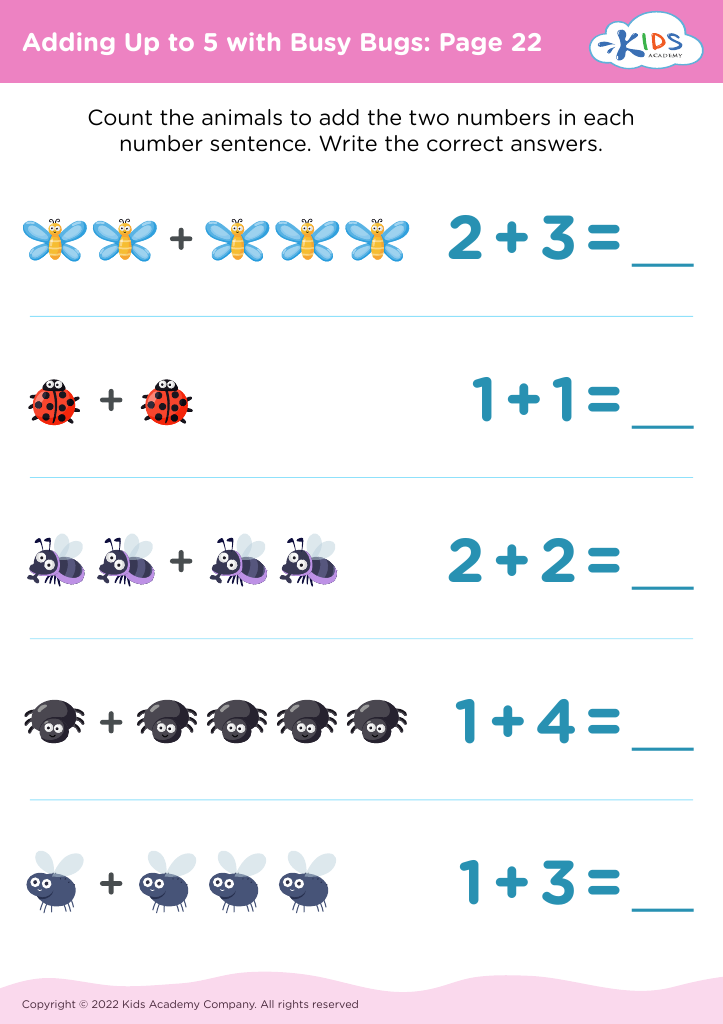
Adding Up to 5 with Busy Bugs: Page 22
Worksheet
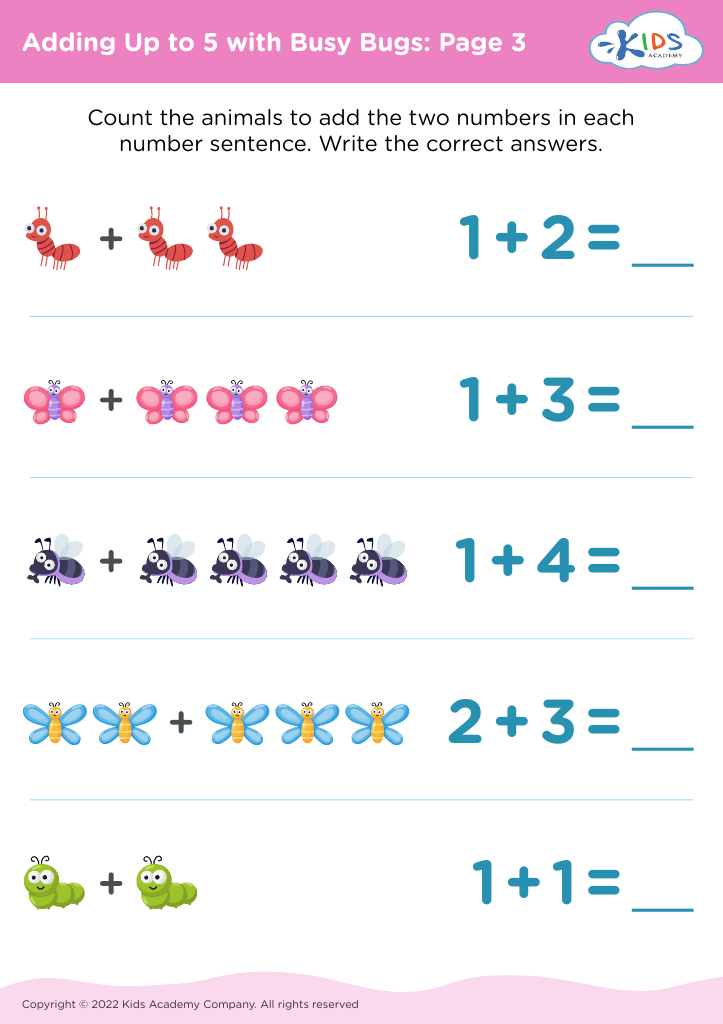
Adding Up to 5 with Busy Bugs: Page 3
Worksheet
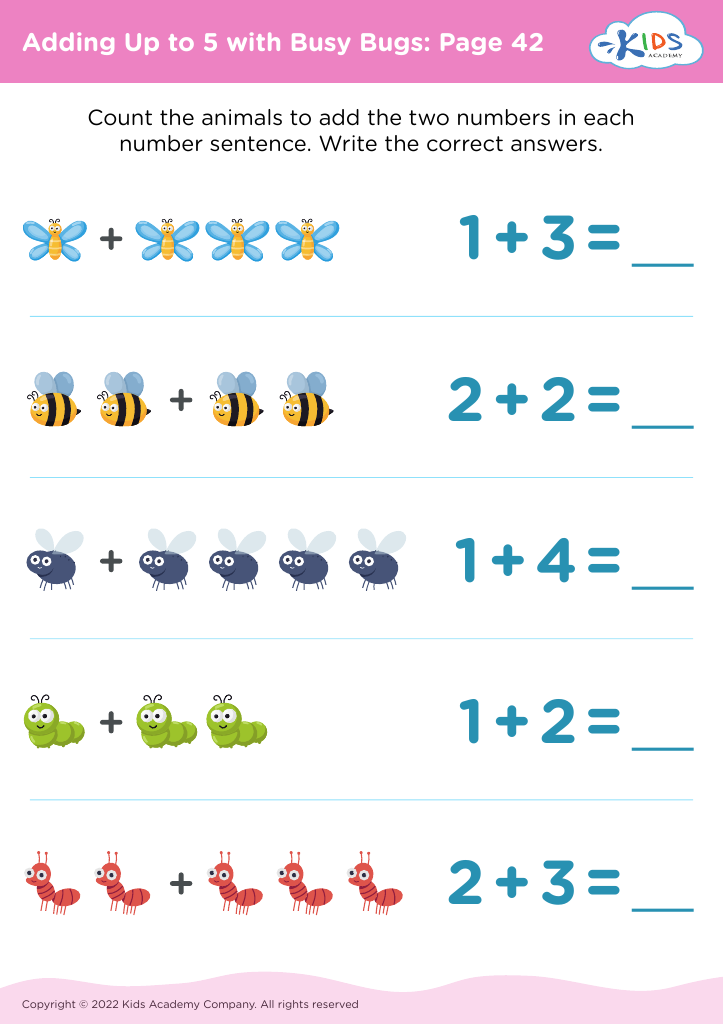
Adding Up to 5 with Busy Bugs: Page 42
Worksheet
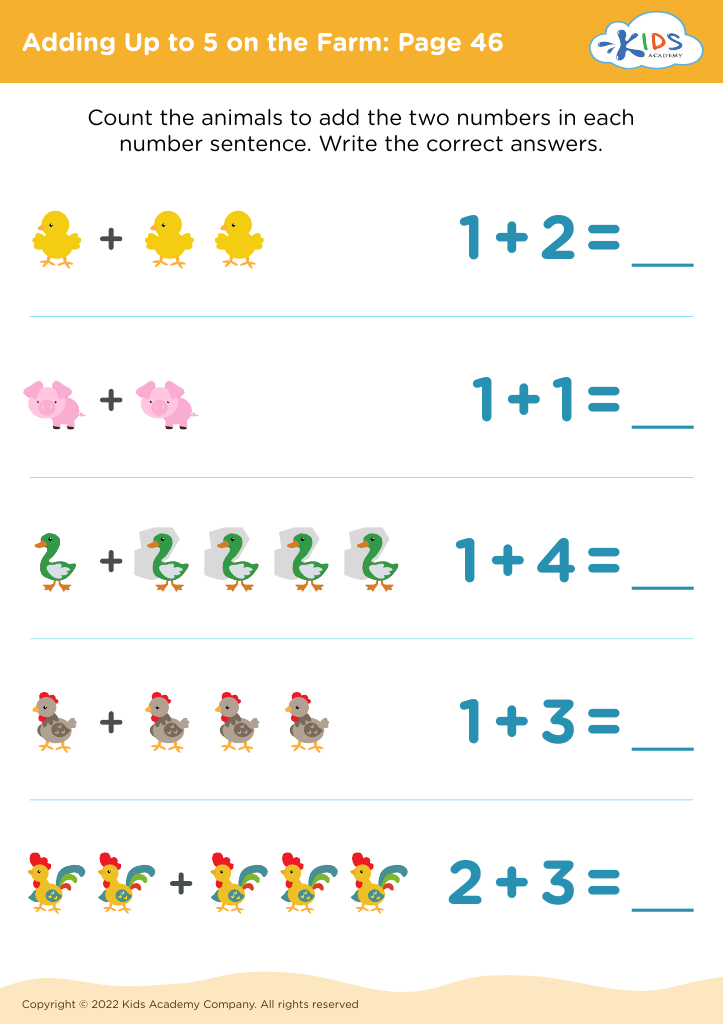
Adding Up to 5 on the Farm: Page 46
Worksheet
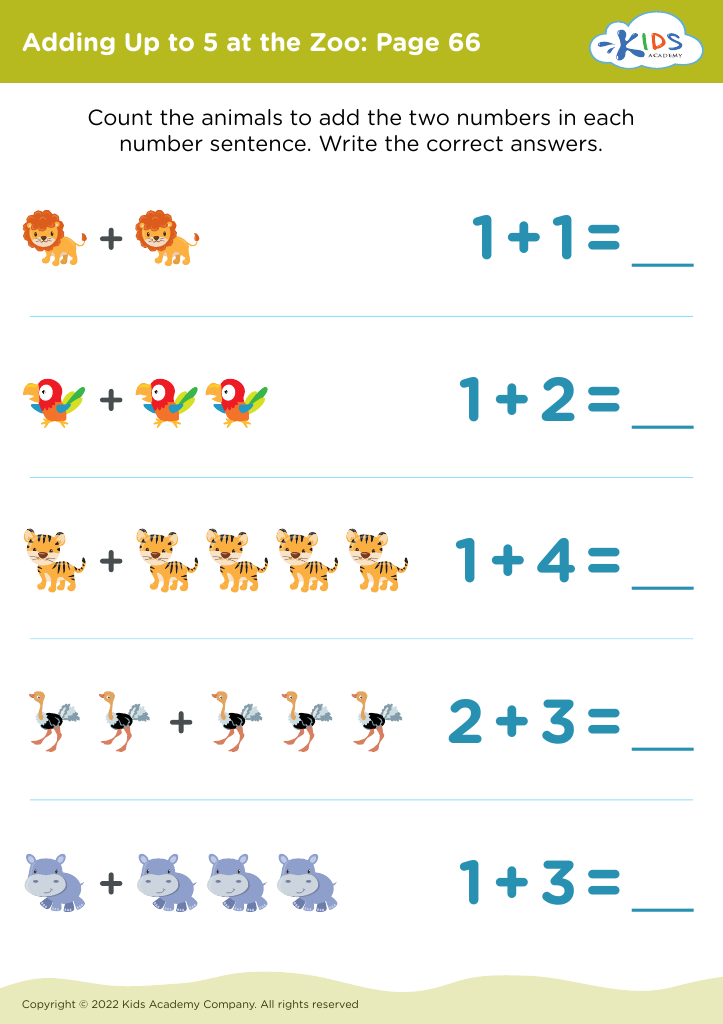
Adding Up to 5 at the Zoo: Page 66
Worksheet
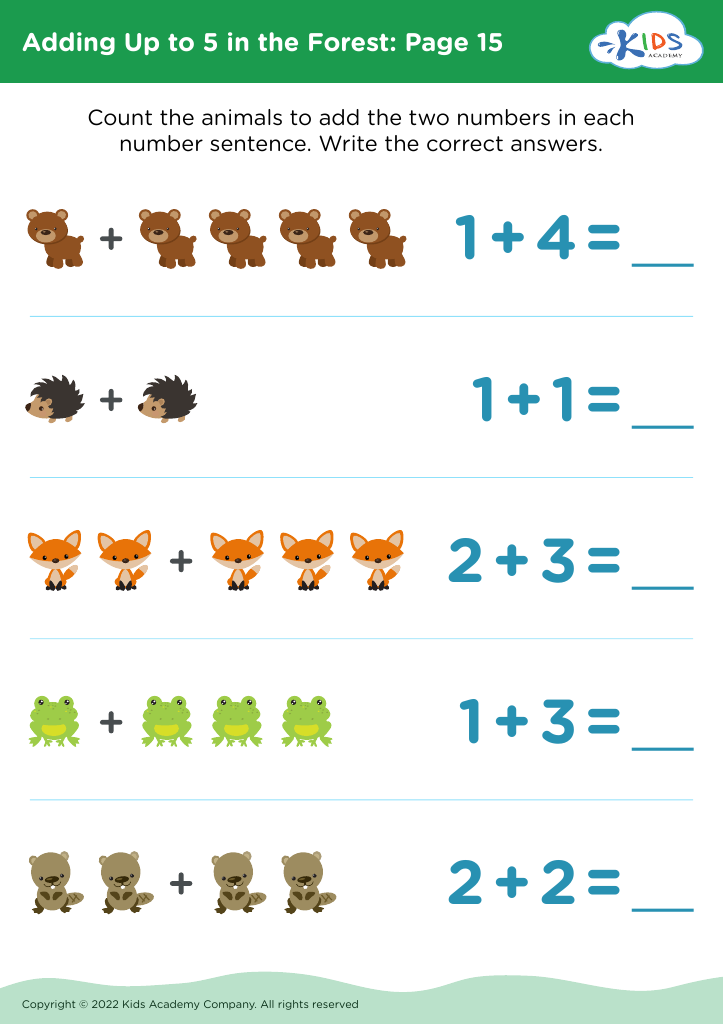
Adding Up to 5 in the Forest: Page 15
Worksheet
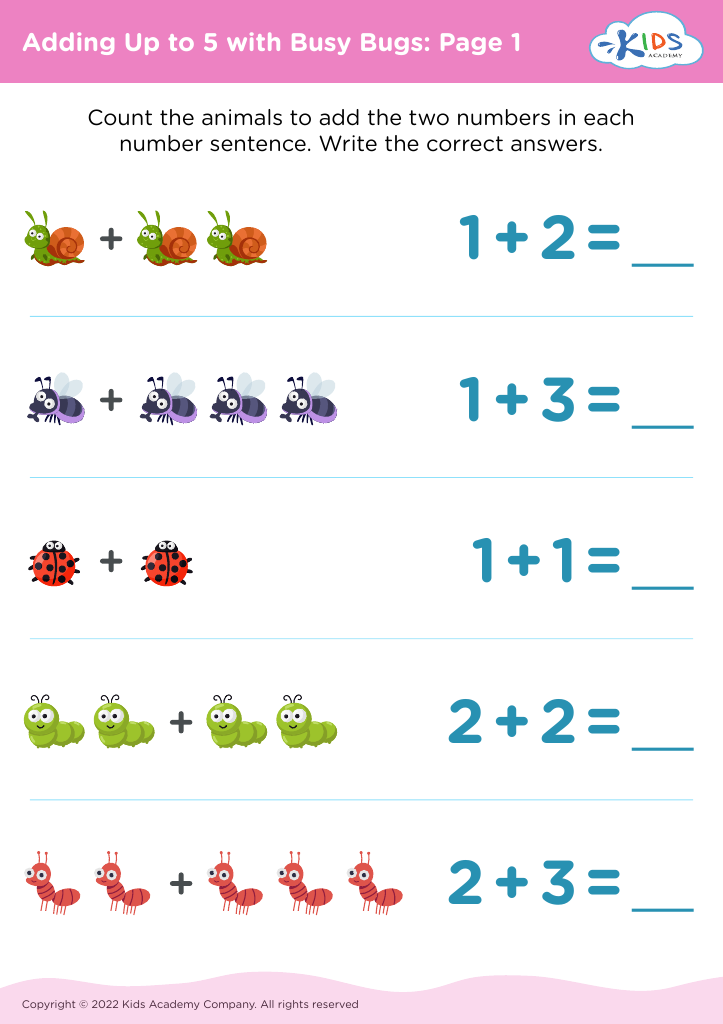
Adding Up to 5 with Busy Bugs: Page 1
Worksheet
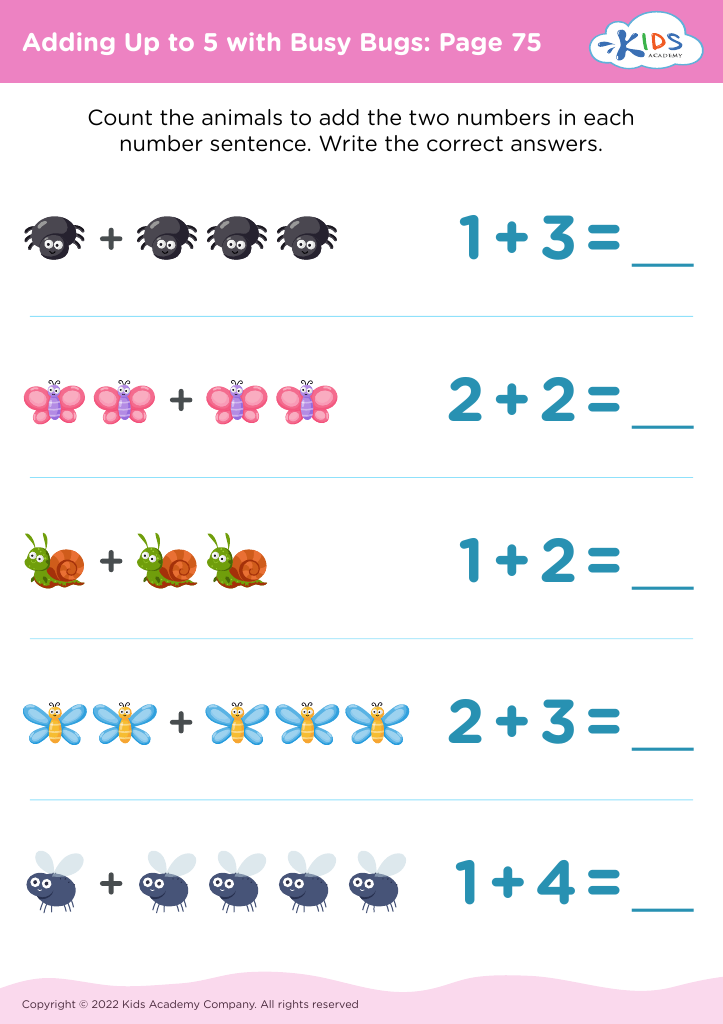
Adding Up to 5 with Busy Bugs: Page 75
Worksheet
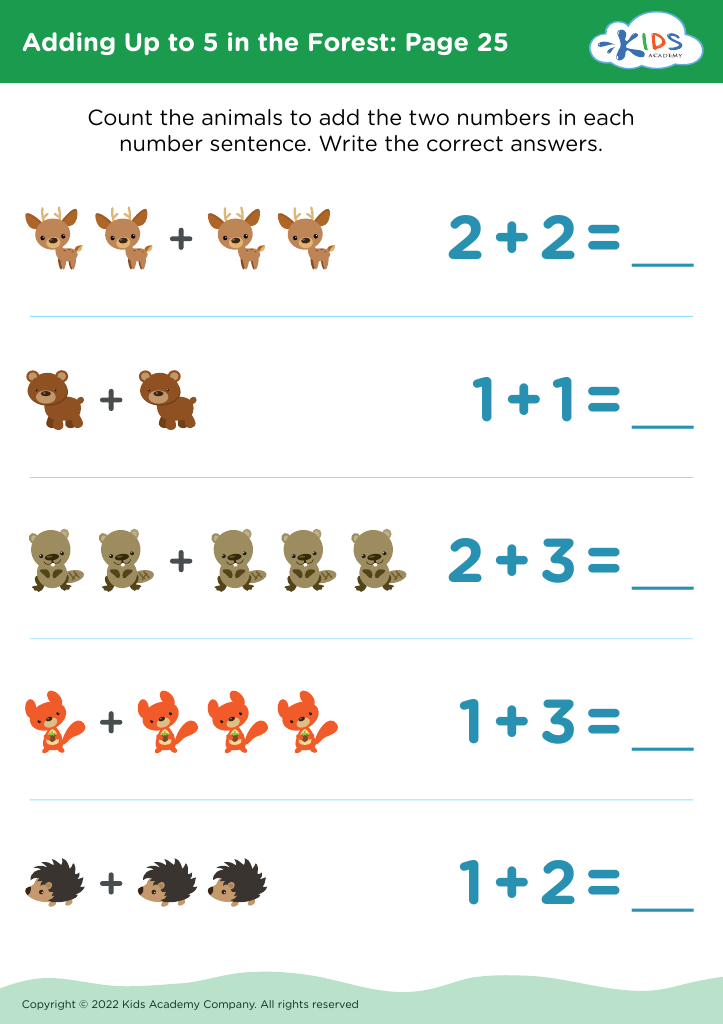
Adding Up to 5 in the Forest: Page 25
Worksheet
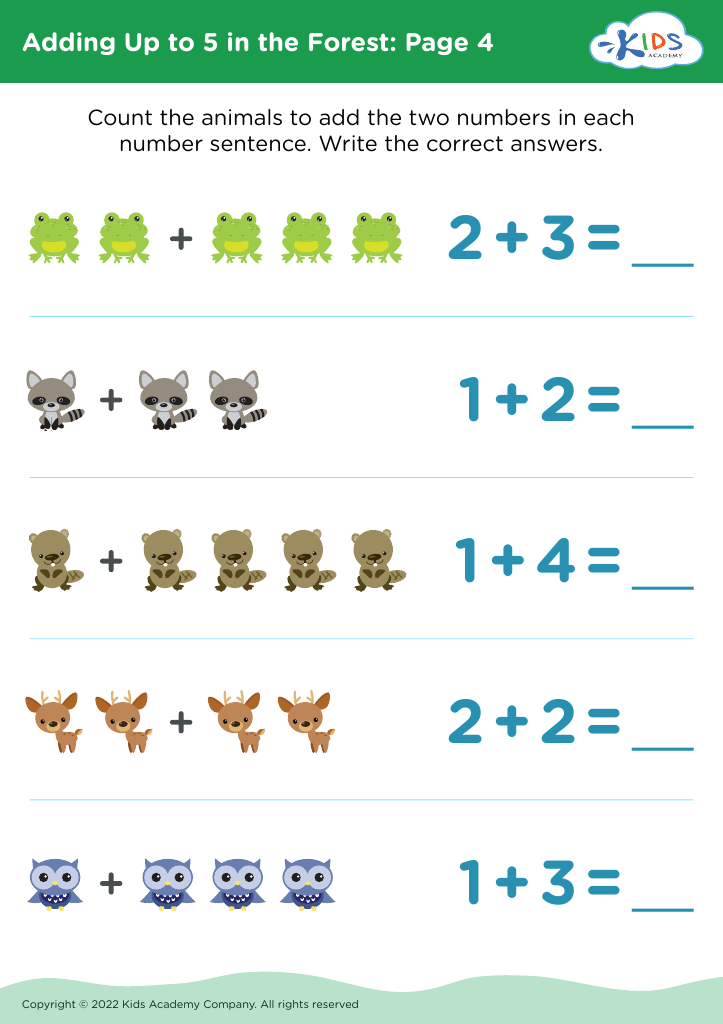
Adding Up to 5 in the Forest: Page 4
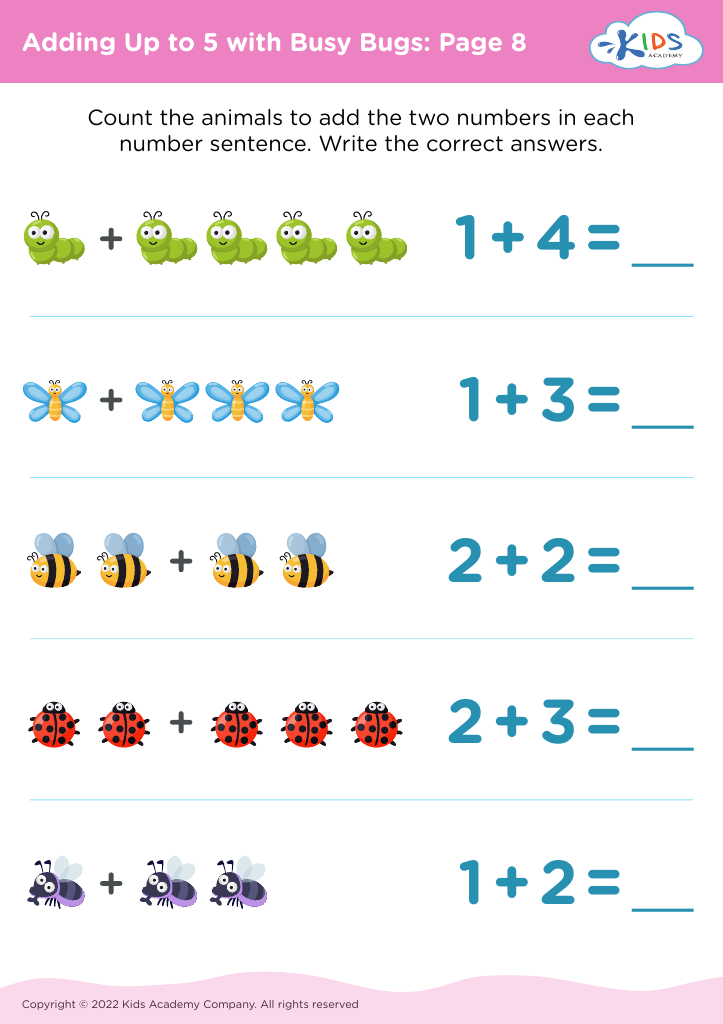
Worksheet
Adding Up to 5 with Busy Bugs: Page 8
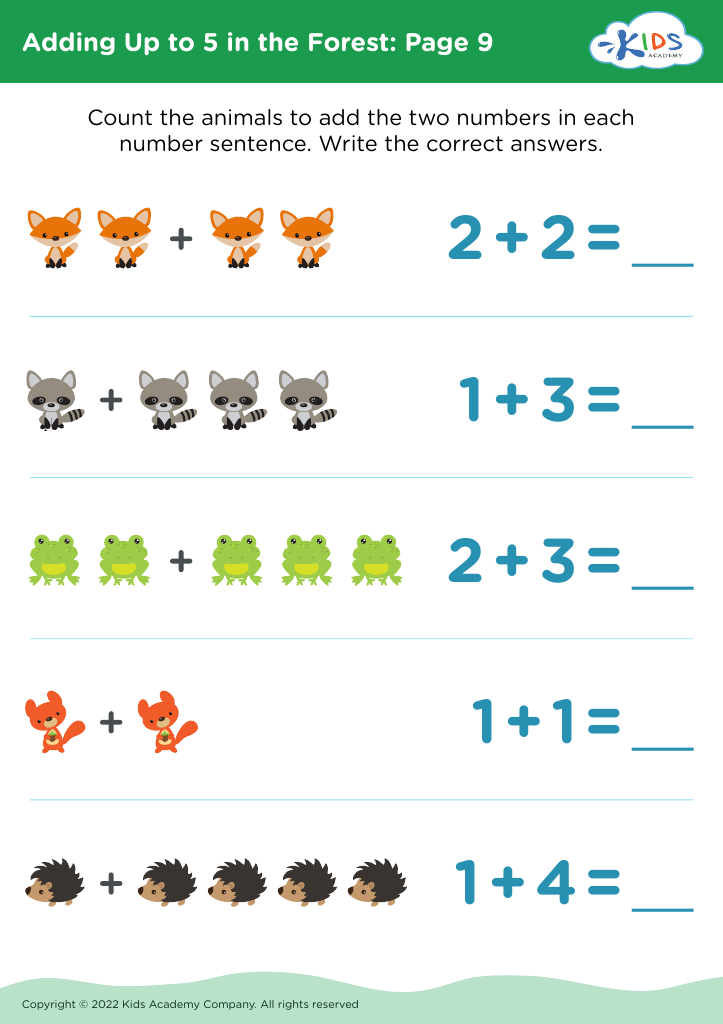
Worksheet
Adding Up to 5 in the Forest: Page 9
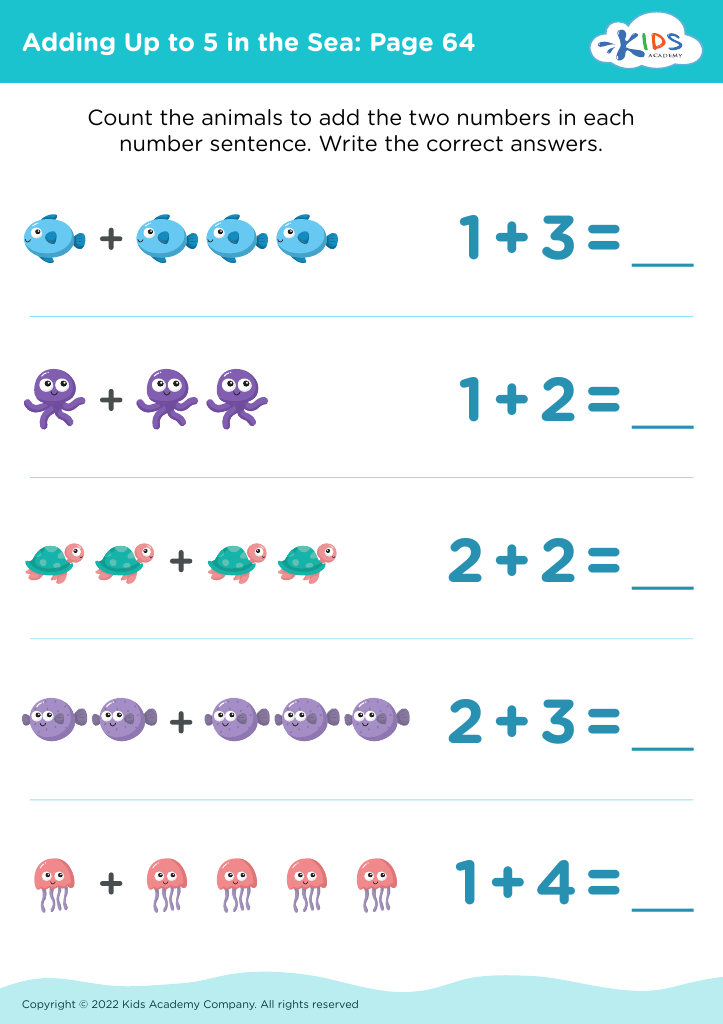
Worksheet
Adding Up to 5 in the Sea: Page 64
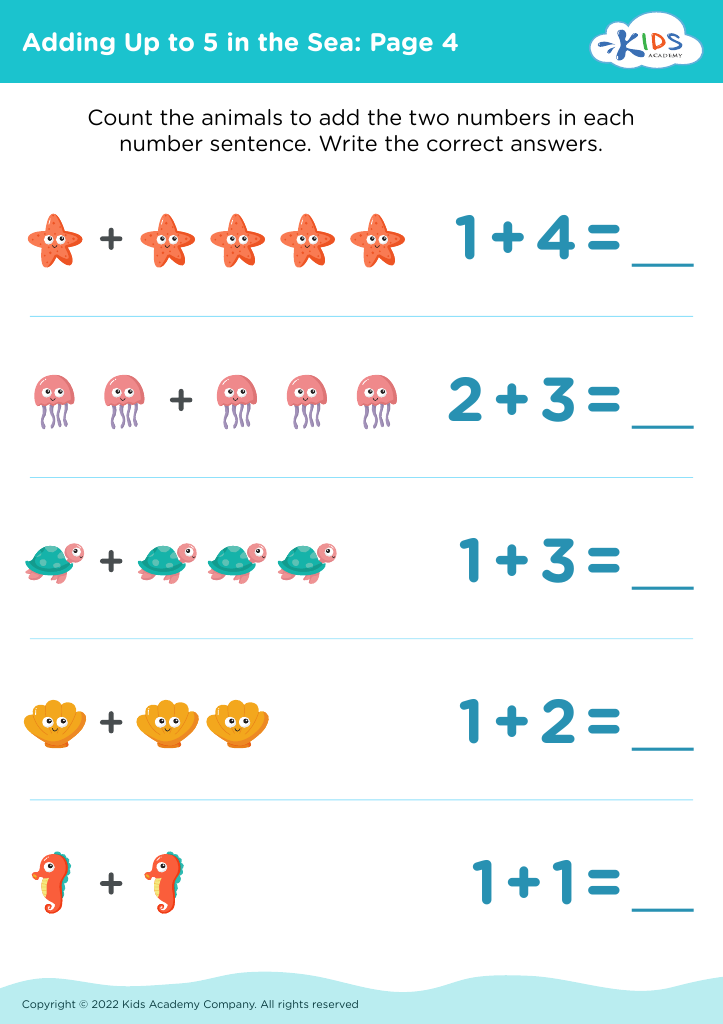
Worksheet
Adding Up to 5 in the Sea: Page 4

Adding Up to 5 in the Sea: Page 4

Adding Up to 5 in the Sea: Page 4
Worksheet


Addition skills, particularly adding up to 5, are foundational for early learners aged 4-6. Mastery of these skills lays the groundwork for more complex mathematical concepts, helping children develop confidence and a positive attitude toward math. Understanding small numbers enhances critical thinking and problem-solving abilities, as youngsters learn to recognize and manipulate quantities in their environment.

When parents and teachers foster addition skills at this stage, they cultivate a child's numerical fluency, which can significantly influence academic success in later grades. Children who grasp basic addition are better equipped to tackle lessons involving larger numbers, operations, and even real-world scenarios like counting money or measuring ingredients in cooking.

Moreover, activities involving simple addition can engage children in playful learning, making the process enjoyable and stimulating. Incorporating games and hands-on activities not only enhances mathematical skills but also strengthens parent-child or teacher-student relationships, making learning a shared journey. Finally, early addition skills encourage a growth mindset, demonstrating to children that with practice and patience, they can improve and overcome challenges. This early investment in addition skills ultimately equips children with the tools they need for lifelong learning and success in math and other subjects.