Basic Addition Skills Adding Up to 5 Worksheets for Ages 4-6 - Page 2
244 filtered results
-
From - To



%20(1).jpg)
.jpg)



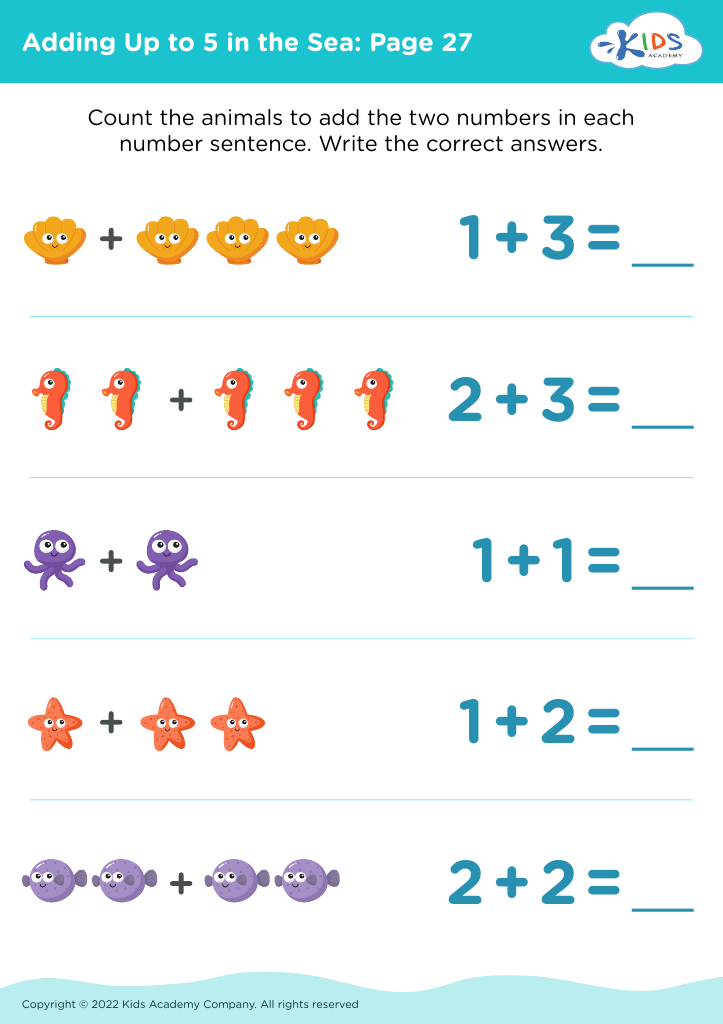
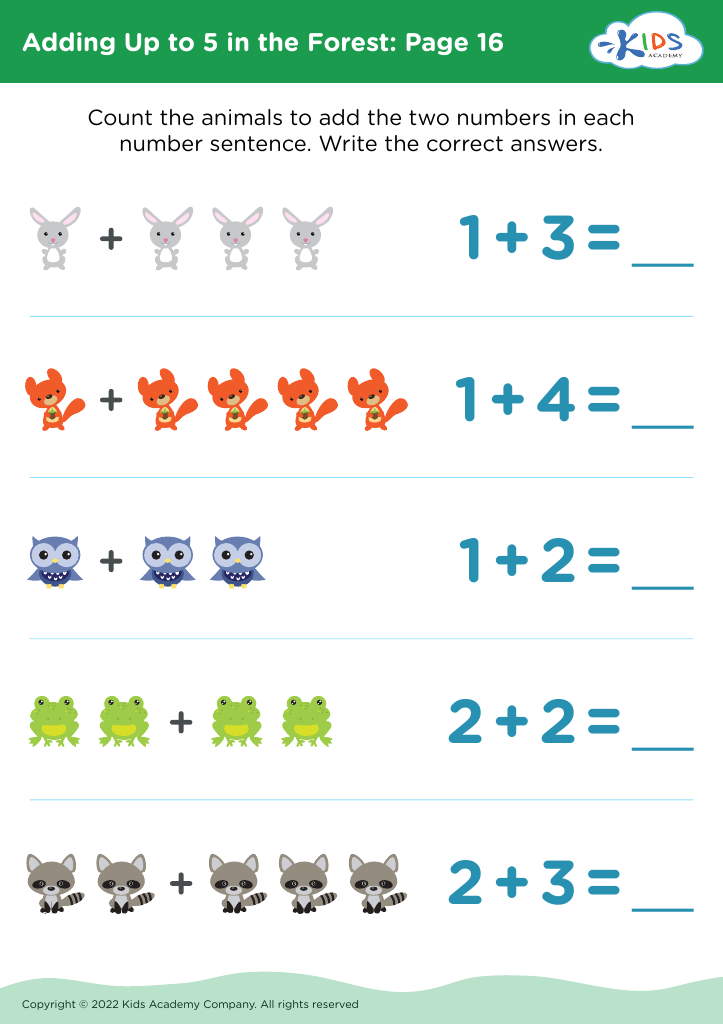
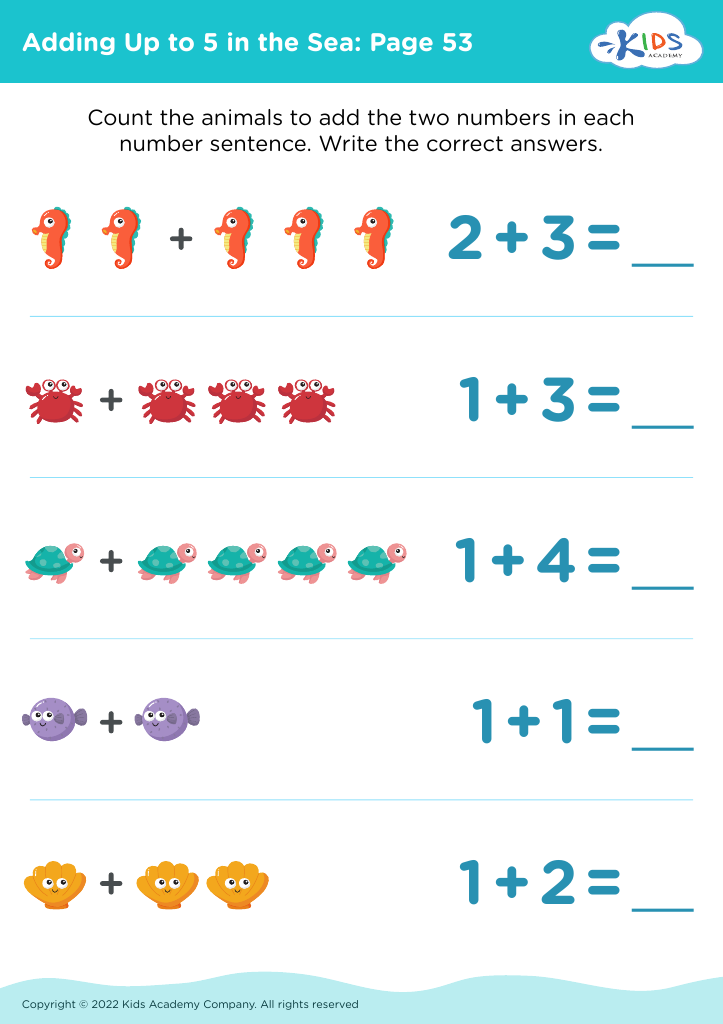
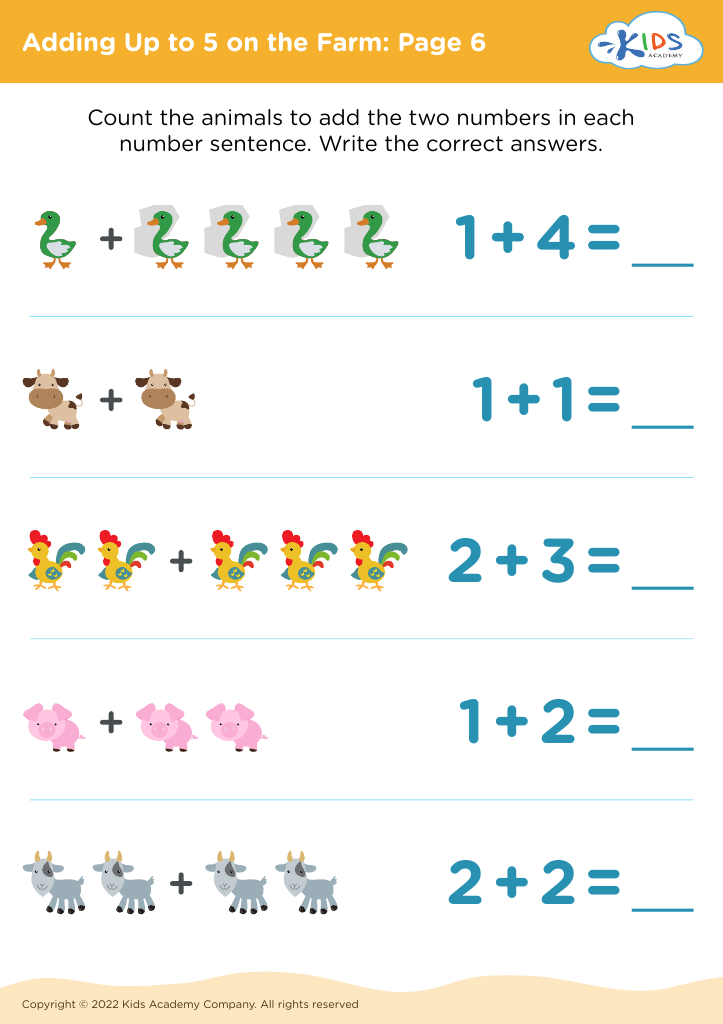
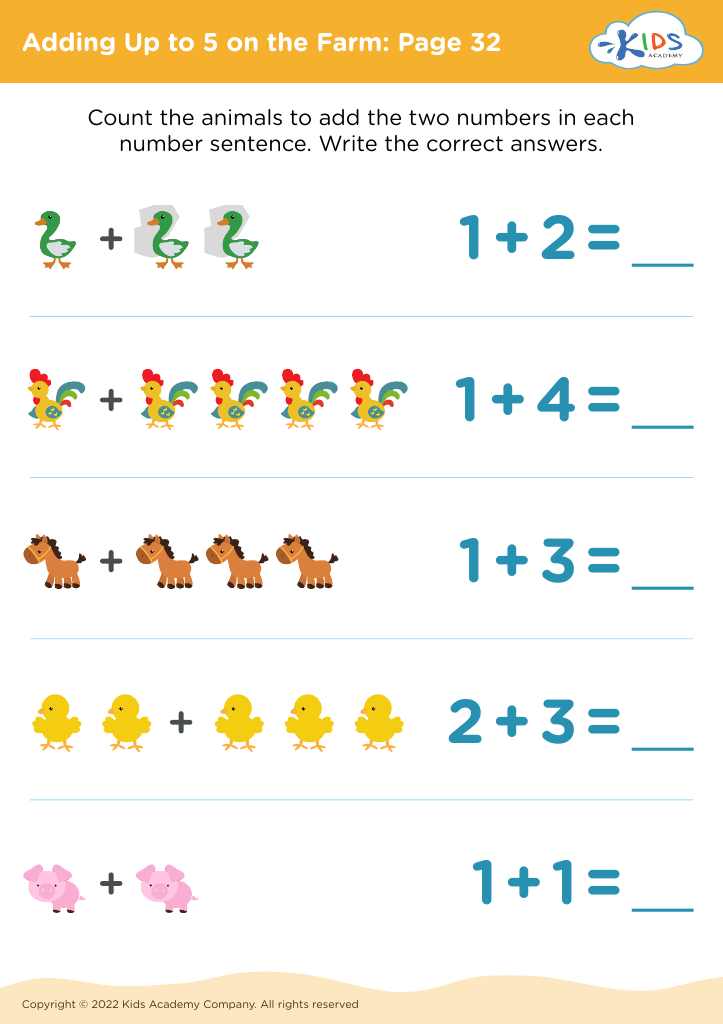
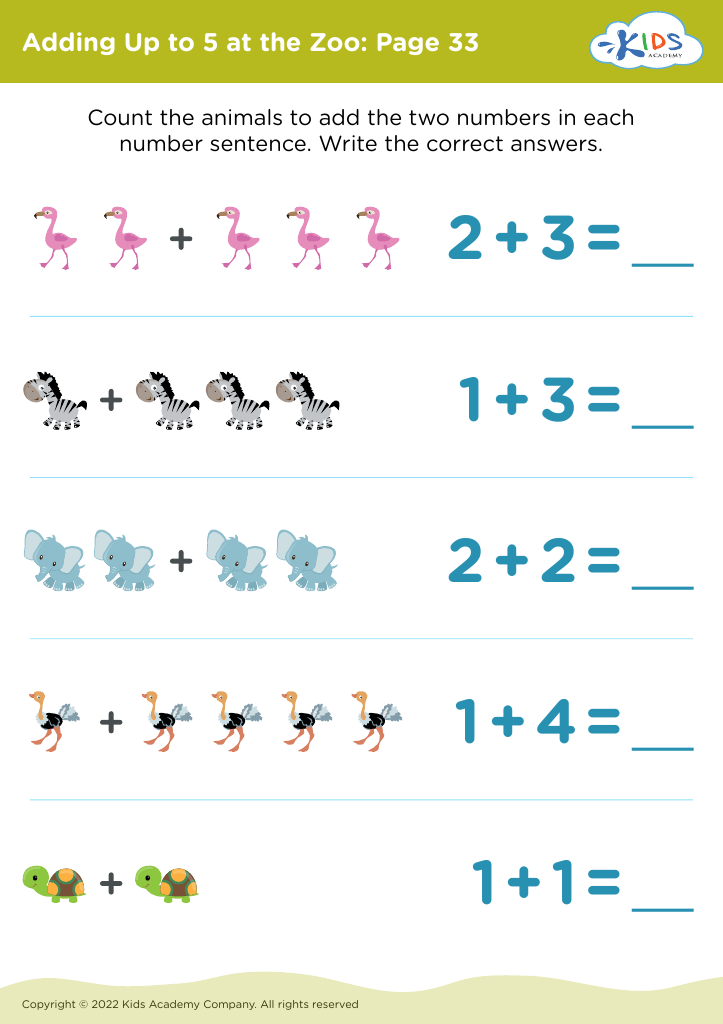
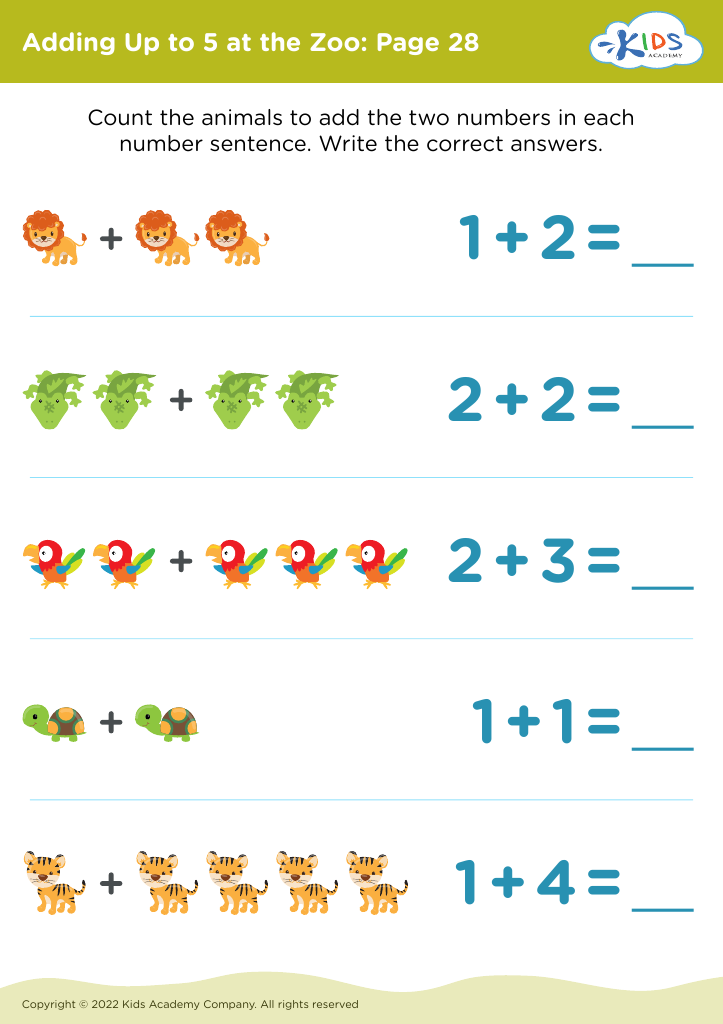
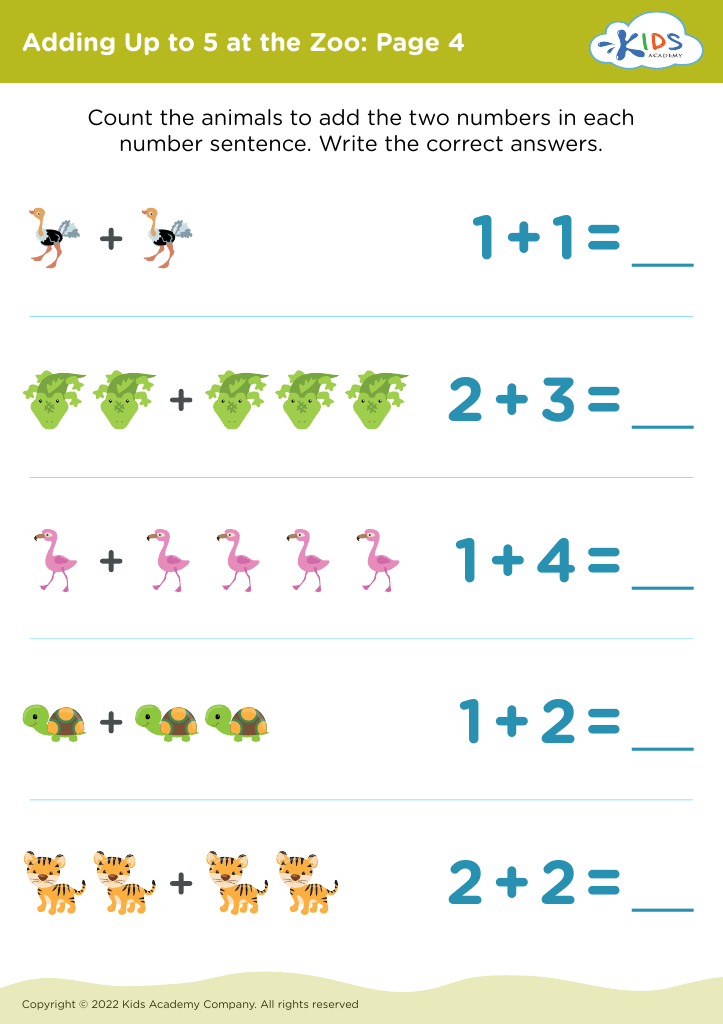
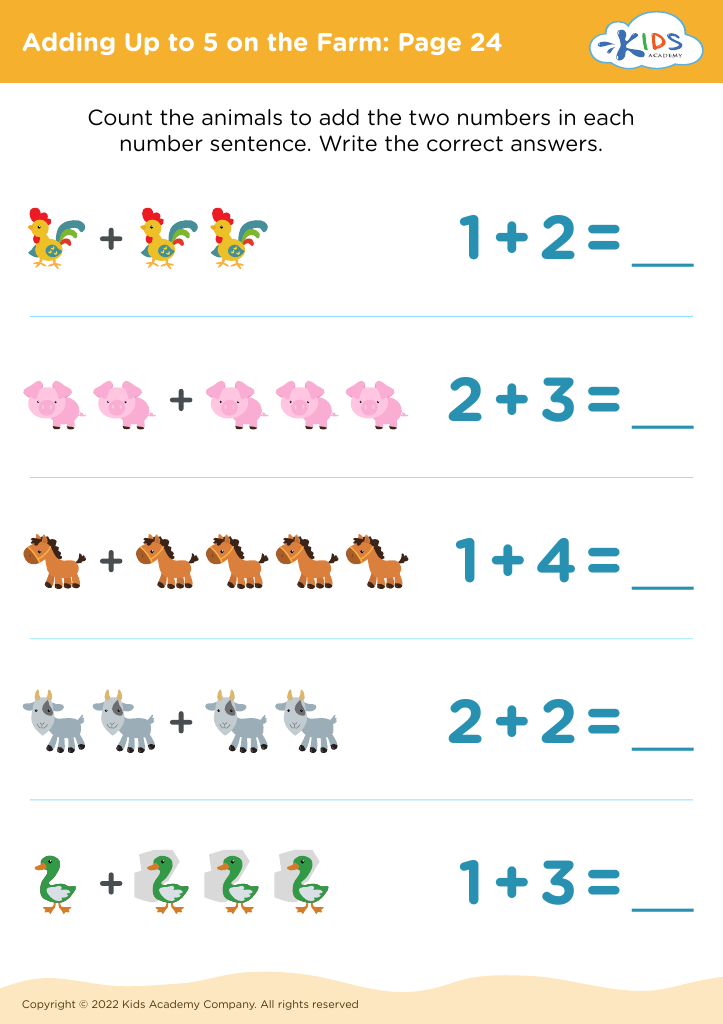
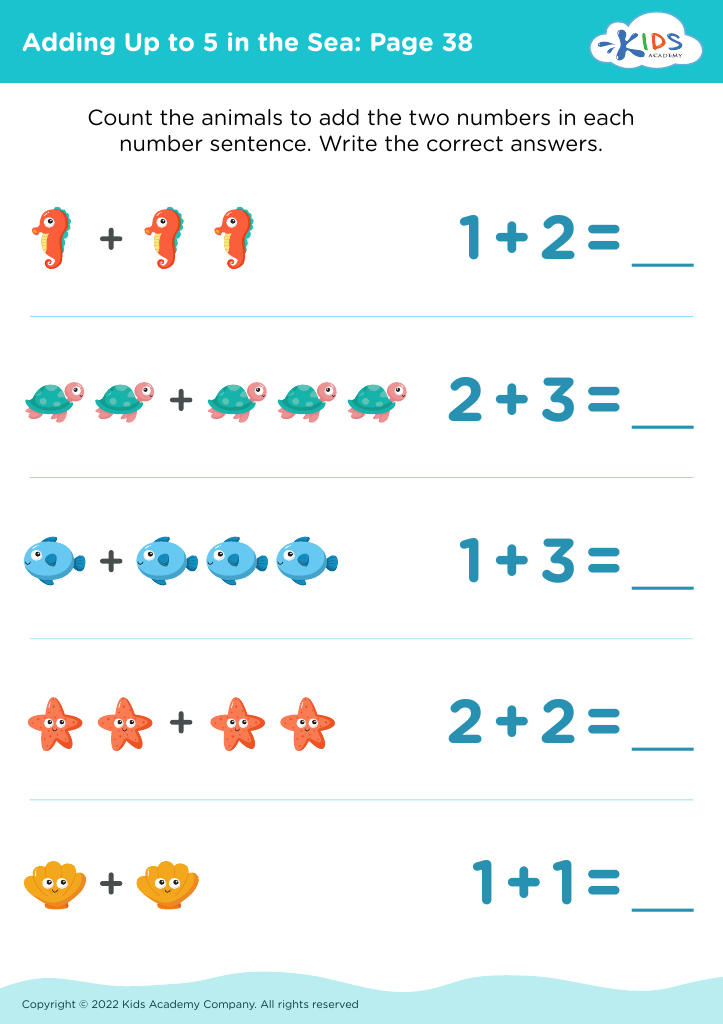
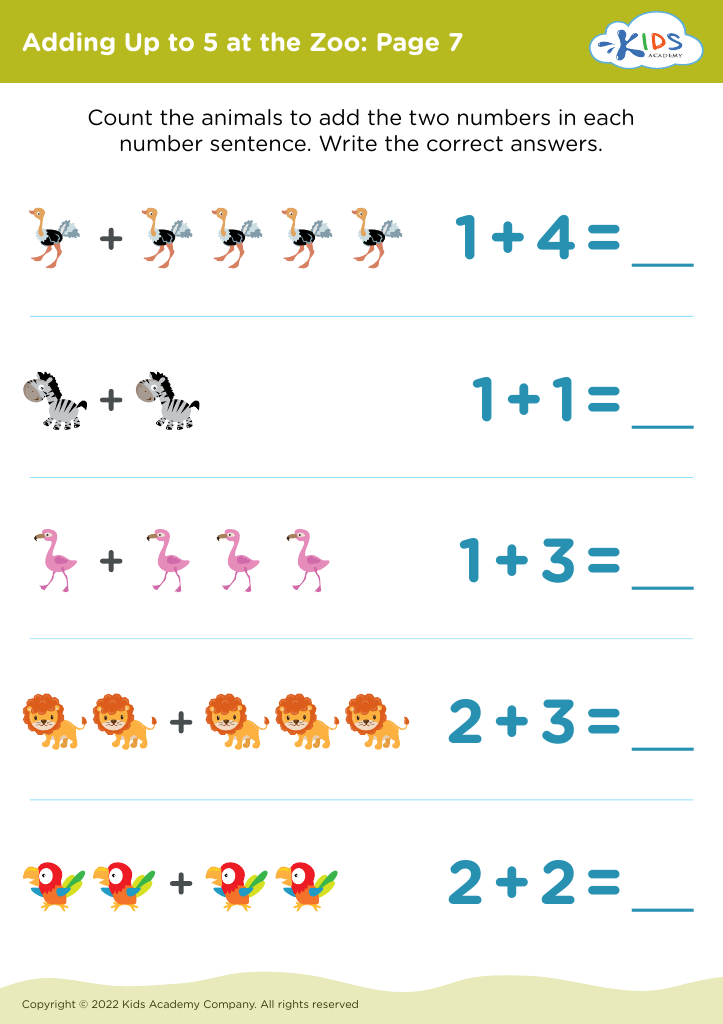
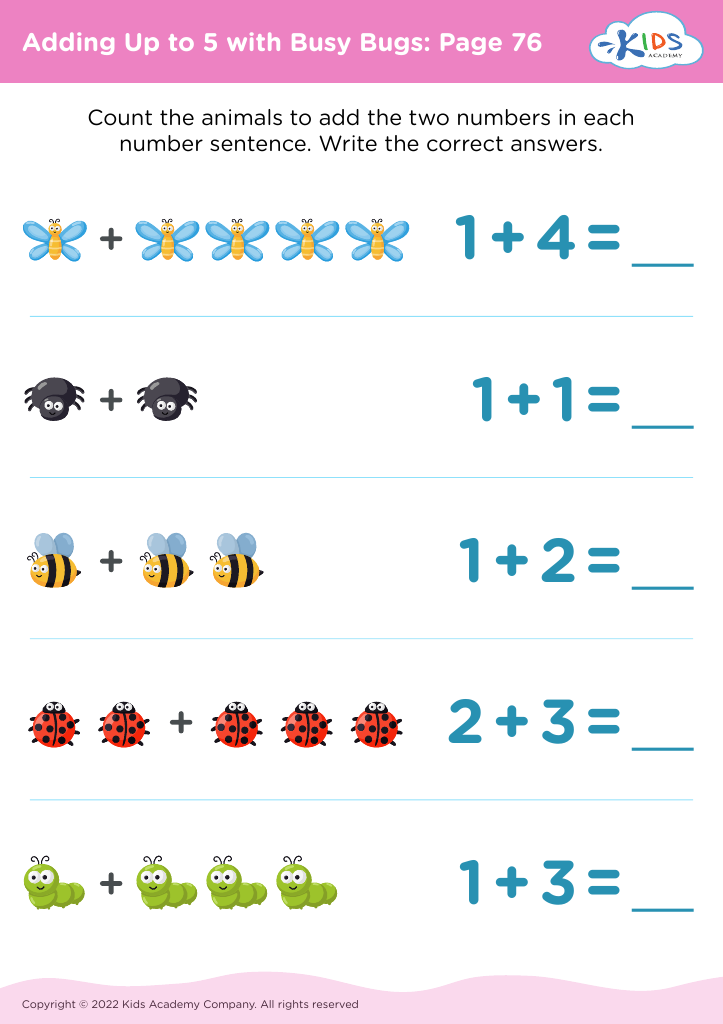
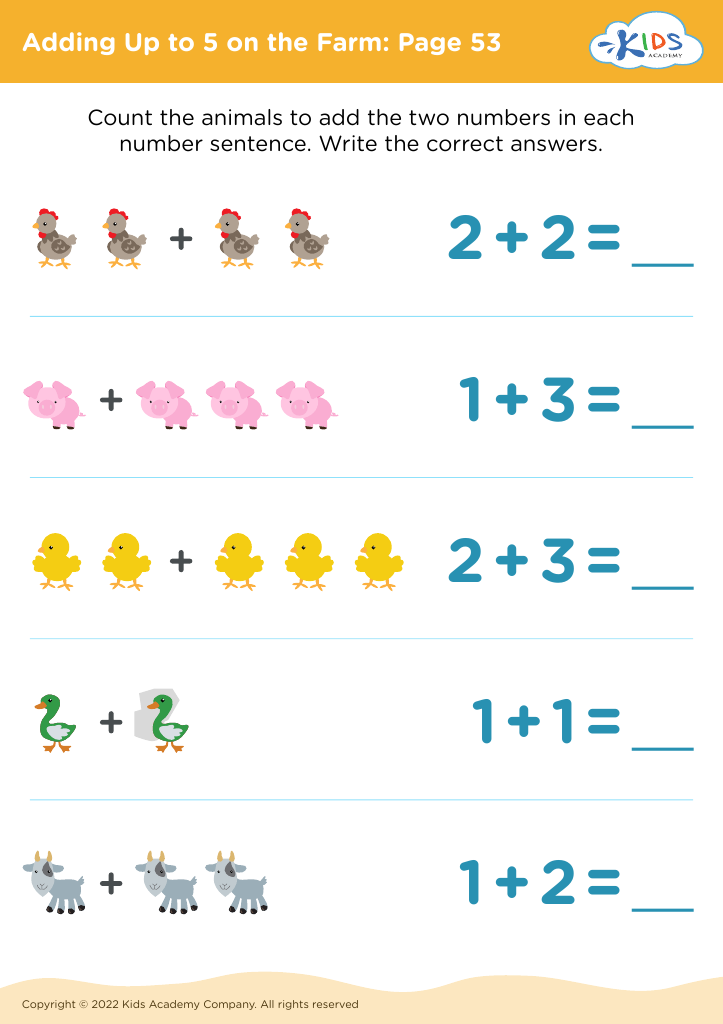
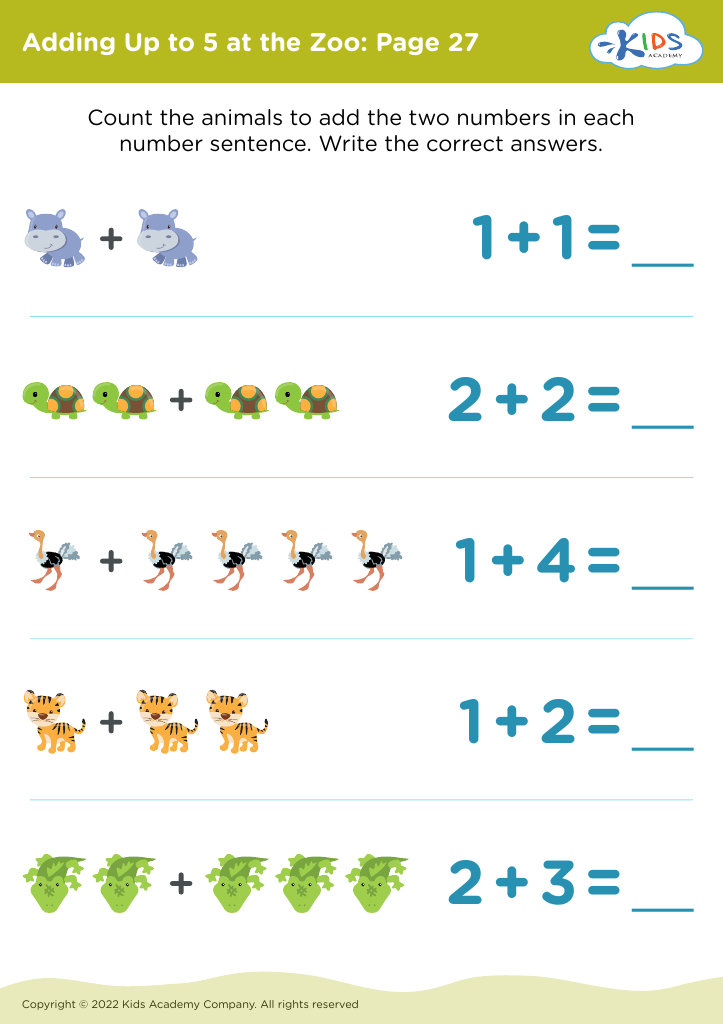
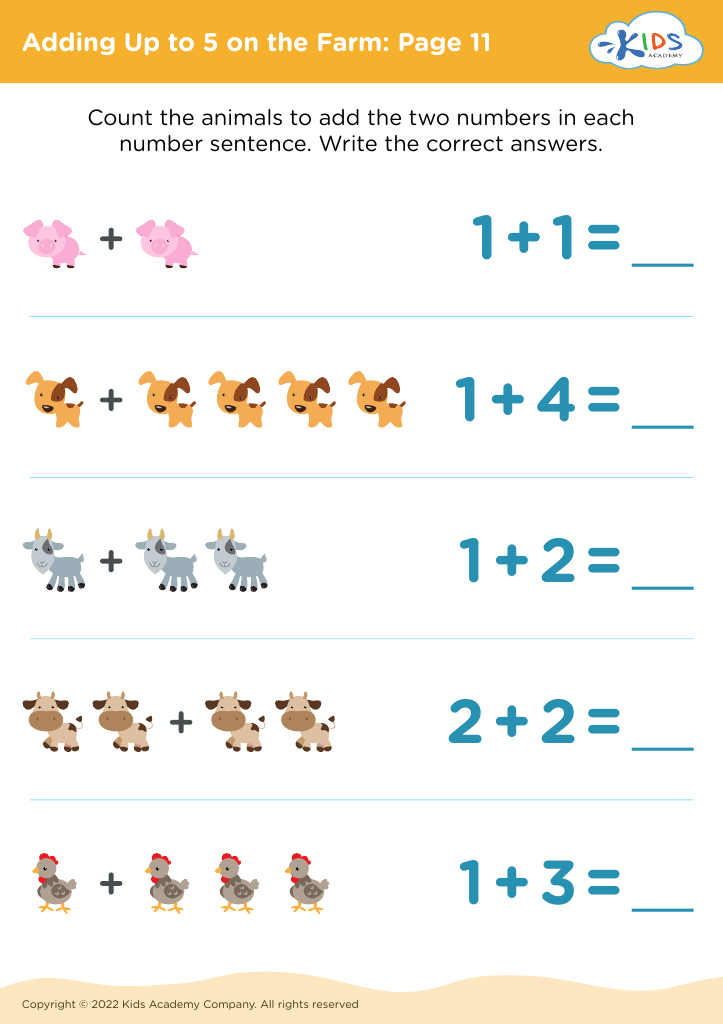
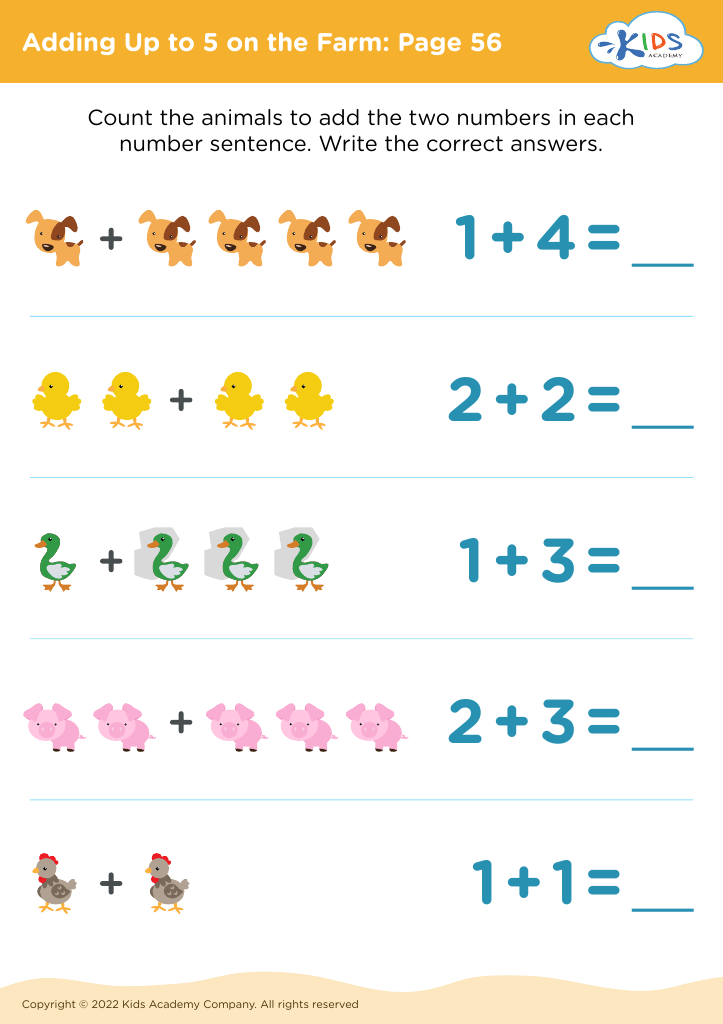
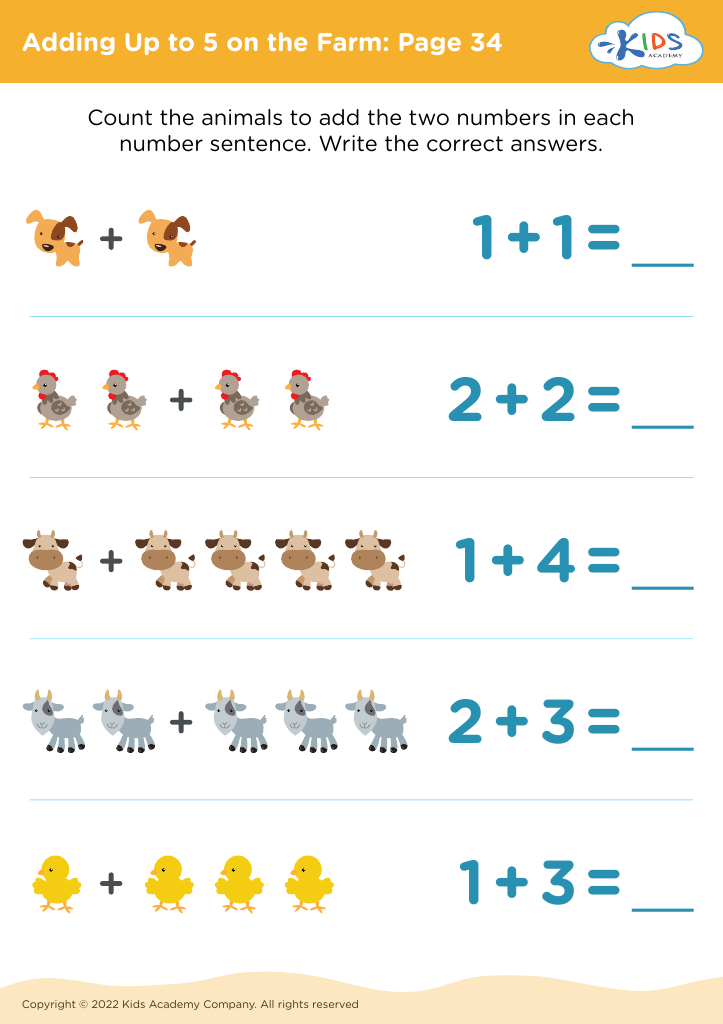
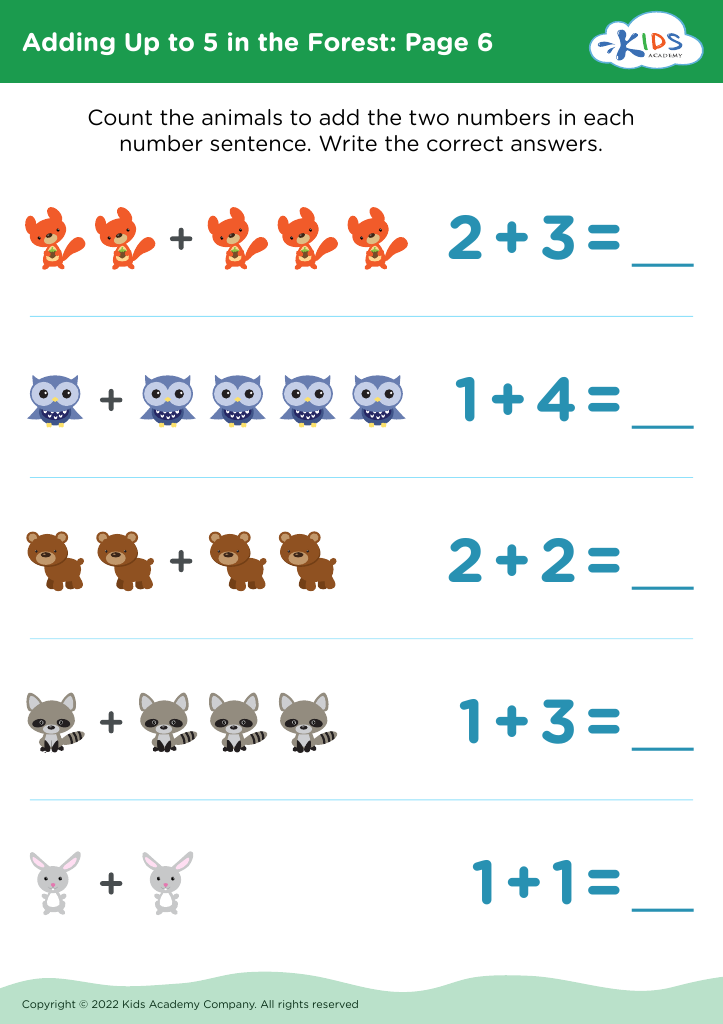
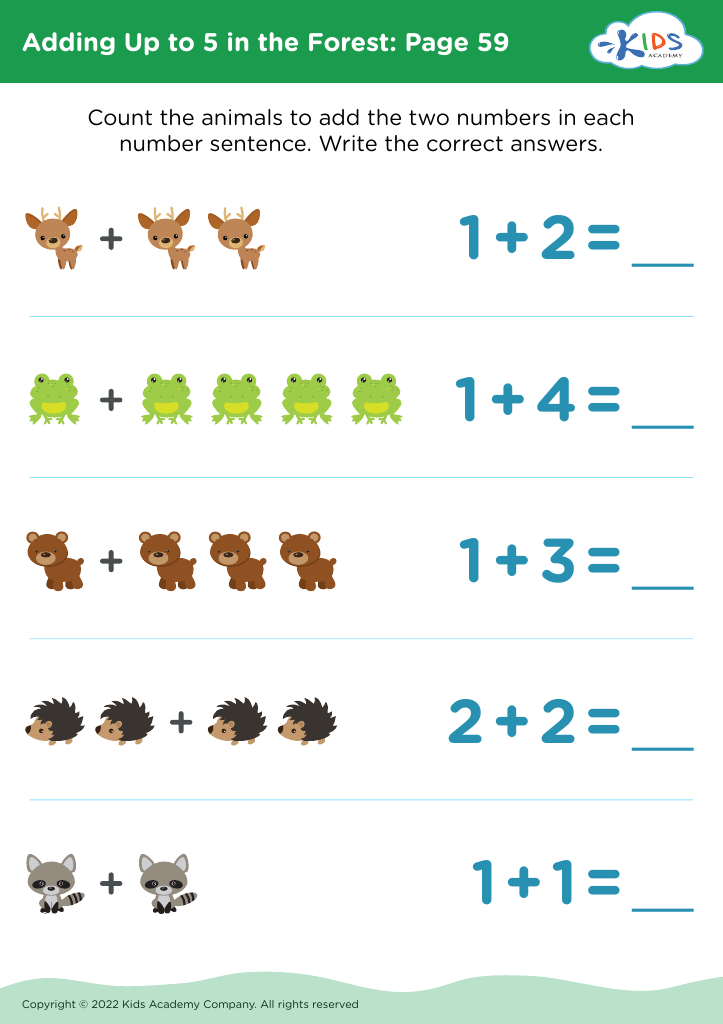
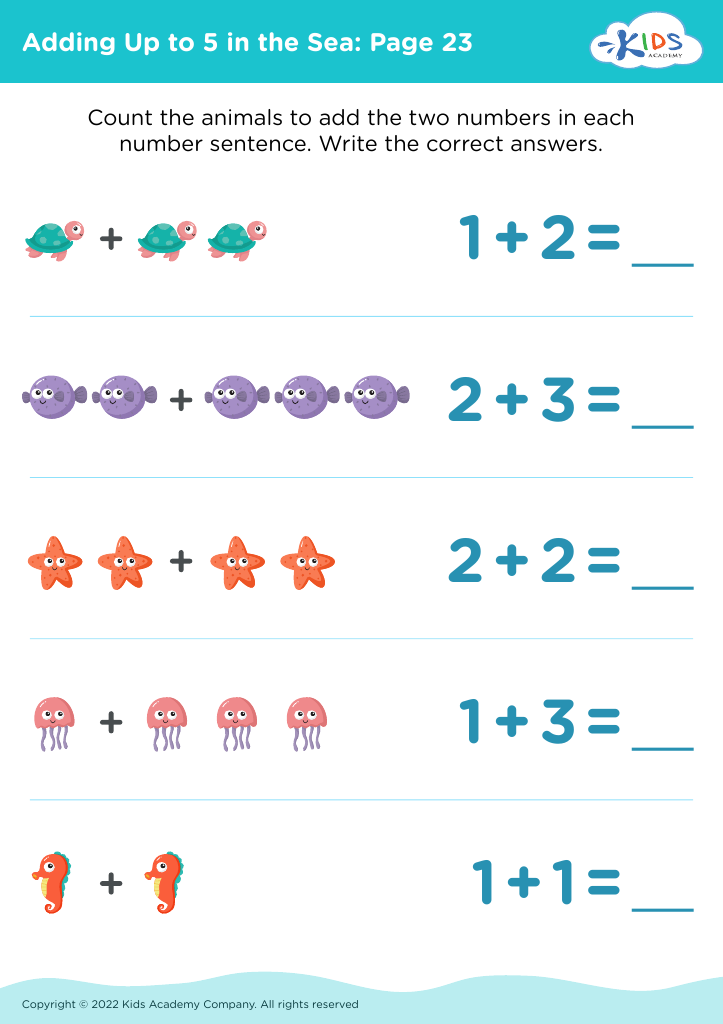
Basic addition skills, especially adding up to 5, are fundamental building blocks in early childhood education for ages 4-6. Parents and teachers should prioritize these skills because they lay the groundwork for future mathematical learning and cognitive development. Mastering simple addition helps young children understand number concepts, recognize patterns, and develop problem-solving abilities.
At this age, children are developing fine motor skills, attention spans, and the ability to follow instructions. Introducing basic addition in a fun and engaging way, such as through games, songs, or manipulatives like counting blocks, makes learning enjoyable and nurtures a positive attitude toward math.
Feeling confident in their ability to perform basic math operations boosts children’s self-esteem and encourages them to tackle more complex tasks with enthusiasm. Additionally, early proficiency in addition supports other academic areas, such as reading rhythms in language and understanding time in daily routines.
Moreover, collaboration between parents and teachers in reinforcing these foundational skills at home and in the classroom ensures consistency and a comprehensive learning environment. By caring about and actively supporting basic addition skills, adults can significantly influence children’s academic success and lifelong love of learning.








