Basic Arithmetic Adding Up to 5 Worksheets for Ages 4-6 - Page 2
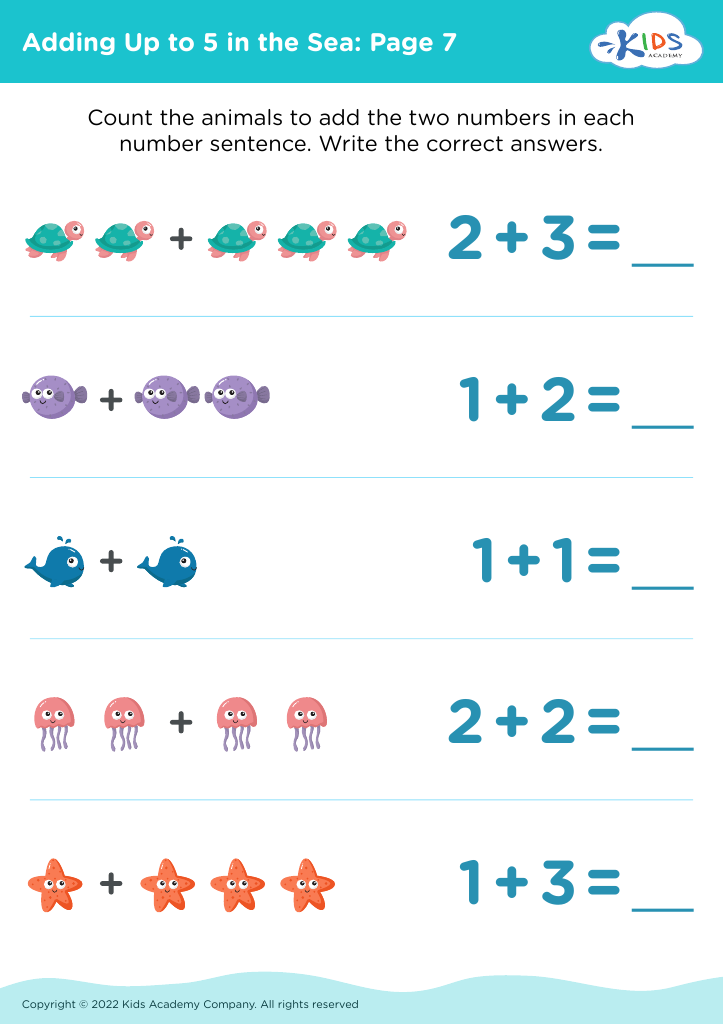
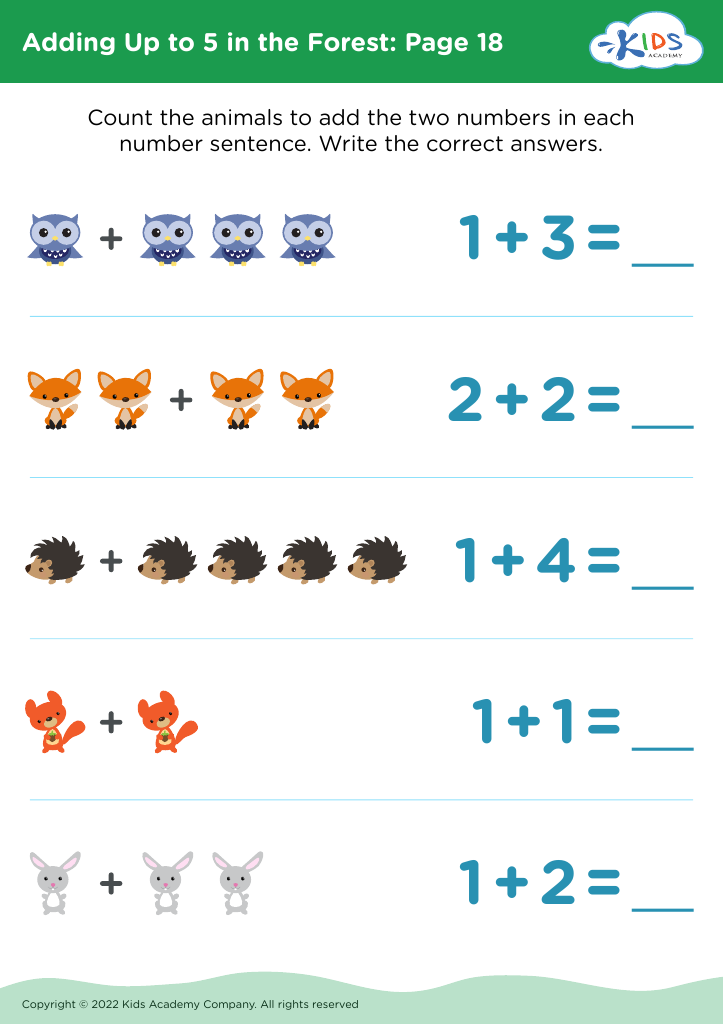
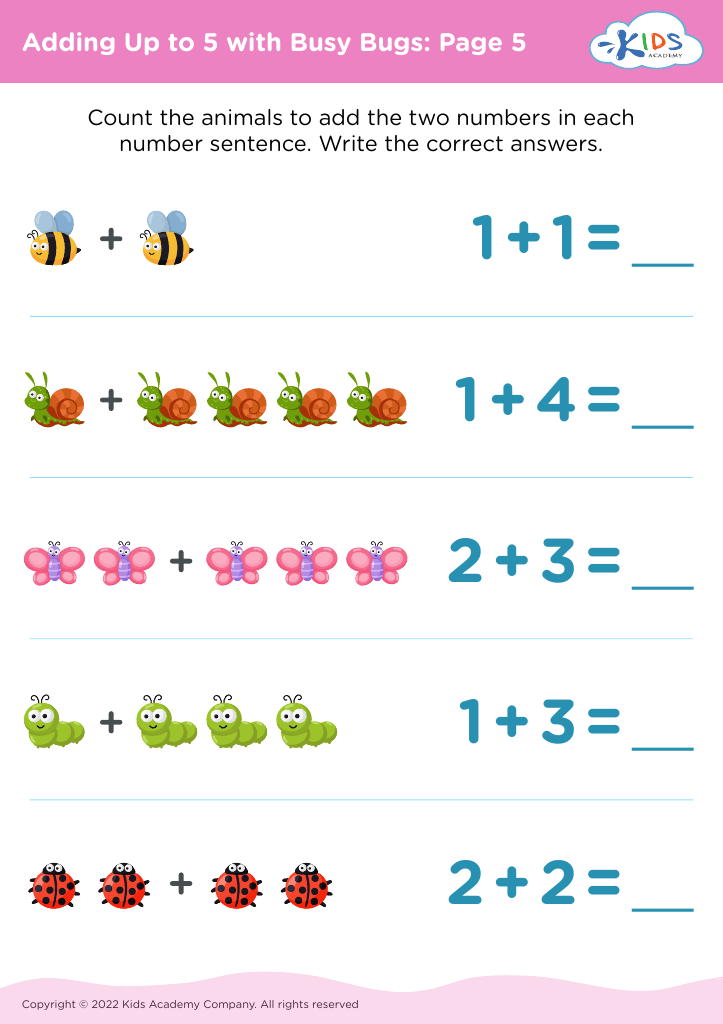
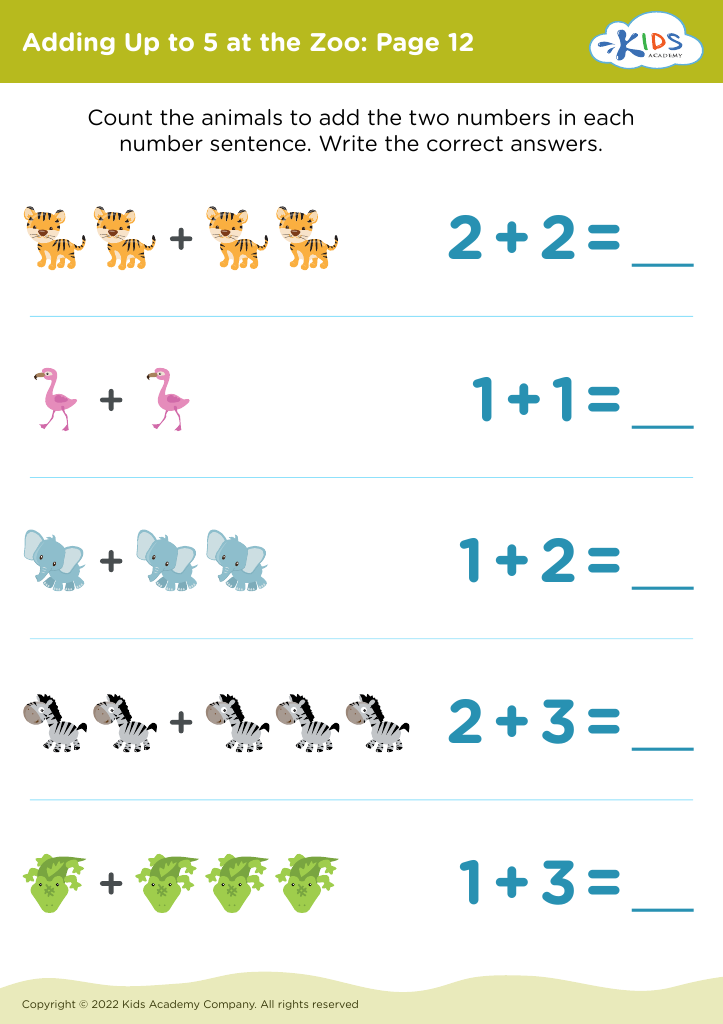
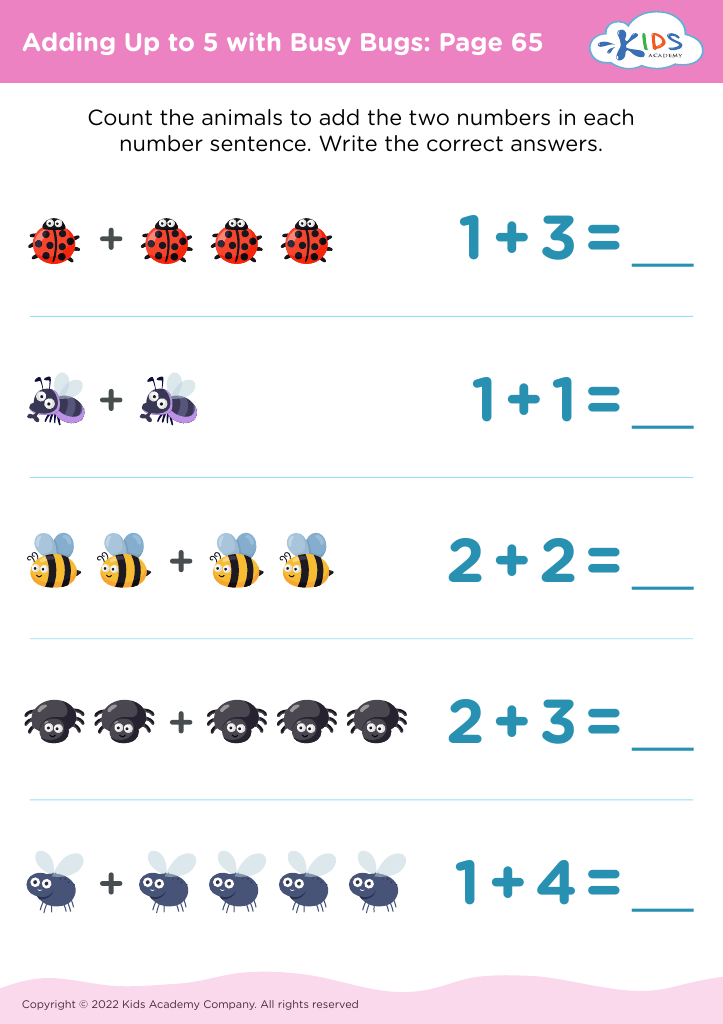
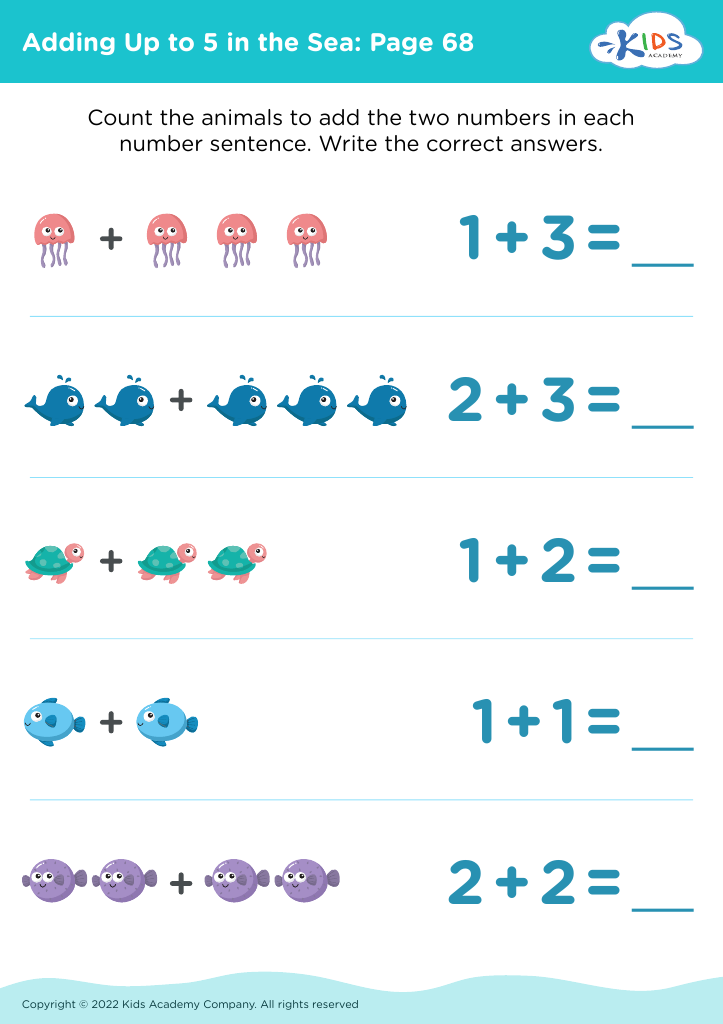
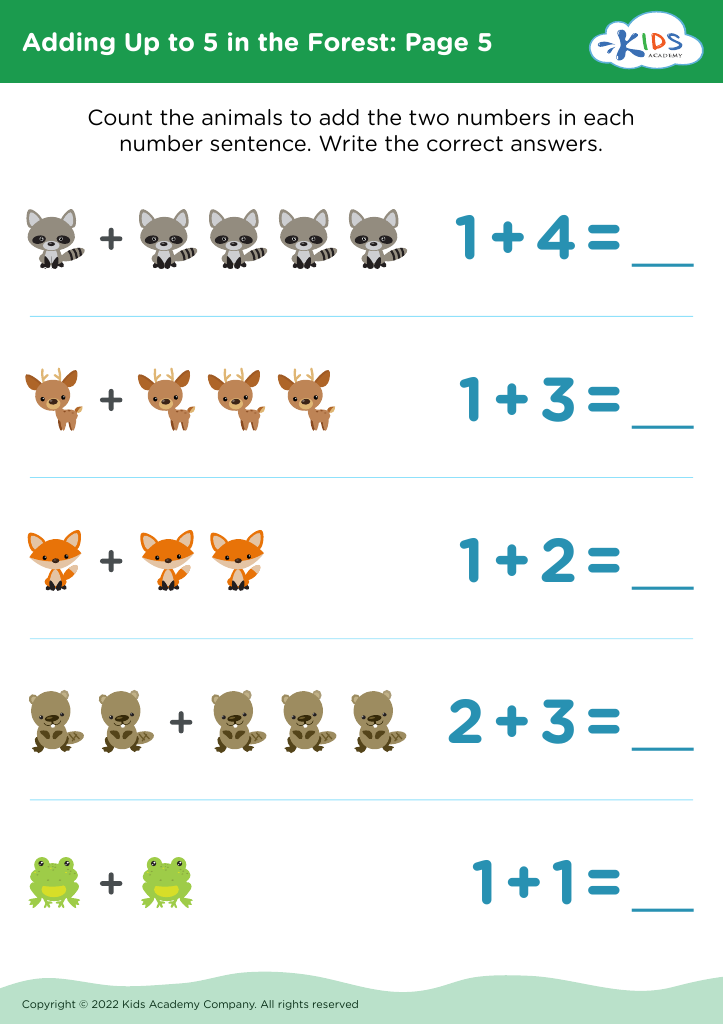
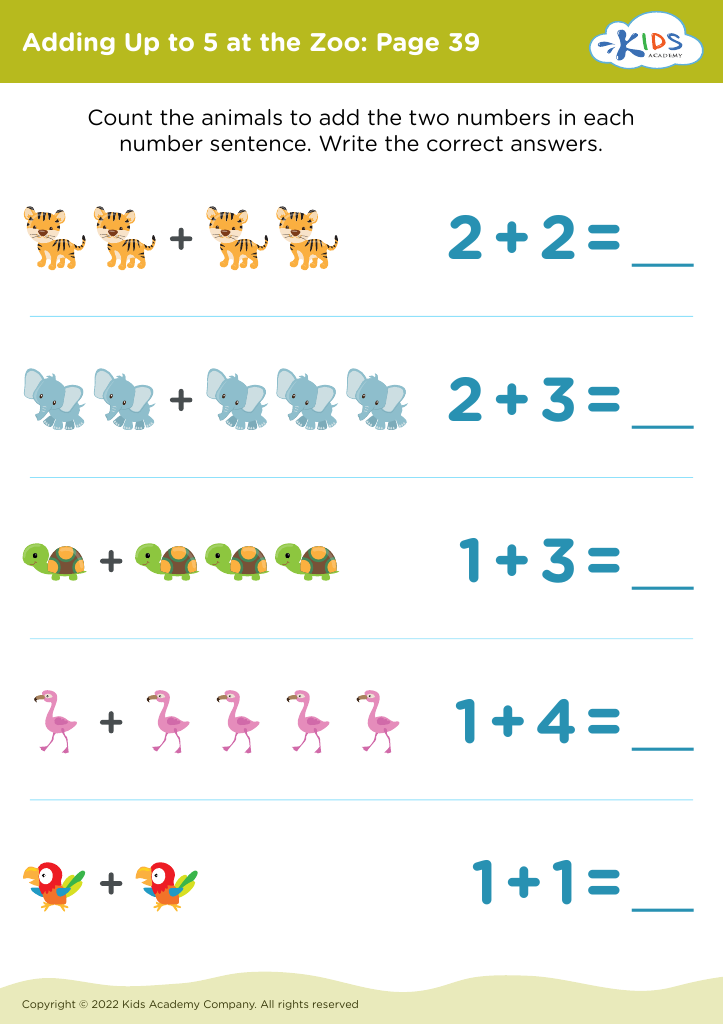
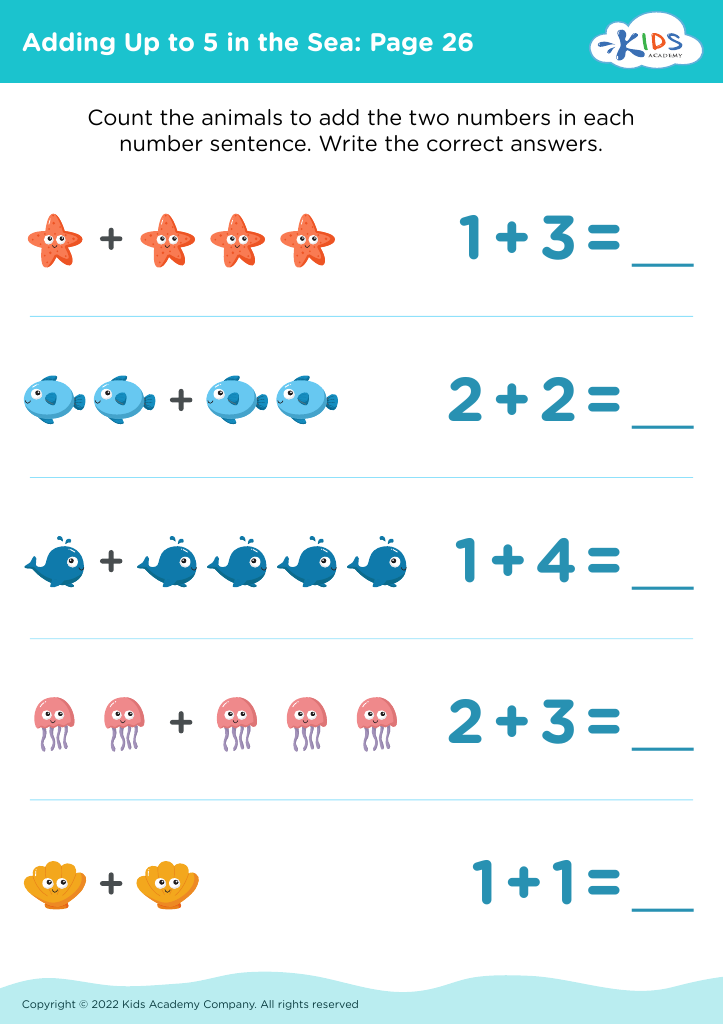
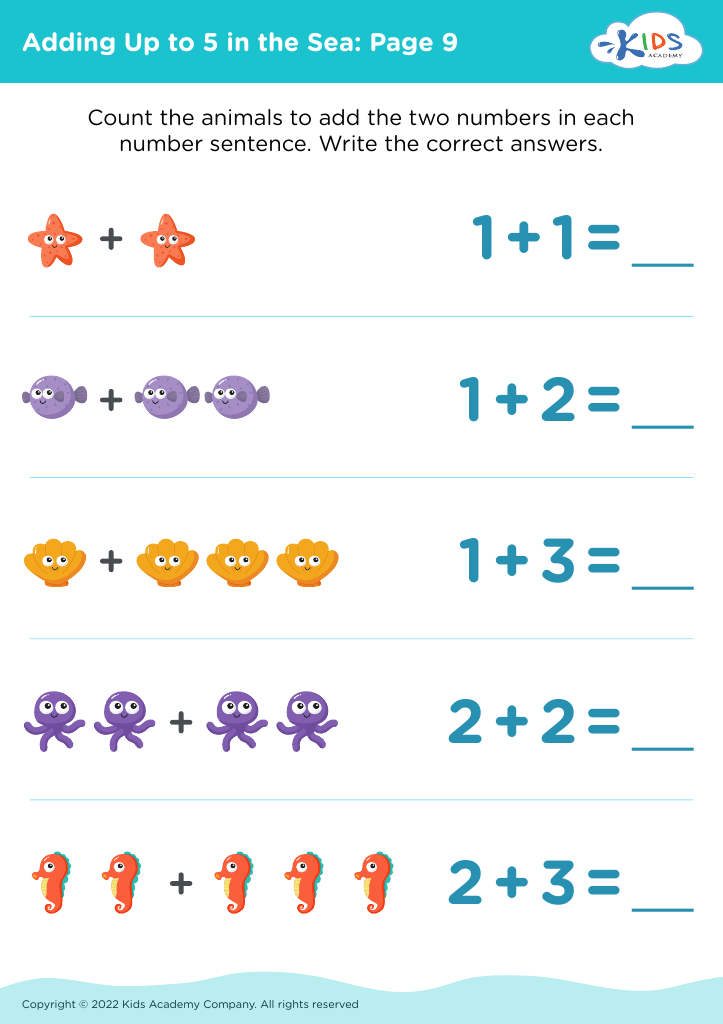





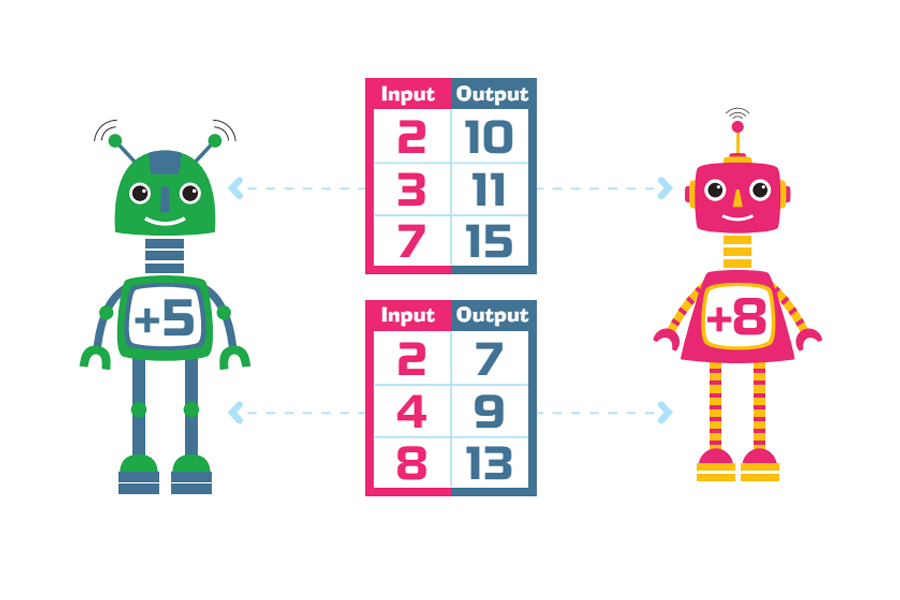


Basic arithmetic, especially adding up to 5, is a critical foundational skill for children ages 4-6. During these formative years, children develop essential cognitive abilities and learning habits that will support their academic journey. Understanding how to add numbers up to 5 helps young learners grasp important mathematical concepts, such as number recognition, counting, and the basic idea of quantities, which are key stepping stones for more complex arithmetic in the future.
For parents and teachers, fostering a supportive environment for mastering these skills can enhance children's confidence and enthusiasm about math. Engaging children through playful activities, such as counting objects or using visual aids, makes learning enjoyable and memorable. When children learn to add within this range, they develop problem-solving skills and critical thinking that extend beyond arithmetic to broader academic achievements.
Moreover, early math skills are closely linked to later success in school. Teachers and parents who prioritize basic arithmetic encourage children to become curious learners, paving the way for stronger comprehension in all subjects. By caring about early math skills, they contribute positively to a child's overall development and help lay the groundwork for lifelong learning and confidence in their mathematical abilities.








