Counting proficiency Adding Up to 5 Worksheets for Ages 4-6
9 filtered results
-
From - To
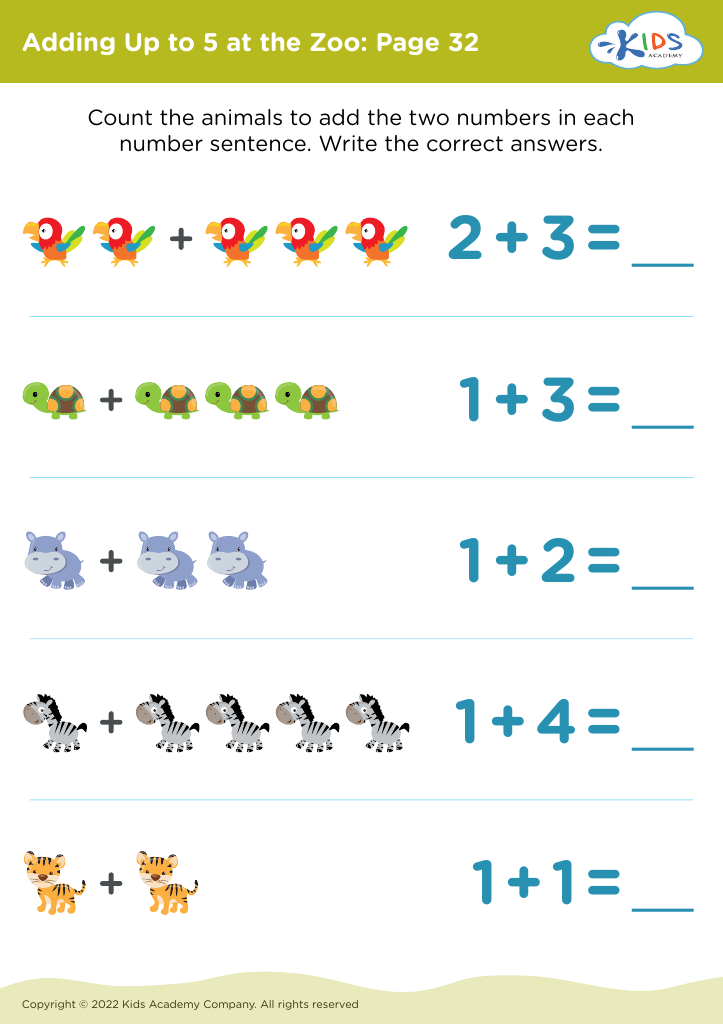
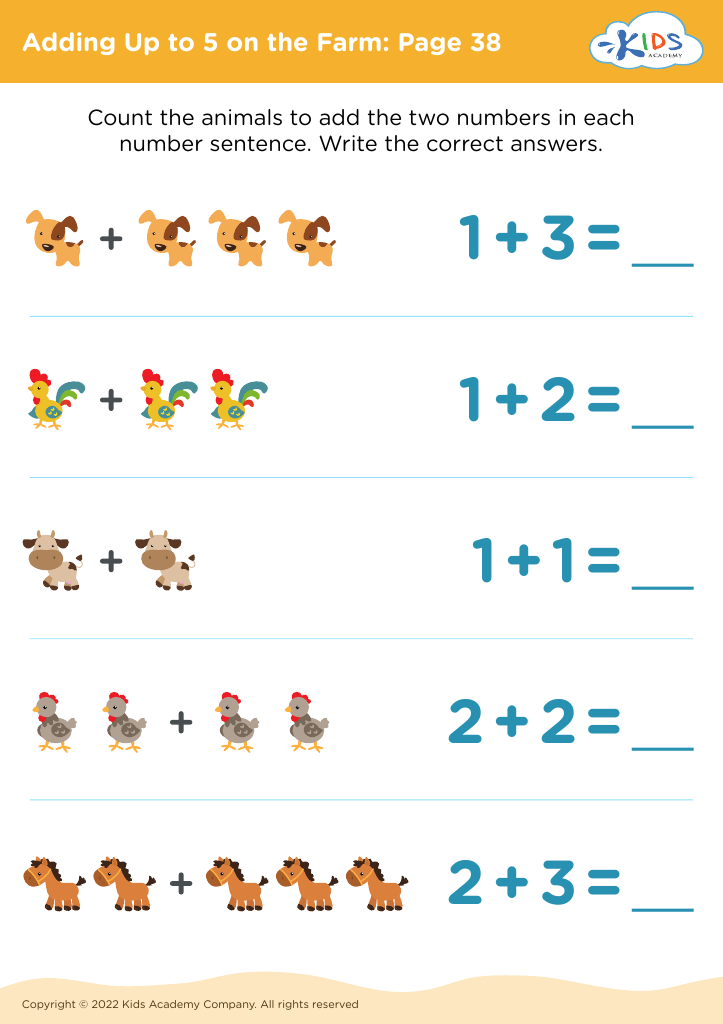
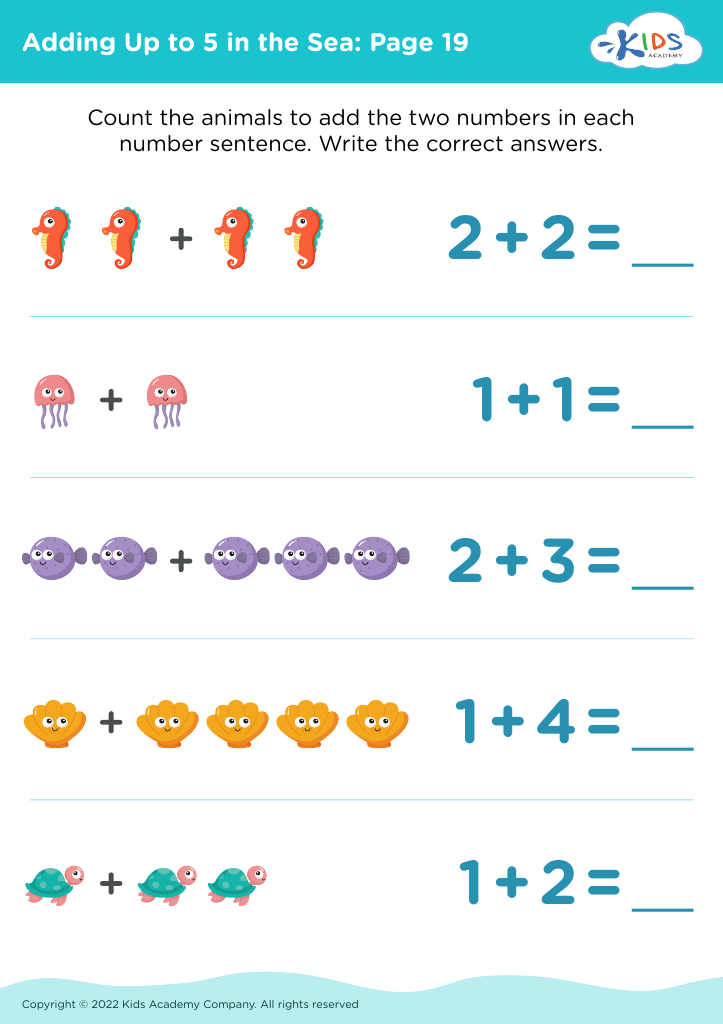
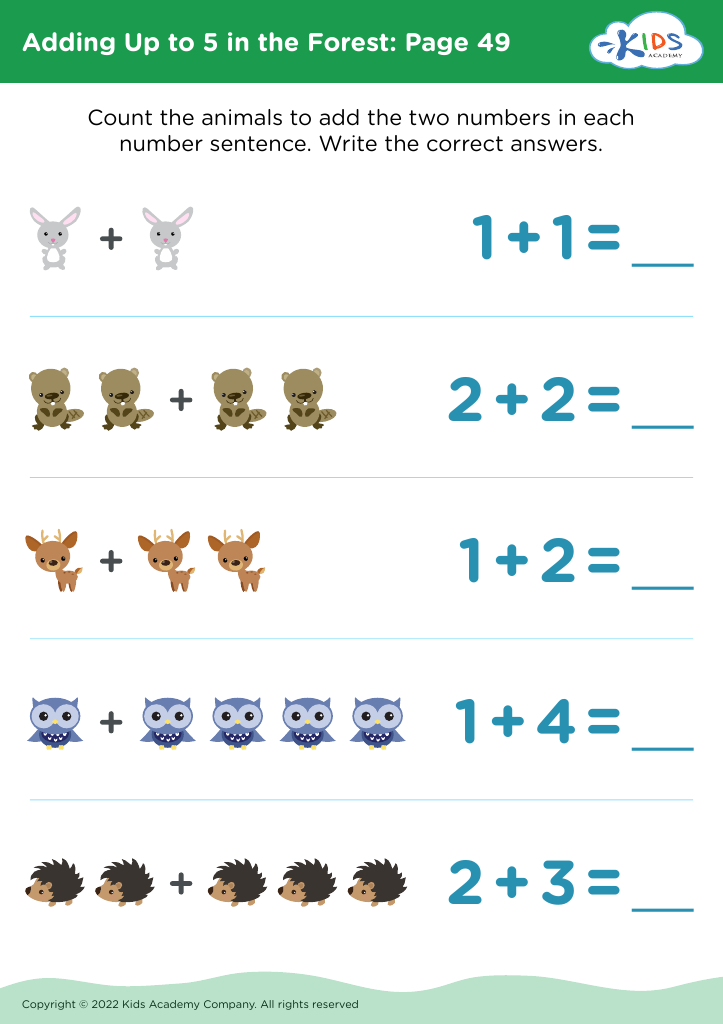
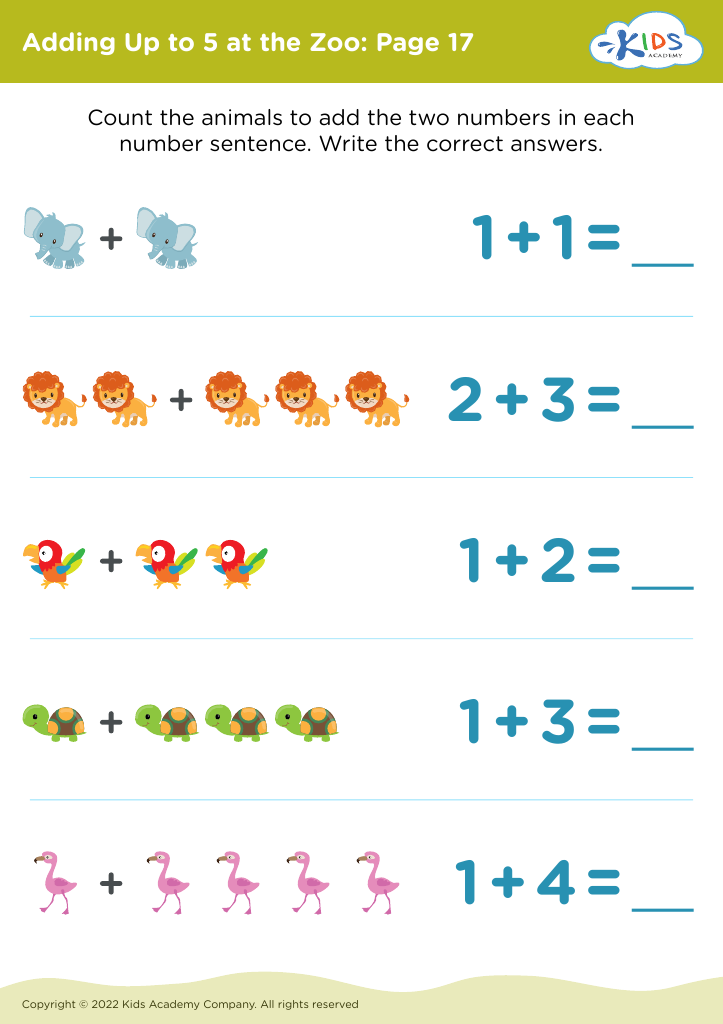
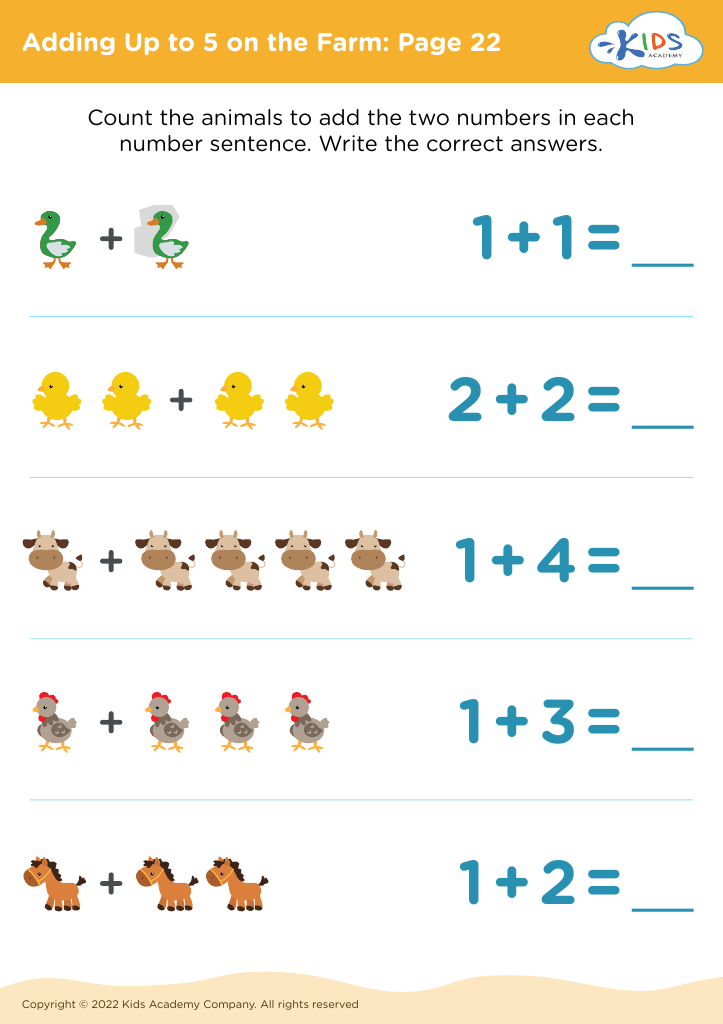
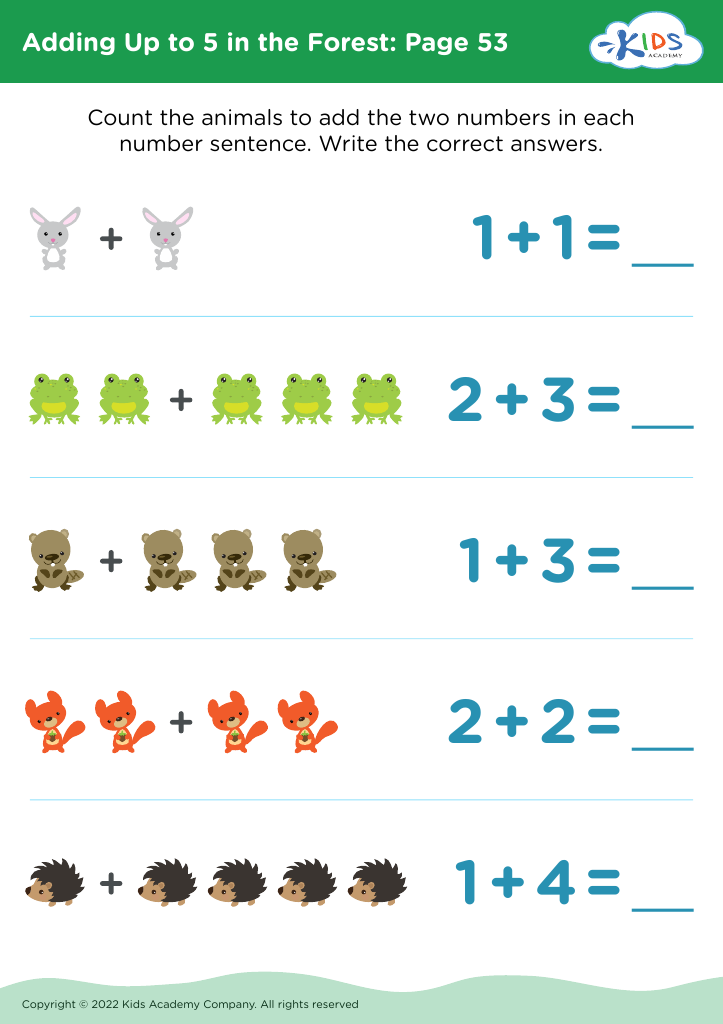
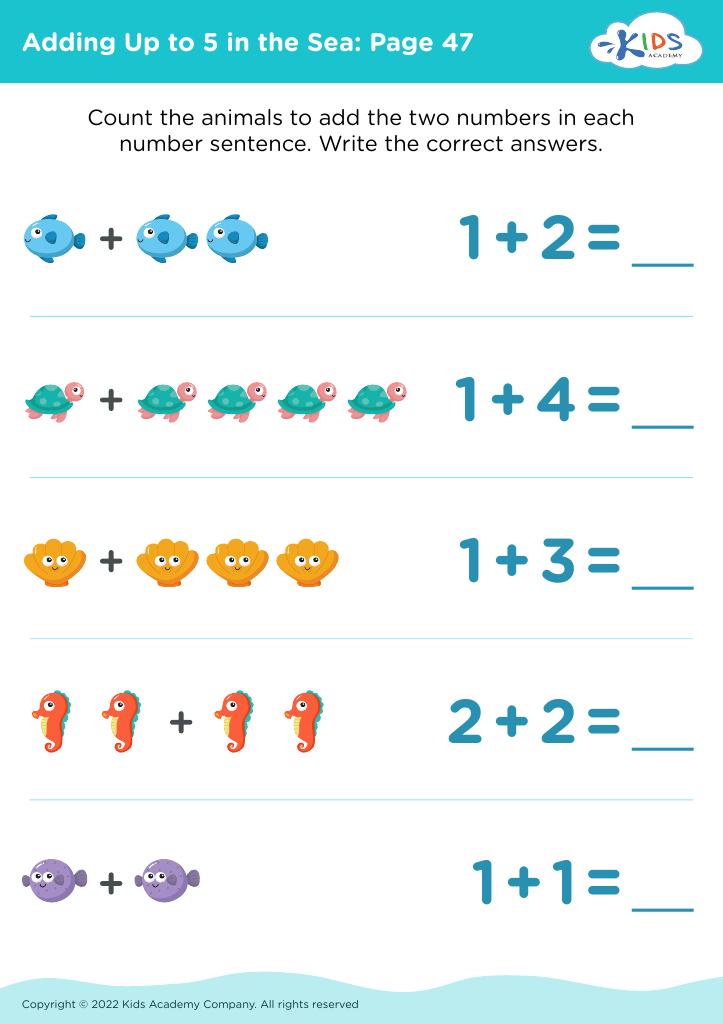
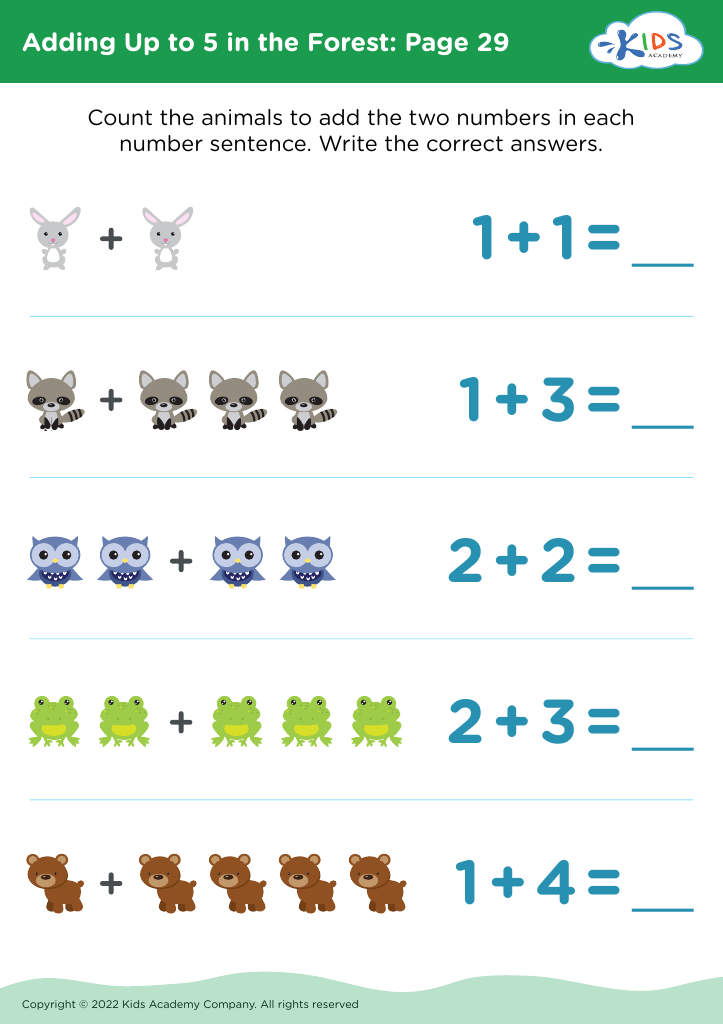
Enhance your child's counting proficiency with our "Adding Up to 5" worksheets, specifically designed for ages 4-6! These engaging activities help little learners practice basic addition skills through fun and interactive methods. Each worksheet features colorful illustrations and relatable themes that make counting enjoyable. As children explore numbers up to 5, they’ll improve not only their math skills but also their problem-solving abilities and fine motor skills. Perfect for classroom use or at-home practice, these worksheets will create a solid foundation for your child's future math learning. Foster a love for numbers and make math a delightful experience today!







%20(1).jpg)
Counting proficiency, particularly in adding up to 5, is essential for children aged 4-6 as it lays the foundation for their mathematical skills and overall cognitive development. At this early age, children are naturally curious and eager to explore numbers, and mastering basic counting helps them build confidence and a positive attitude towards math.
Parents and teachers should care about this proficiency because it enhances children's problem-solving and critical thinking abilities. By engaging with simple addition through fun activities, like counting objects in a group or using fingers, children learn to recognize patterns and relationships between numbers, which are crucial for future math concepts.
Furthermore, early counting skills encourage social interaction and collaboration as children work together to solve counting problems. This reinforces communication skills and can improve their overall learning experience. Beyond math, these skills support essential life lessons in sharing, grouping, and categorizing.
Moreover, children who achieve counting proficiency early are more likely to succeed in subsequent math learning, preventing future difficulties and fostering a lifelong love for learning. Overall, fostering adding up to 5 is a vital step in nurturing a child's academic journey and developing their self-esteem and curiosity.








