Filters

349 filtered results

Clear all filters
Favorites
With answer key
Interactive

349 filtered results

Difficulty Level

Grade


Check out this FREE Trial Lesson on Adding Up to 5 for age 4-6!

Match Exactly the Same

Favorites
With answer key
Interactive
  • 4-6
  • Number Recognition
  • Adding Up to 5
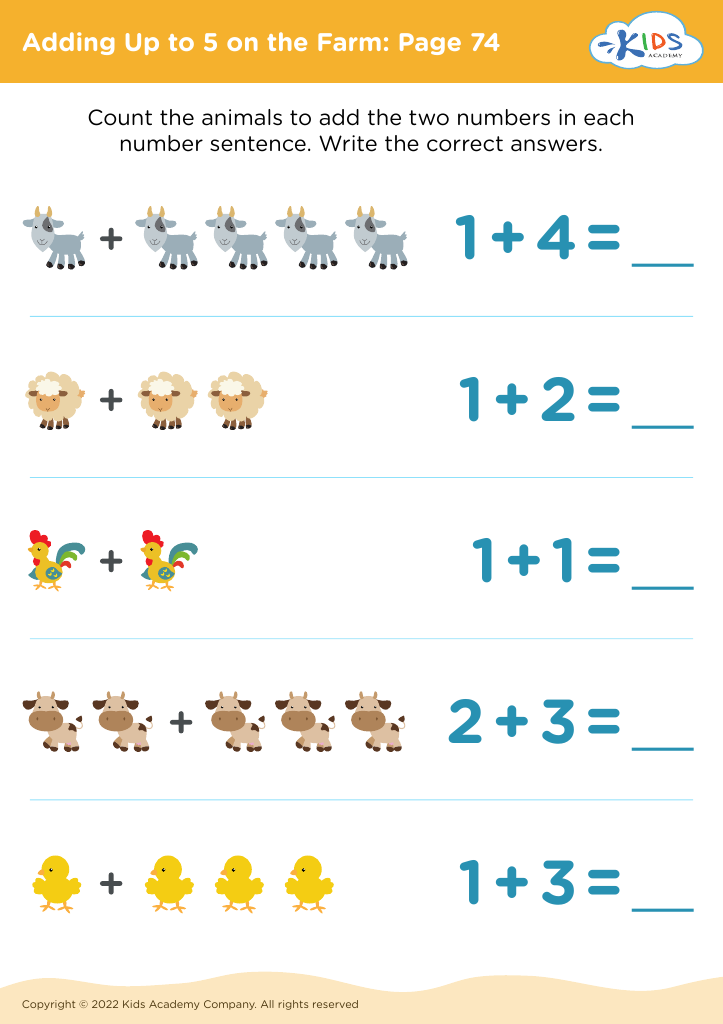
Adding Up to 5 on the Farm: Page 74
Worksheet
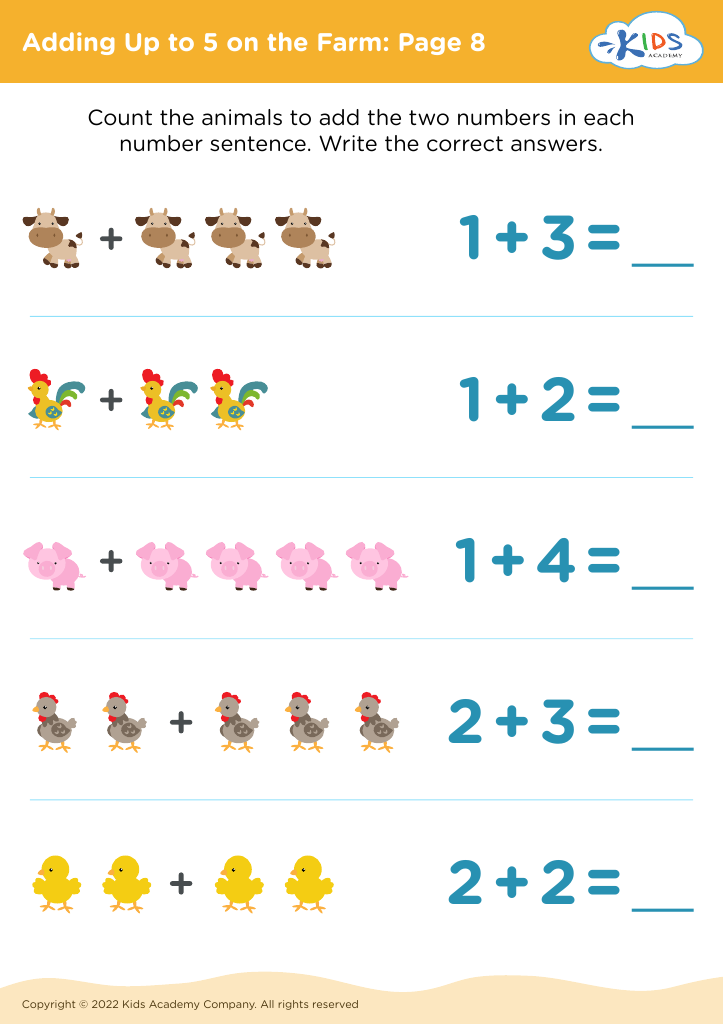
Adding Up to 5 on the Farm: Page 8
Worksheet
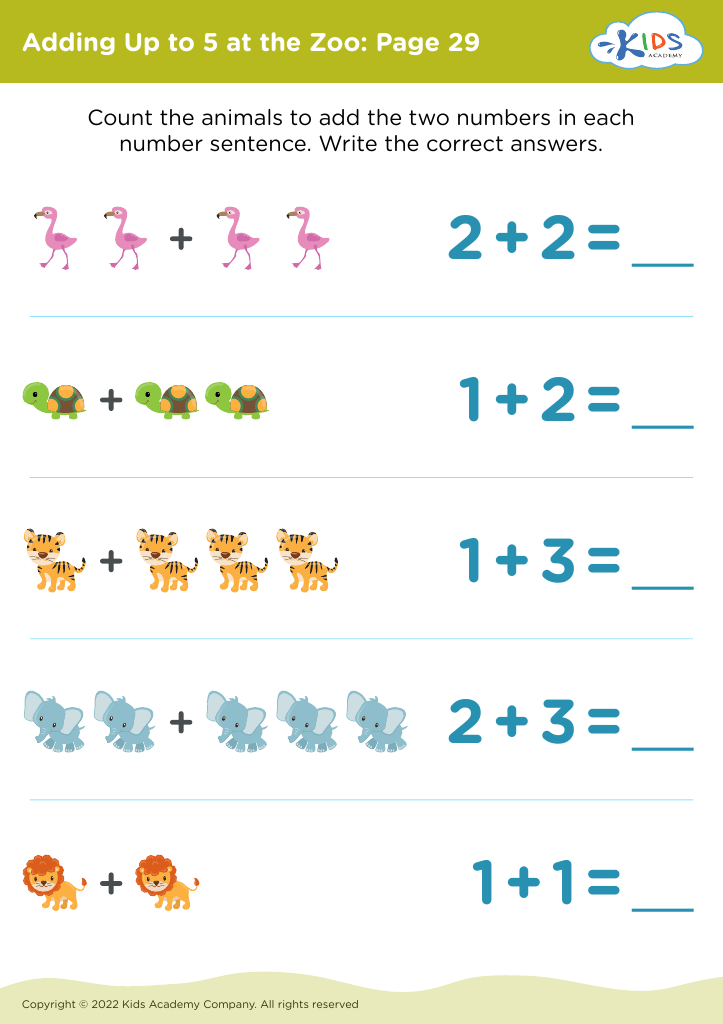
Adding Up to 5 at the Zoo: Page 29
Worksheet
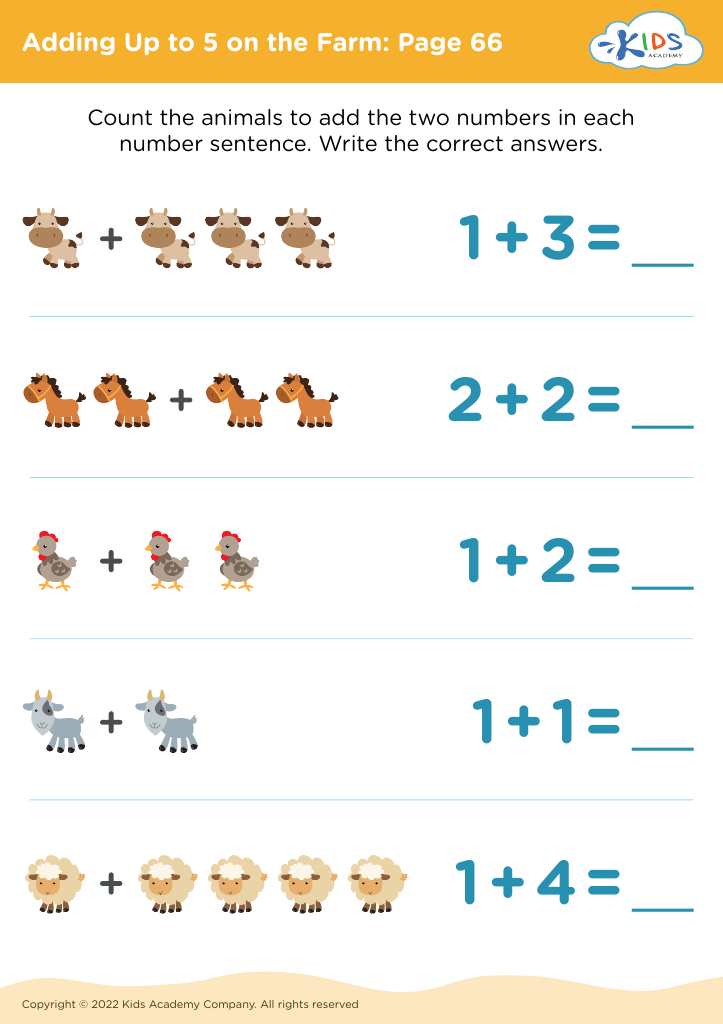
Adding Up to 5 on the Farm: Page 66
Worksheet
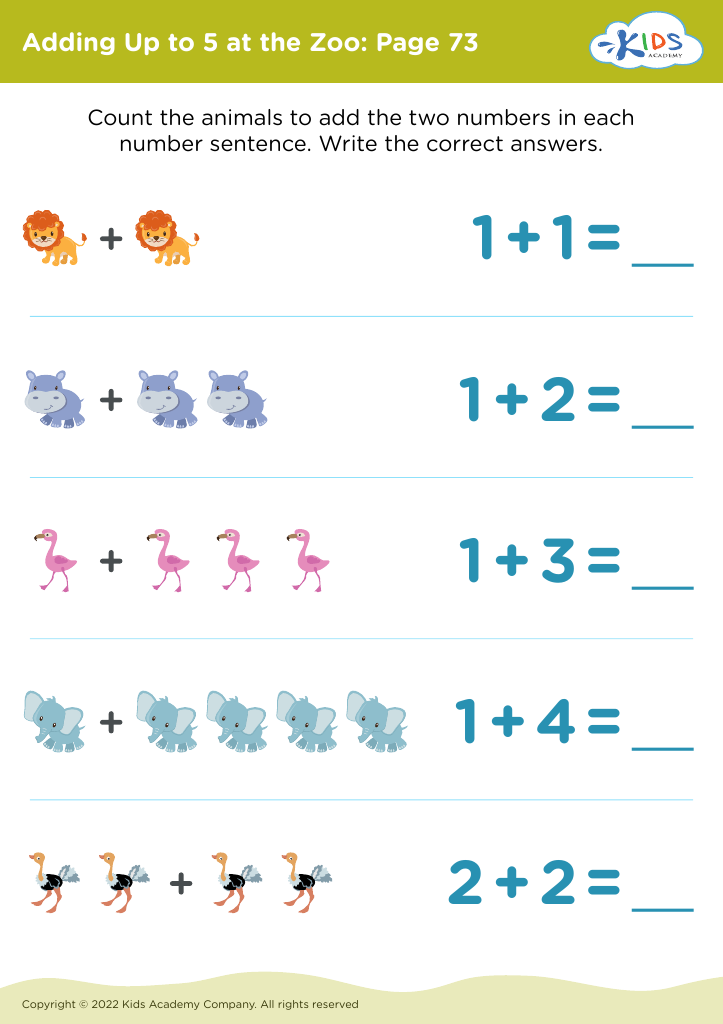
Adding Up to 5 at the Zoo: Page 73
Worksheet
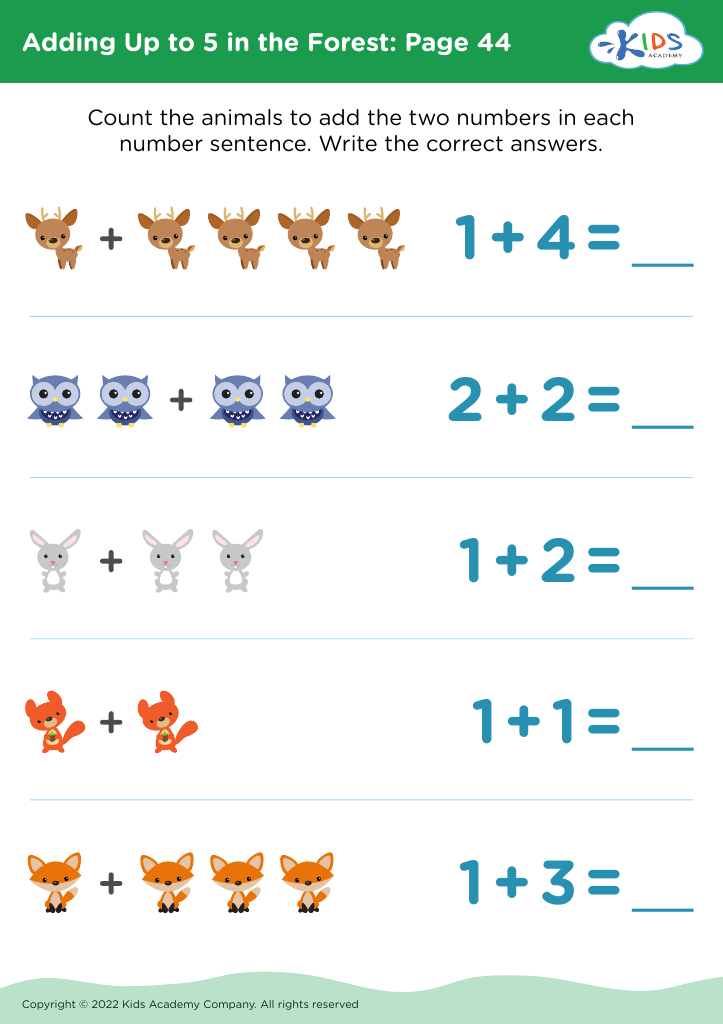
Adding Up to 5 in the Forest: Page 44
Worksheet
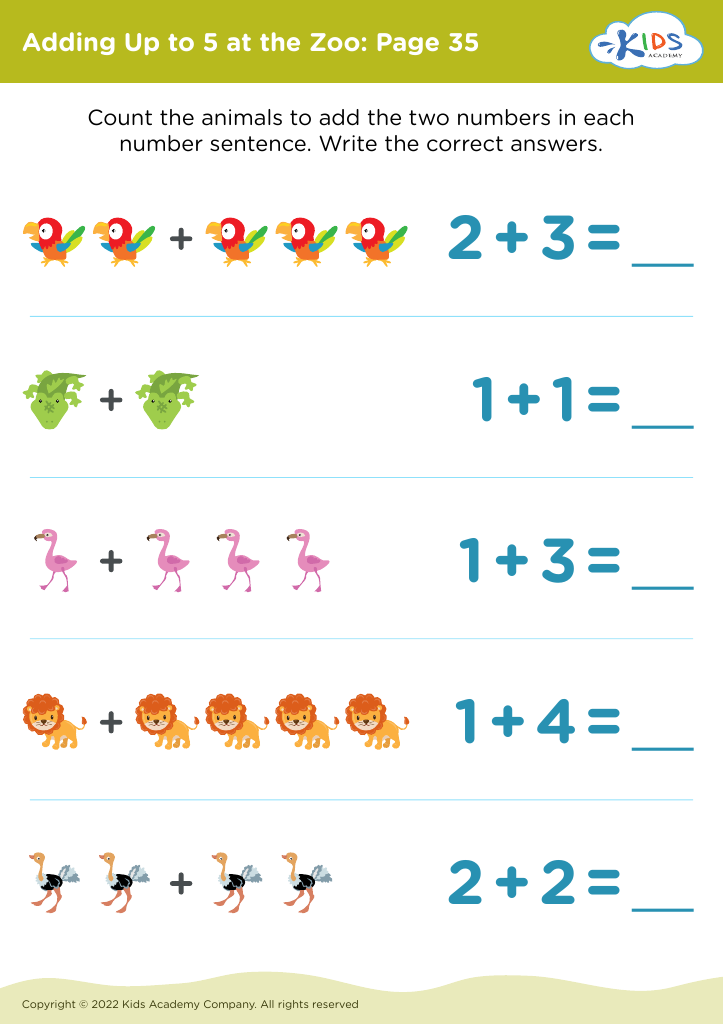
Adding Up to 5 at the Zoo: Page 35
Worksheet
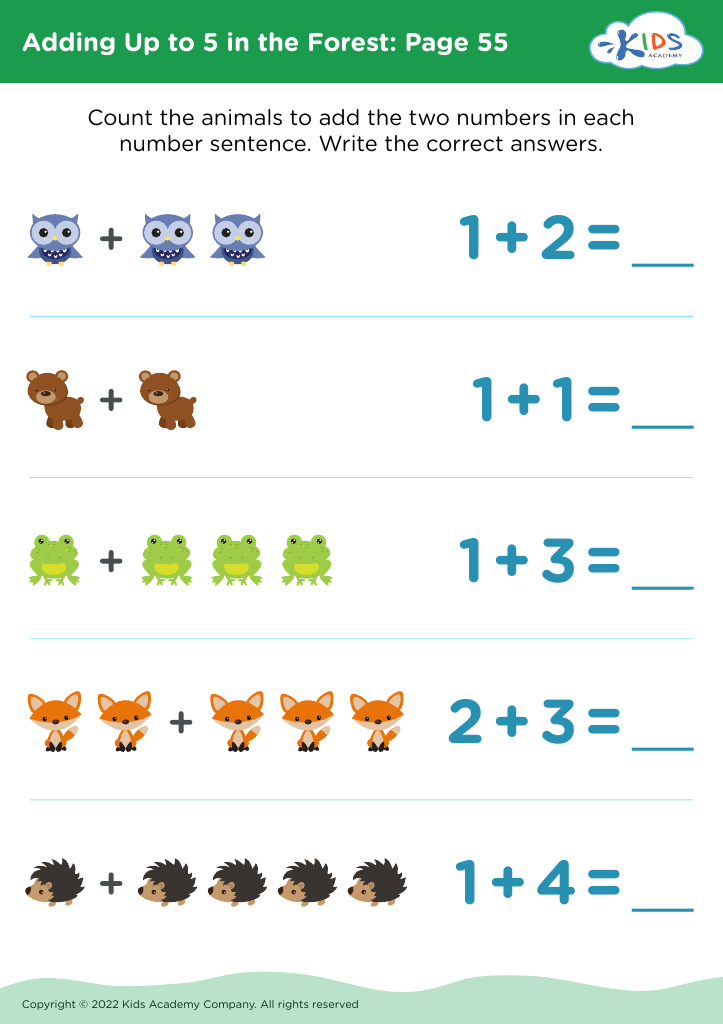
Adding Up to 5 in the Forest: Page 55
Worksheet
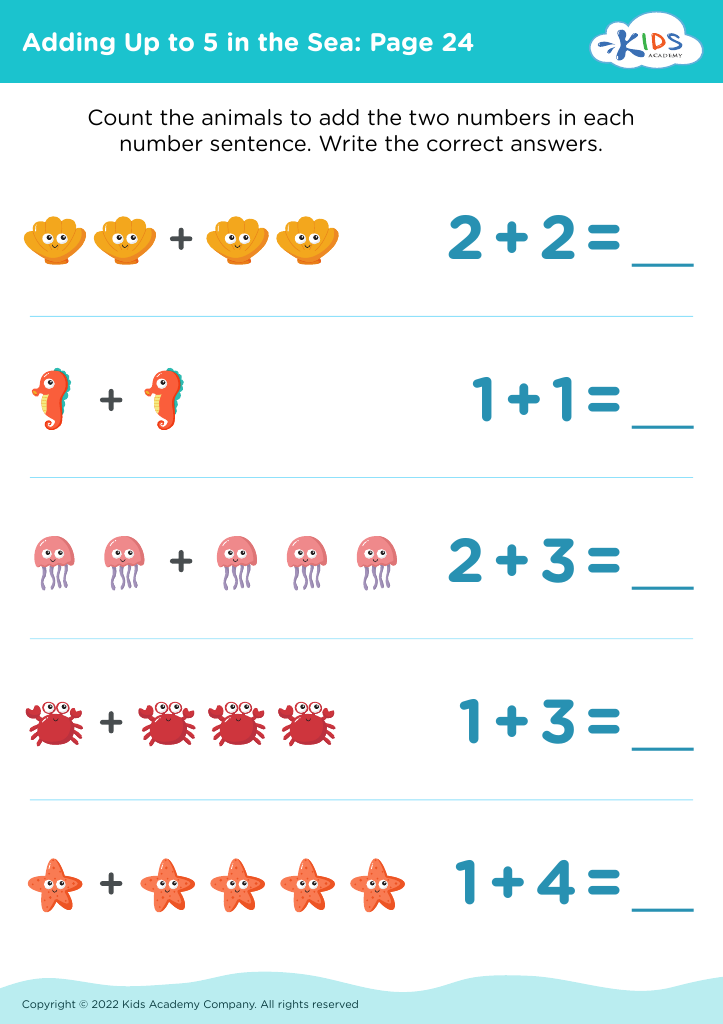
Adding Up to 5 in the Sea: Page 24
Worksheet
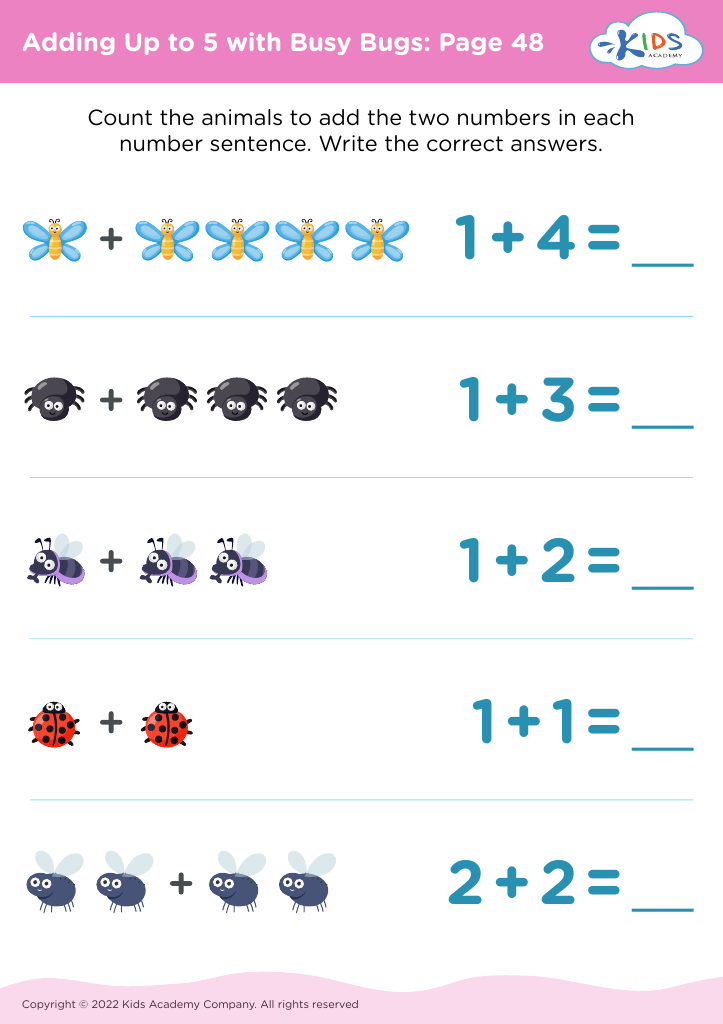
Adding Up to 5 with Busy Bugs: Page 48
Worksheet
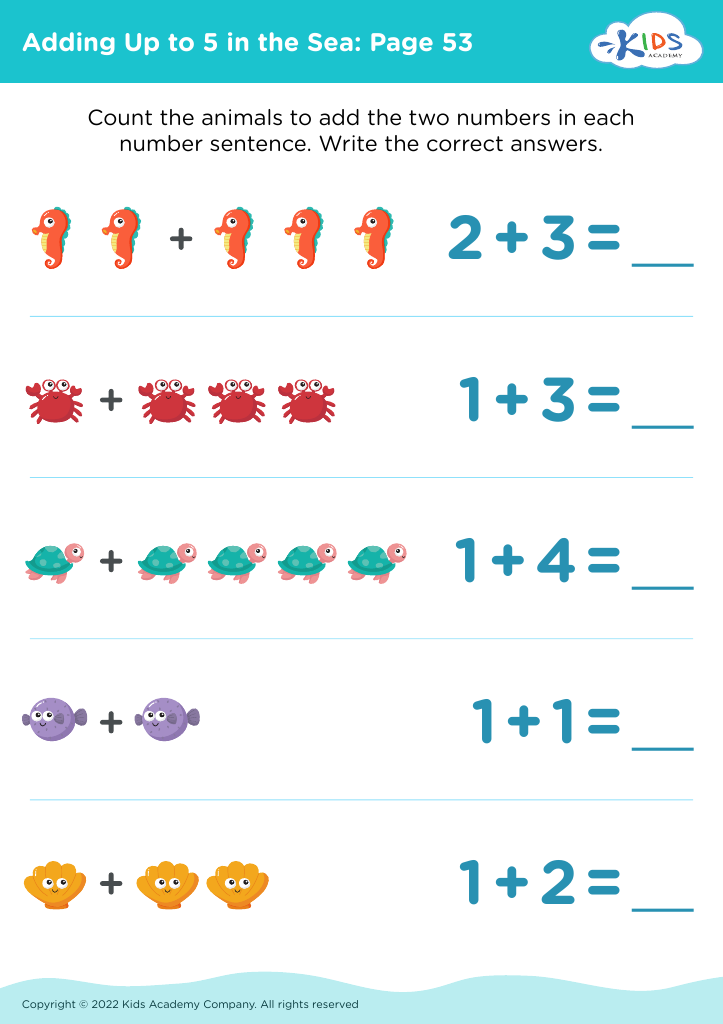
Adding Up to 5 in the Sea: Page 53
Worksheet
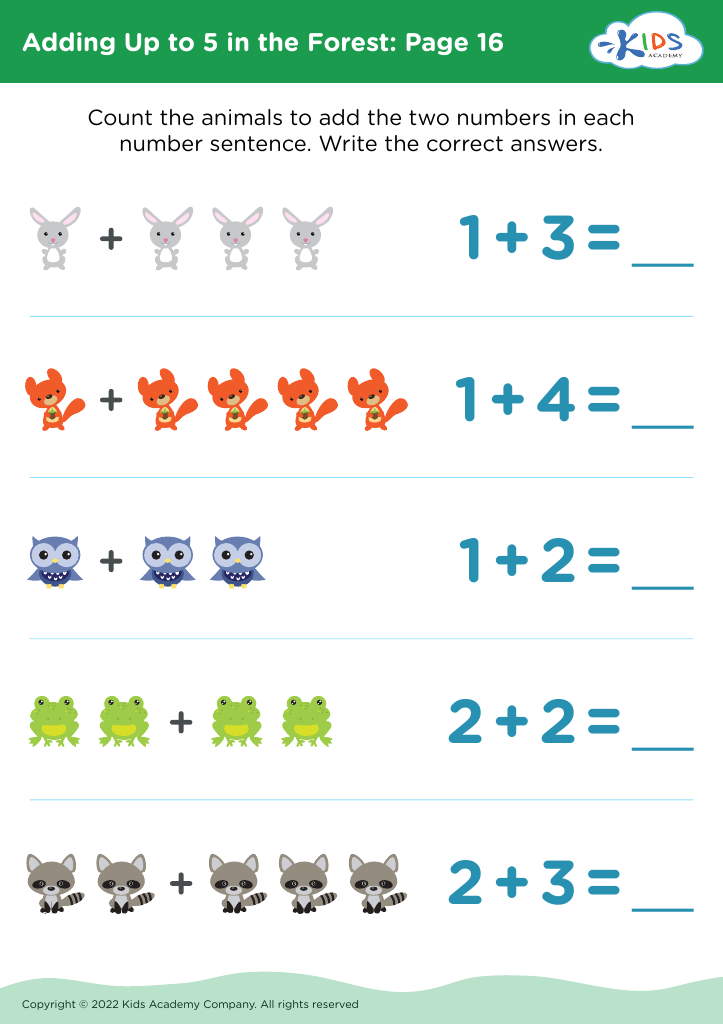
Adding Up to 5 in the Forest: Page 16
Worksheet
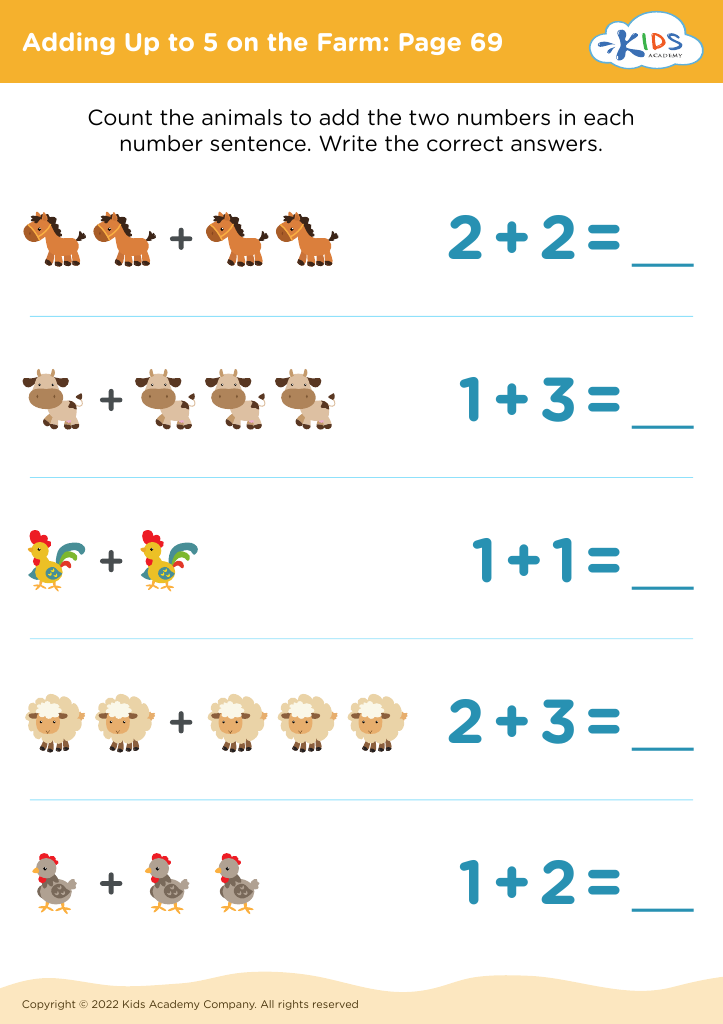
Adding Up to 5 on the Farm: Page 69
Worksheet
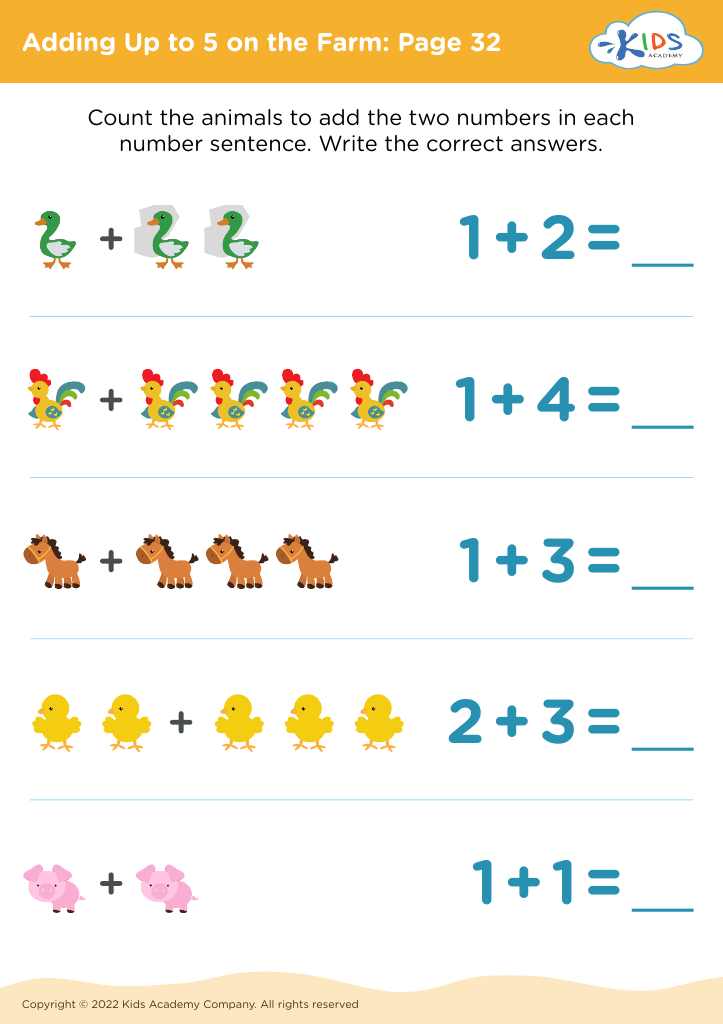
Adding Up to 5 on the Farm: Page 32
Worksheet
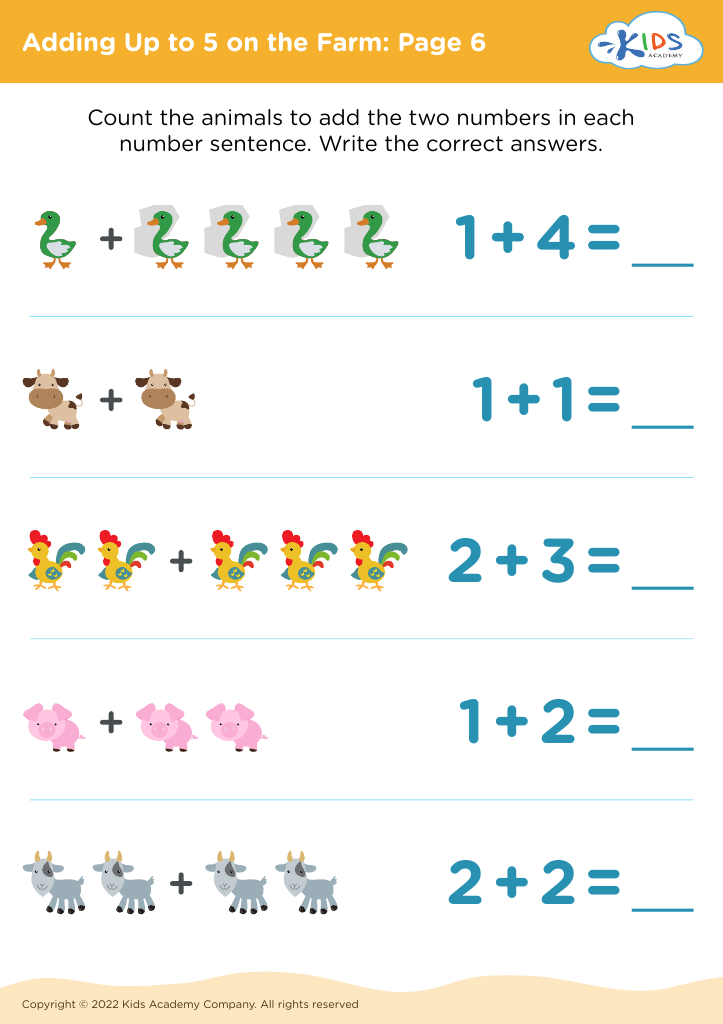
Adding Up to 5 on the Farm: Page 6
Worksheet
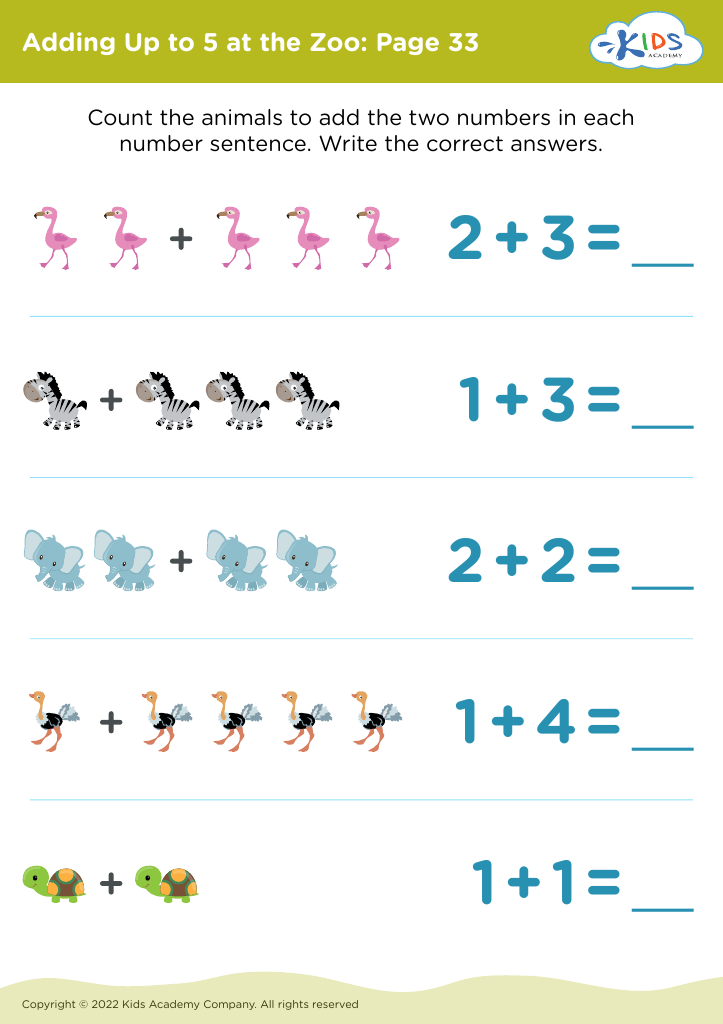
Adding Up to 5 at the Zoo: Page 33
Worksheet
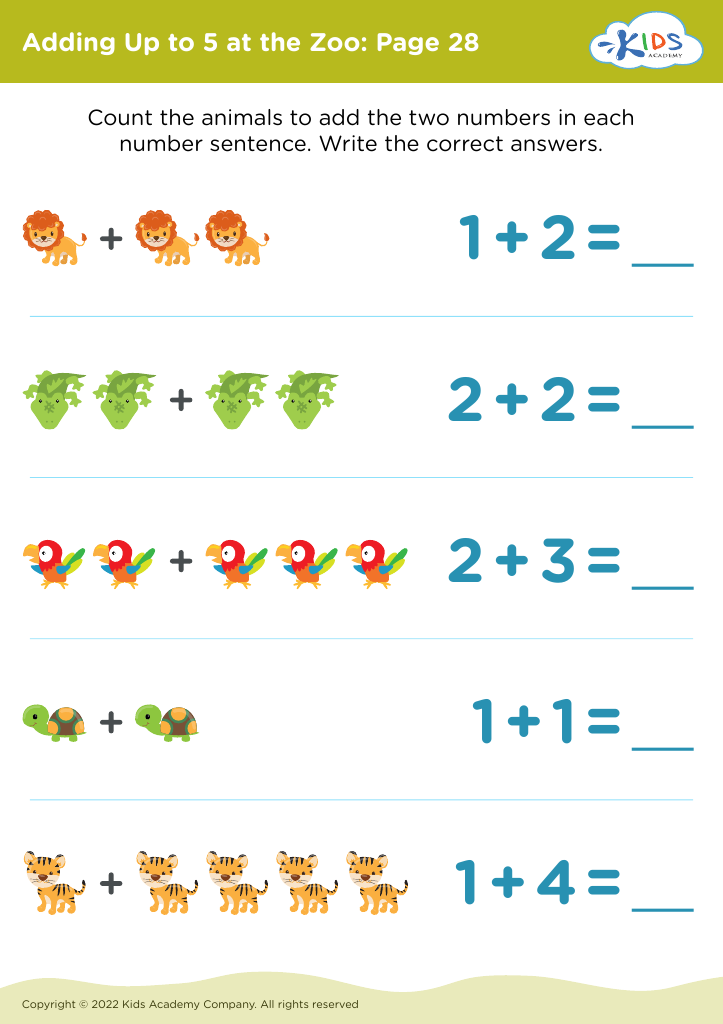
Adding Up to 5 at the Zoo: Page 28
Worksheet
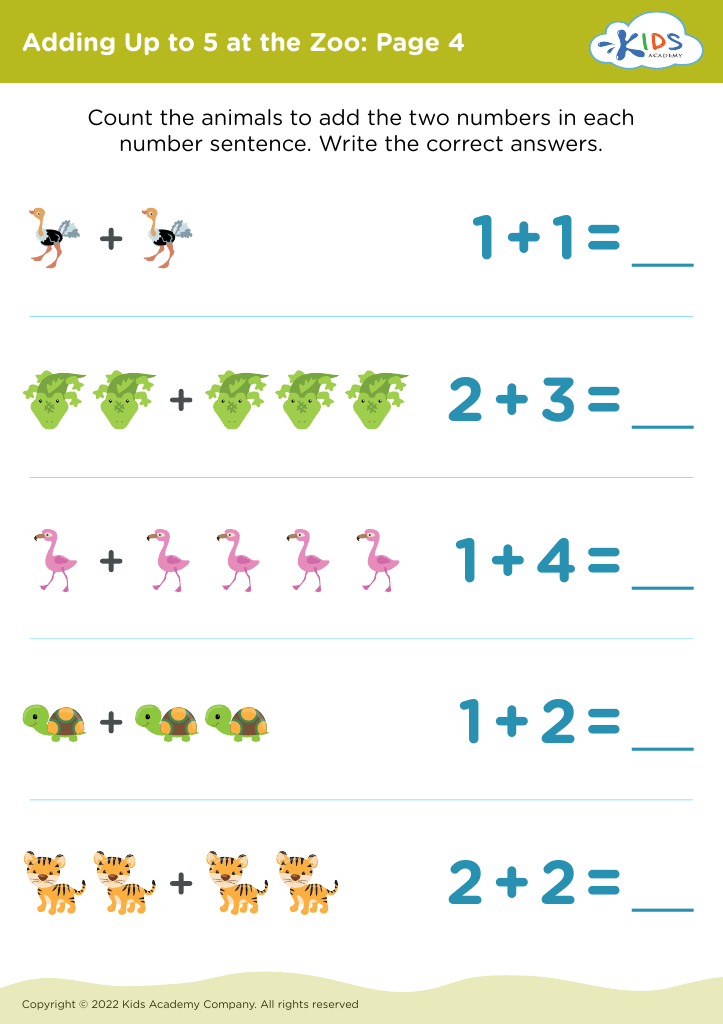
Adding Up to 5 at the Zoo: Page 4

Adding Up to 5 at the Zoo: Page 4

Adding Up to 5 at the Zoo: Page 4
Worksheet
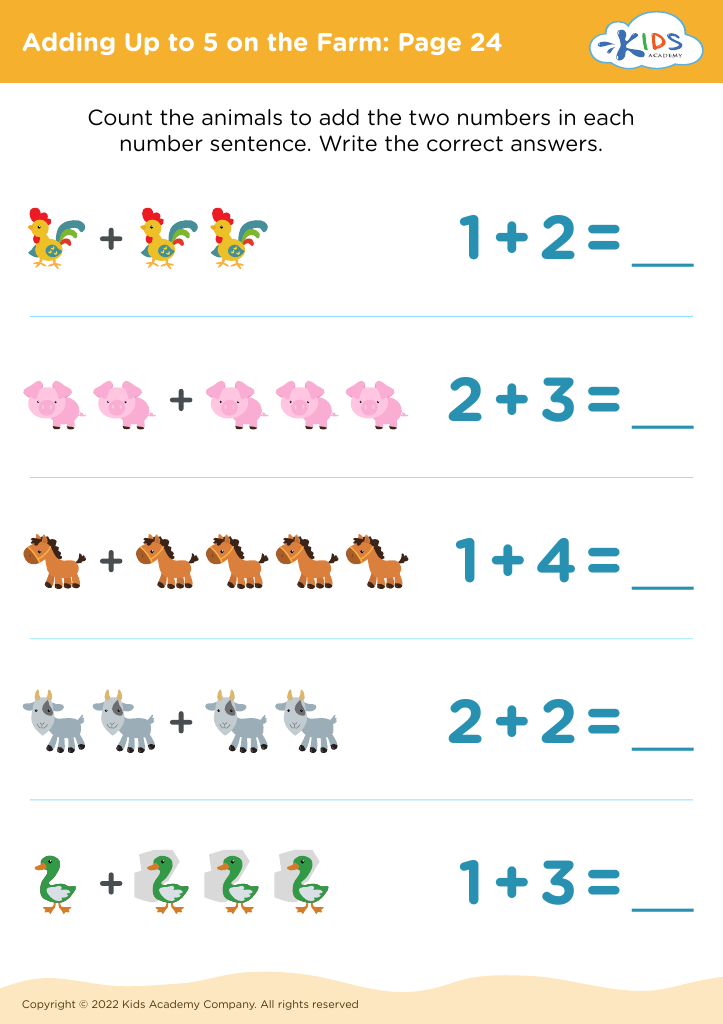
Adding Up to 5 on the Farm: Page 24
Worksheet
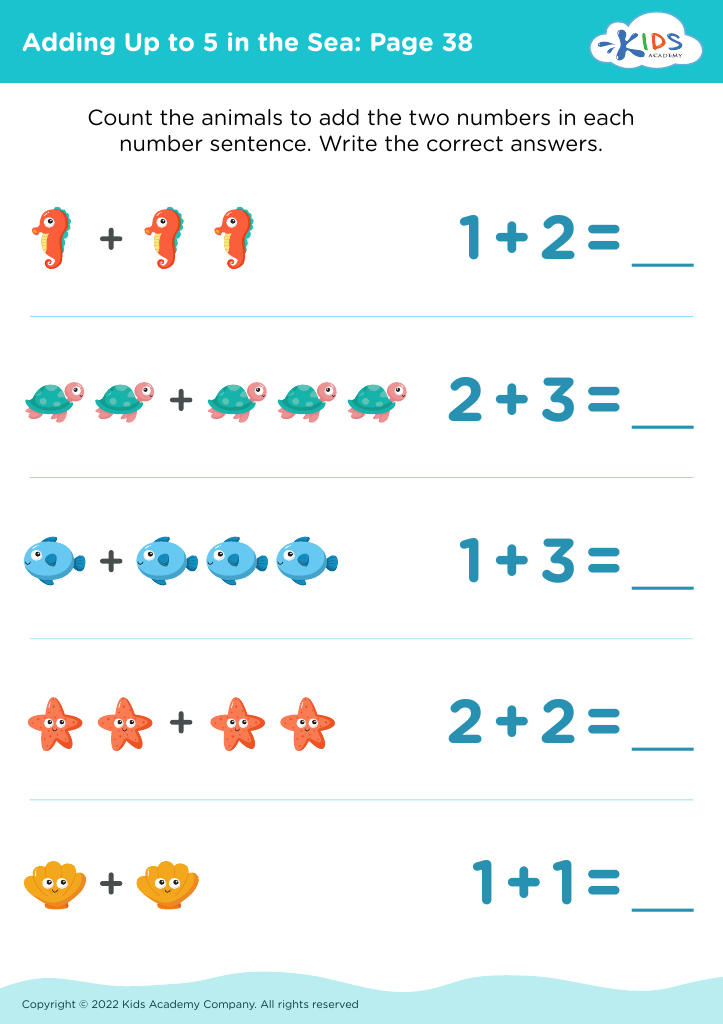
Adding Up to 5 in the Sea: Page 38
Worksheet
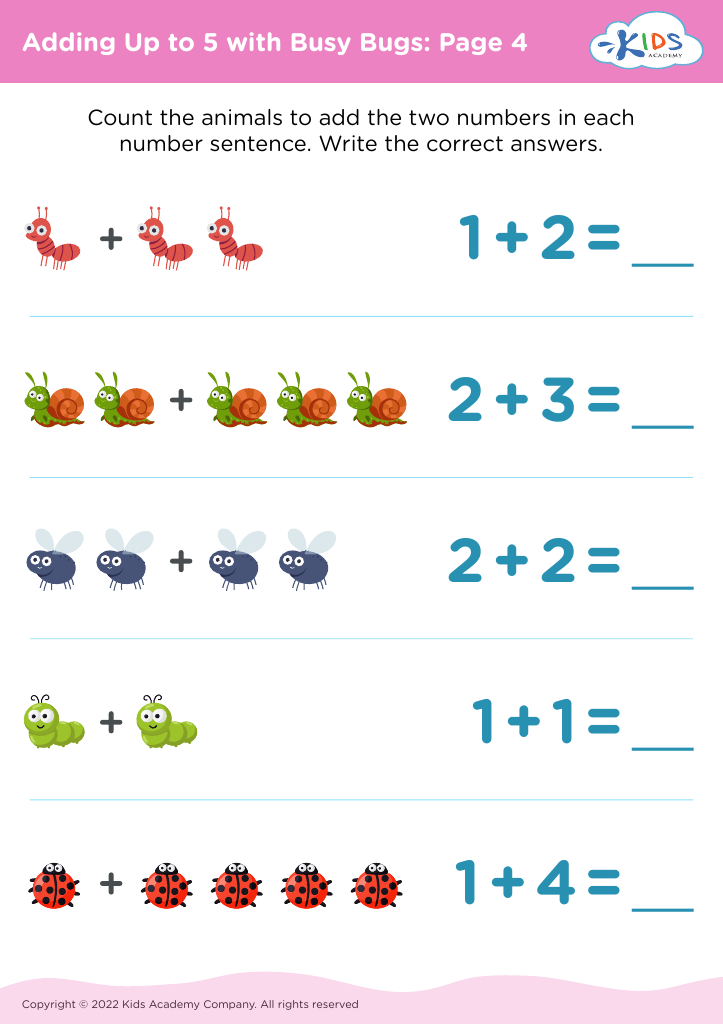
Adding Up to 5 with Busy Bugs: Page 4
Worksheet
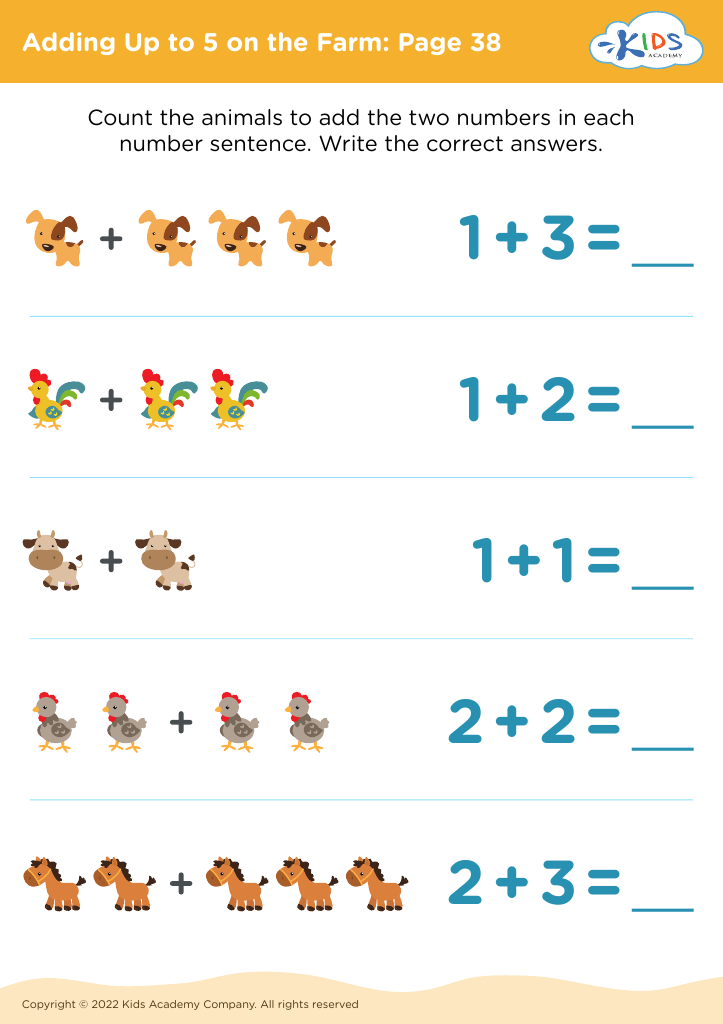
Adding Up to 5 on the Farm: Page 38
Worksheet
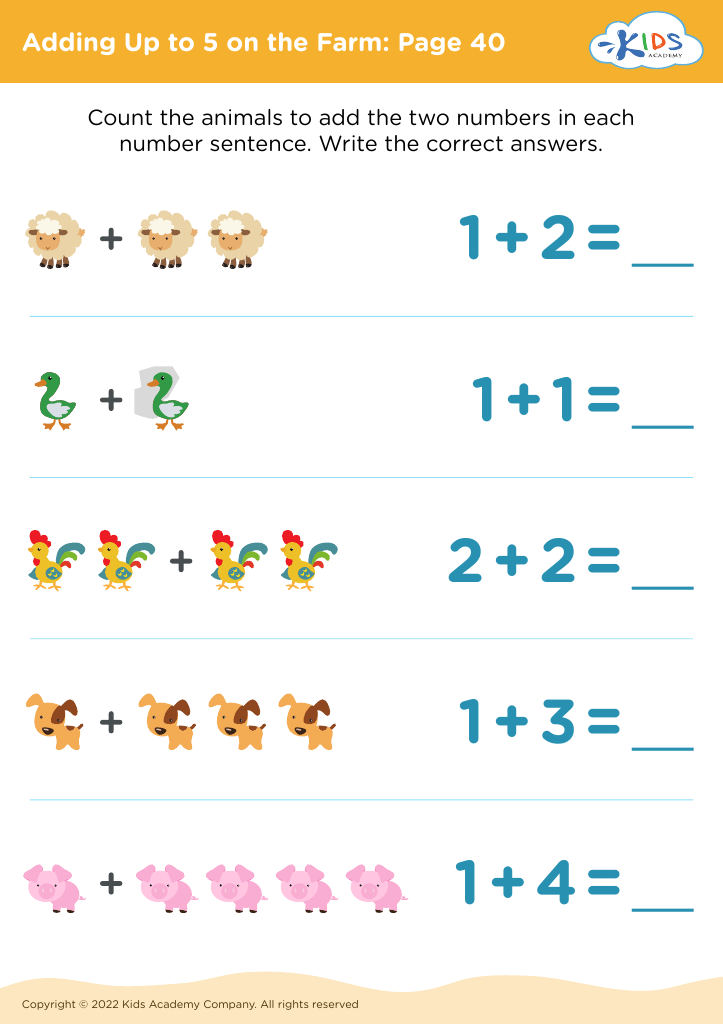
Adding Up to 5 on the Farm: Page 40
Worksheet
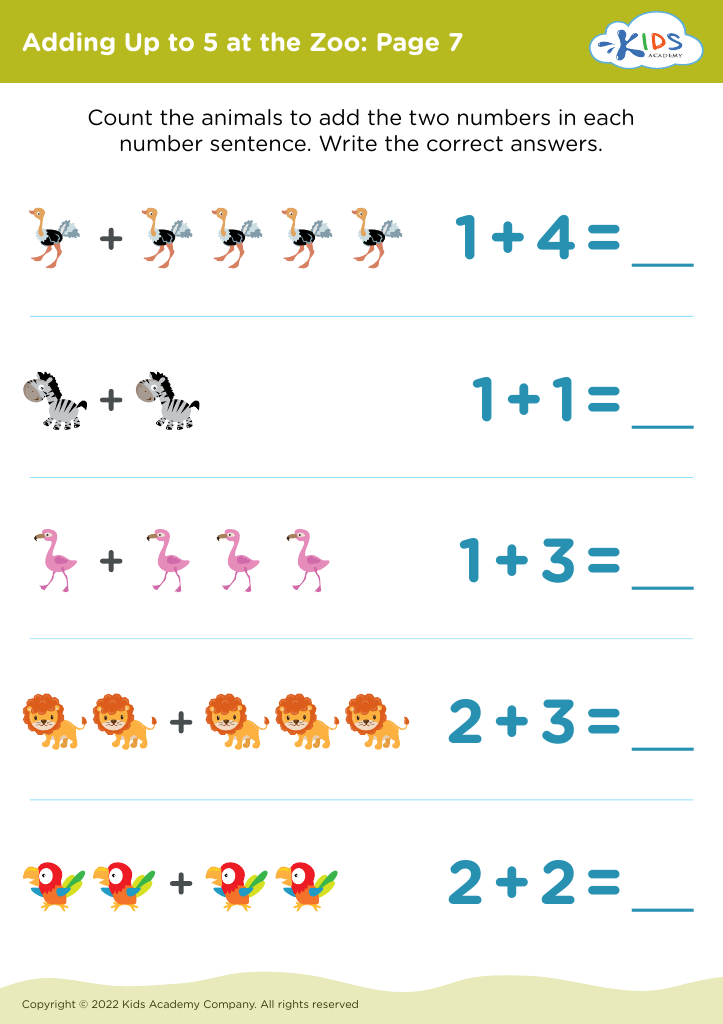
Adding Up to 5 at the Zoo: Page 7

Adding Up to 5 at the Zoo: Page 7

Adding Up to 5 at the Zoo: Page 7
Worksheet


Number recognition and basic addition are foundational skills for children aged 4-6, forming the bedrock for future mathematical understanding. Teaching youngsters to recognize numbers up to 5 helps them develop essential cognitive skills such as counting, comparison, and quantity assessment.

When children learn to identify numbers visually, it boosts their confidence and enthusiasm for learning math concepts. Early exposure to simple addition, such as adding up to 5, allows them to grasp the concept of combining quantities and enhances their problem-solving abilities.

Moreover, these skills foster critical thinking and spatial awareness, preparing children for more complex math challenges in later grades. For parents and teachers, encouraging number recognition and simple addition activities can improve a child's social interaction as they play and collaborate with peers in games or learning stations.

It's essential for caregivers to create a numerically rich environment, incorporating everyday mathematics into playtime, grocery shopping, or family games. This approach lays a strong educational foundation and nurtures a positive attitude towards math, ensuring kids not only perform well academically but also enjoy the learning process. For the holistic development of children, focusing on number recognition and basic addition is crucial at this transformative age.