Filters

84 filtered results

Clear all filters
Favorites
With answer key
Interactive

84 filtered results

Difficulty Level

Grade


Check out this FREE Trial Lesson on Adding Up to 5 for age 4-6!

P

Favorites
With answer key
Interactive
  • 4-6
  • Visual Learning
  • Adding Up to 5
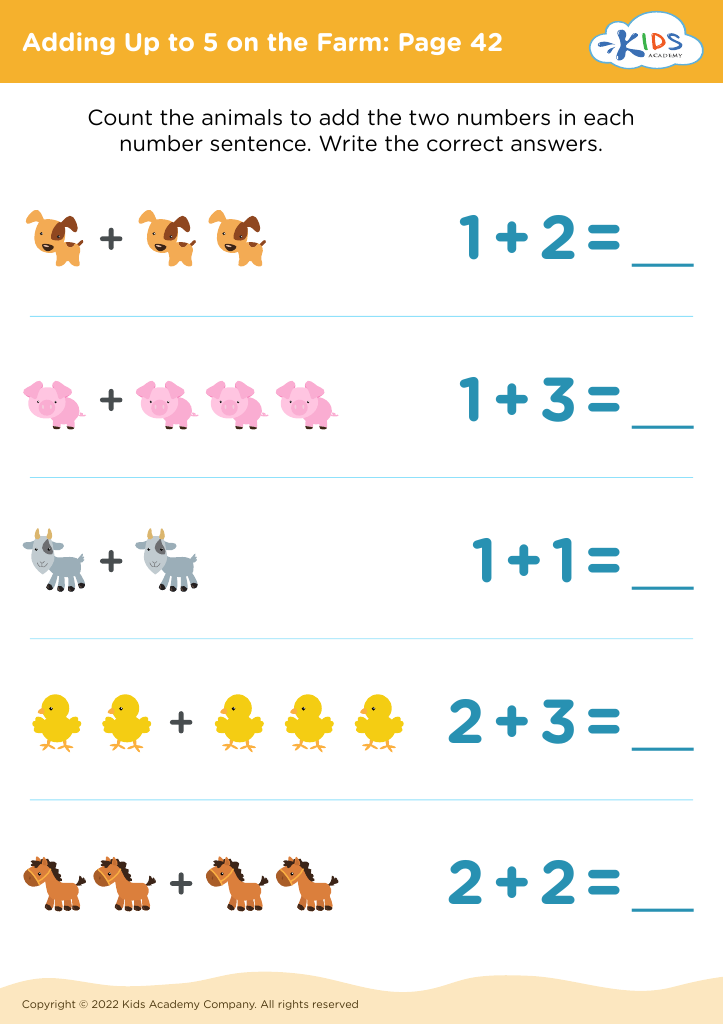
Adding Up to 5 on the Farm: Page 42
Worksheet
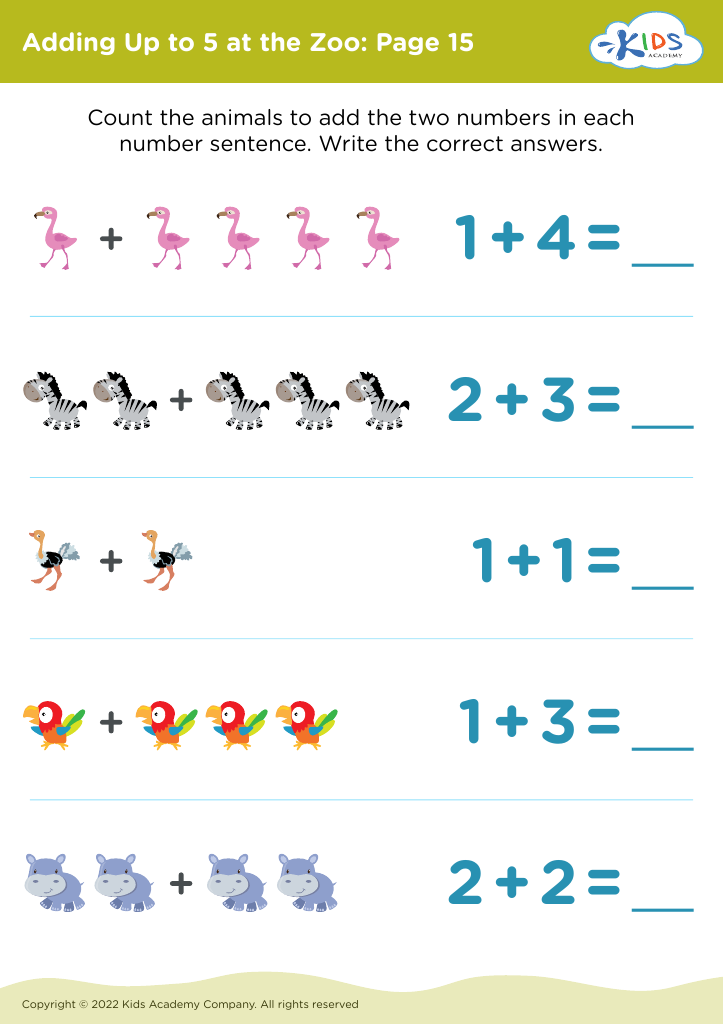
Adding Up to 5 at the Zoo: Page 15
Worksheet
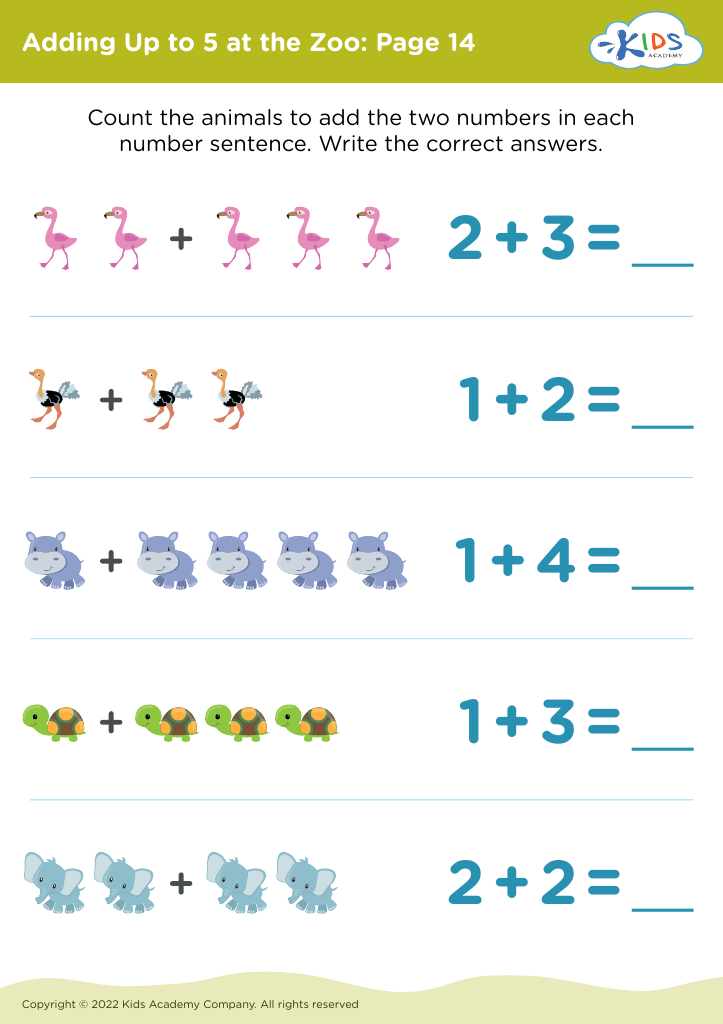
Adding Up to 5 at the Zoo: Page 14
Worksheet
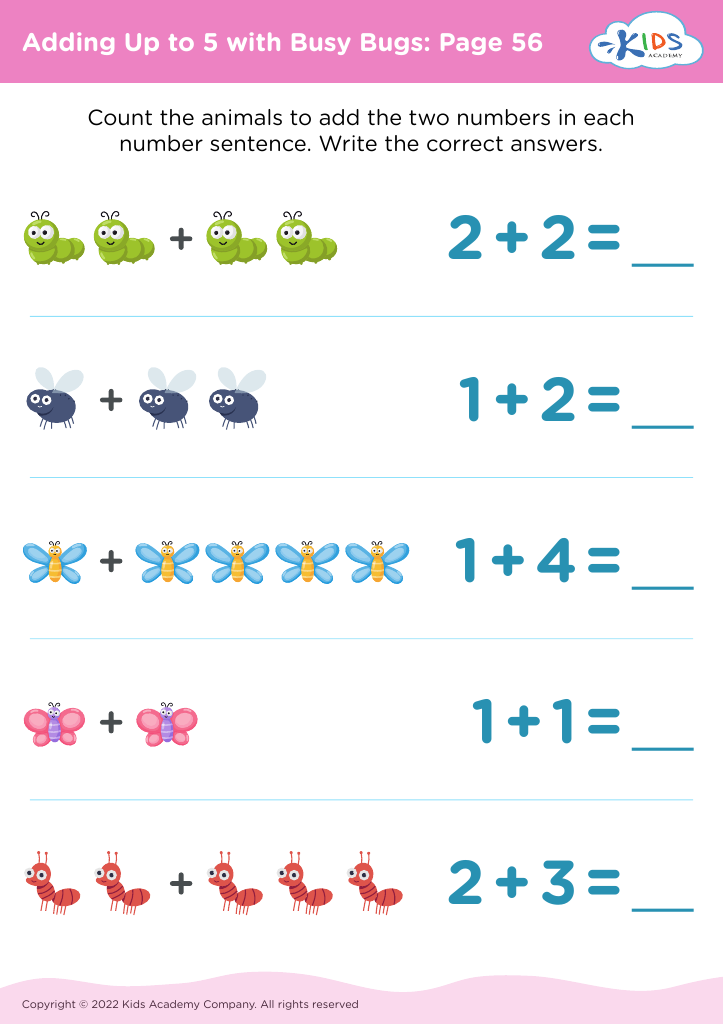
Adding Up to 5 with Busy Bugs: Page 56
Worksheet
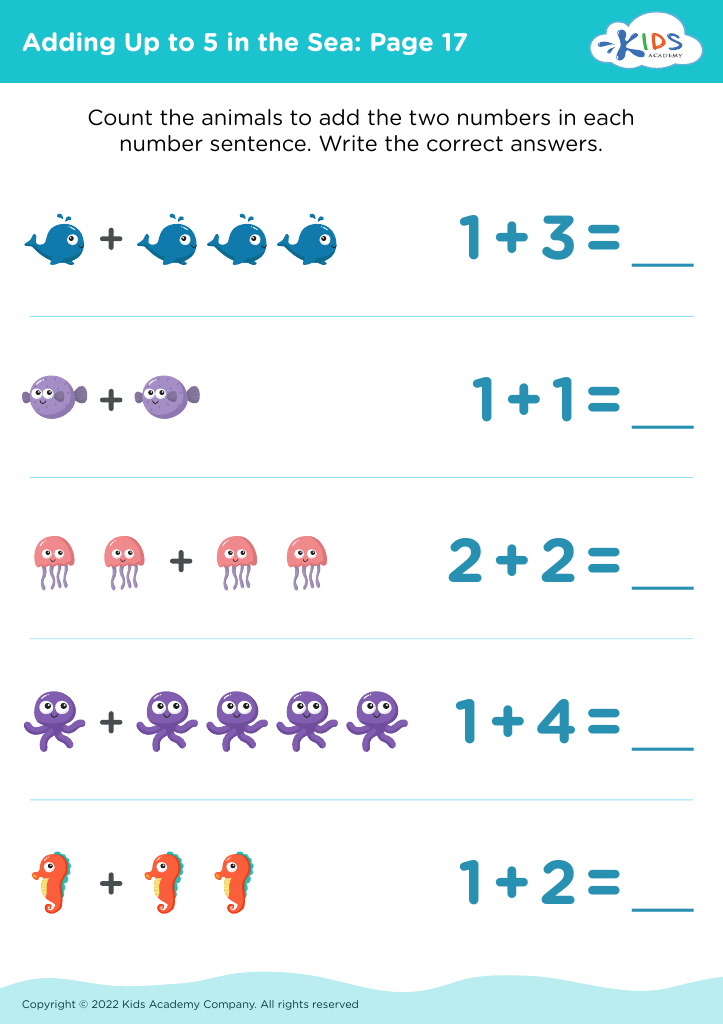
Adding Up to 5 in the Sea: Page 17
Worksheet
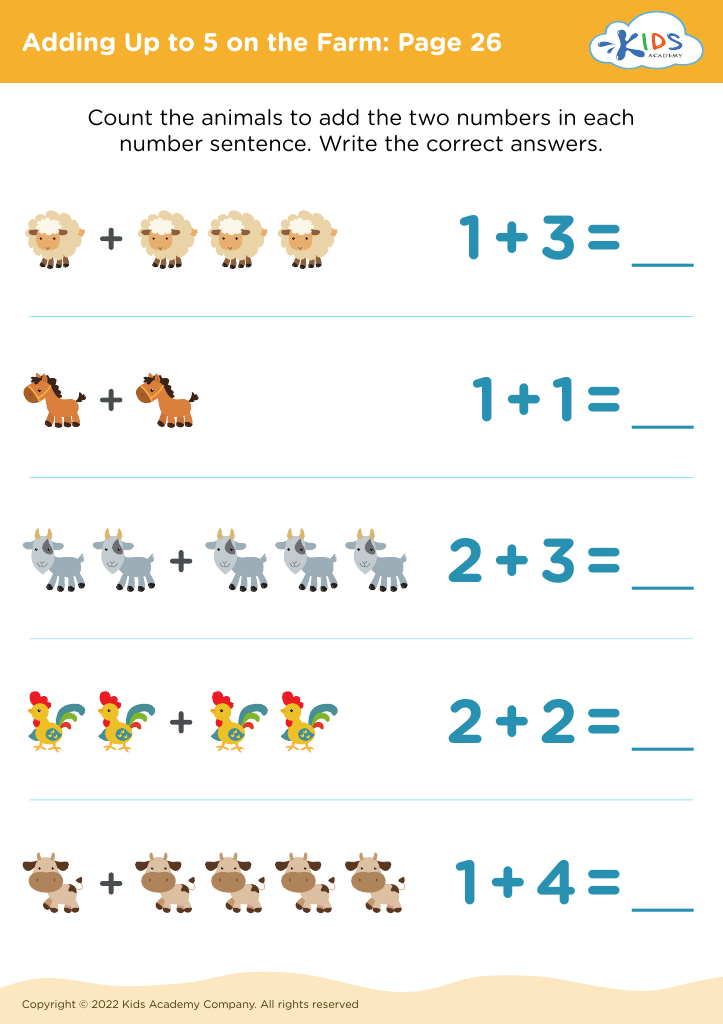
Adding Up to 5 on the Farm: Page 26
Worksheet
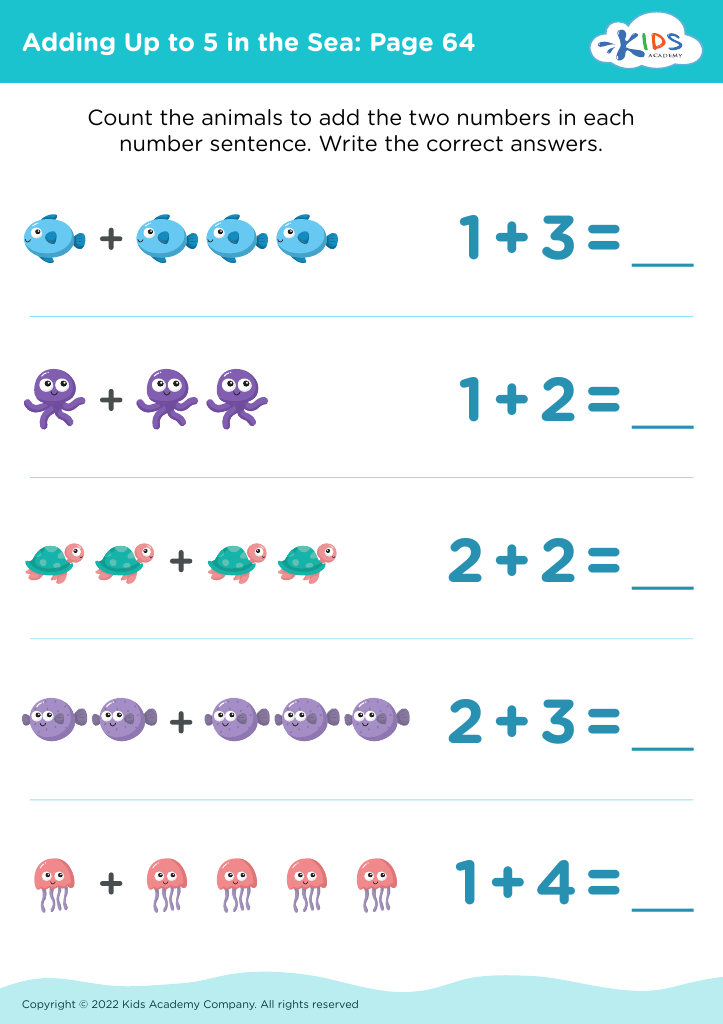
Adding Up to 5 in the Sea: Page 64
Worksheet
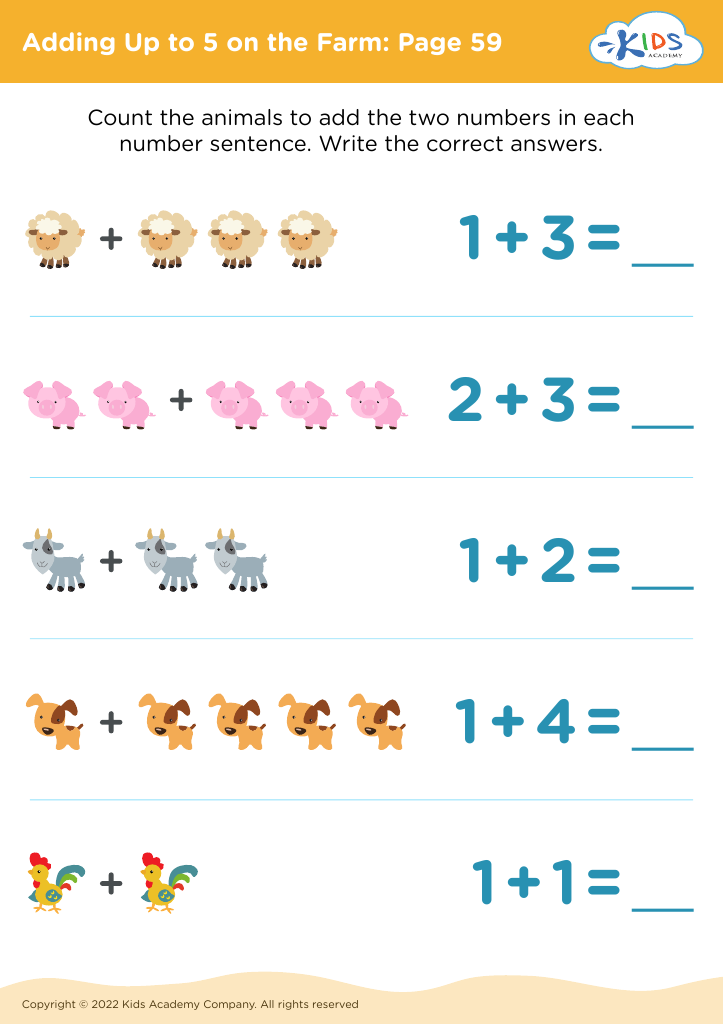
Adding Up to 5 on the Farm: Page 59
Worksheet
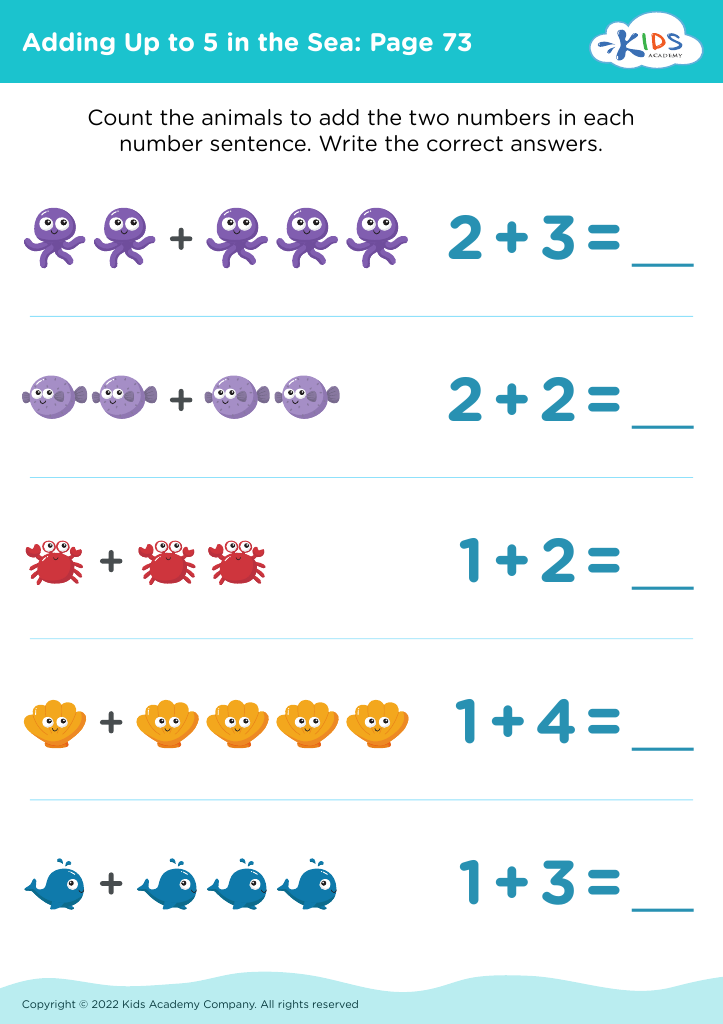
Adding Up to 5 in the Sea: Page 73
Worksheet
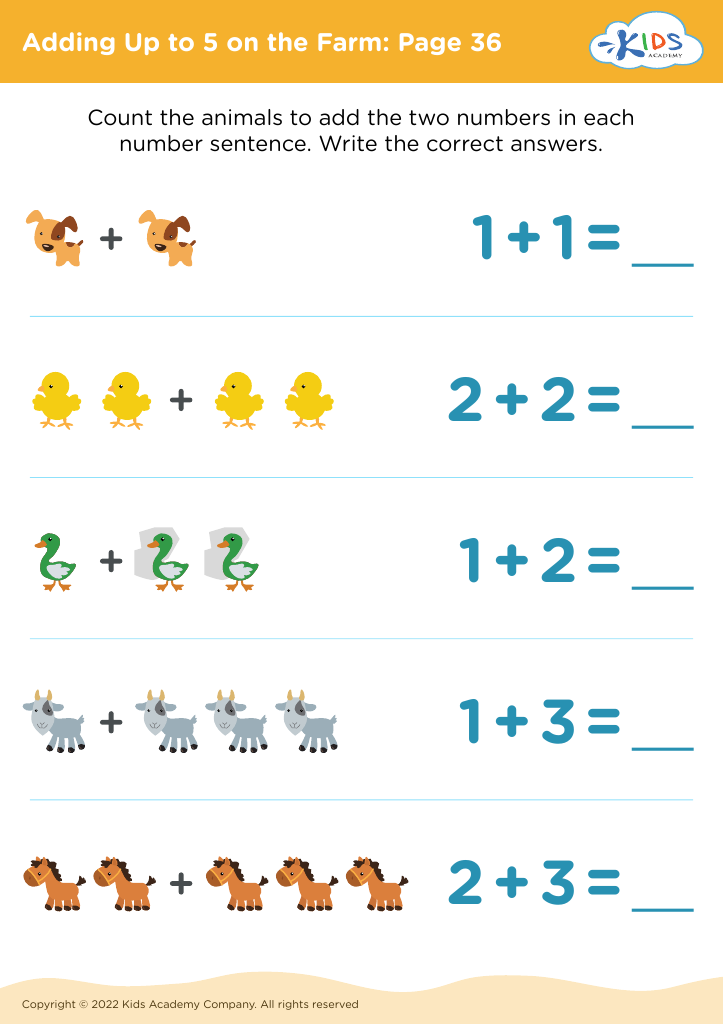
Adding Up to 5 on the Farm: Page 36
Worksheet
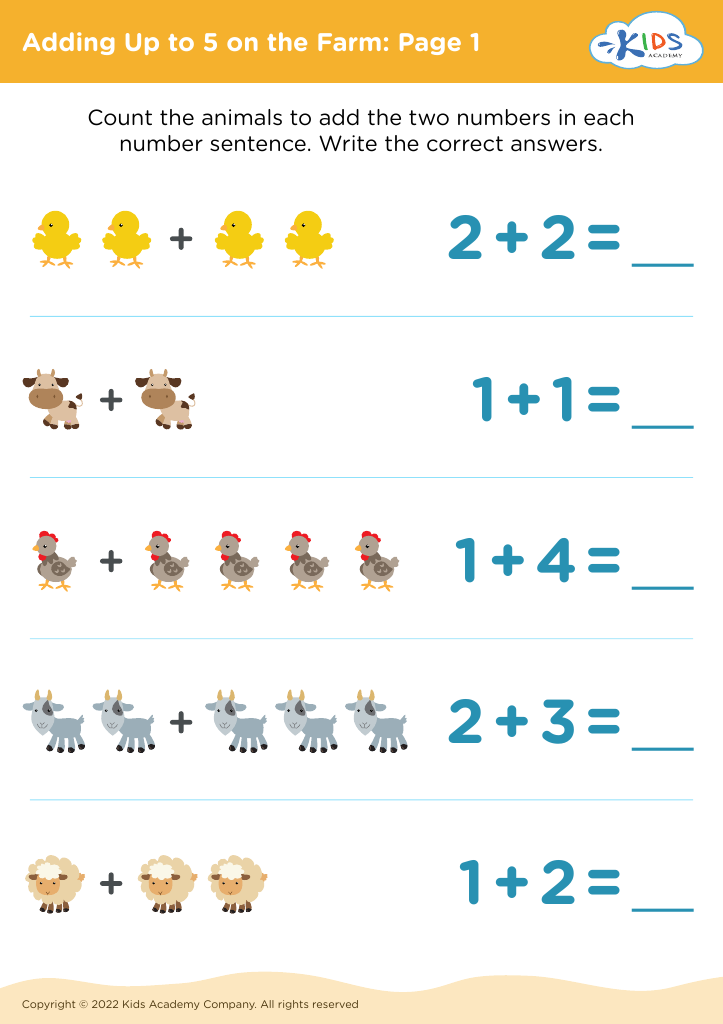
Adding Up to 5 on the Farm: Page 1
Worksheet
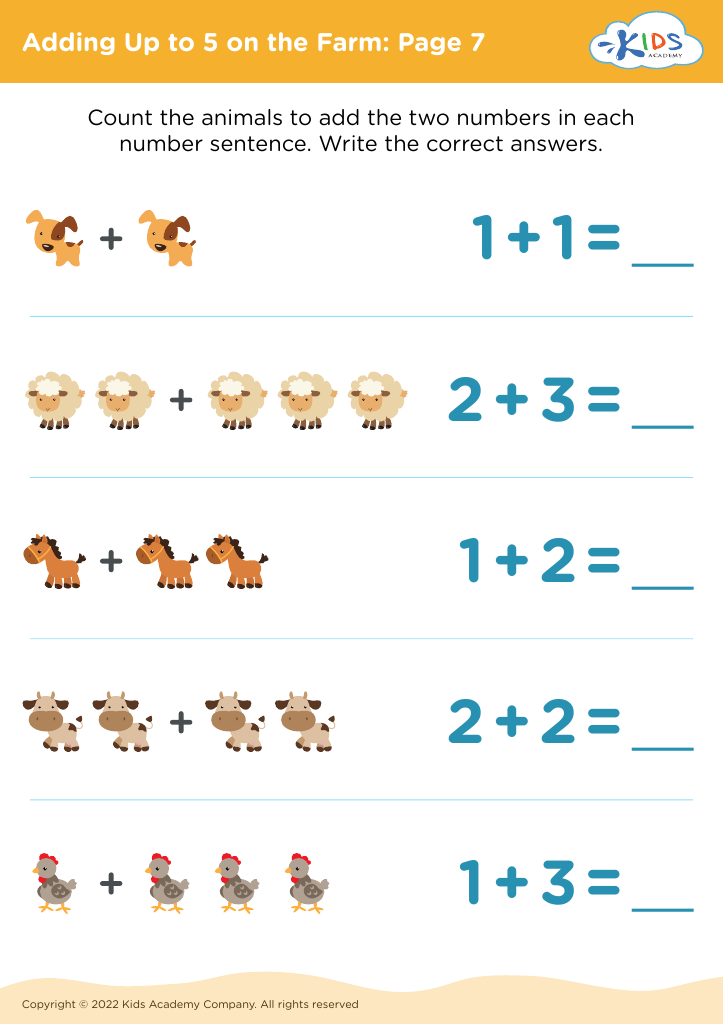
Adding Up to 5 on the Farm: Page 7
Worksheet
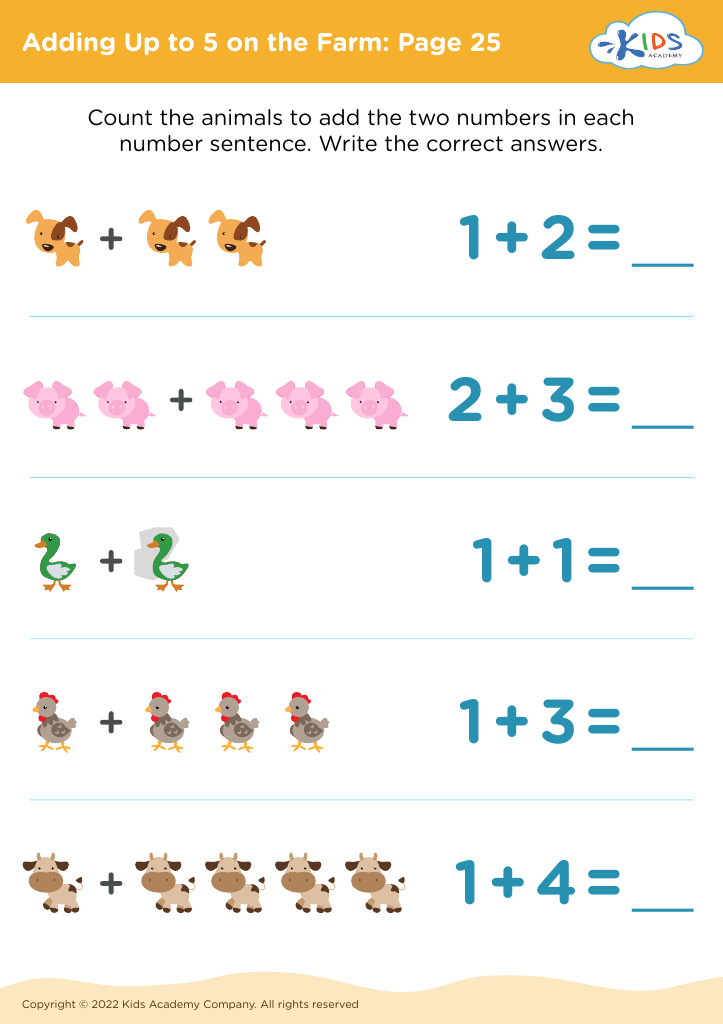
Adding Up to 5 on the Farm: Page 25
Worksheet
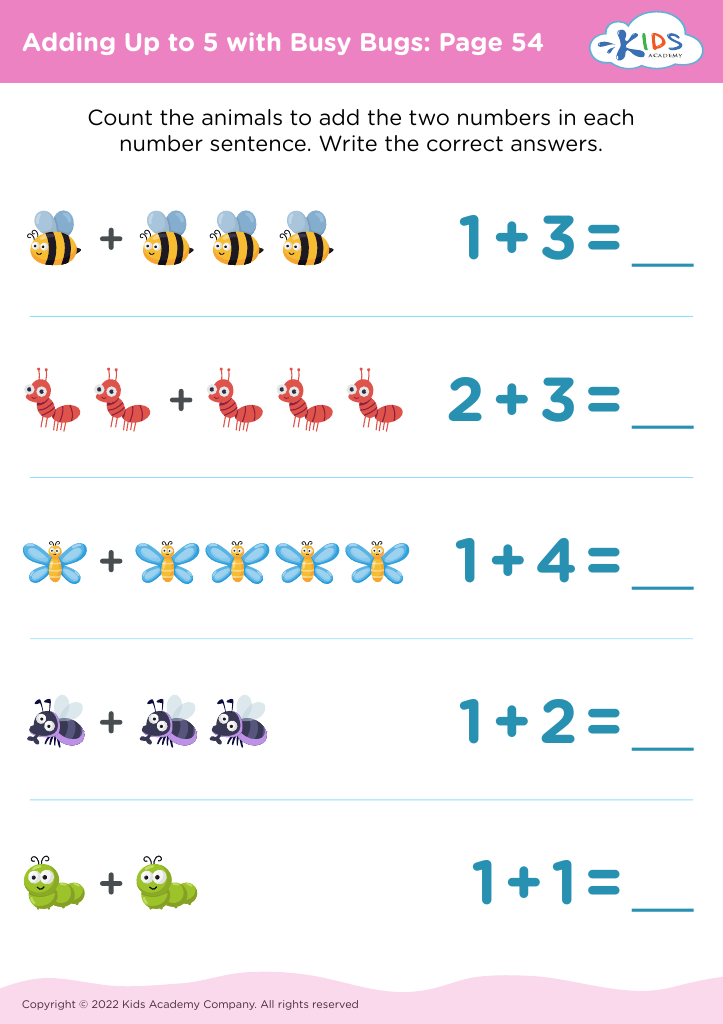
Adding Up to 5 with Busy Bugs: Page 54
Worksheet
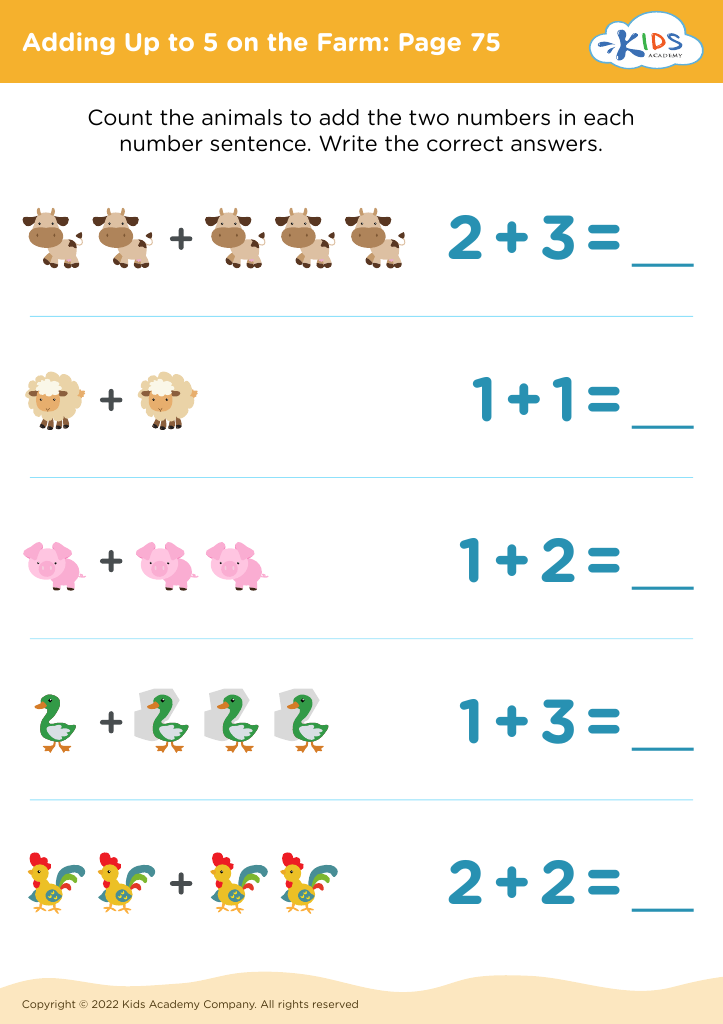
Adding Up to 5 on the Farm: Page 75
Worksheet
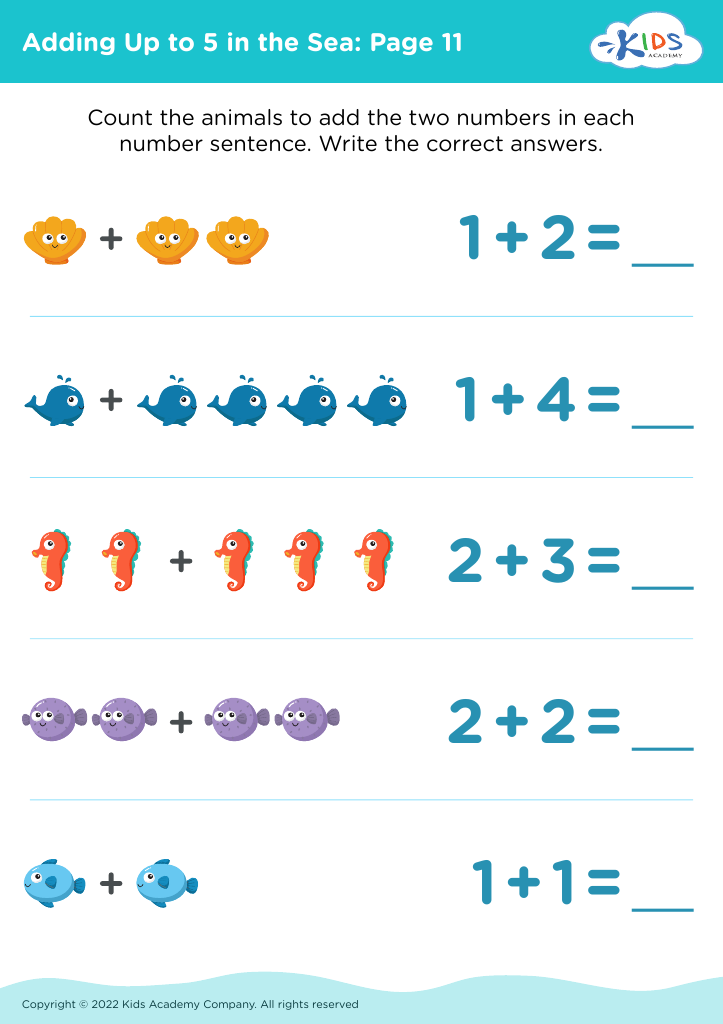
Adding Up to 5 in the Sea: Page 11
Worksheet
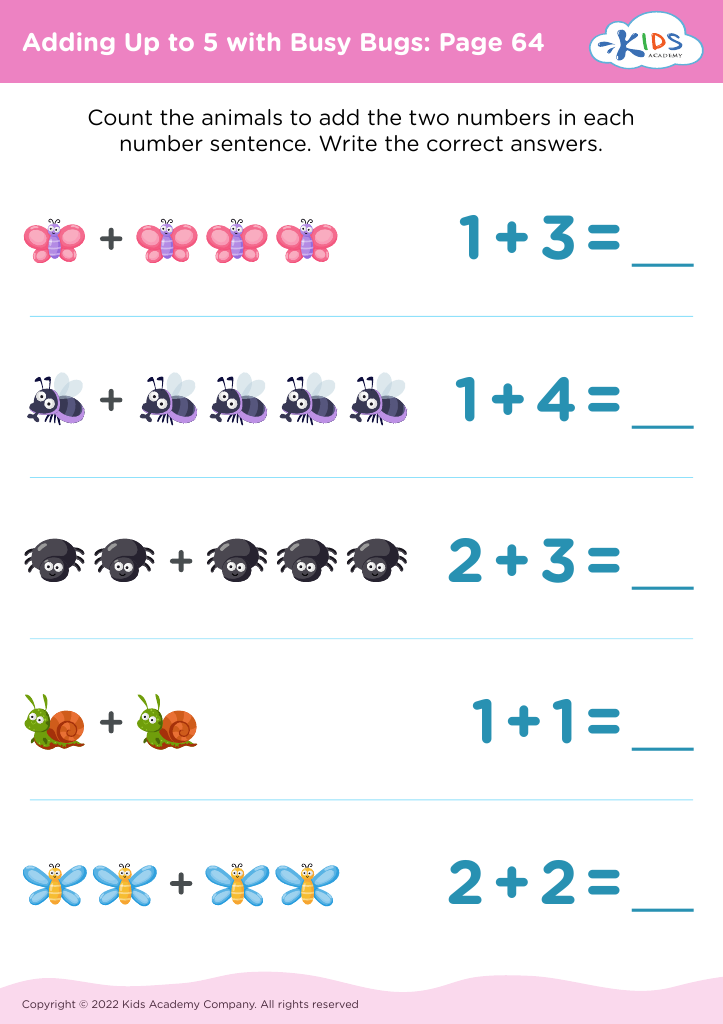
Adding Up to 5 with Busy Bugs: Page 64
Worksheet
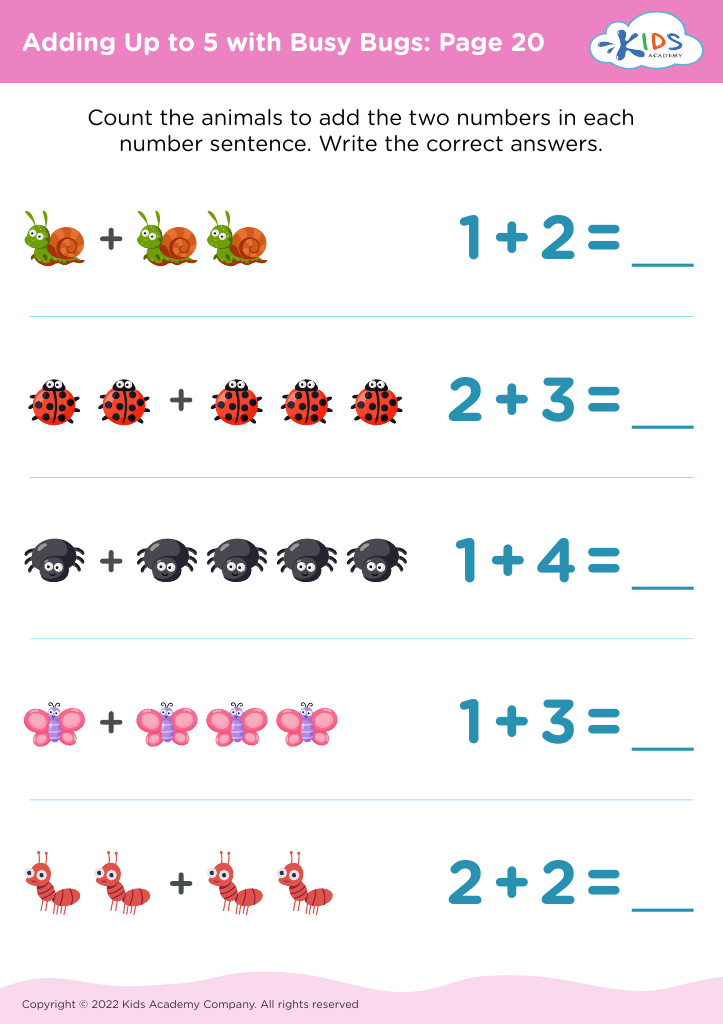
Adding Up to 5 with Busy Bugs: Page 20
Worksheet
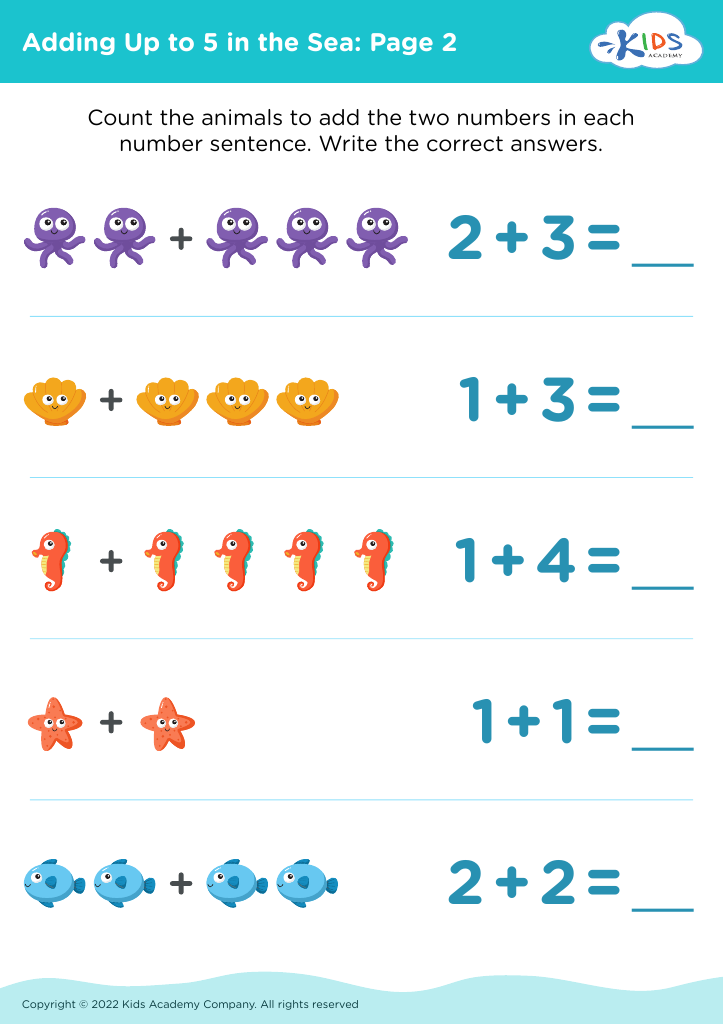
Adding Up to 5 in the Sea: Page 2

Adding Up to 5 in the Sea: Page 2

Adding Up to 5 in the Sea: Page 2
Worksheet
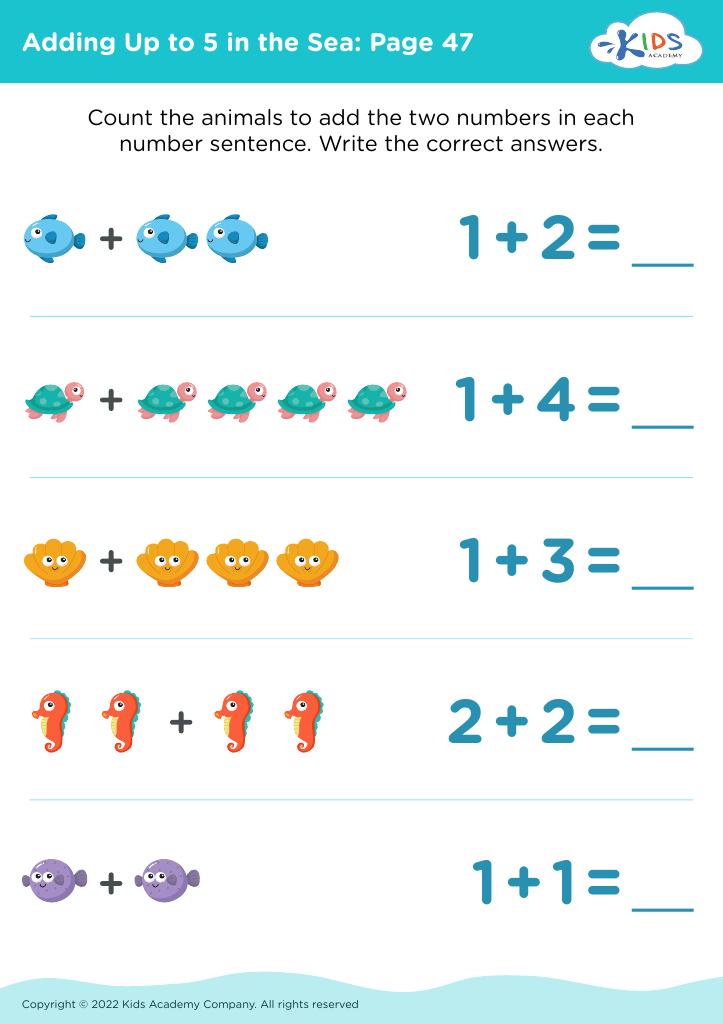
Adding Up to 5 in the Sea: Page 47
Worksheet
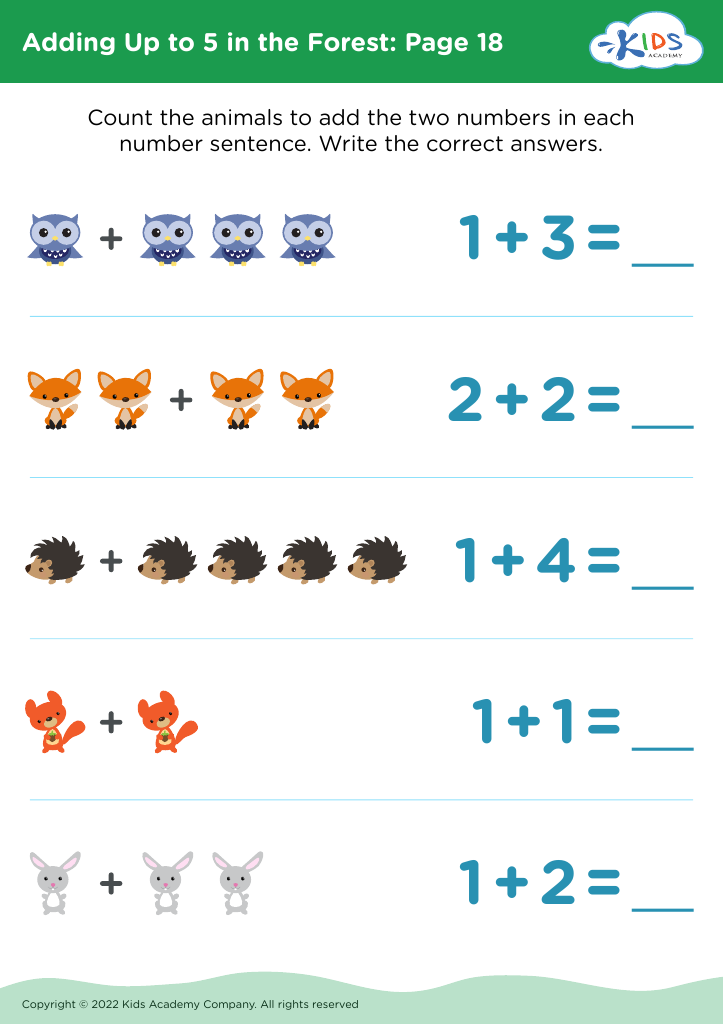
Adding Up to 5 in the Forest: Page 18
Worksheet
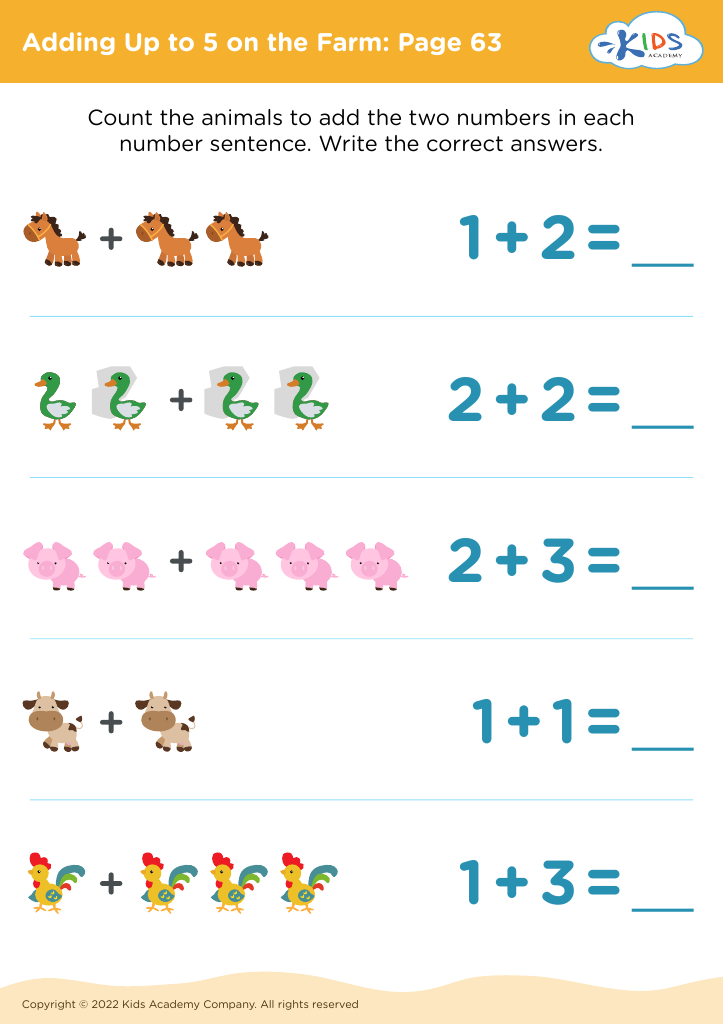
Adding Up to 5 on the Farm: Page 63
Worksheet
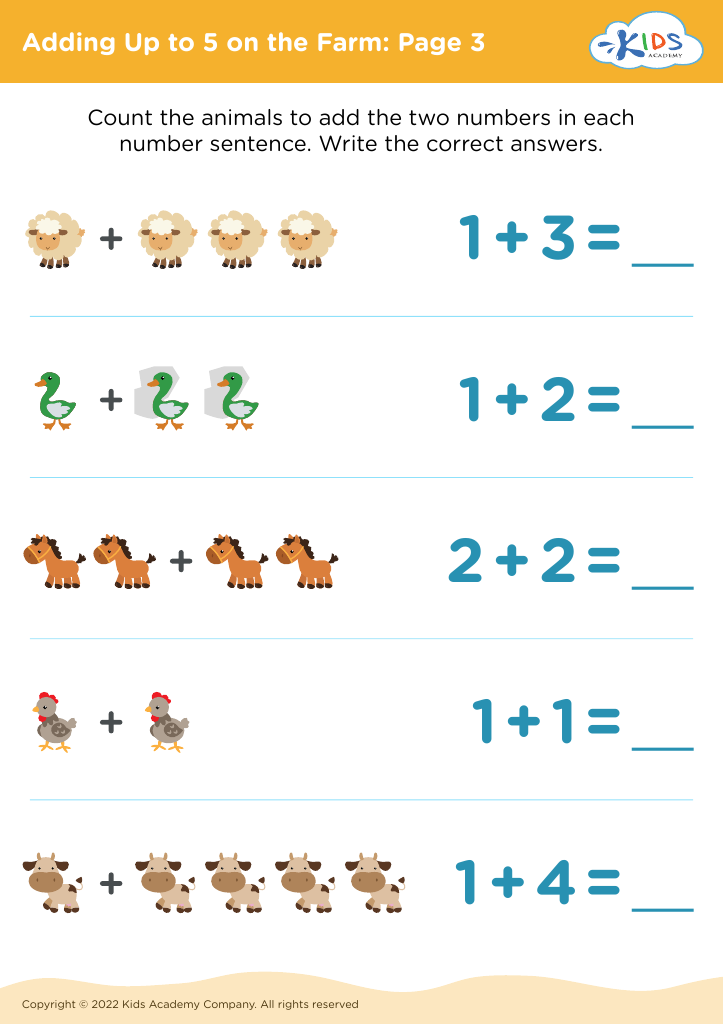
Adding Up to 5 on the Farm: Page 3
Worksheet
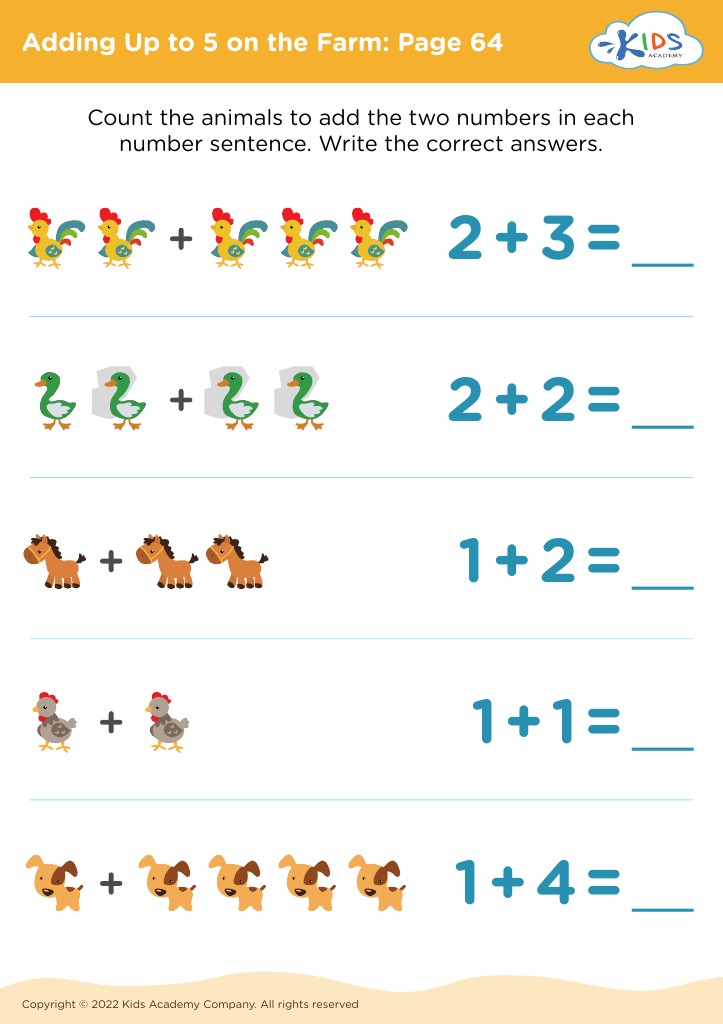
Adding Up to 5 on the Farm: Page 64
Worksheet


Visual learning is a powerful tool for children aged 4-6, especially when learning foundational math skills, such as adding up to 5. At this developmental stage, children’s brains are highly receptive to visual stimuli, which makes using visual aids an effective way to enhance their understanding and retention.

When children see representations of numbers through pictures, objects, or diagrams, it helps them grasp abstract concepts in a concrete manner. For example, visual aids like counting blocks, number lines, and illustrated addition problems can turn numerical symbols into relatable, countable items. This is crucial because young learners often find it easier to understand the idea of "adding" when they can visualize combining groups of items.

Moreover, visual learning supports the development of critical thinking and problem-solving skills. By repeatedly viewing and manipulating visual representations of addition, children start recognizing patterns and relationships between numbers, laying down a solid mathematical foundation.

Parents and teachers should care about visual learning aids because they cater to different learning styles and can address various learning needs, ensuring that all children gain a basic understanding of addition. This encourages a positive attitude towards math, reducing anxiety and fostering an environment where children feel confident in their abilities to solve mathematical problems. Simply put, using visual learning to teach addition sets children on a successful path in their math education journey.