Visual perception improvement Adding Up to 5 Worksheets for Ages 4-6
5 filtered results
-
From - To
Develop vital visual perception skills for young learners with our engaging Adding Up to 5 Worksheets, designed for children ages 4-6. These expertly crafted worksheets help improve number recognition, counting, and basic addition through vibrant, interactive activities. By enhancing visual perception, children gain the ability to accurately process and comprehend visual information, laying a solid mathematical foundation. Perfect for both classroom and home use, these worksheets make early math fun and rewarding. Build confidence and competence in your child’s learning journey with this unique, educational tool from Kids Academy. Download today and start exploring the world of numbers!
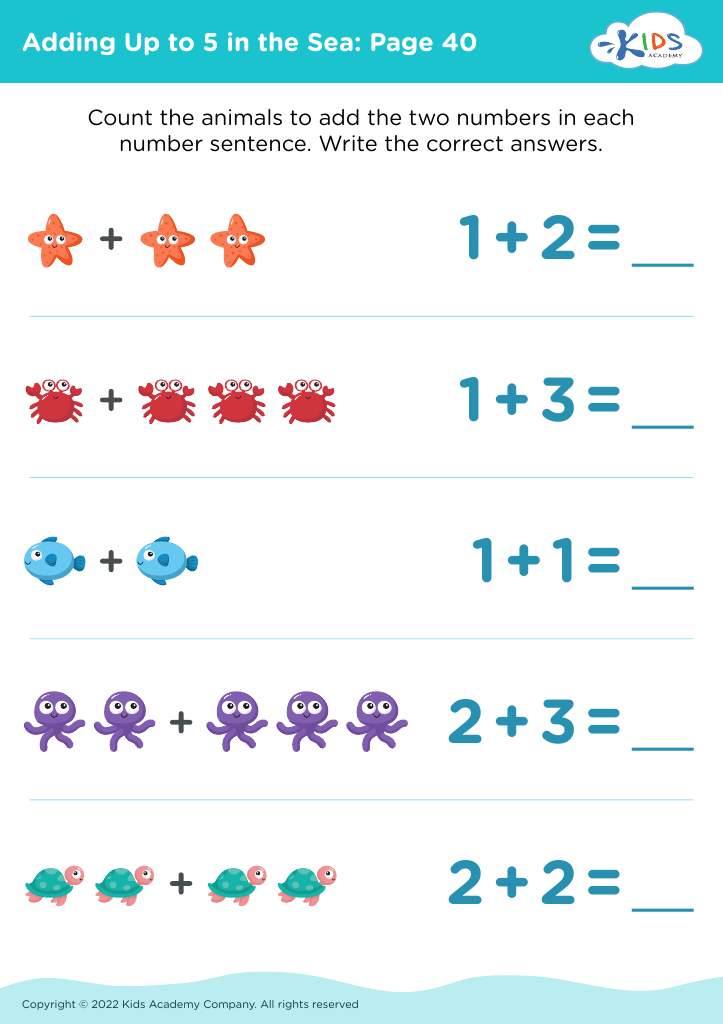
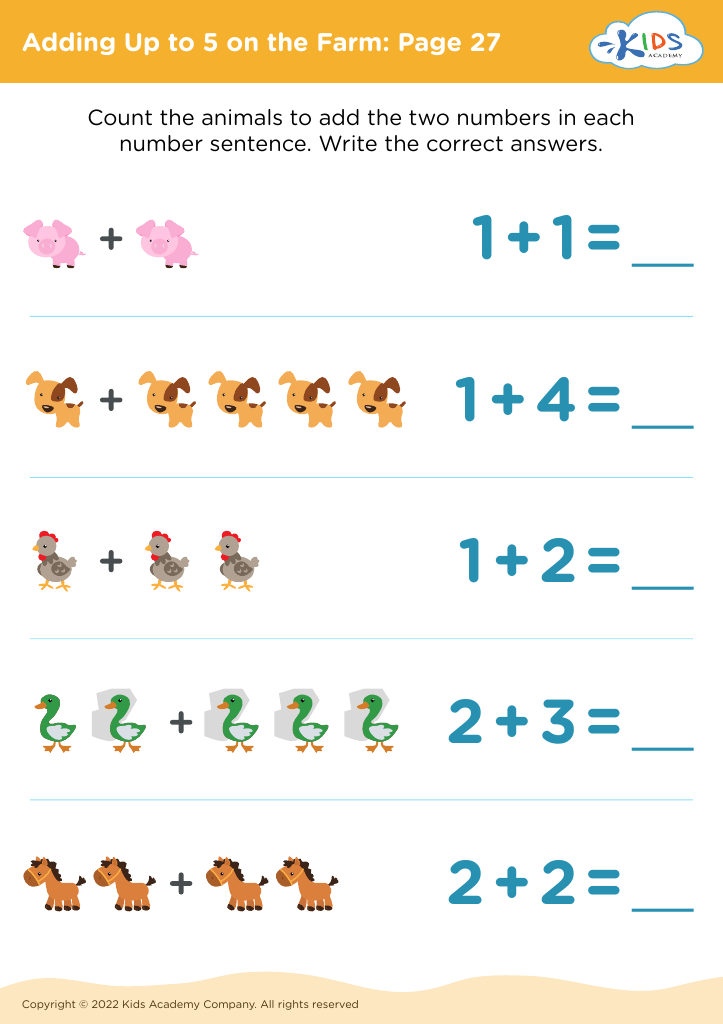
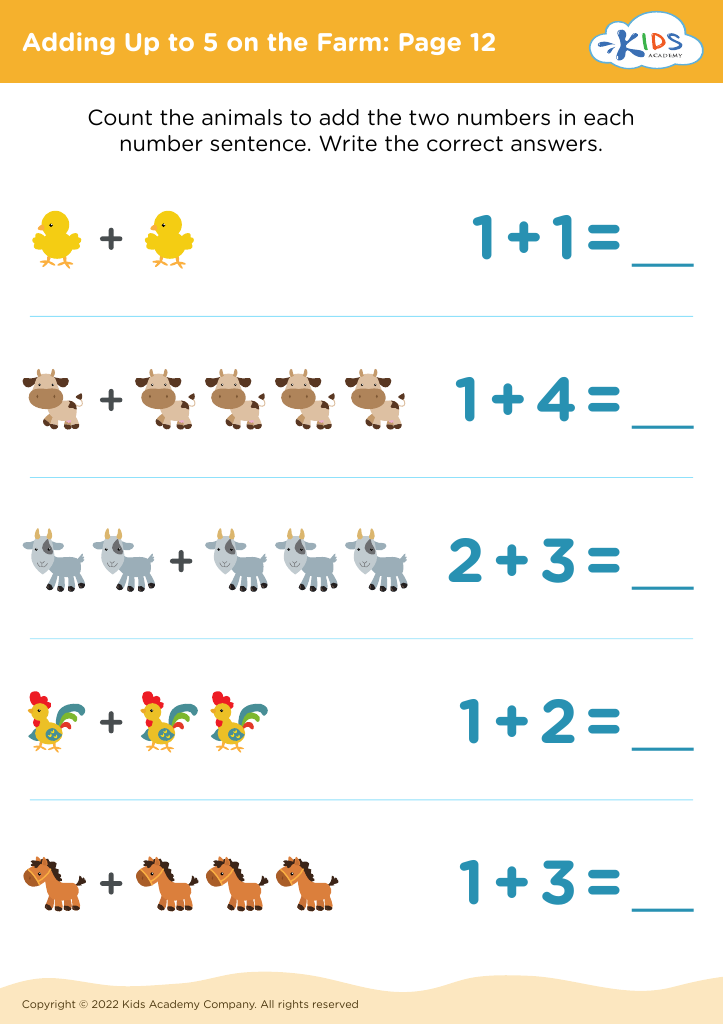
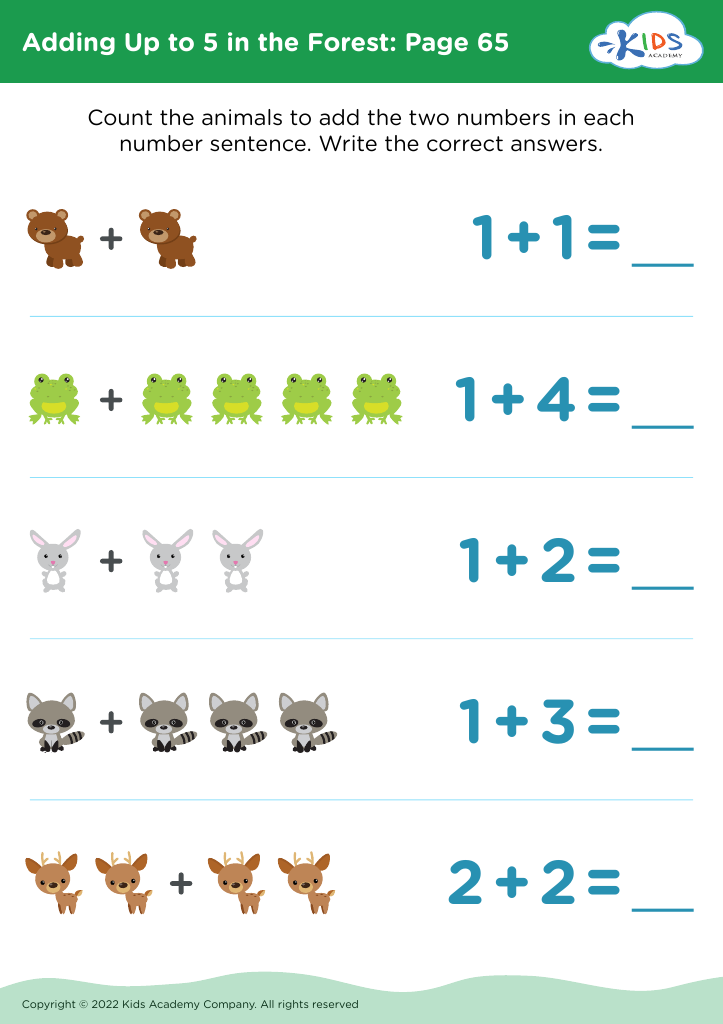
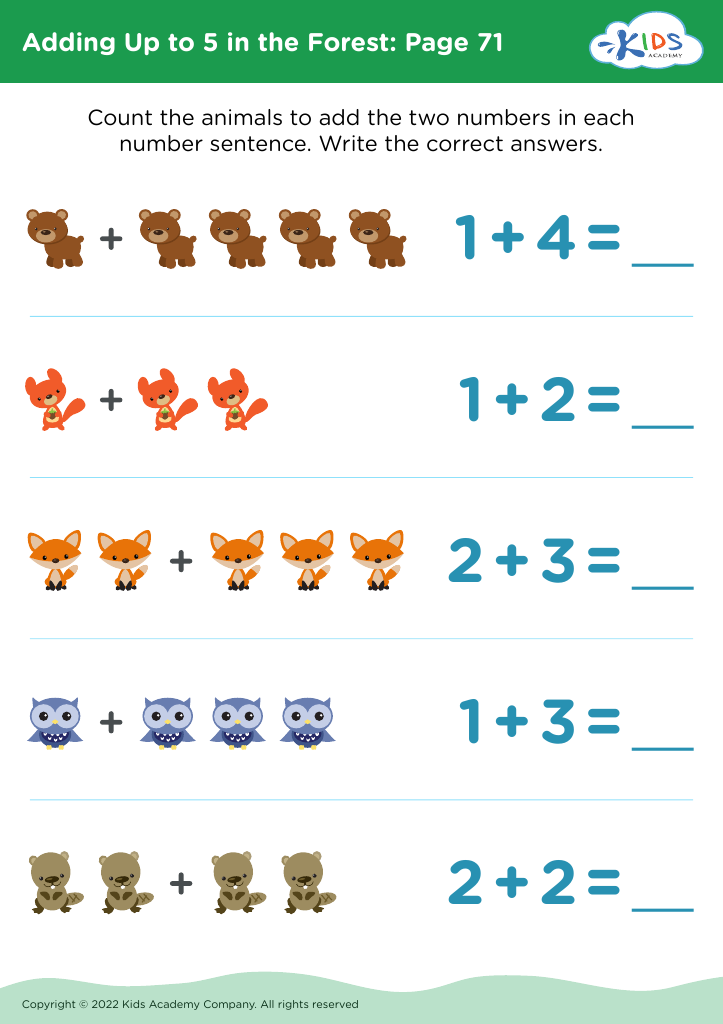








Parents and teachers should prioritize visual perception improvement in young children, particularly in skills like Adding Up to 5, to set a strong foundation for future learning and development. Visual perception encompasses a child's ability to interpret and make sense of visual information, which is critical for reading, writing, mathematics, and navigating their environment.
Improving visual perception helps children better recognize numbers, patterns, and spatial relationships — essential skills for early math development. Kindergarten-aged children who can accurately perceive visual details are more likely to smoothly transition from recognizing numbers to understanding basic addition. For example, grasping the concept of adding up to 5 through visual exercises, like counting dots or matching numerals with groups of objects, enhances their number sense and paves the way for more complex arithmetic later on.
Moreover, strong visual perception skills aid in the child's overall cognitive development, including memory, attention, and problem-solving abilities. This enables them to process classroom instructions more effectively and enhances their confidence and enthusiasm for learning. By focusing on these skills during the formative years of ages 4-6, parents and teachers can support a child's academic success and foster a proactive attitude towards new challenges and activities, laying a solid groundwork for lifelong learning.








