Counting practice Addition and Subtraction Word Problems Worksheets for Ages 4-6
5 filtered results
-
From - To
Explore our engaging Counting Practice Addition and Subtraction Word Problems Worksheets designed specifically for children ages 4-6! These printable activities help young learners develop essential math skills through fun and relatable word problems. Each worksheet is tailored to enhance counting abilities while introducing basic addition and subtraction concepts. Your child will enjoy solving problems that involve everyday scenarios, building their confidence and critical thinking skills. Perfect for use at home or in the classroom, these worksheets make learning math enjoyable and effective. Foster a love for math in your little ones and watch them thrive as they master counting with our comprehensive resources!
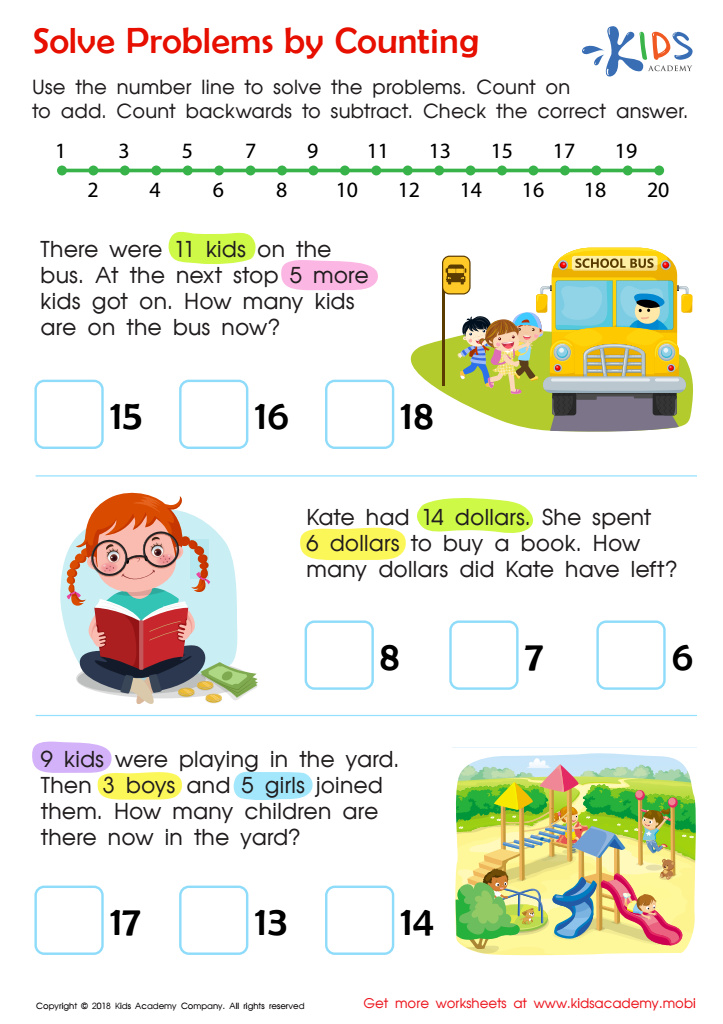
Solve Problems by Counting Worksheet
 Assign to My Students
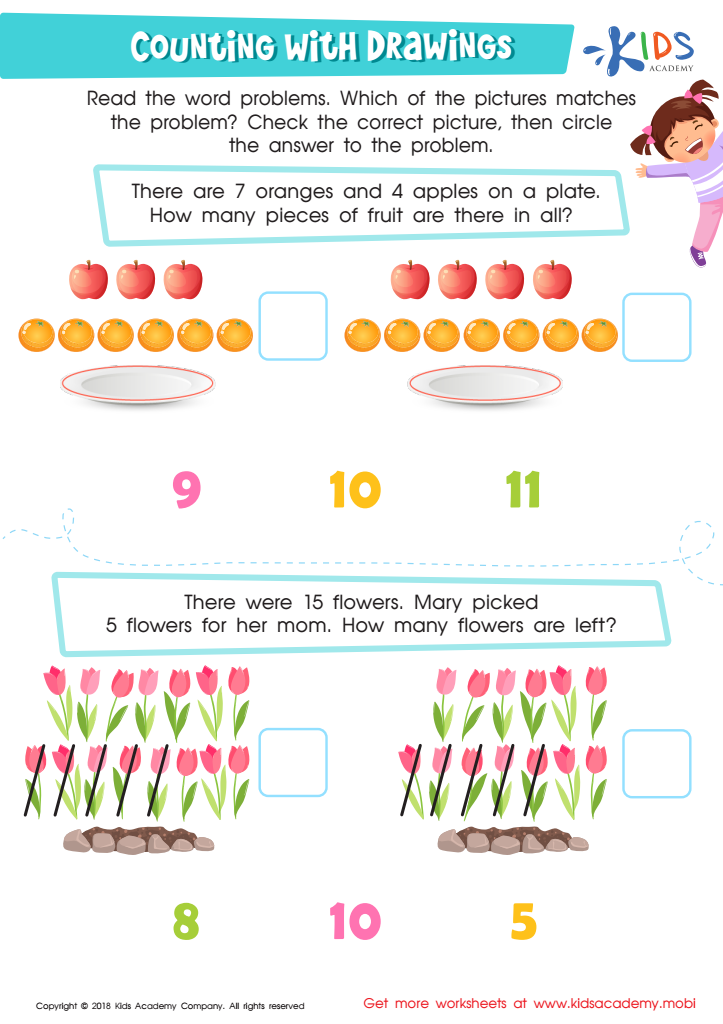
Counting with Drawings: Fruits & Chocolates Worksheet
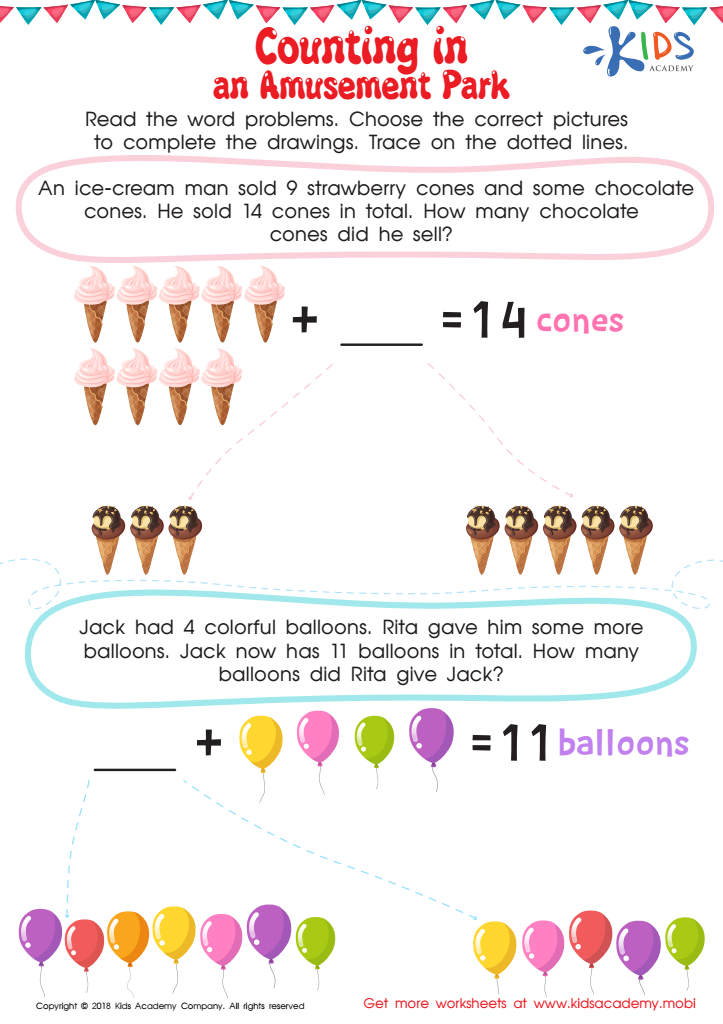
Counting in an Amusement Park Worksheet
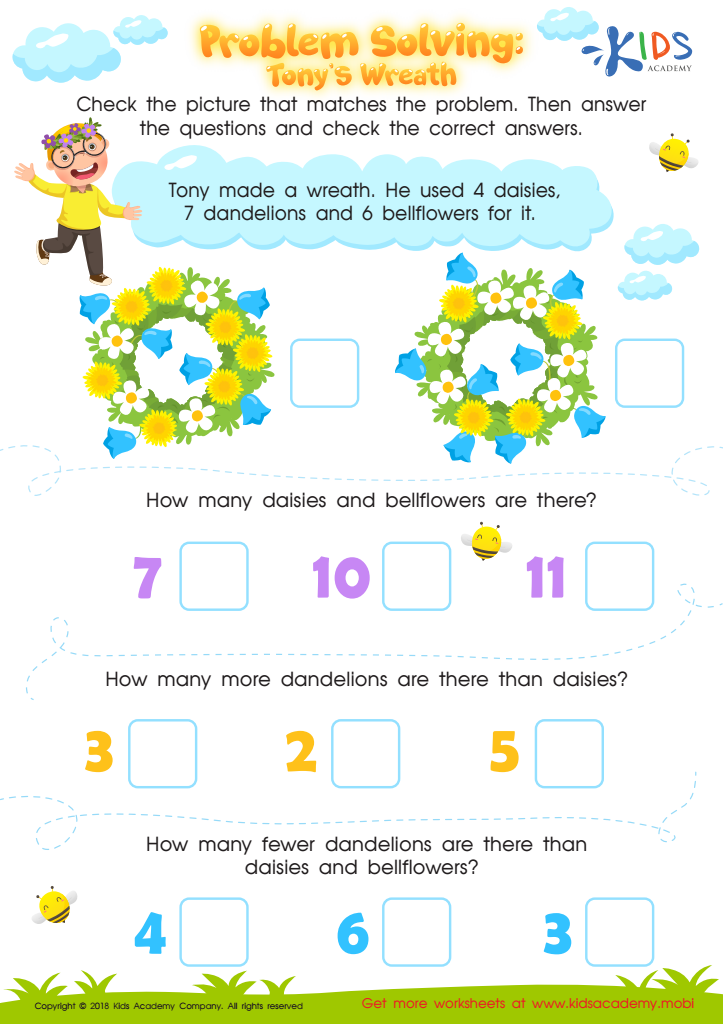
Problem Solving: Tony's Wreath Worksheet
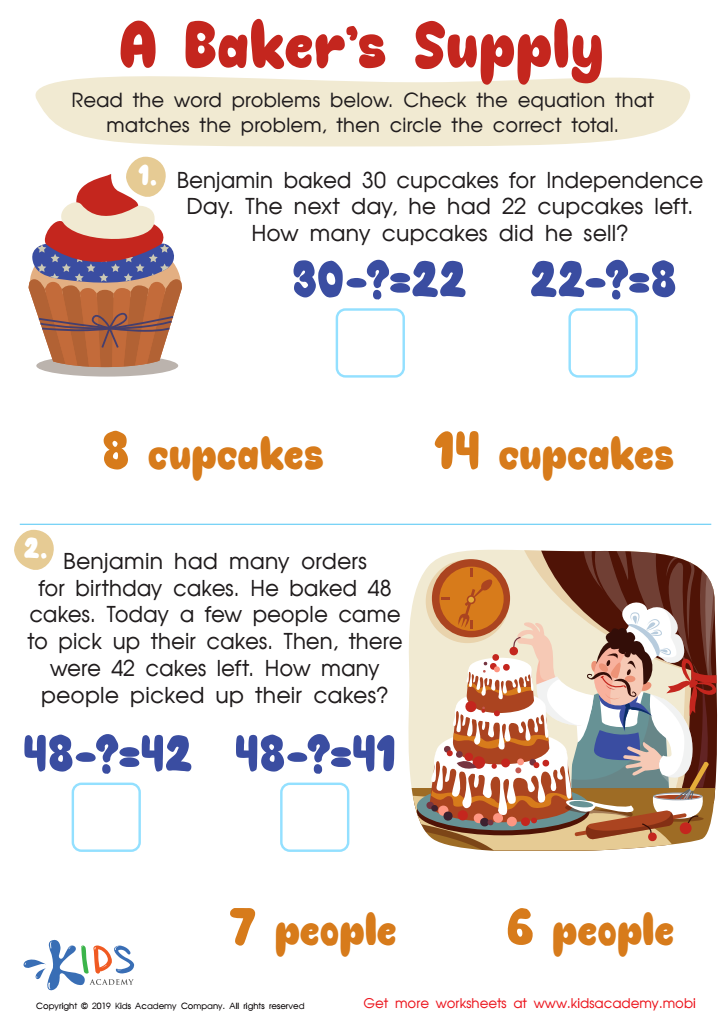
A Baker's Supply Worksheet








Parents and teachers should recognize the importance of counting practice and word problems in addition and subtraction for children aged 4 to 6, as these foundational skills are crucial for early childhood development. At this stage, children are becoming familiar with numbers and basic operations, which are essential building blocks for more advanced math concepts.
Engaging with counting practice helps young learners develop number sense, improving their ability to recognize, compare, and manipulate numbers. Word problems stimulate critical thinking and comprehension skills, enabling children to understand the practical application of math in everyday situations. Additionally, solving these problems encourages them to approach challenges systematically, fostering problem-solving abilities.
Furthermore, practicing counting and basic operations cultivates a positive attitude towards math, reducing anxiety and increasing confidence as they progress through their educational journey. Early exposure to mathematics has been linked to better performance later in school, making it vital for long-term academic success.
Lastly, collaborative counting activities can enhance social skills as children discuss and solve problems together, promoting communication and teamwork. Overall, parents and teachers should prioritize this practice to support a child's cognitive development and lay a strong foundation for future learning.