Fine motor skills (writing numbers) Addition & Subtraction Worksheets for Ages 4-6
14 filtered results
-
From - To
Boost your child's fine motor skills and number-writing abilities with our engaging Addition & Subtraction Worksheets, designed for ages 4-6. These printables from Kids Academy combine fun activities with educational value, helping young learners practice writing numbers while mastering basic arithmetic operations. Each worksheet offers a variety of exercises that encourage precision and attention to detail, essential for developing strong fine motor skills. Perfect for at-home learning or classroom use, our worksheets provide a foundation for future math success. Give your child the tools they need to excel in writing numbers and basic math with these interactive resources.
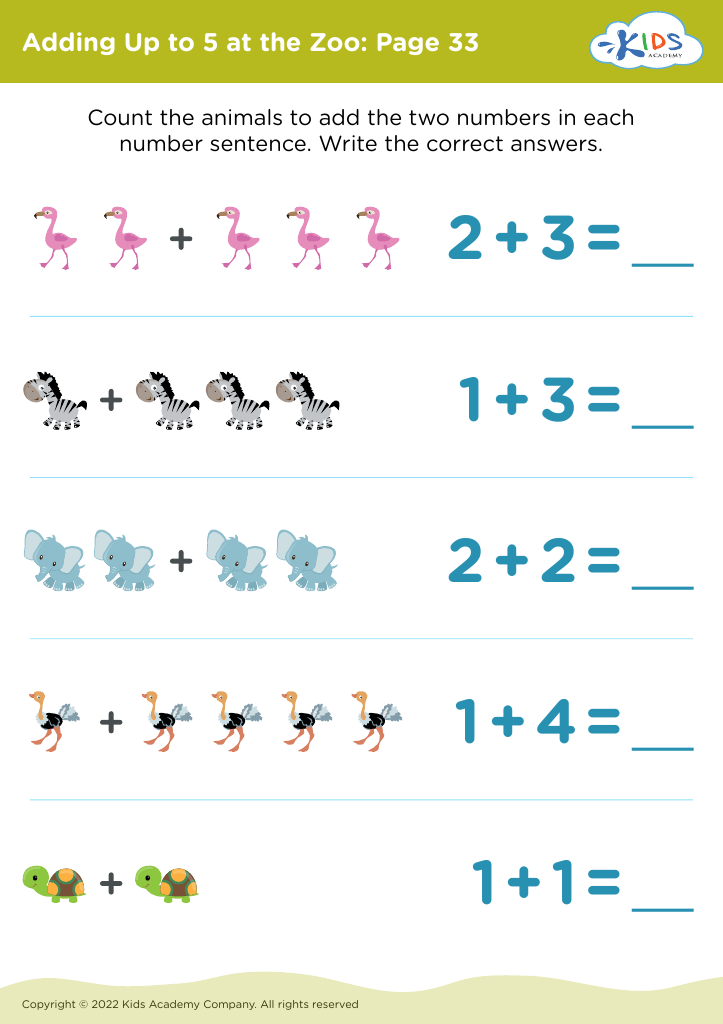
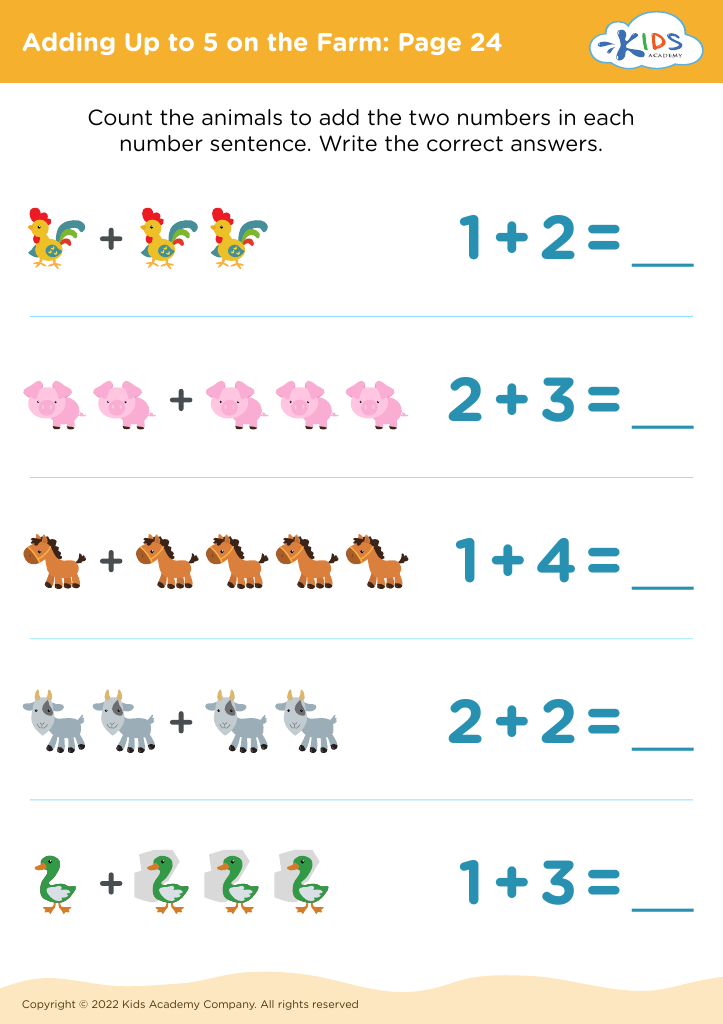
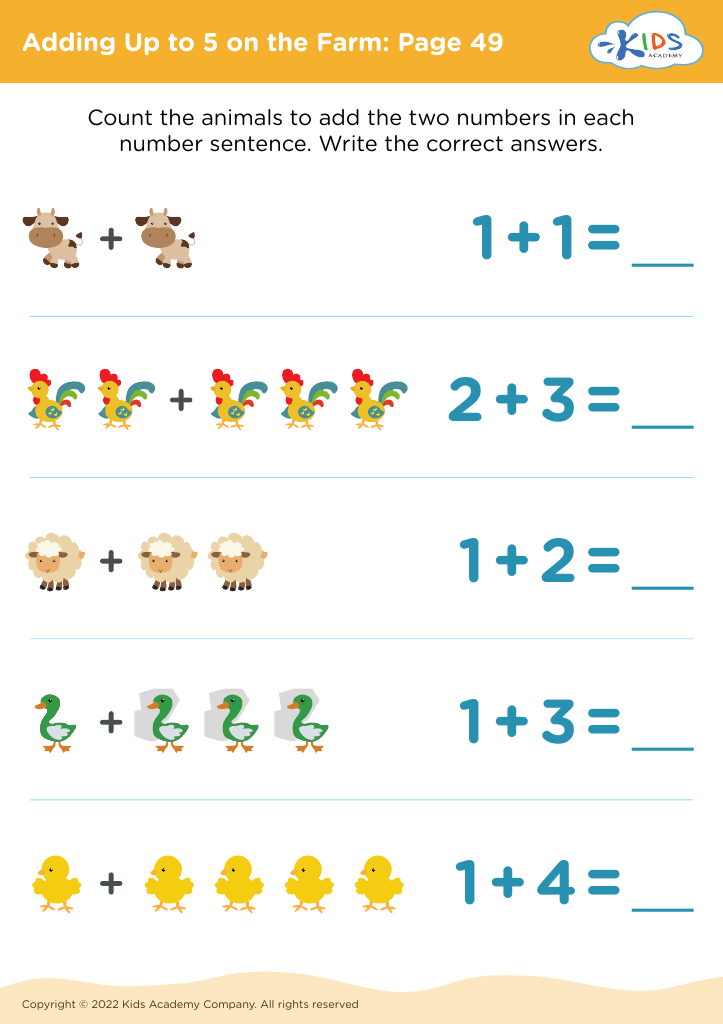
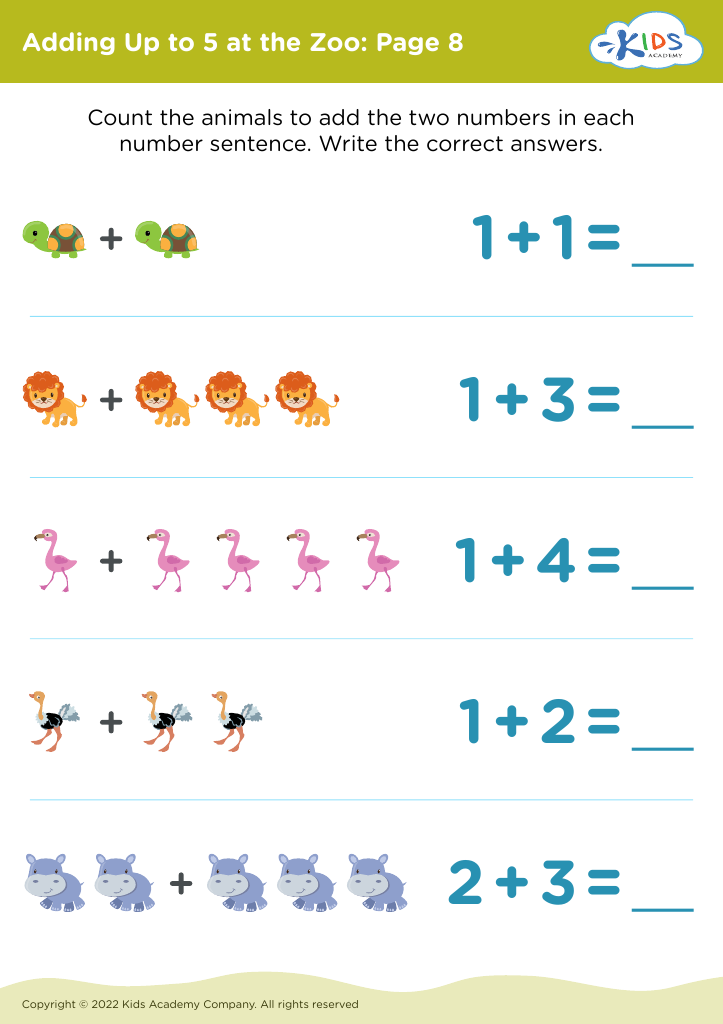
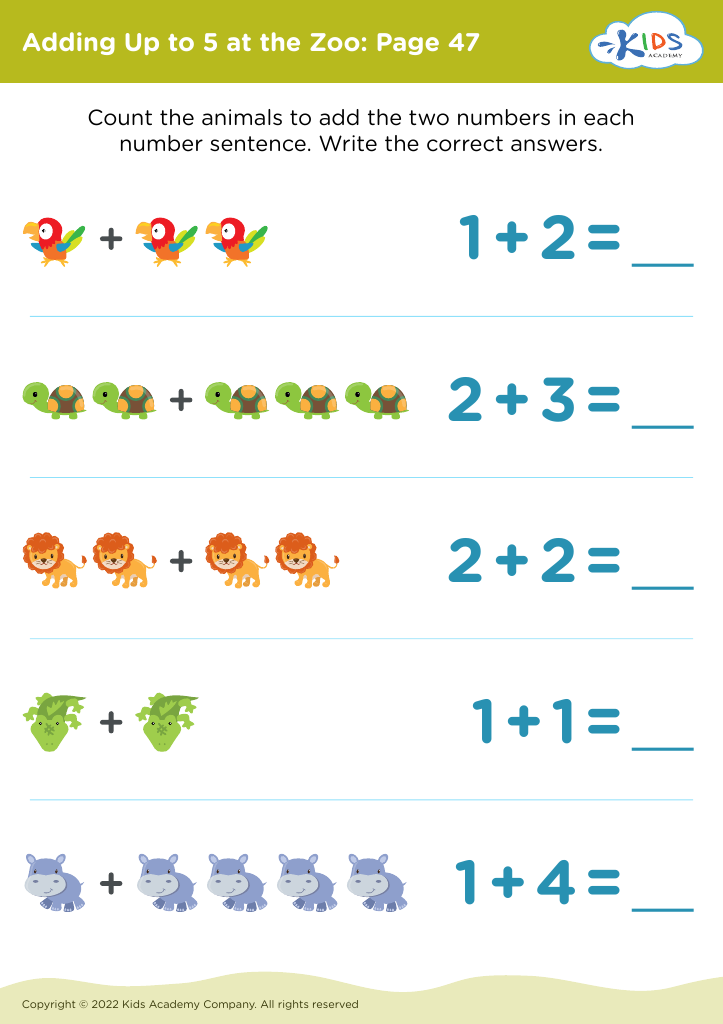
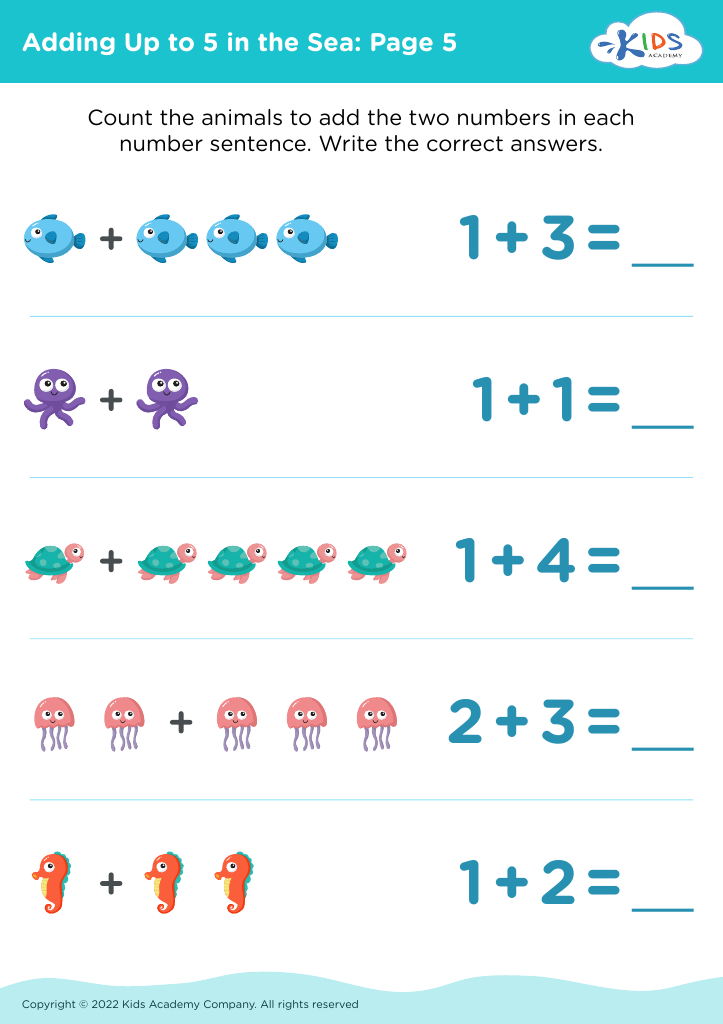
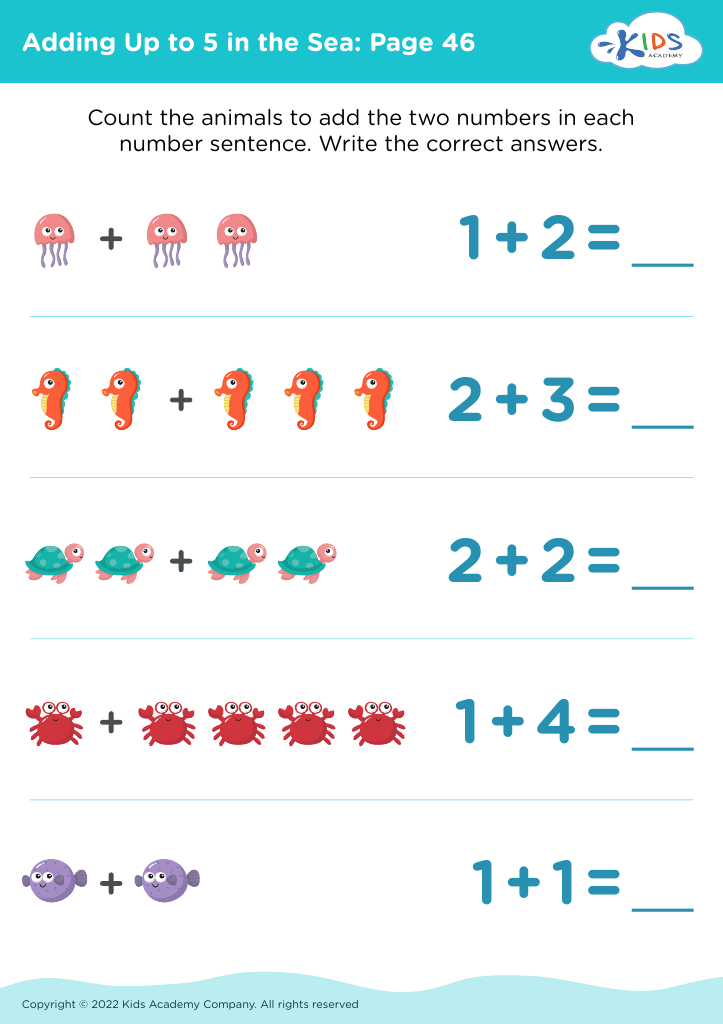
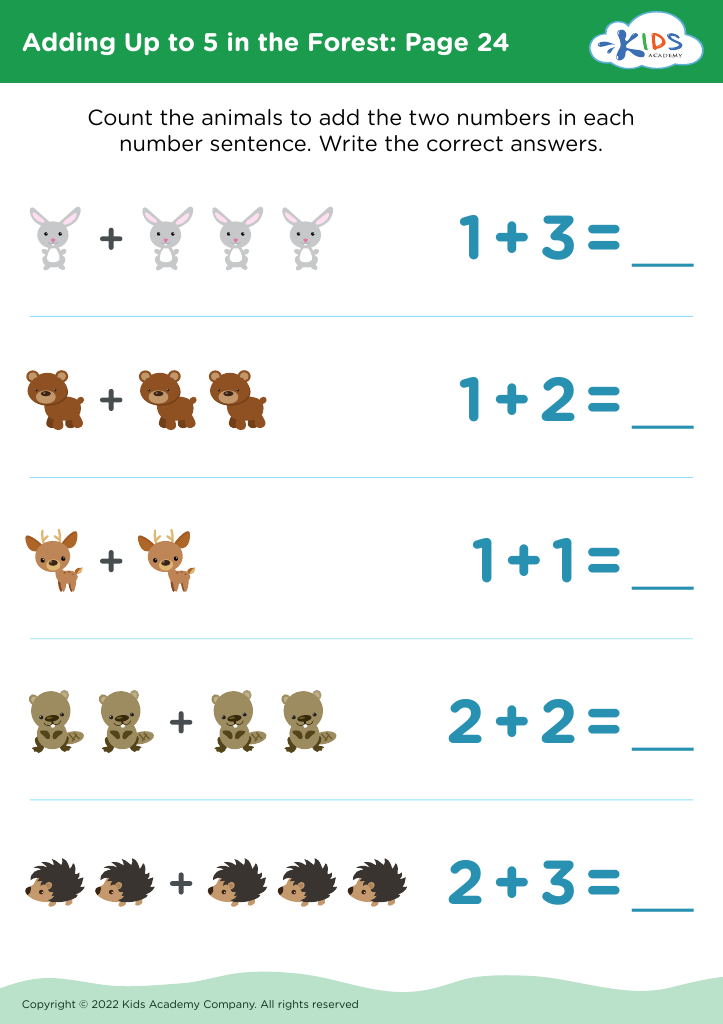
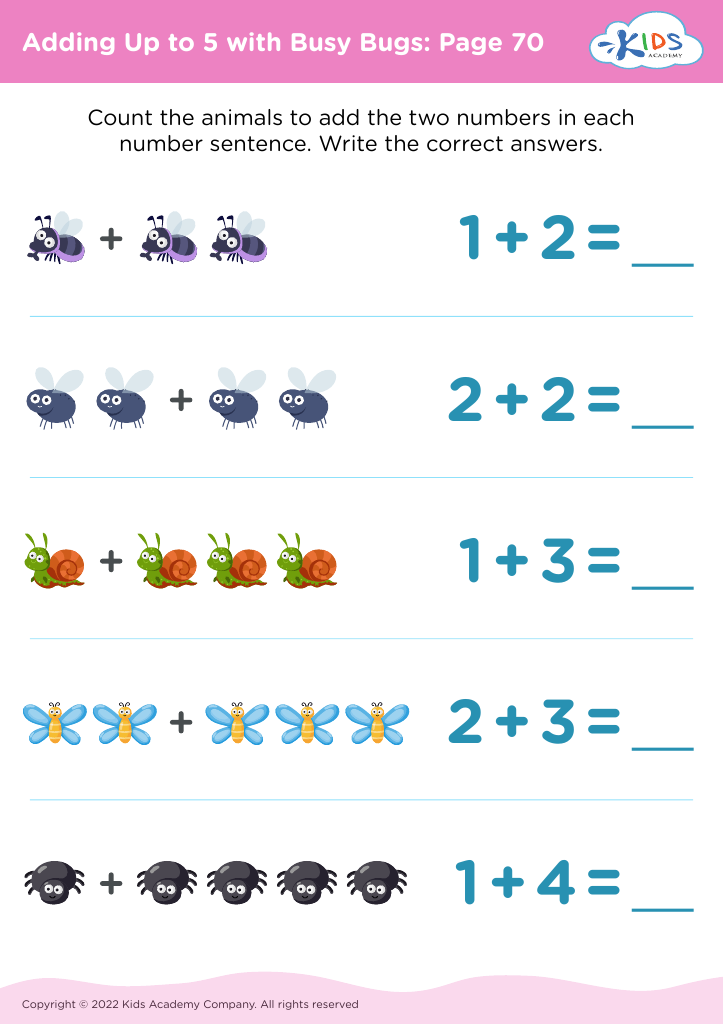
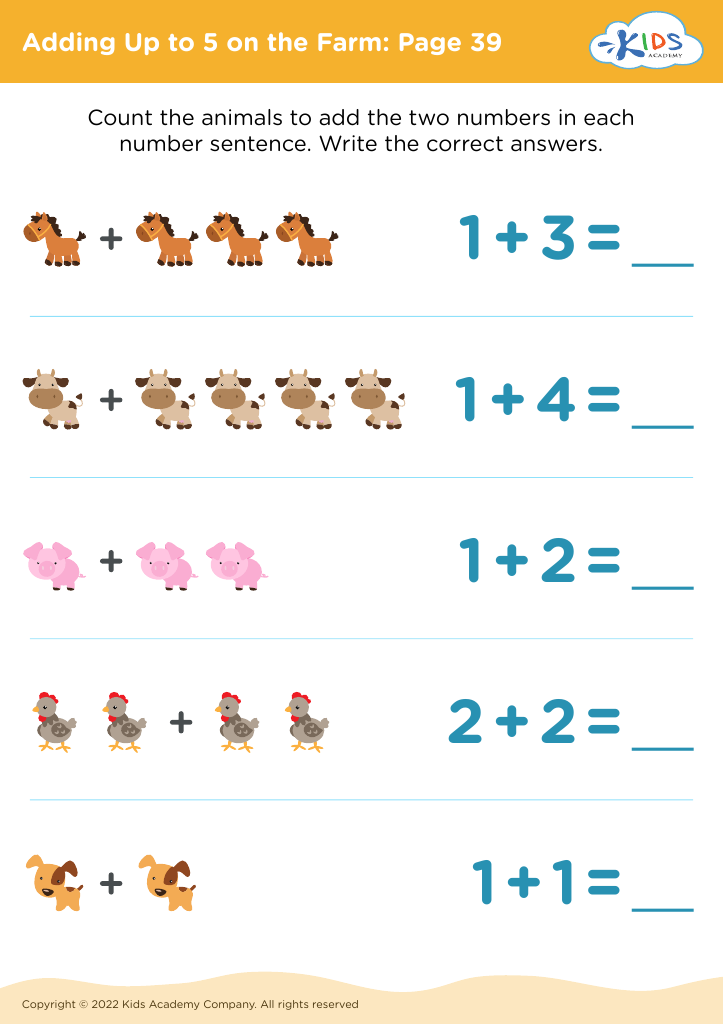
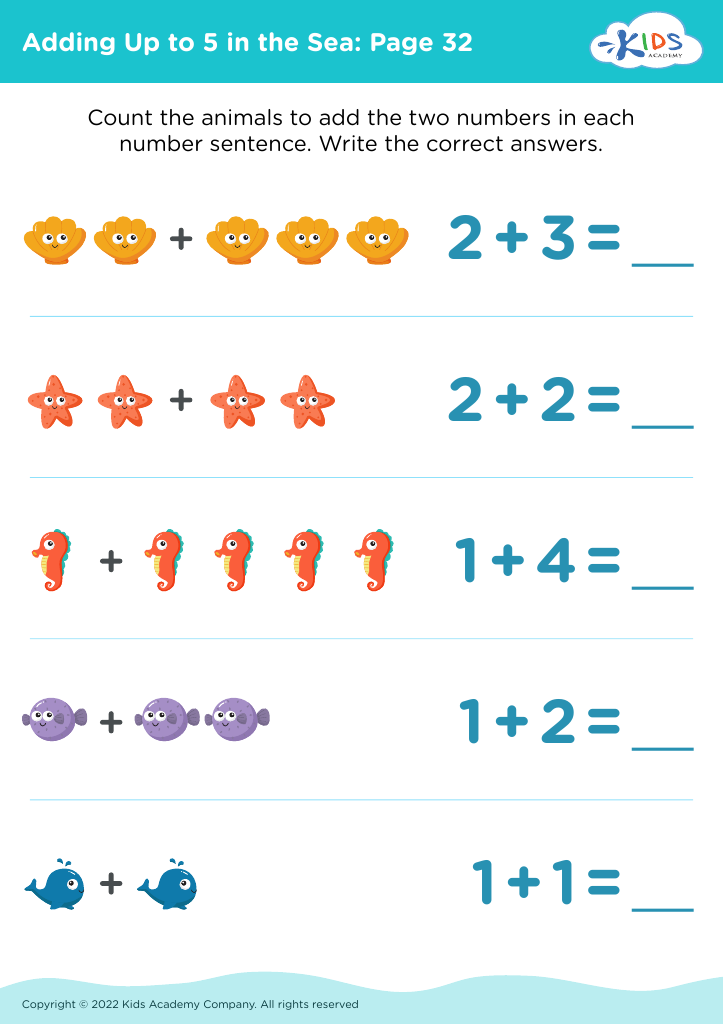
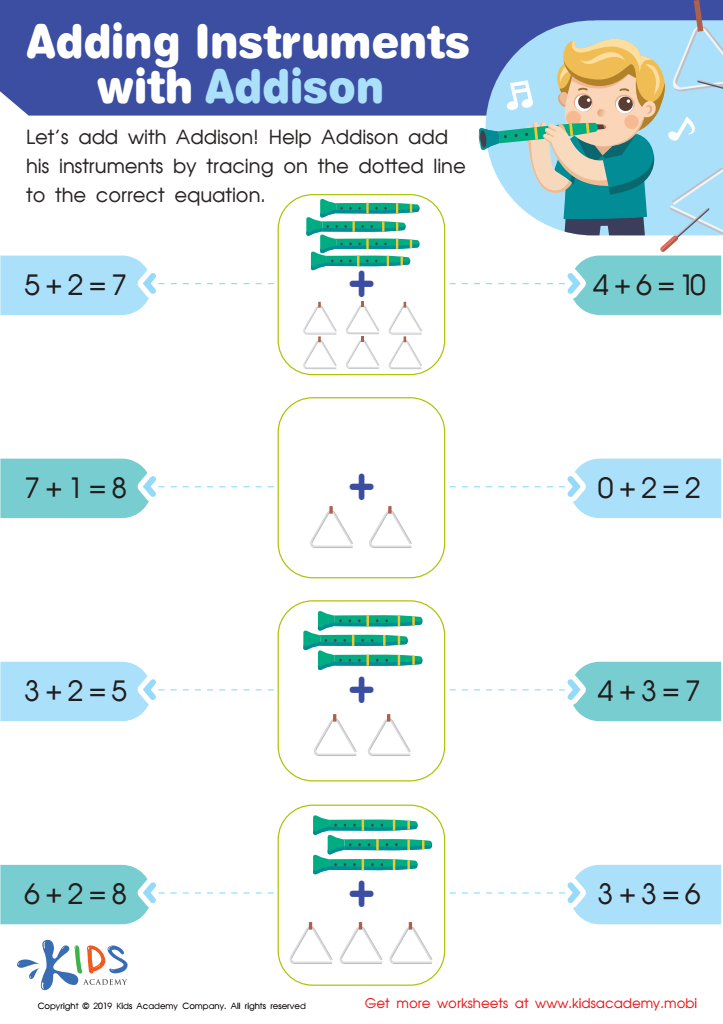
Adding Instruments with Addison Worksheet
 Assign to My Students
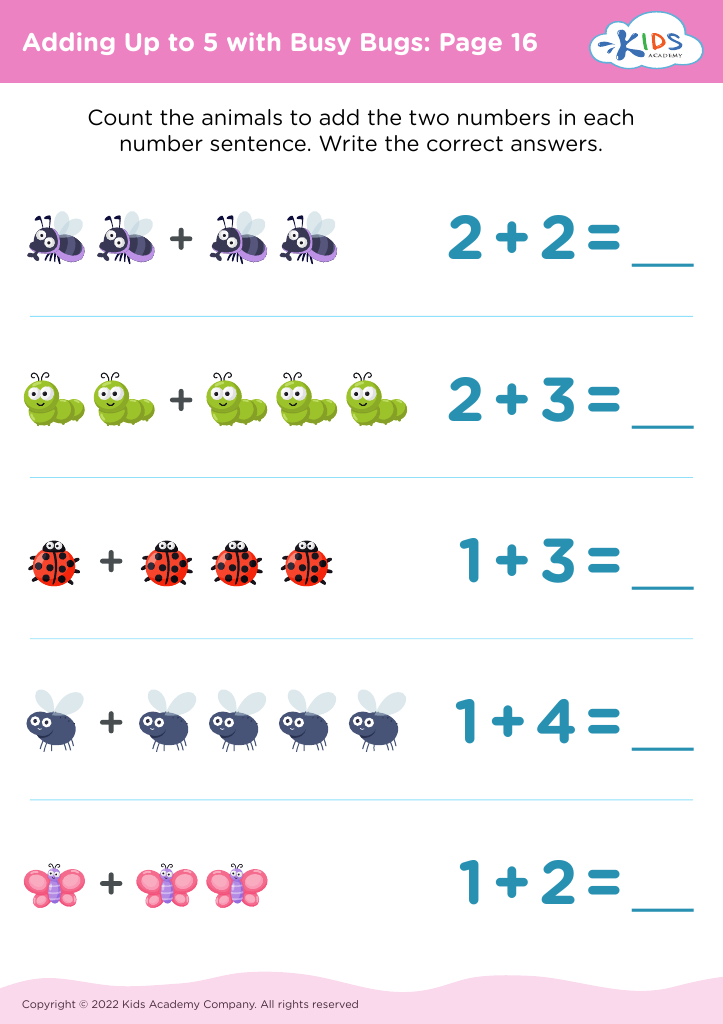
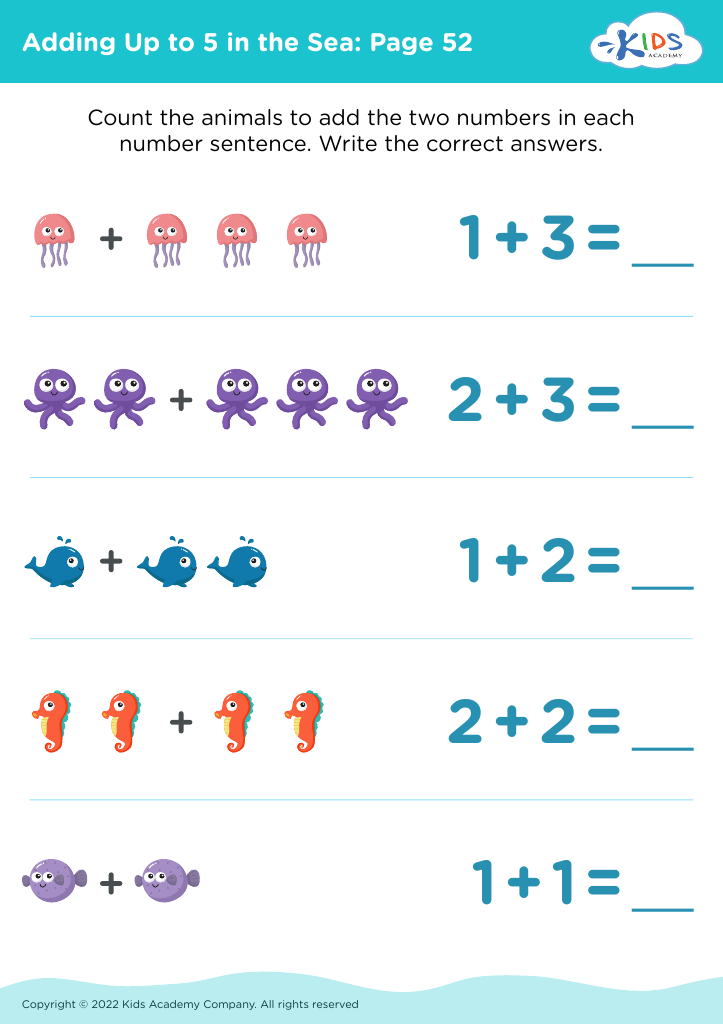








Fine motor skills are crucial for children aged 4-6 as they lay the groundwork for essential academic and everyday tasks. These skills involve the coordination of small muscles, particularly in the hands and fingers, to perform precise movements. When children practice writing numbers, they not only learn to recognize and reproduce numeric symbols but also strengthen their fine motor abilities. This foundational skill supports legible handwriting, affecting their performance in school and boosting self-confidence.
Addition and subtraction are critical arithmetic concepts that serve as the building blocks for more advanced math. Introducing these skills at a young age develops problem-solving abilities and logical thinking. By understanding basic arithmetic, children also enhance their cognitive development, which plays a role in understanding patterns and sequences in various subjects.
For parents and teachers, focusing on these areas ensures children have a solid educational foundation. This early proficiency can reduce frustration, making learning enjoyable and nurturing a positive attitude towards academics. Engaging young learners in fine motor activities and simple math problems fosters independence and critical thinking, setting the stage for future success in school and beyond. Recognizing the importance of these skills helps address developmental milestones, guiding children toward balanced, holistic growth.








