Improving counting skills Addition & Subtraction Worksheets for Ages 4-6
4 filtered results
-
From - To
Discover our engaging “Improving Counting Skills: Addition & Subtraction Worksheets“ designed specifically for children aged 4-6! These interactive worksheets provide young learners with hands-on activities to enhance their counting abilities while mastering basic addition and subtraction concepts. Featuring colorful visuals and age-appropriate exercises, we aim to make learning fun and accessible. Our resources foster critical thinking, problem-solving skills, and numerical fluency, ensuring a solid math foundation for your child. Perfect for both classroom use and at-home practice, these worksheets will empower children to gain confidence in their mathematical skills. Start the journey to numerical mastery today!
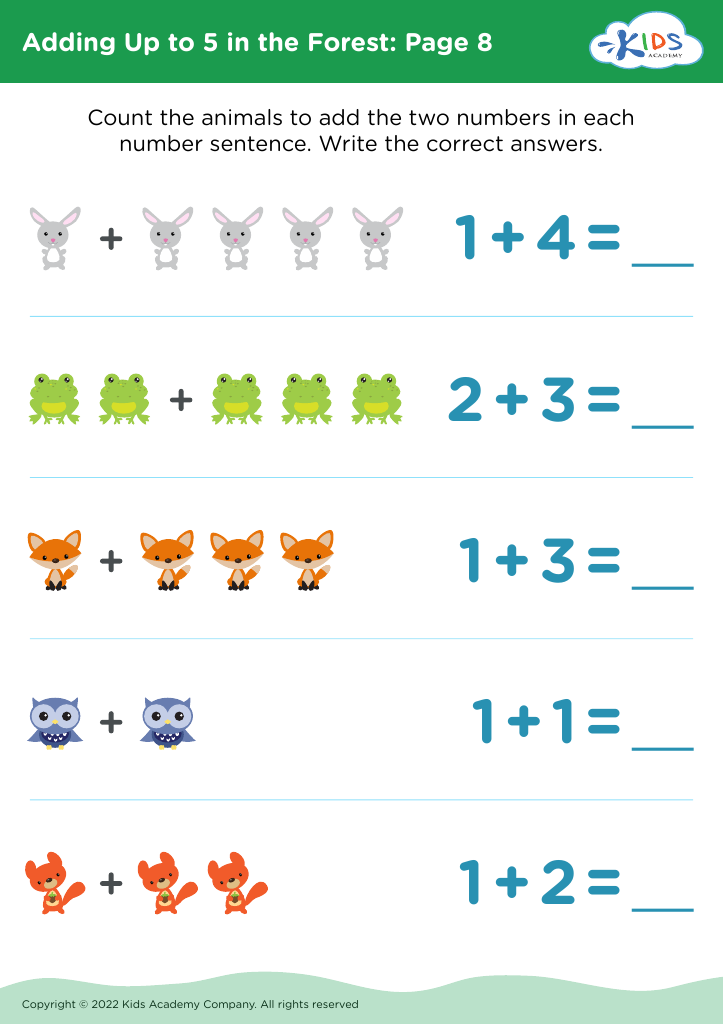
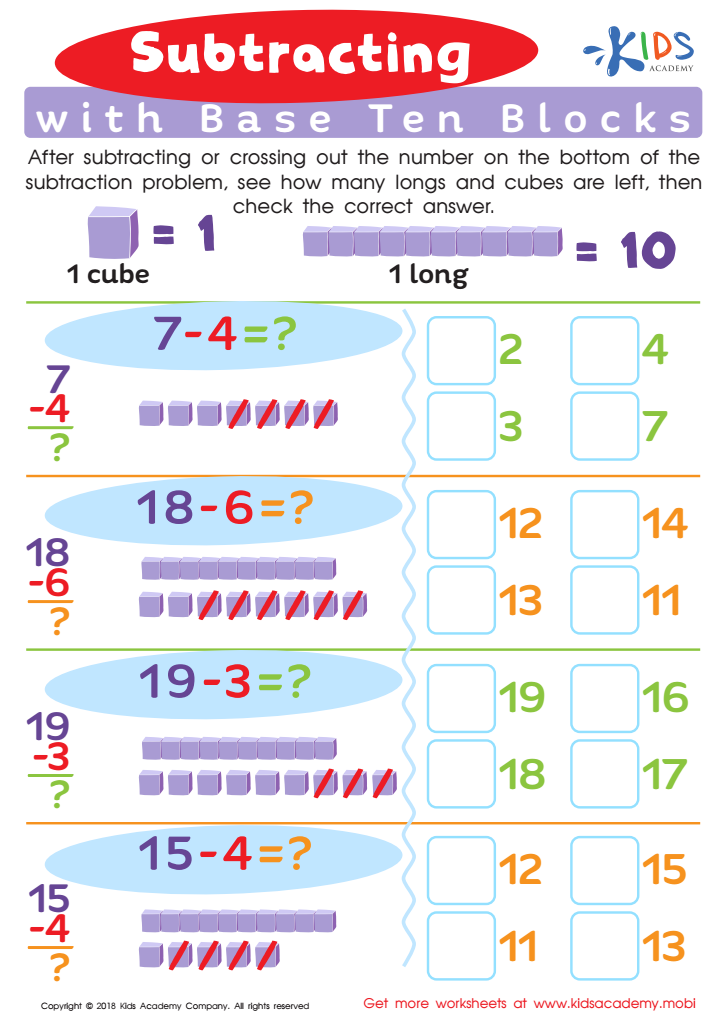
Subtracting With Base 10 Blocks Worksheet
 Assign to My Students
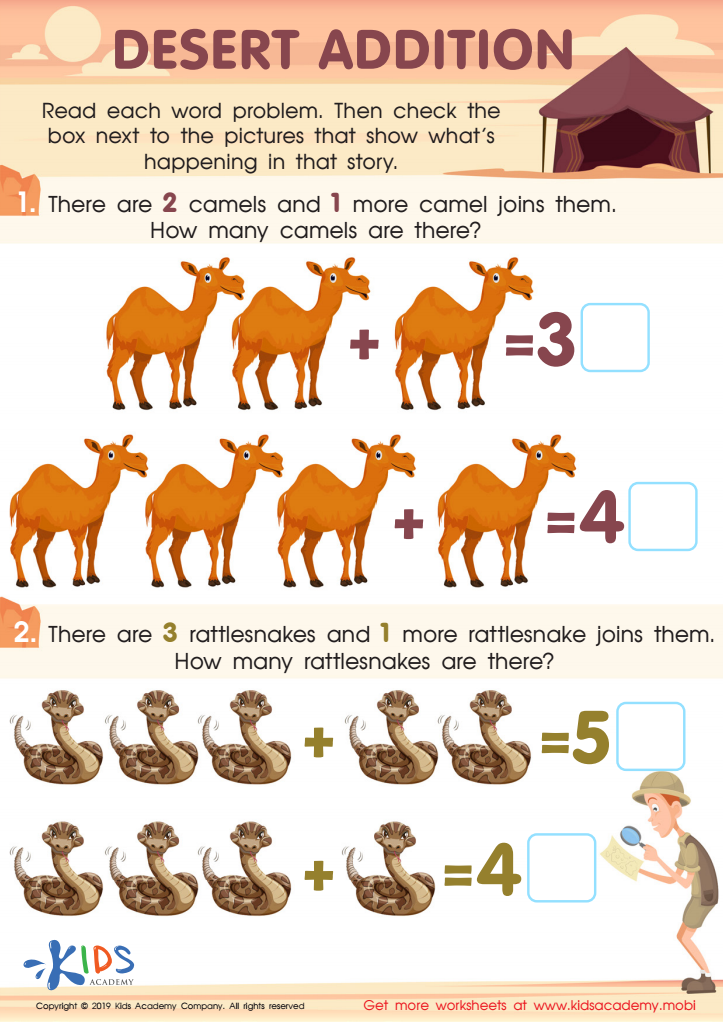
Desert Addition Worksheet
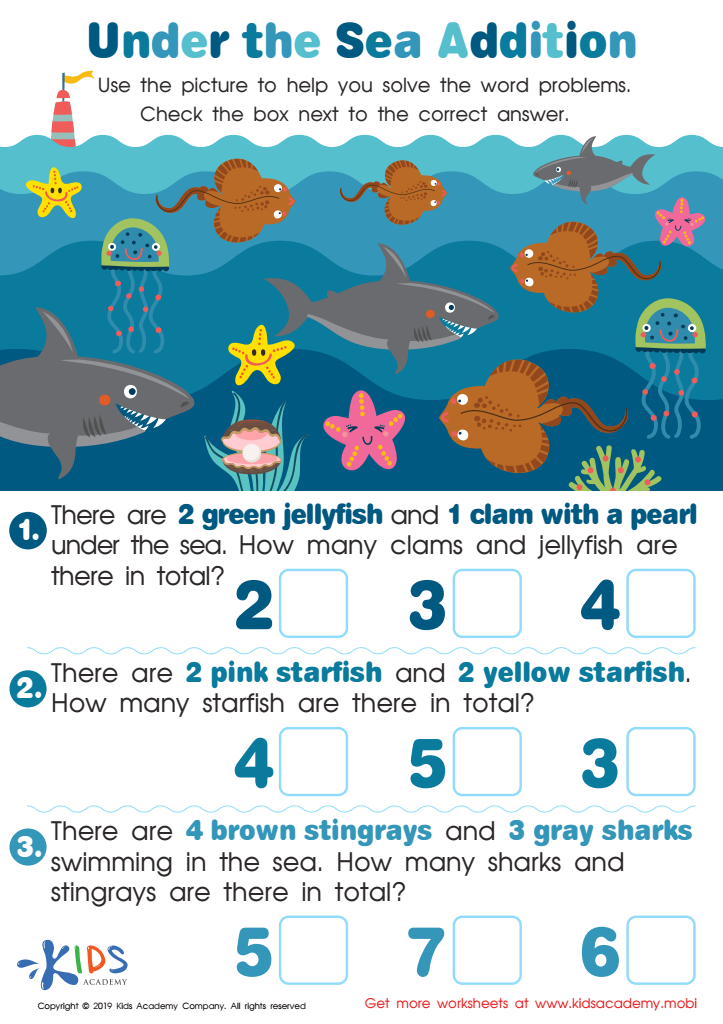
Under the Sea Addition Worksheet








Improving counting skills, along with addition and subtraction, is crucial for children ages 4-6 as it sets the foundation for future mathematical understanding. During these formative years, children develop their number sense, which is essential for everyday problem-solving and academic success. Mastery of counting establishes a robust framework for understanding the relationships between numbers, paving the way for more complex operations later on.
Parents and teachers should prioritize enhancing these skills through engaging and interactive activities that make learning enjoyable. Developing counting proficiency helps children recognize patterns, comprehend quantity, and improve their spatial awareness, all of which have implications beyond math, influencing cognitive and reasoning skills.
Furthermore, strong early number skills are predictive of later academic achievement. Kids who grasp the basics of addition and subtraction tend to feel more confident and competent in their mathematical abilities, fostering a positive attitude toward learning. Intervention at this age not only helps address any misconceptions before they solidify but also builds a love for math through play and exploration. By investing time and resources into counting and basic arithmetic, adults play a pivotal role in shaping children's future academic paths and lifelong learning ambitions.








