Number Sequencing Addition & Subtraction Worksheets for Ages 4-6
7 filtered results
-
From - To
Discover our engaging Number Sequencing Addition & Subtraction Worksheets designed specifically for children ages 4-6. These worksheets are perfect for early learners, helping them develop essential math skills through fun and interactive activities. Each worksheet focuses on understanding number sequences while reinforcing addition and subtraction concepts, making math enjoyable and approachable. Our carefully crafted exercises support cognitive development and problem-solving skills, providing a solid foundation for future math success. With vibrant illustrations and age-appropriate challenges, kids will love to learn and practice their math skills. Start your child’s math journey with our exciting and educational worksheets today!
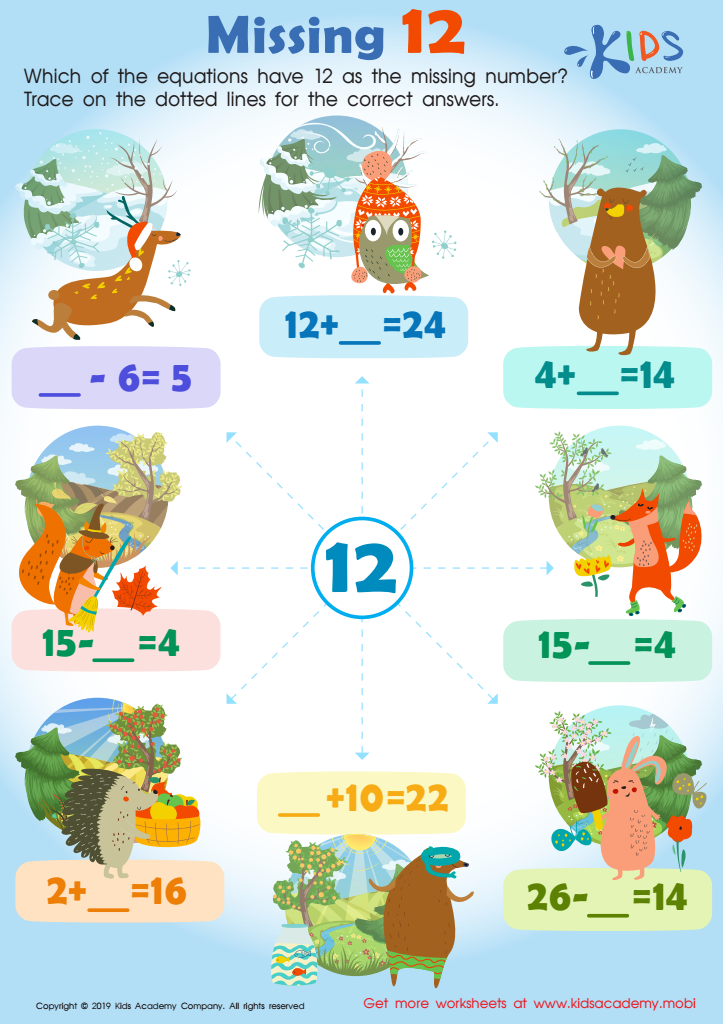
Missing 12 Worksheet
 Assign to My Students
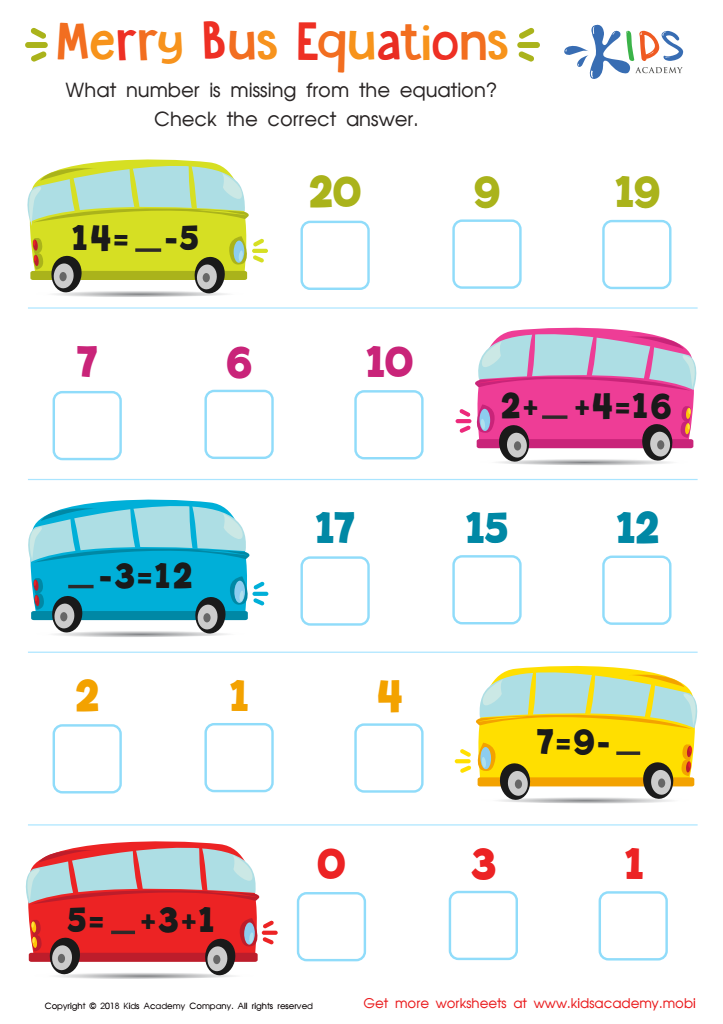
Merry Bus Equations Worksheet
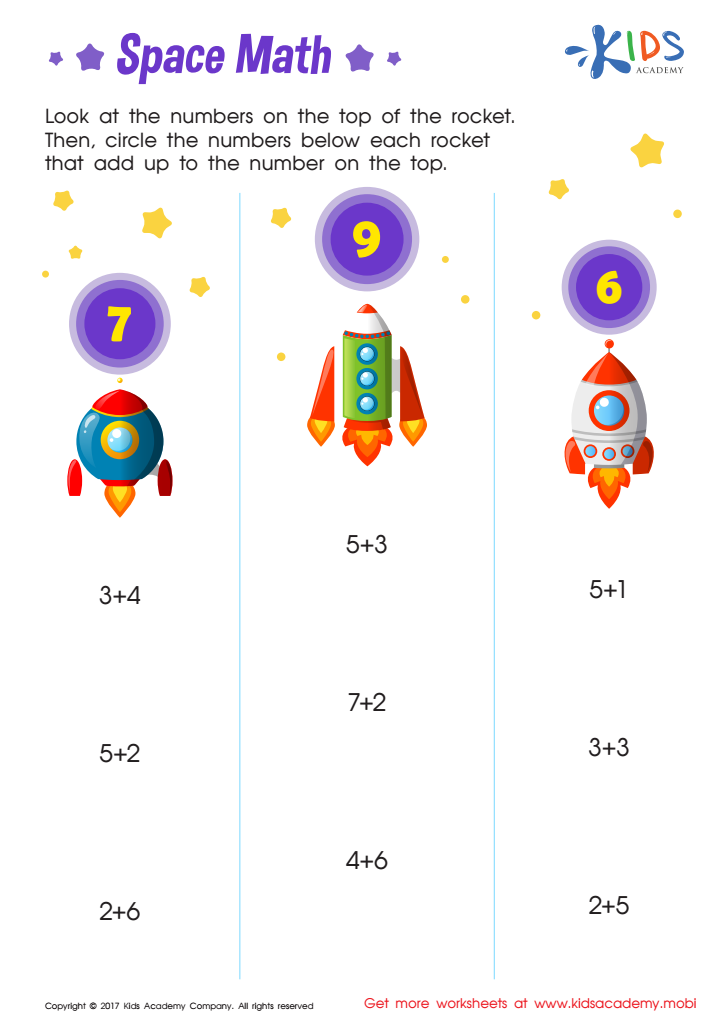
Addition: Space Math Worksheet
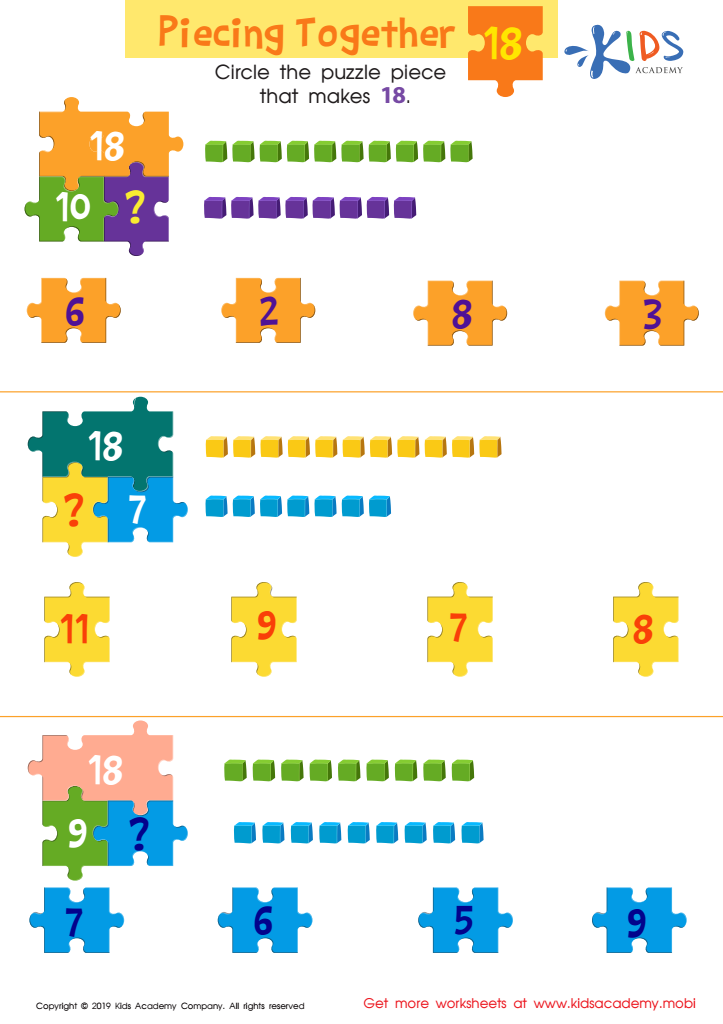
Piecing Together 18 Worksheet
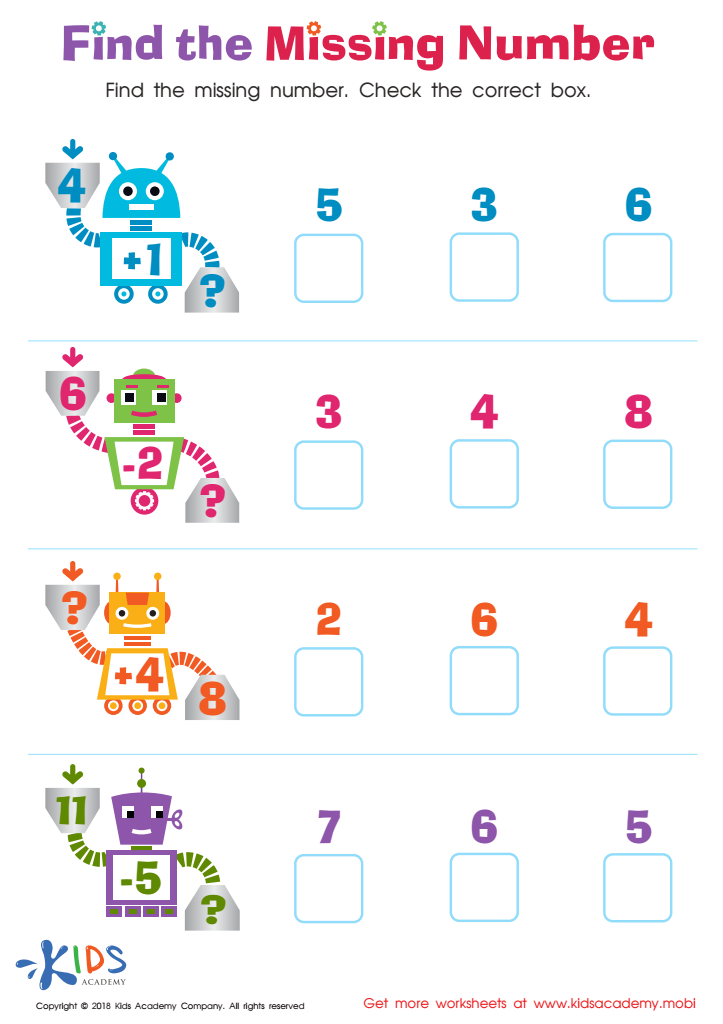
Find the Missing Number Worksheet
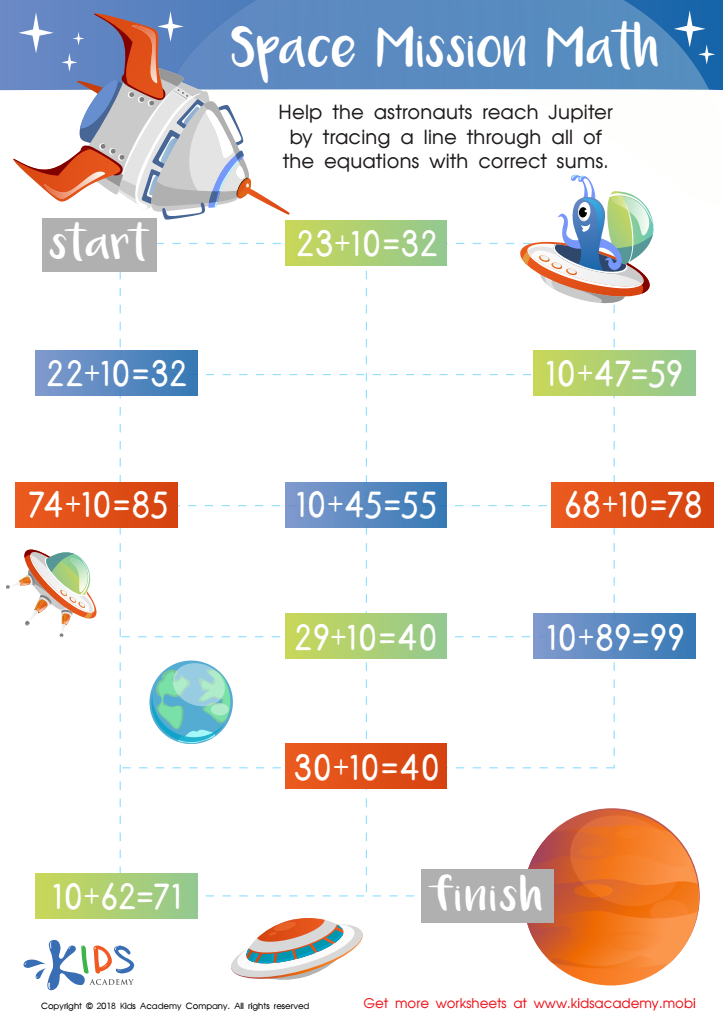
Space Mission Math Worksheet
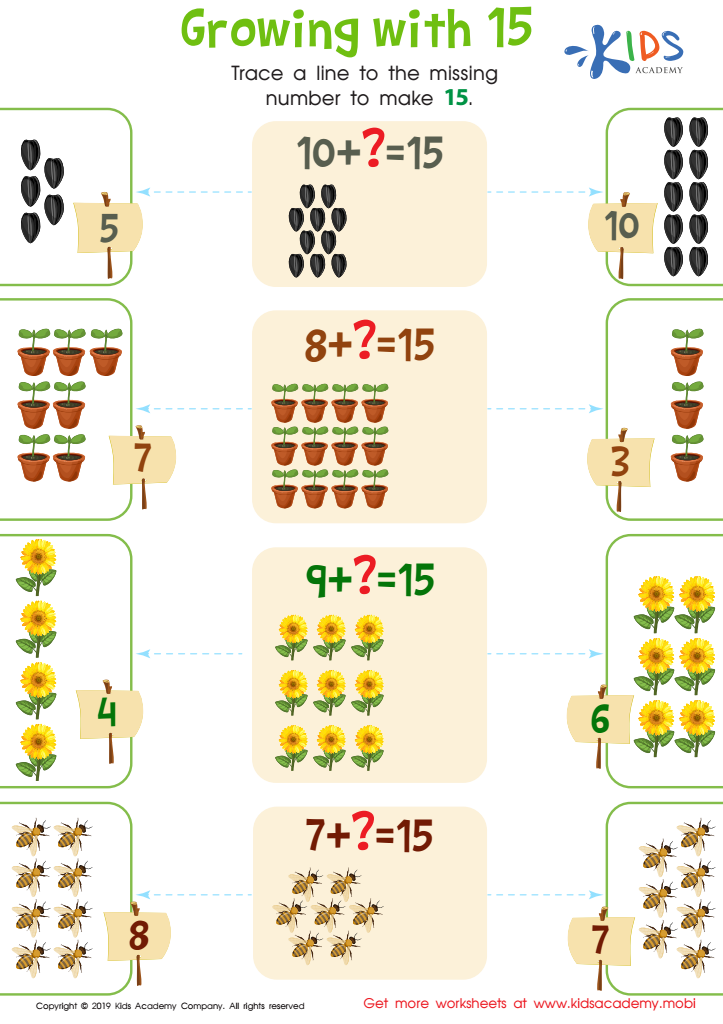
Growing with 15 Worksheet








Number sequencing in addition and subtraction is a foundational skill critical for early childhood math development, especially for children ages 4-6. Parents and teachers should care about these skills because they set the stage for a child's future success in mathematics and problem-solving. At this age, children are beginning to understand numerical concepts and relationships, and engaging with number sequences helps them grasp the order of numbers, essential for effective counting and arithmetic operations.
This early exposure enables children to develop mental strategies for solving addition and subtraction problems, promoting fluency and confidence in their mathematical abilities. Understanding how numbers connect and progress fosters critical thinking and spatial reasoning, essential skills not only in math but across academic subjects.
Additionally, incorporating number sequencing into fun games and activities makes learning enjoyable, encouraging a lifelong interest in mathematics. This positive experience with math can help prevent math anxiety, an issue that often begins in childhood. By nurturing these skills, parents and teachers empower children to face more complex mathematical concepts in the future, laying a strong foundation for academic success. Ultimately, investing time and resources into this crucial developmental phase benefits both individual children and society as a whole.








