Understanding numeracy Addition & Subtraction Worksheets for Ages 4-6
4 filtered results
-
From - To
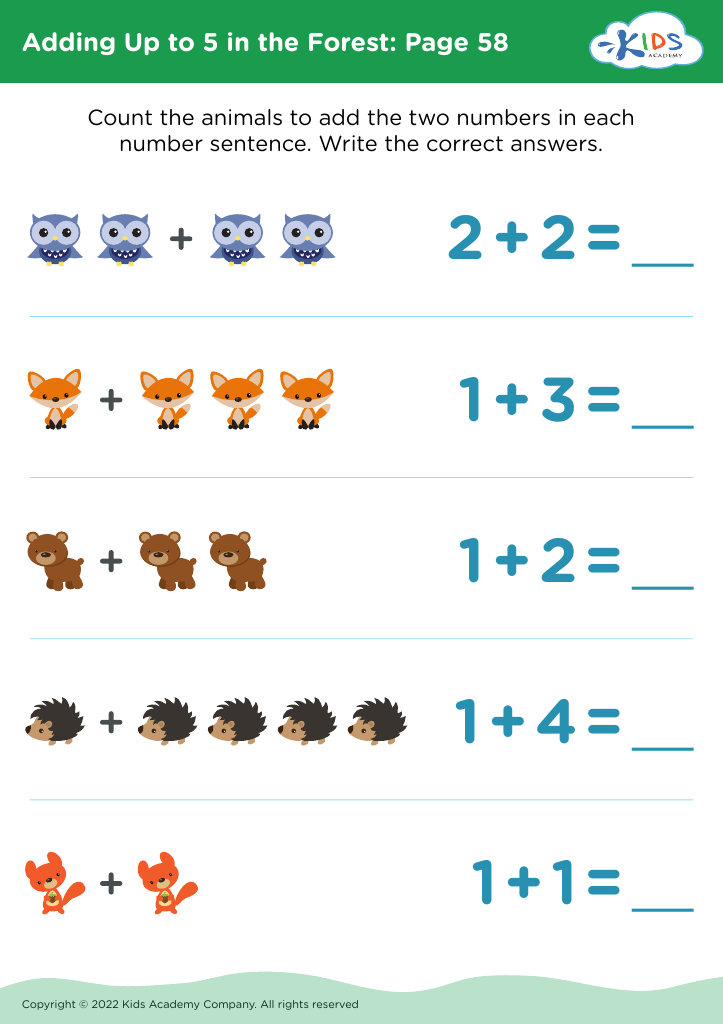
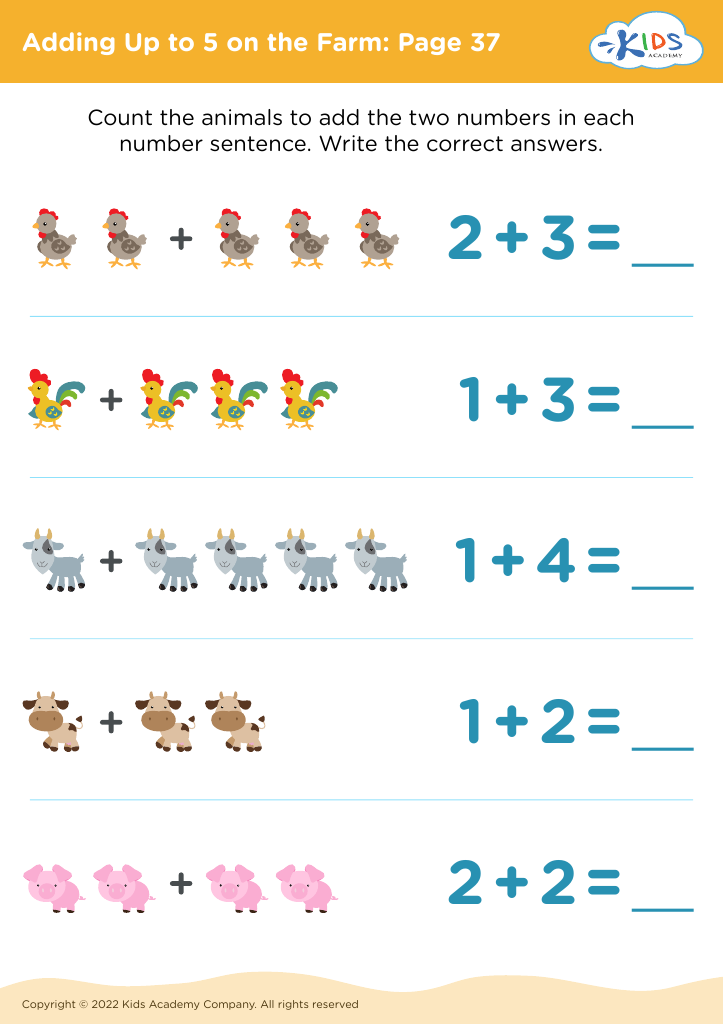
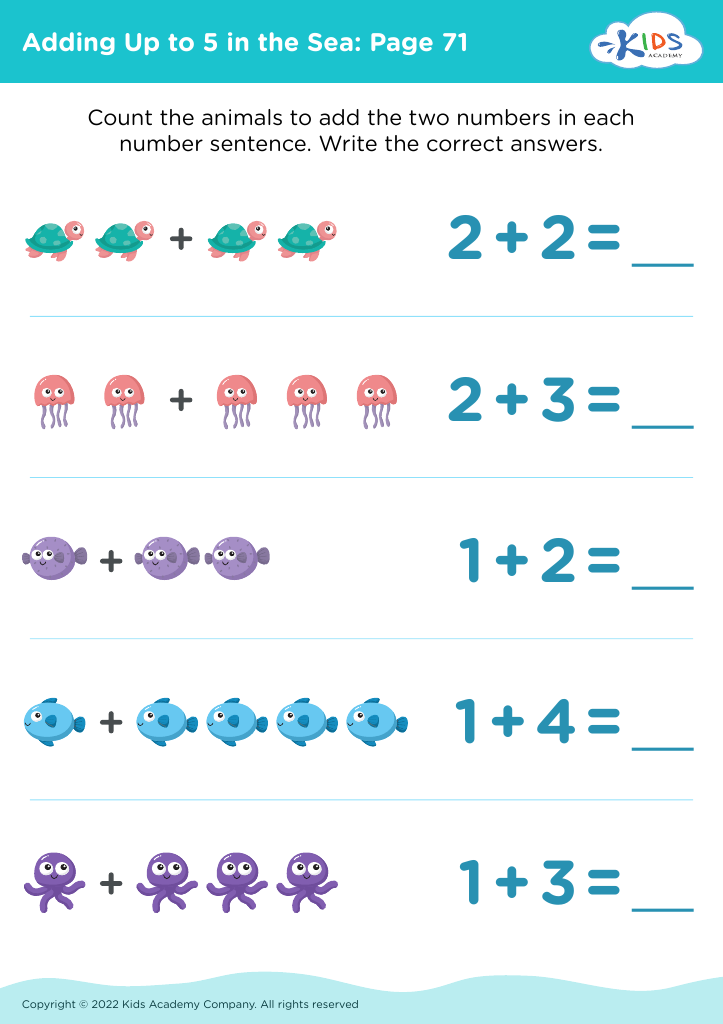
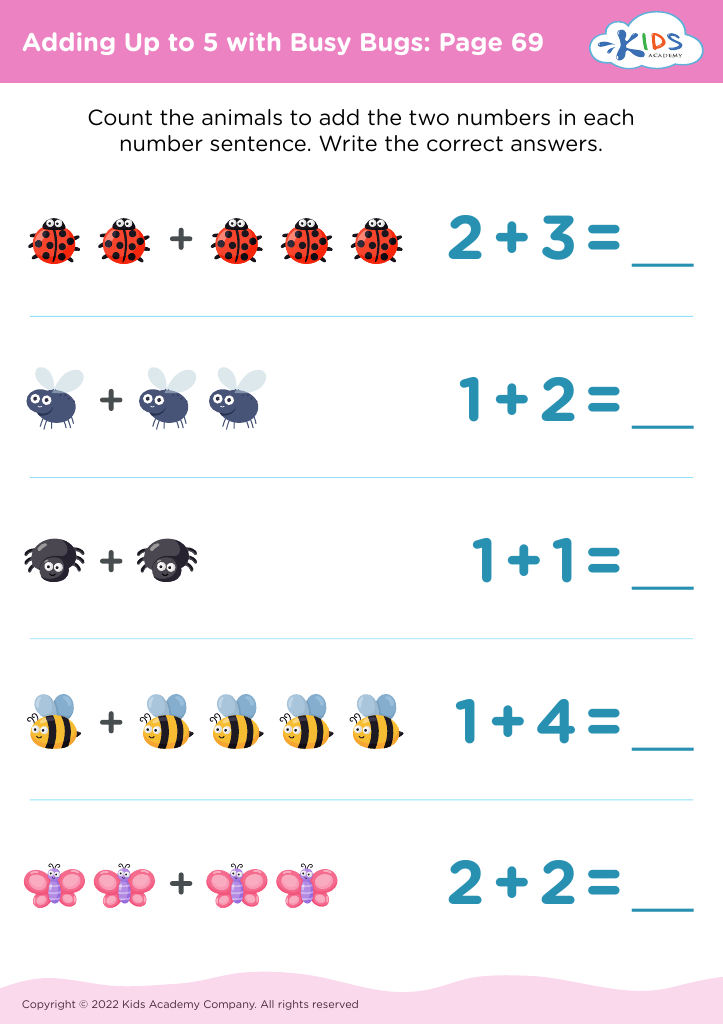
Boost your child's mathematical confidence with our "Understanding Numeracy: Addition & Subtraction Worksheets" designed for ages 4-6. These engaging worksheets introduce fundamental concepts of addition and subtraction in a fun and interactive way. Tailored to develop essential numeracy skills, they feature colorful visuals and age-appropriate exercises that capture young learners' attention. By practicing with critical thinking and problem-solving exercises, children will strengthen their understanding of math while building a solid foundation for future learning. Perfect for classroom or home use, these worksheets provide an effective resource to help children grasp the basics of numbers, ensuring they are ready for success in early mathematics.








Understanding numeracy, particularly addition and subtraction, is foundational for children aged 4-6. Parents and teachers should prioritize this skill because it lays the groundwork for critical mathematical concepts. Mastering basic addition and subtraction helps young learners develop number sense, which is essential for problem-solving and logical thinking later in their education.
Moreover, engaging with these concepts early fosters confidence and a positive attitude toward math. Children who grasp addition and subtraction are better equipped to tackle more complex operations as they progress through school. These skills also support everyday activities, like counting objects, sharing, and organizing, enhancing a child's sense of responsibility and independence.
Additionally, numeracy involves not only calculations but also understanding patterns, relationships, and quantities, which are crucial for cognitive development. When parents and teachers engage children in fun, interactive math activities, it promotes a love for learning and nurtures their curiosity about the world around them.
Encouraging early numeracy skills can also positively impact a child's overall academic performance, as math is a significant component of various subjects including science and economics. By prioritizing numeracy, we are investing in a child’s future success and lifelong learning.








