
Visual perception Addition & Subtraction Worksheets for Ages 4-6
14 filtered results
Difficulty Level
Grade
Age
-
From - To
Subject
Activity
Standards
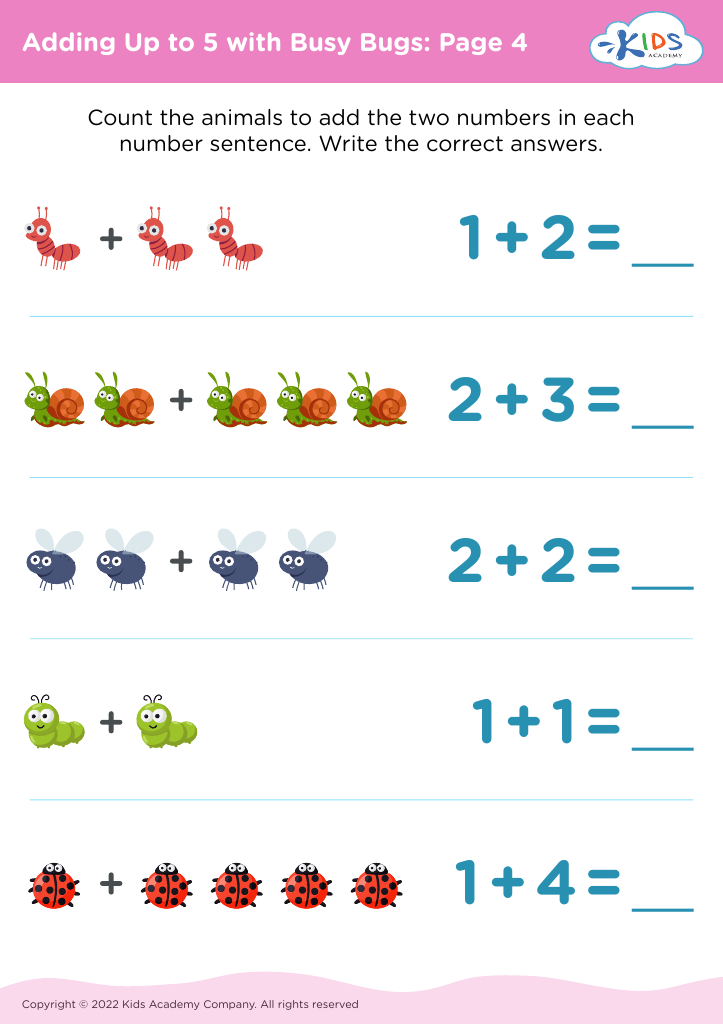
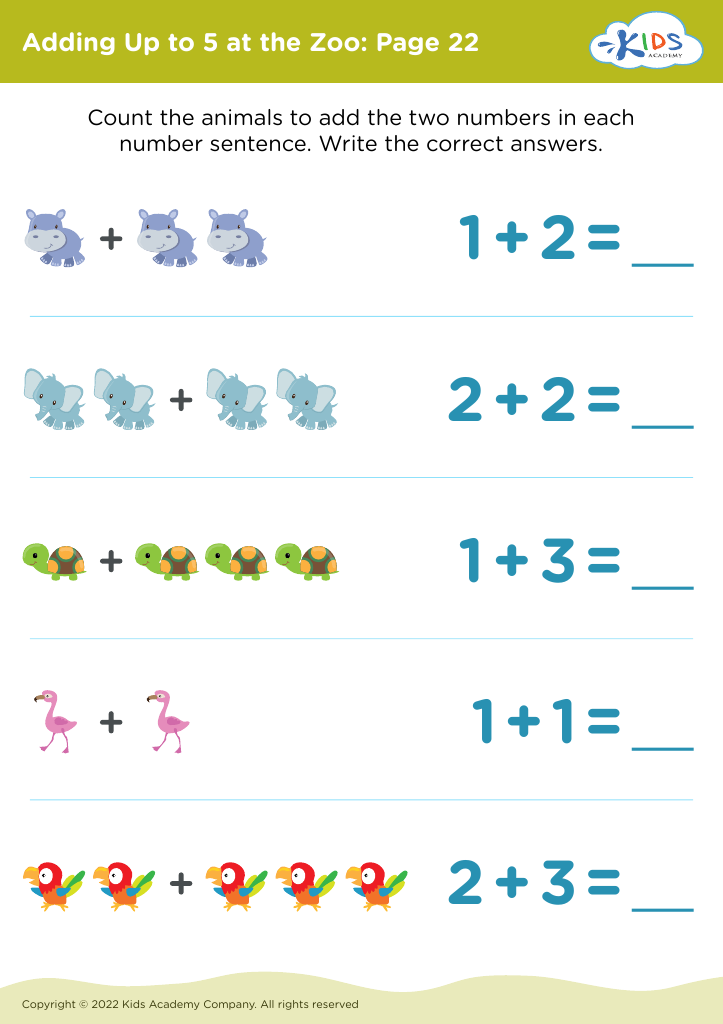
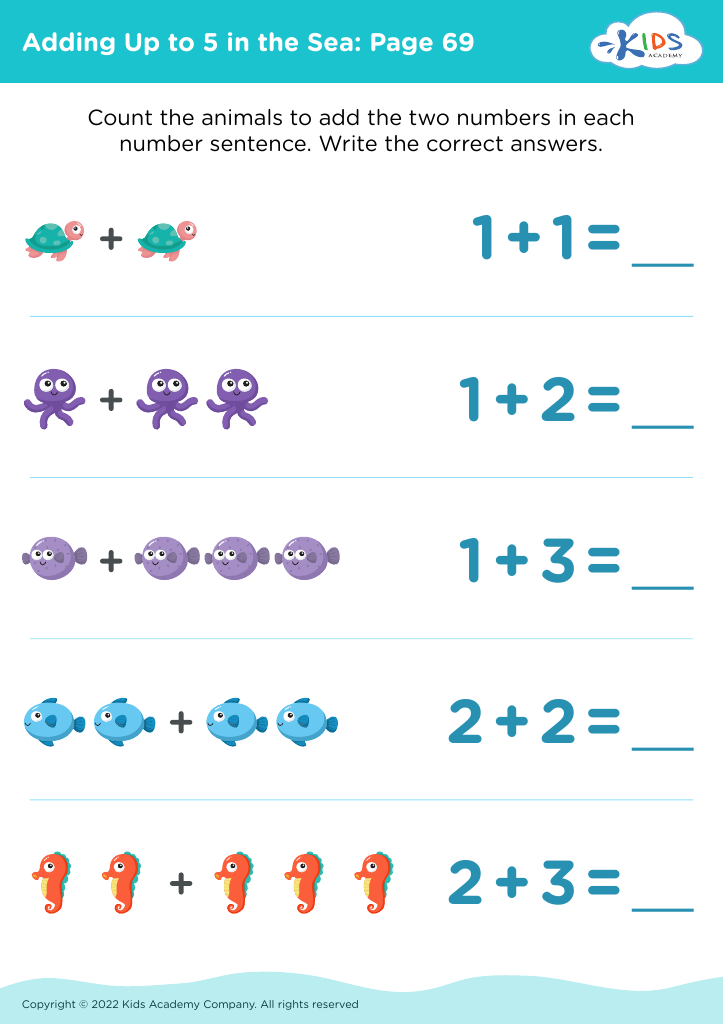
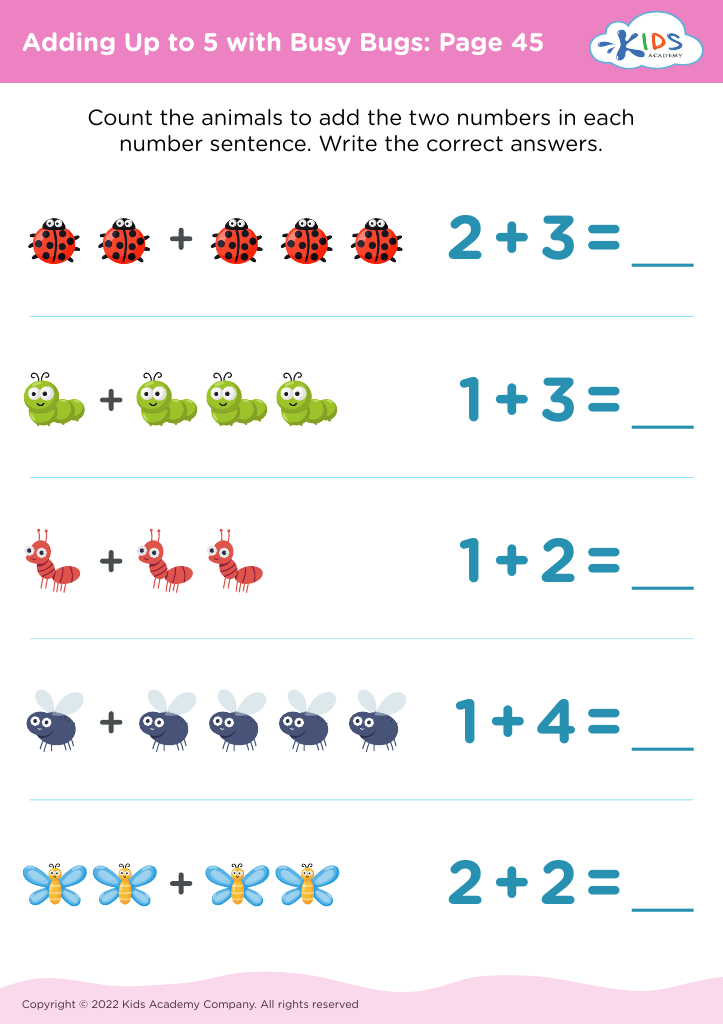
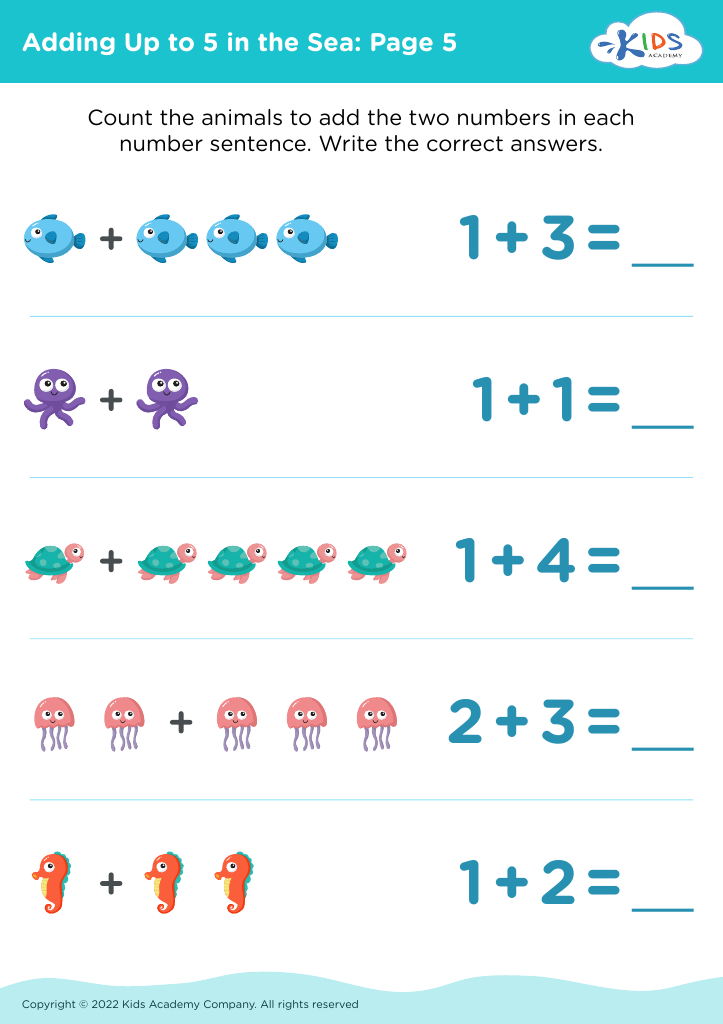
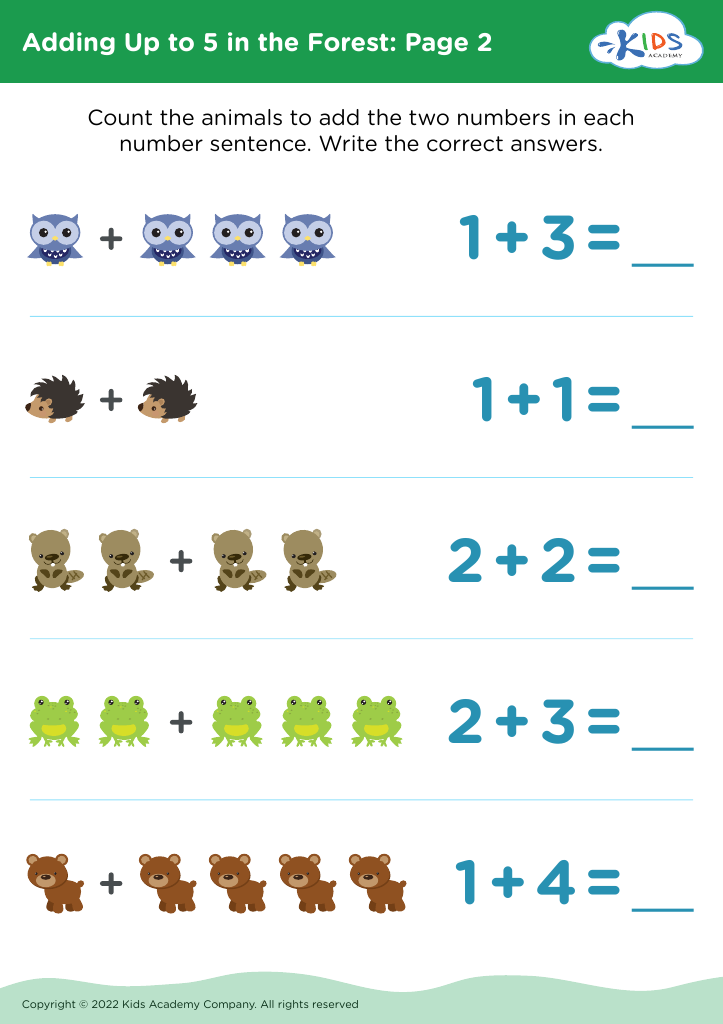
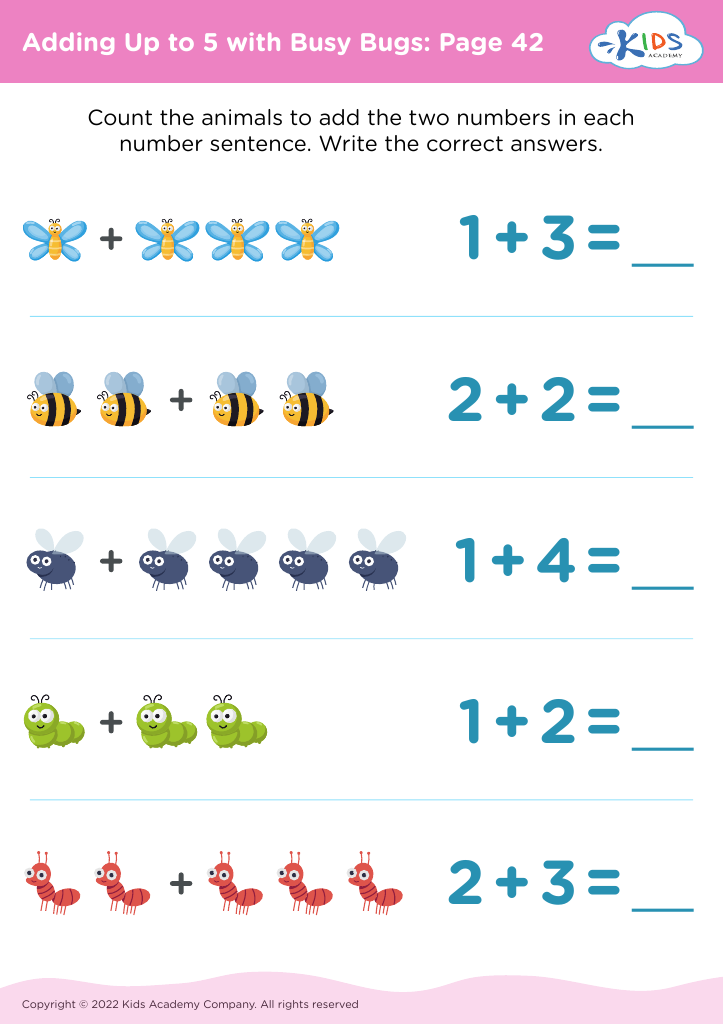
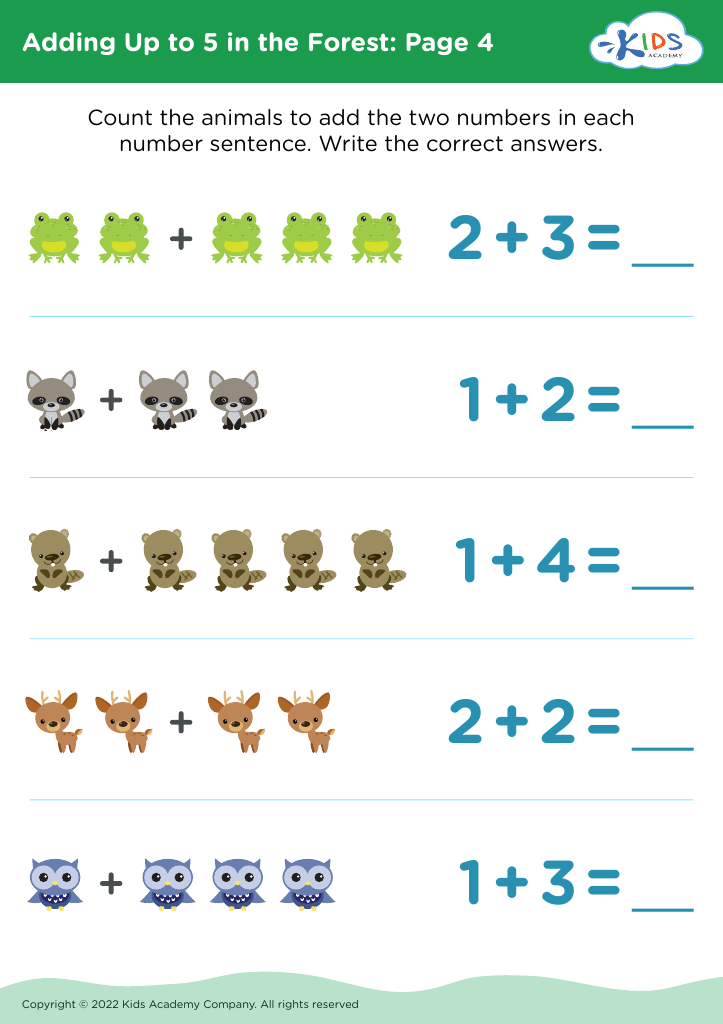
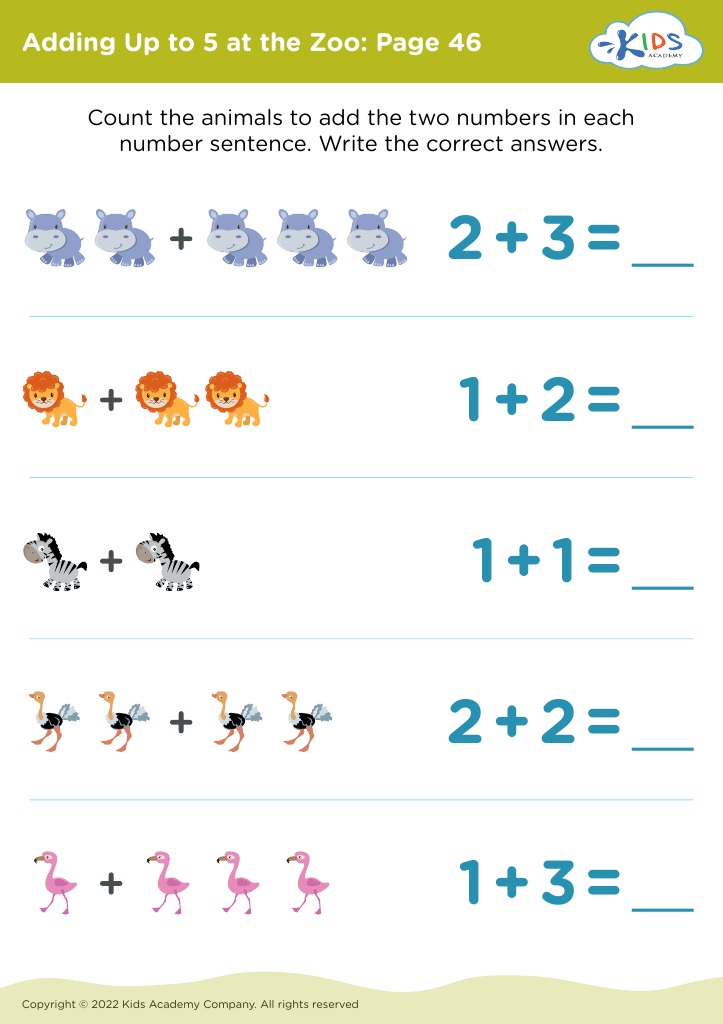
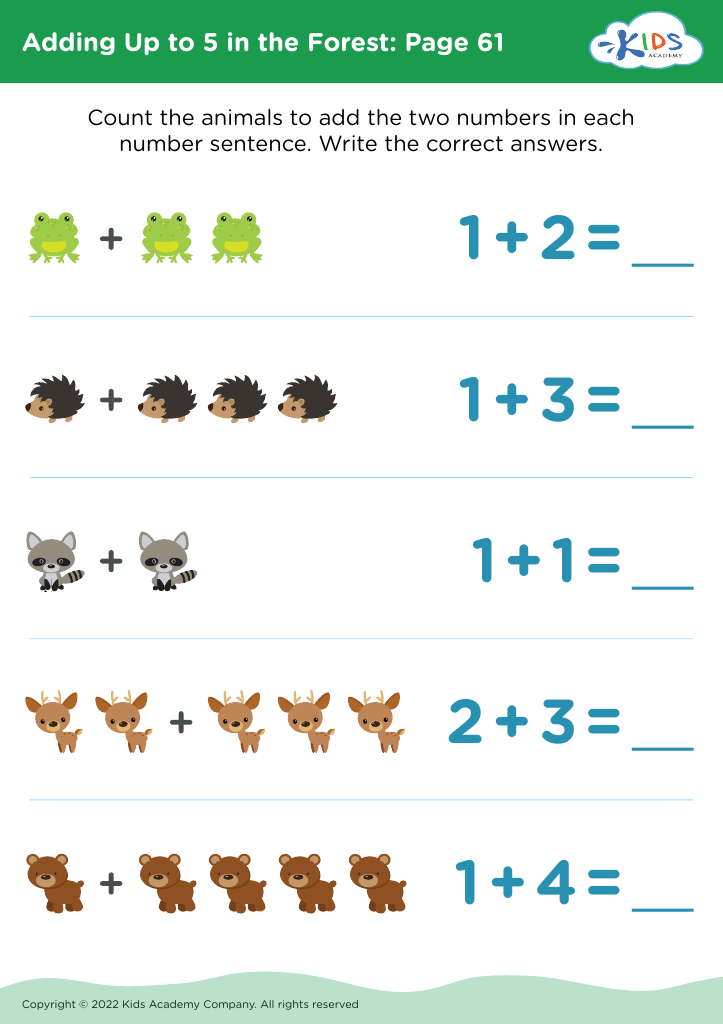
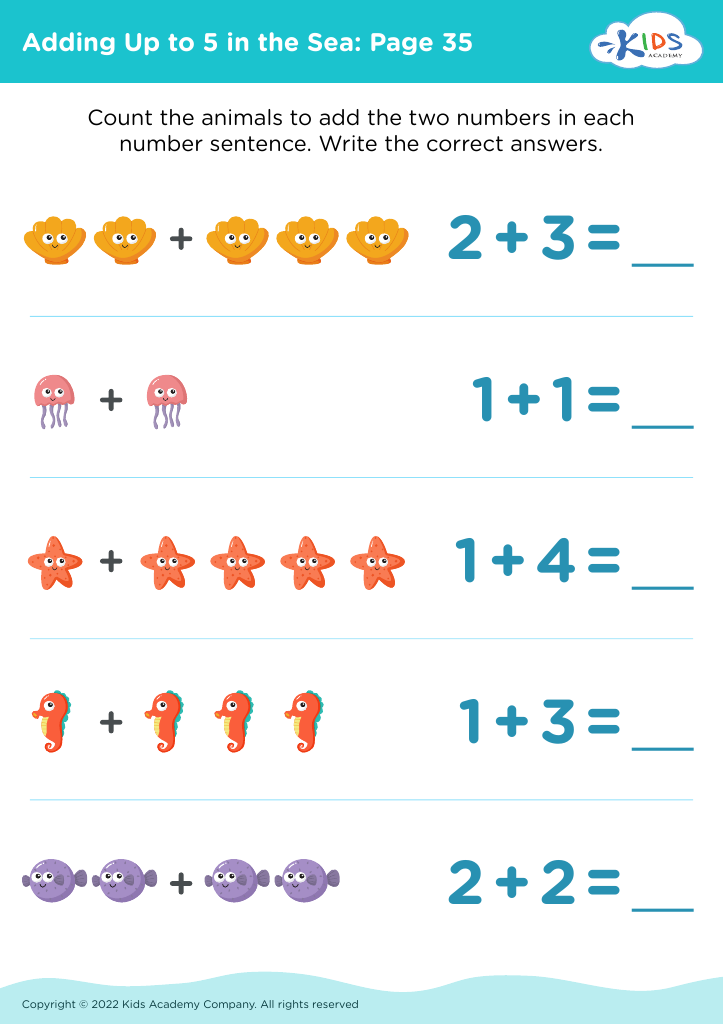
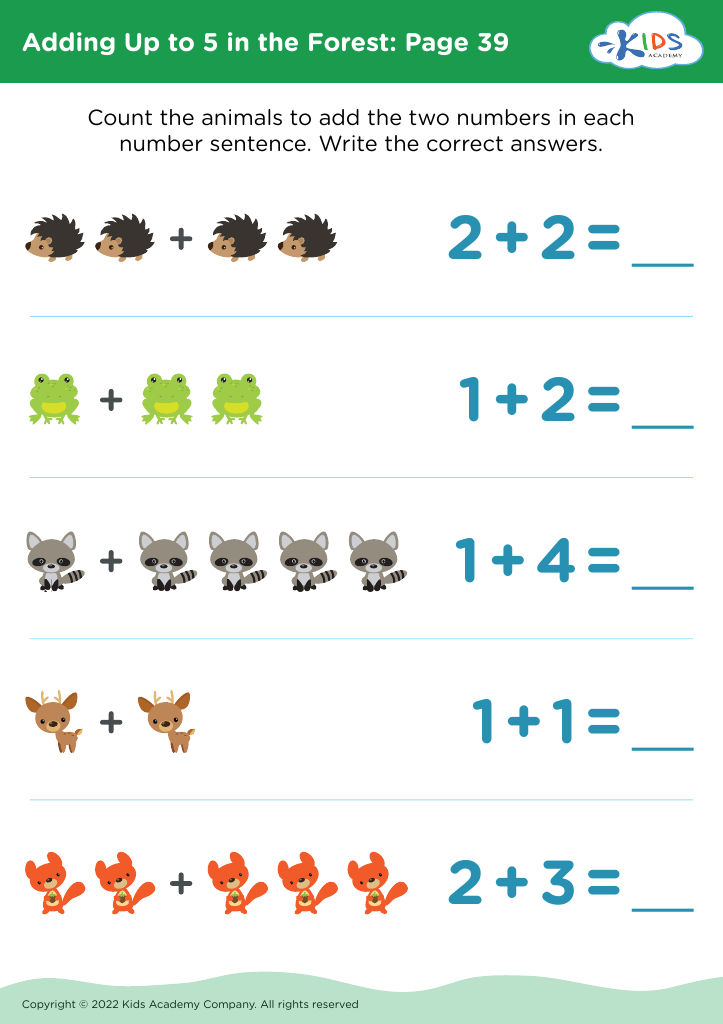
Enhance your child's math skills with our engaging Visual Perception Addition & Subtraction Worksheets, crafted specifically for ages 4-6. These interactive worksheets merge fun and learning, developing visual perception alongside fundamental addition and subtraction skills. Kids trace, count, and solve colorful, playful problems that capture their interest and bolster confidence. Ideal for early learners, our worksheets provide the perfect blend of educational challenges and creative activities, ensuring your child stays entertained while mastering essential math concepts. Foster a love for learning and mathematical proficiency with our expertly designed resources. Explore now and cultivate early math success!
Favorites
With answer key
Interactive
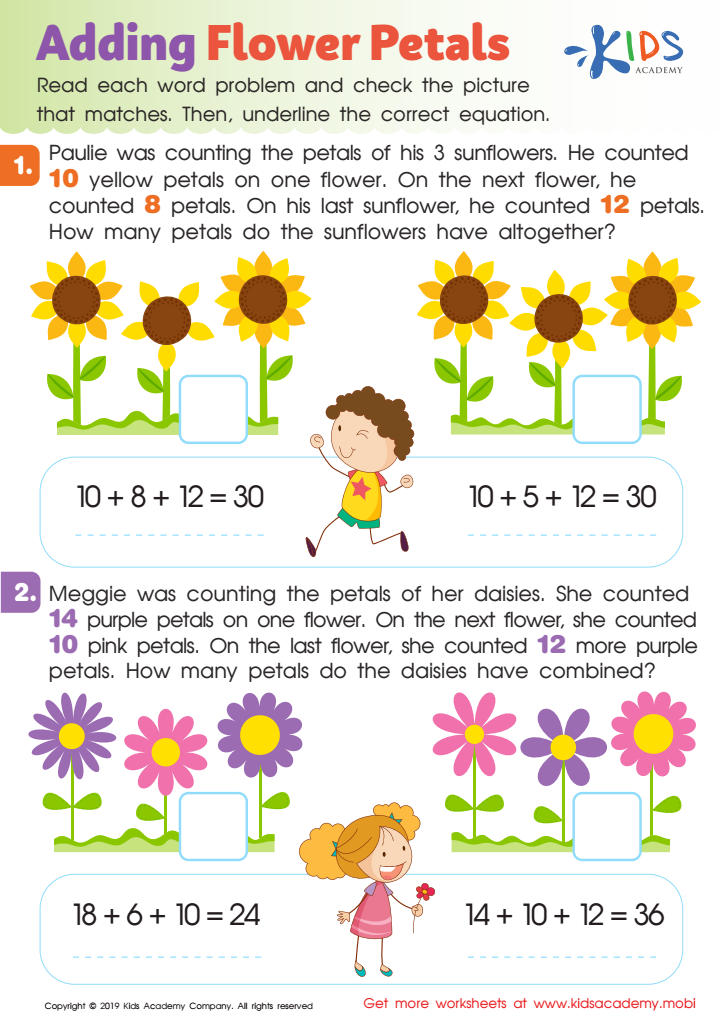
Adding Flower Petals Worksheet
This free worksheet helps little mathematicians learn to understand word problems. They'll read each one and match it to the corresponding picture. Important info is highlighted, teaching kids to look for key info when solving problems. Then they'll underline the correct number equation that matches the picture. A great way to practice problem-solving skills!
 Assign to My Students
Adding Flower Petals Worksheet
Worksheet
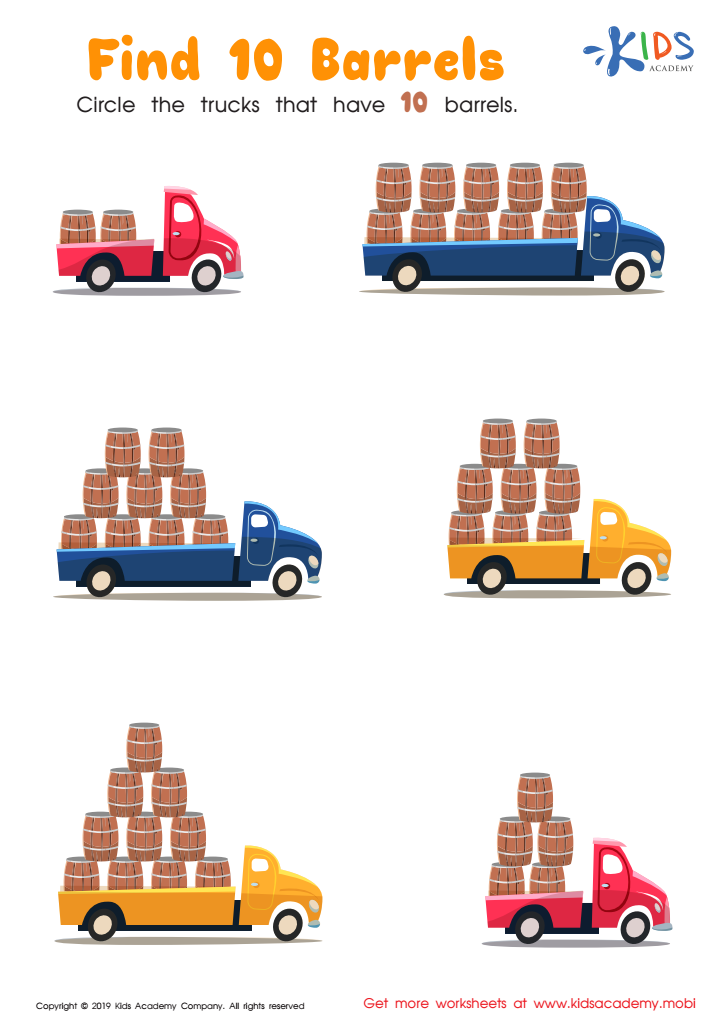
Find 10 Barrels Worksheet
Help your kids learn to count with 1, 2 and 3, then progress to tens and hundreds. Supplied with educational materials and colorful worksheets, they'll be counting as high as they can. Together, count the barrels on the trucks in the printout and encourage them to circle the ones with 10 barrels.
Find 10 Barrels Worksheet
Worksheet
Join Kids Academy for Free
Who is primarily going to use this learning content?








Visual perception in addition and subtraction is crucial for children aged 4-6 because it forms the foundation for their future mathematical understanding and cognitive development. At this age, children are developing their ability to process and interpret visual information, which is essential not just for math but for overall learning. By teaching them to recognize patterns, shapes, and numbers visually, you are helping them to comprehend abstract math concepts more concretely.
When children use visual aids, like counting objects, number lines, or pictorial representations of problems, they are better able to grasp the principles of addition and subtraction. This hands-on interaction promotes active learning and helps solidify their understanding. It moves them beyond mere rote memorization to actually understanding why and how numbers work together, which is crucial for more advanced math topics they'll encounter later.
Moreover, developing visual perception in math improves children's problem-solving skills and attention to detail, which are important life skills. For teachers and parents, incorporating visual methods in teaching addition and subtraction can make learning more engaging and accessible, particularly for visual learners. Early success in math can build a child's confidence and foster a positive attitude towards future learning experiences. This early intervention sets a strong foundation for academic success across multiple subjects.








