Nature awareness Addition Worksheets for Ages 4-6
8 filtered results
-
From - To
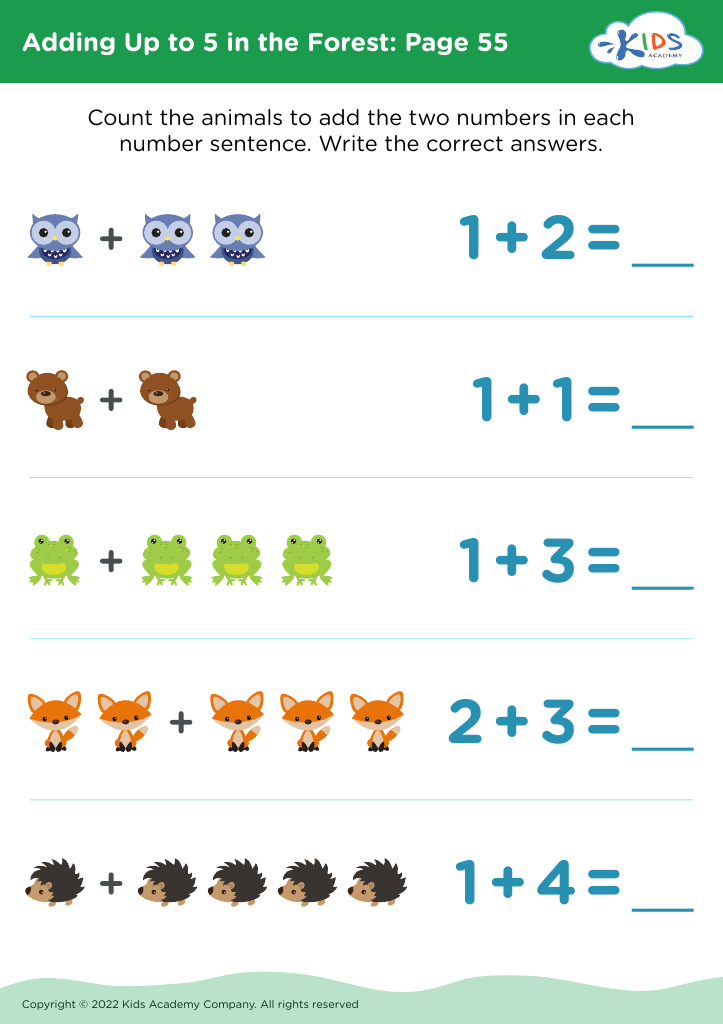
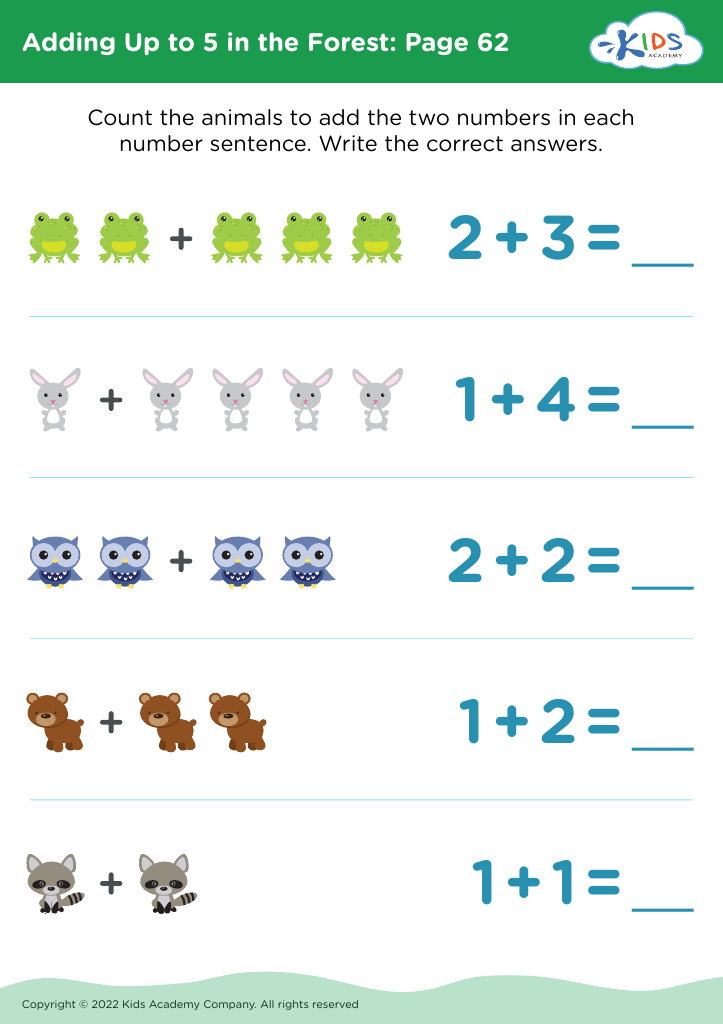
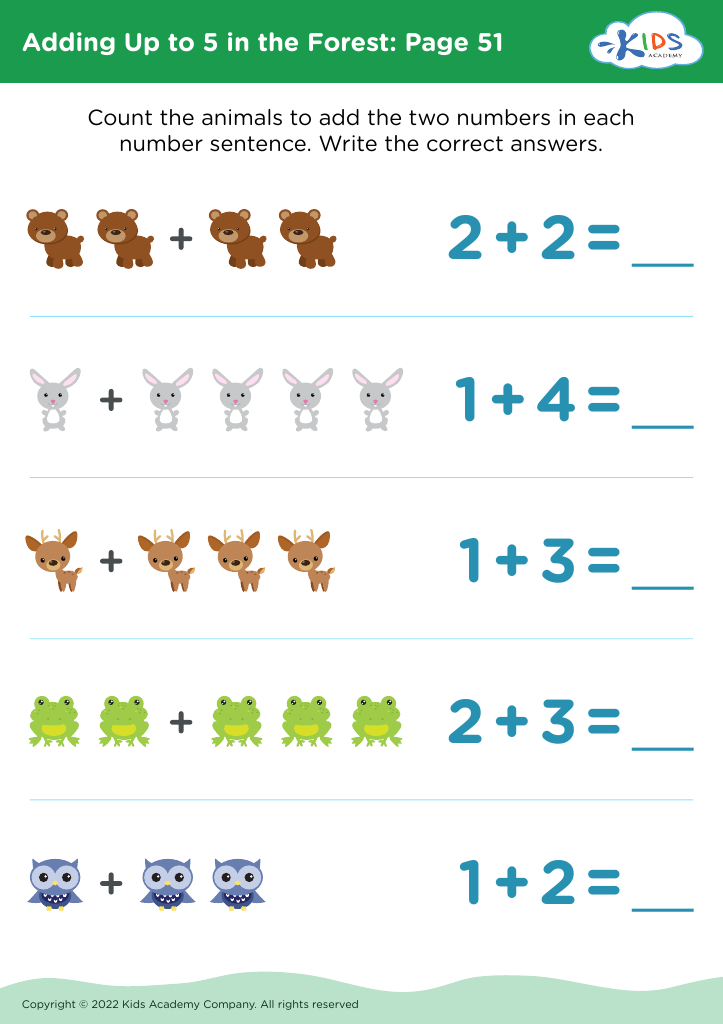
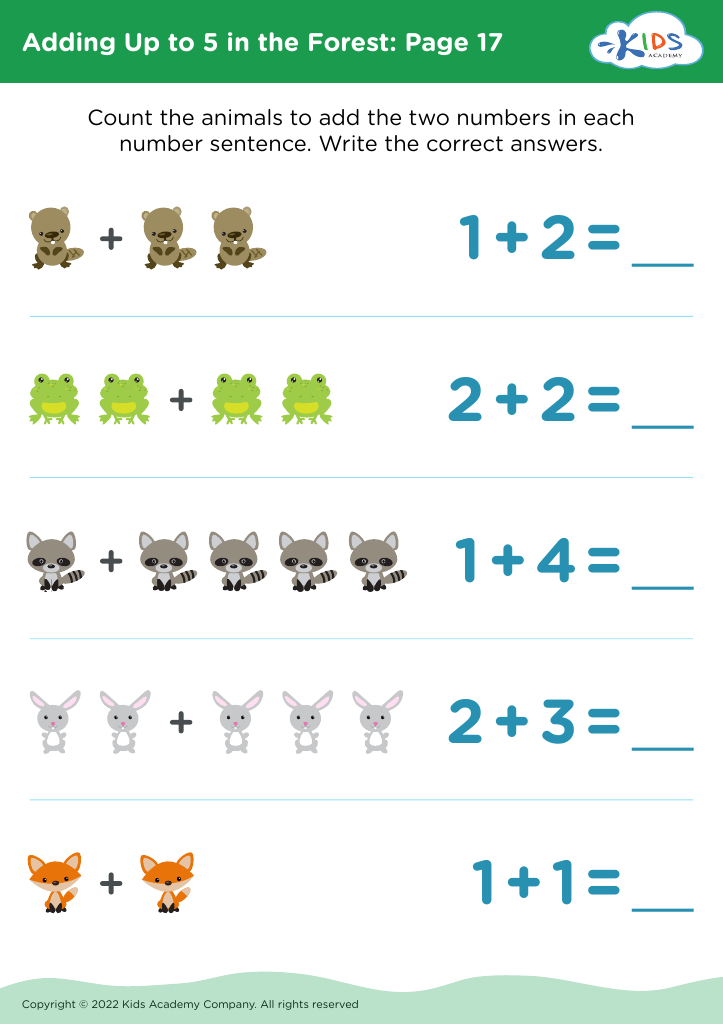
Introduce your little ones to the wonders of arithmetic while fostering a love for nature with our "Nature Awareness Addition Worksheets" for ages 4-6. These engaging worksheets combine basic addition skills with vibrant, nature-themed illustrations to make learning fun and interactive. Young learners will be excited to explore topics like flowers, animals, and natural elements as they practice their counting and addition skills. Perfect for teachers and parents, these worksheets are designed to enhance cognitive development, boost number recognition, and encourage an appreciation of the natural world in an enjoyable educational setting.
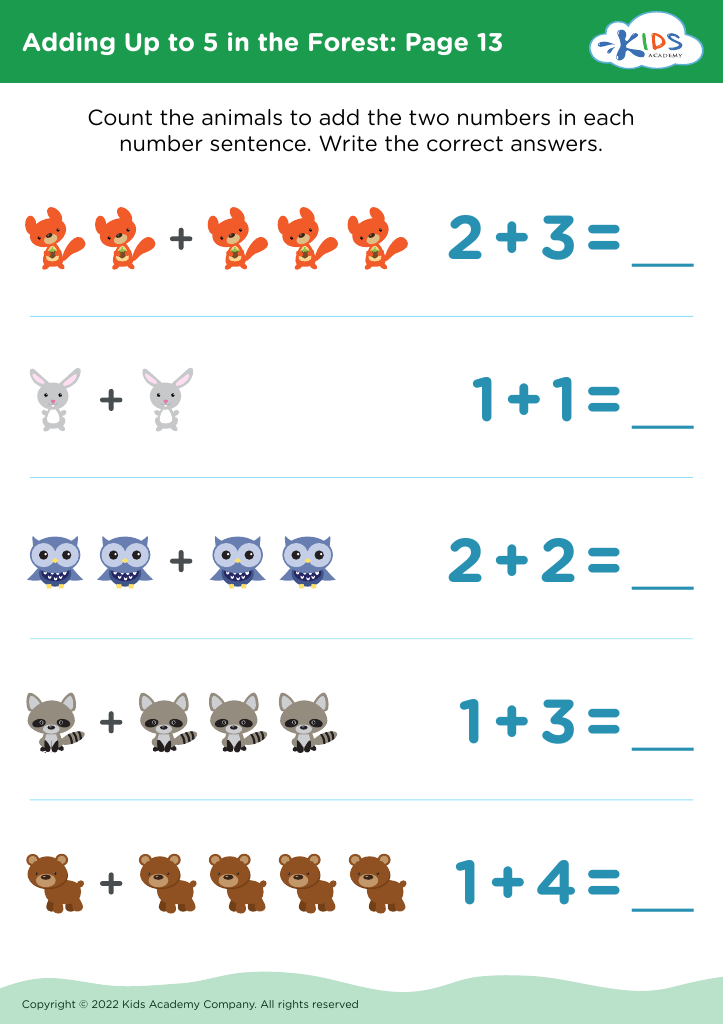
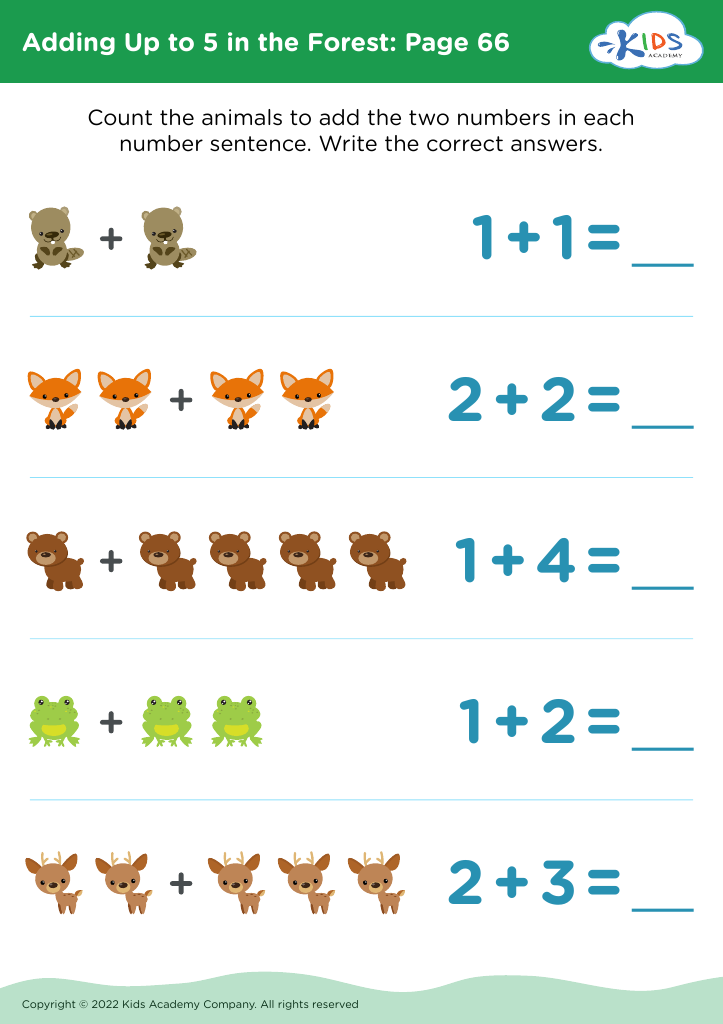
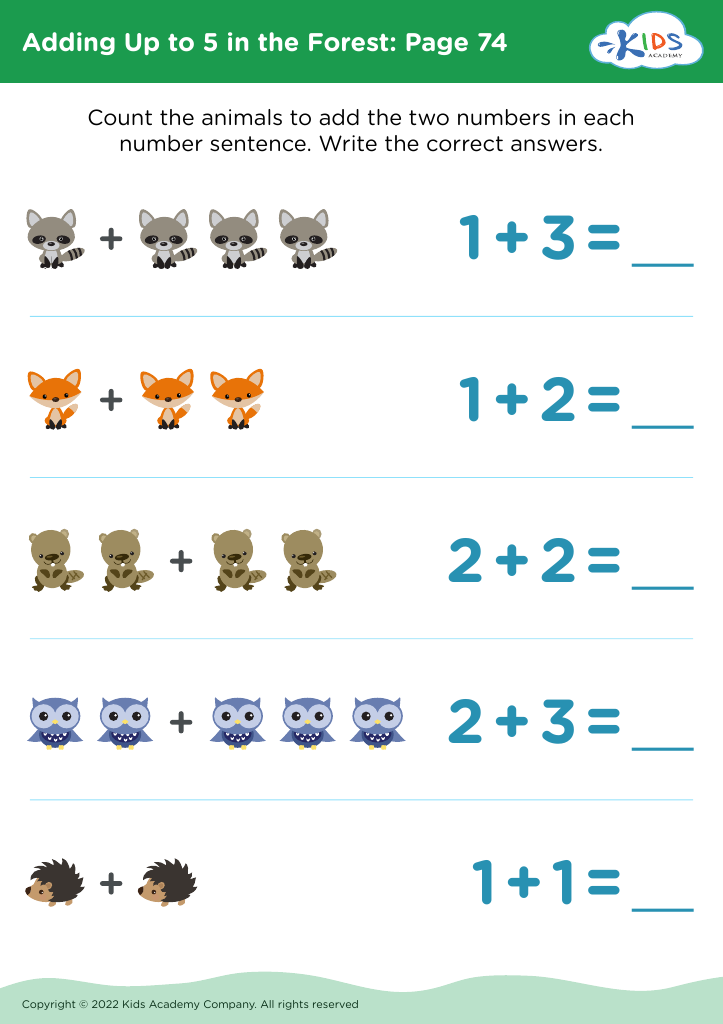
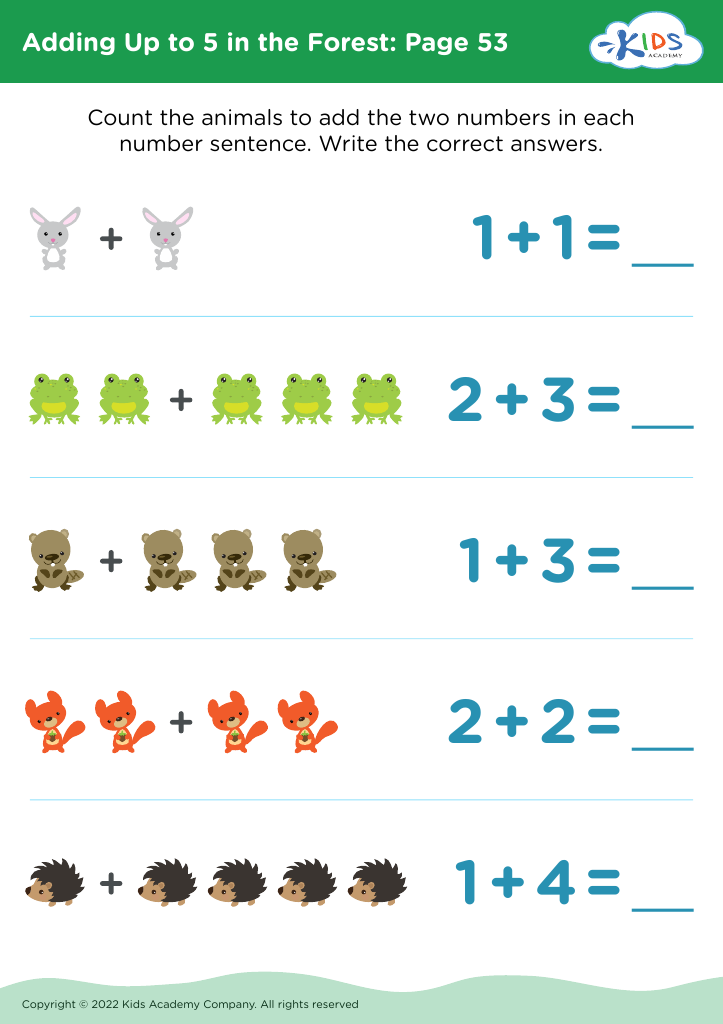






.jpg)

Nature awareness is crucial for children ages 4-6, and it's essential for parents and teachers to prioritize this development for several reasons.
Firstly, engaging with nature fosters curiosity and a sense of wonder in young children. When kids explore the natural world, they are more likely to ask questions and seek answers. This inquisitiveness is a foundation for lifelong learning and critical thinking skills that will benefit them academically and personally.
Secondly, nature provides a multisensory environment that can enhance children's physical development. Walking, running, climbing, and other outdoor activities improve motor skills, balance, and coordination. Furthermore, exposure to natural light and fresh air has proven benefits for physical health, promoting stronger bones and improving immune function.
Socially and emotionally, nature also plays a key role. Children learn teamwork and cooperation through nature-based activities, like building forts or searching for insects together. It prepares them for future social interactions by fostering empathy for living things and an understanding of the environment.
Lastly, time spent in nature can reduce stress and anxiety, which is especially important in our fast-paced, tech-centric world. Children who are calm and less stressed tend to focus better, adapt more easily to new situations, and develop healthier coping mechanisms.
By integrating nature awareness into the lives of young children, parents and teachers help nurture well-rounded, curious, and emotionally resilient individuals who value and understand the natural world.








