Filters

387 filtered results

Clear all filters
Favorites
With answer key
Interactive

387 filtered results

Difficulty Level

Grade


Check out this FREE Trial Lesson on Addition for age 4-6!

Z

Favorites
With answer key
Interactive
  • 4-6
  • Number Recognition
  • Addition
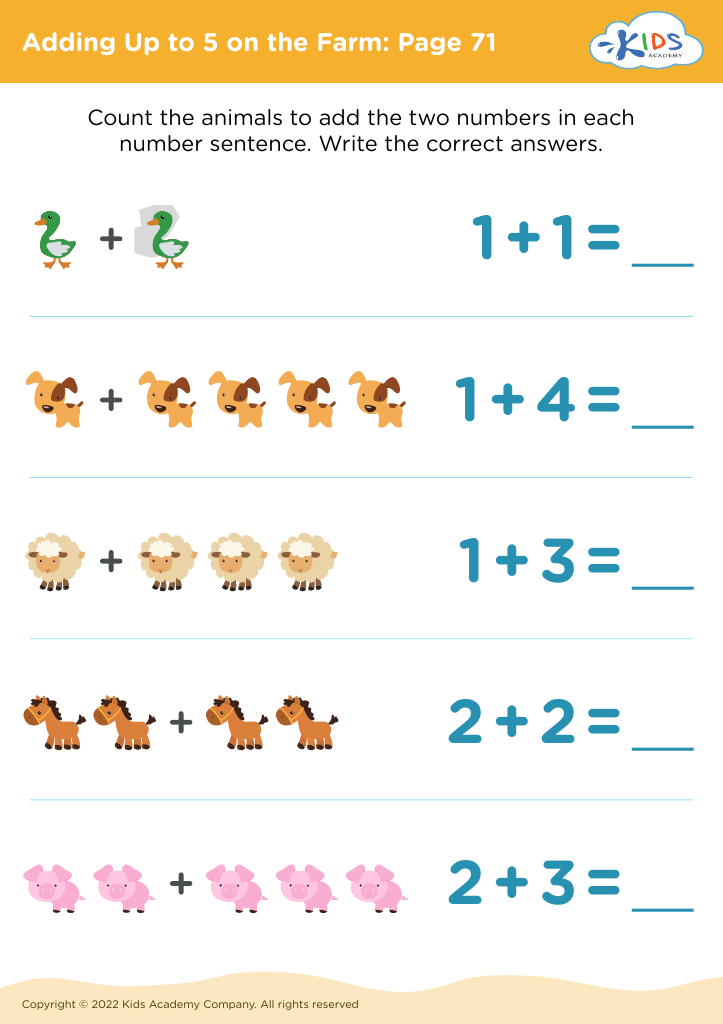
Adding Up to 5 on the Farm: Page 71
Worksheet
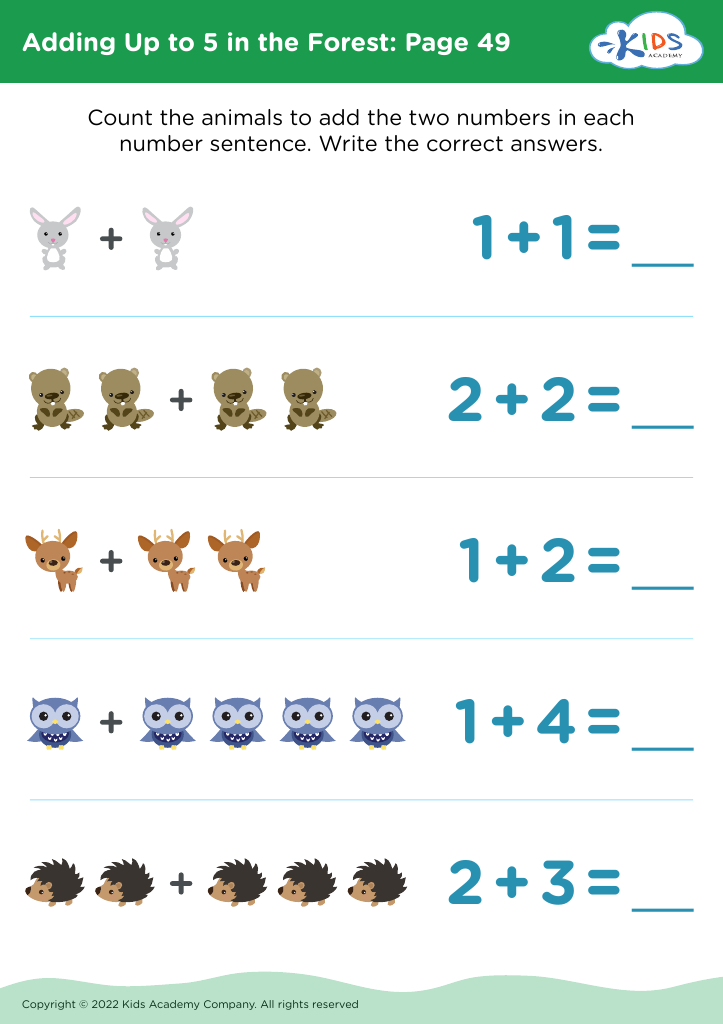
Adding Up to 5 in the Forest: Page 49
Worksheet
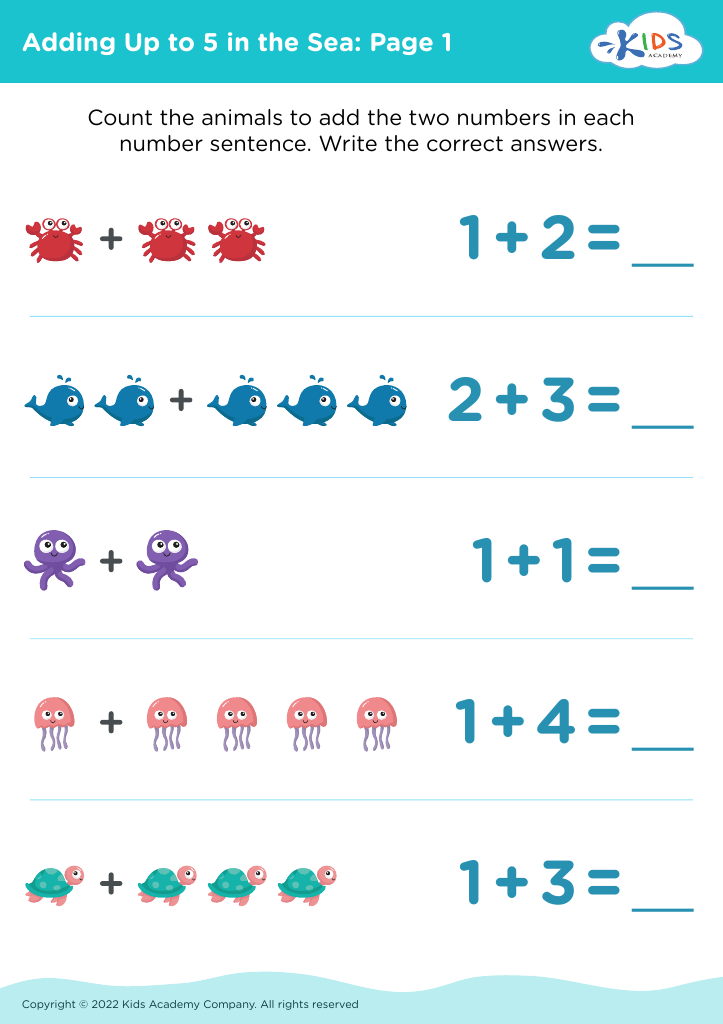
Adding Up to 5 in the Sea: Page 1

Adding Up to 5 in the Sea: Page 1

Adding Up to 5 in the Sea: Page 1
Worksheet
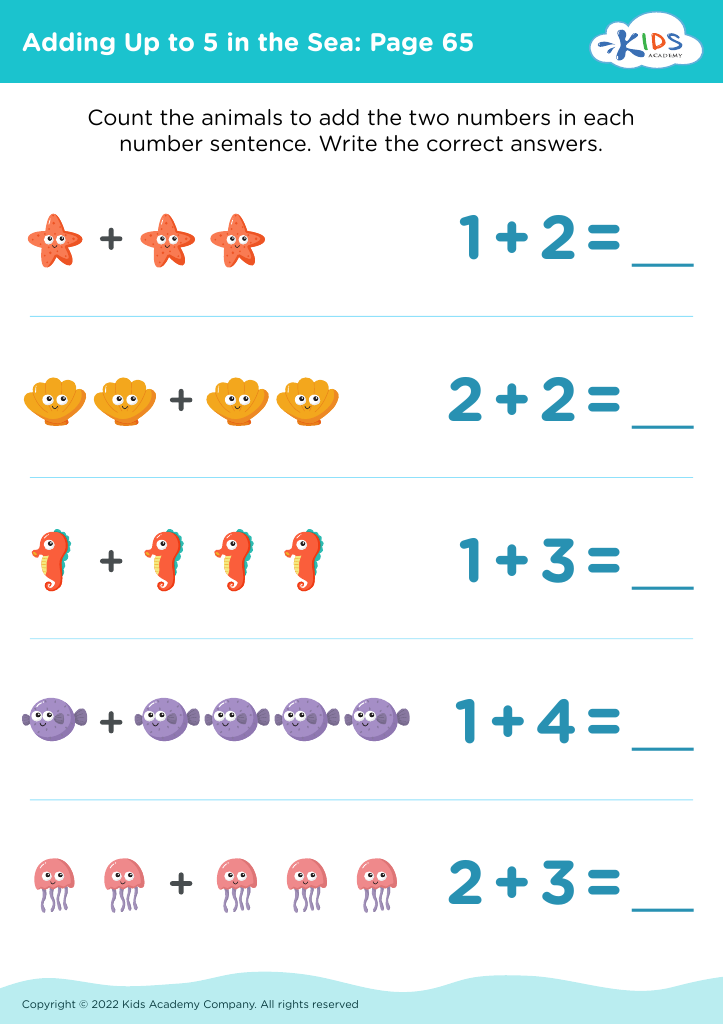
Adding Up to 5 in the Sea: Page 65
Worksheet
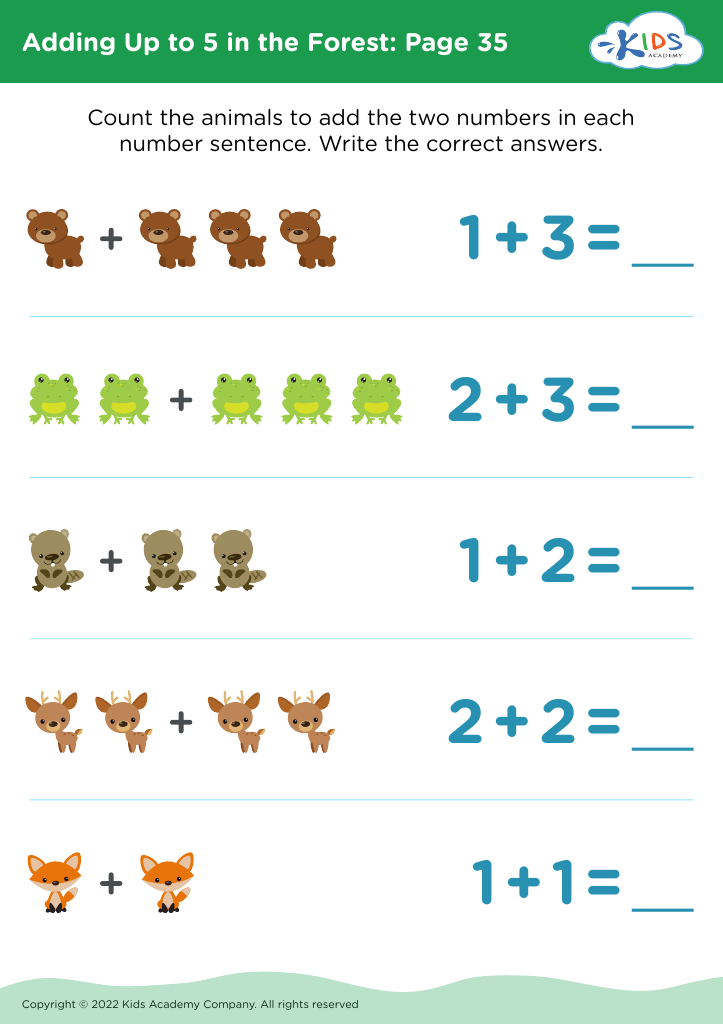
Adding Up to 5 in the Forest: Page 35
Worksheet
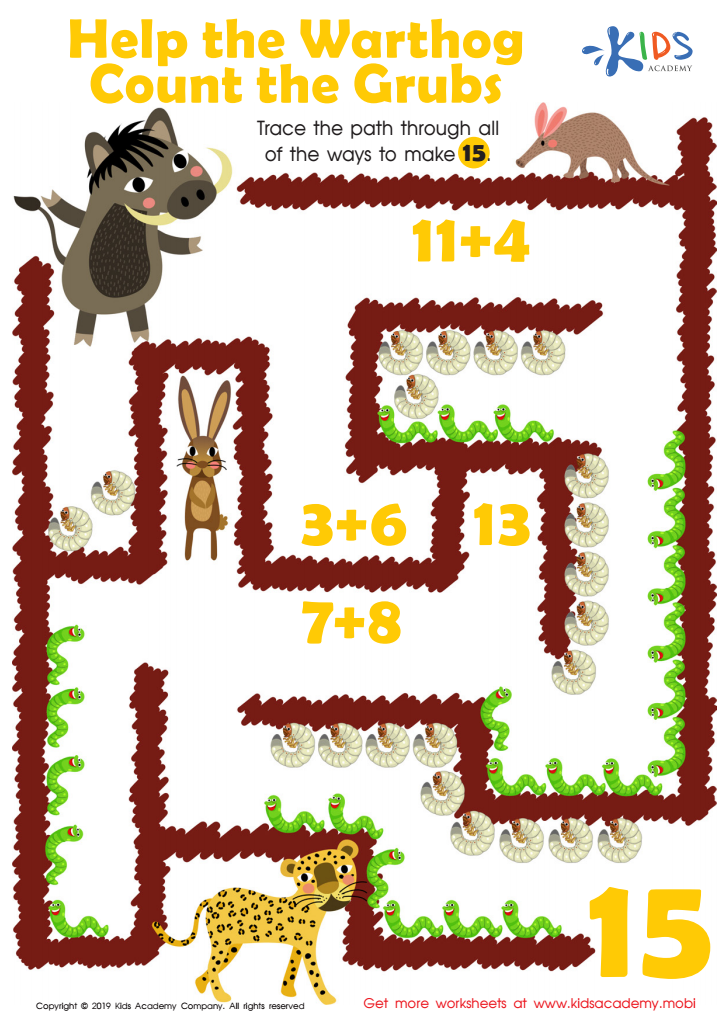
Help the Warthog Count the Grubs Worksheet

Help the Warthog Count the Grubs Worksheet

Test your kids' knowledge of wild animals. Ask them to name some they know, then have them identify the animals on this worksheet. If they can't, take the time to tell them the names. Finally, trace the warthog's path through the maze by solving the equations and going through paths that make 15.
Help the Warthog Count the Grubs Worksheet
Worksheet
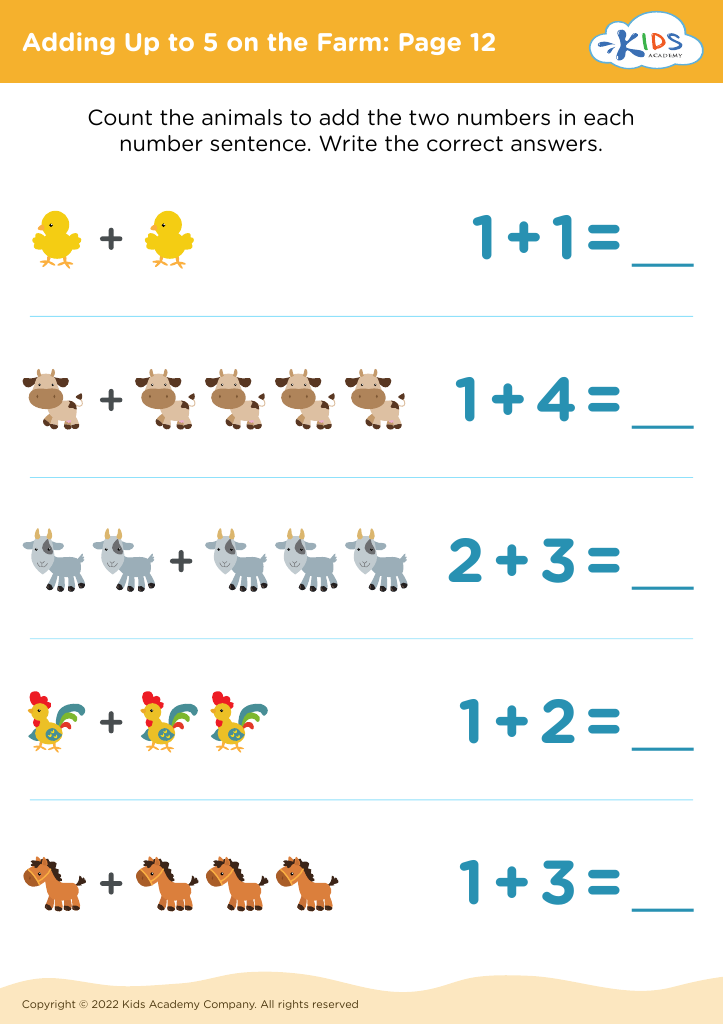
Adding Up to 5 on the Farm: Page 12
Worksheet
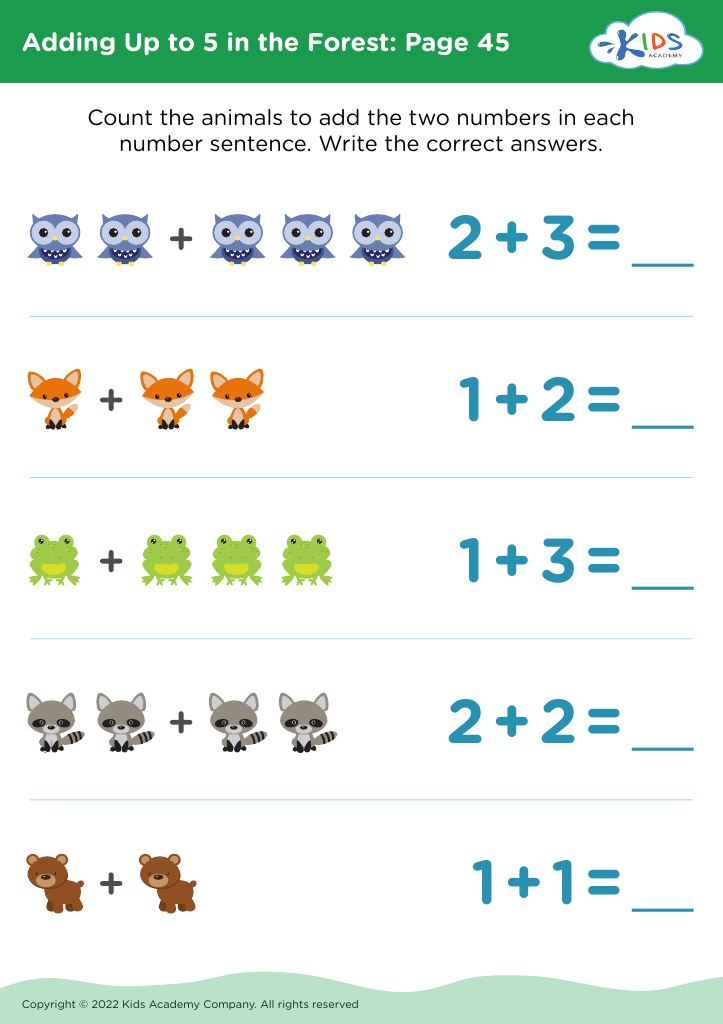
Adding Up to 5 in the Forest: Page 45
Worksheet
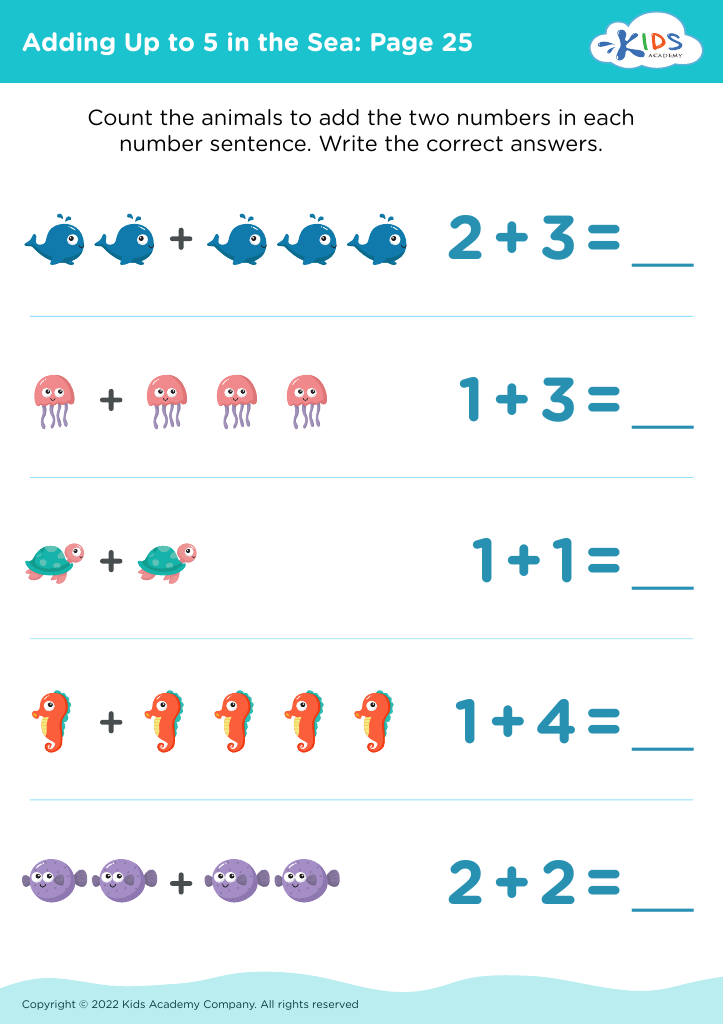
Adding Up to 5 in the Sea: Page 25
Worksheet
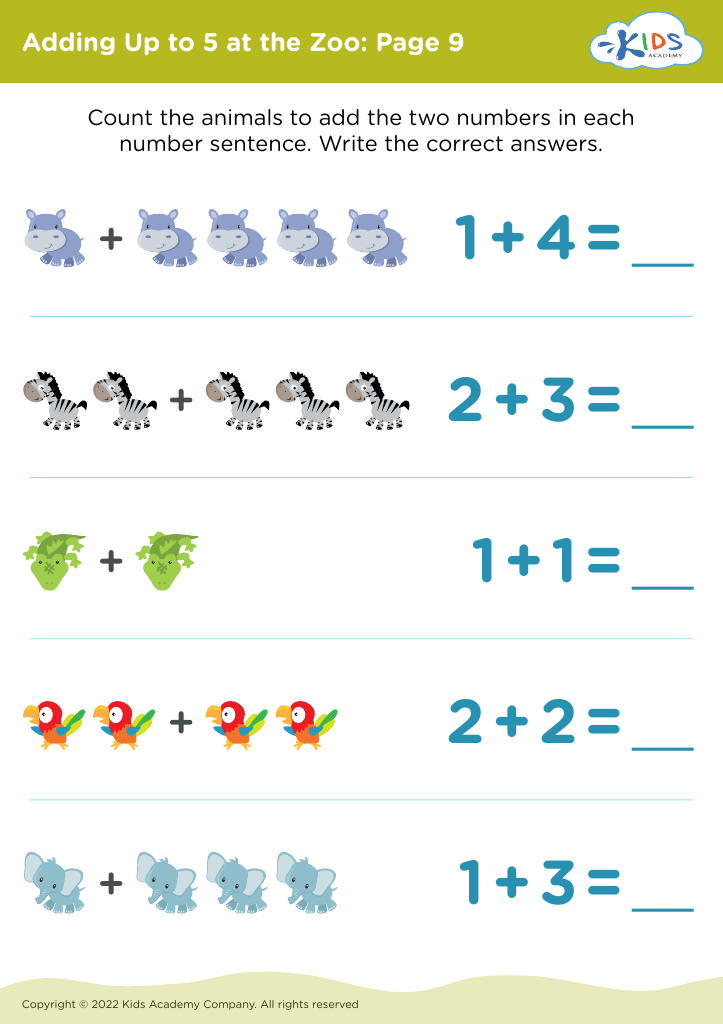
Adding Up to 5 at the Zoo: Page 9

Adding Up to 5 at the Zoo: Page 9

Adding Up to 5 at the Zoo: Page 9
Worksheet
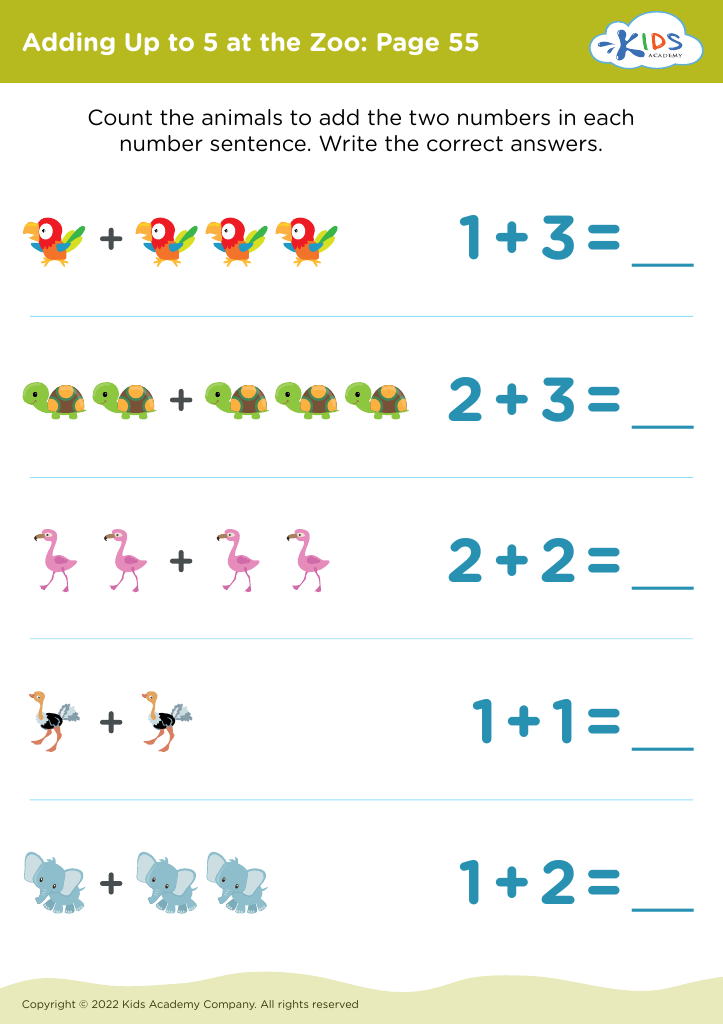
Adding Up to 5 at the Zoo: Page 55
Worksheet
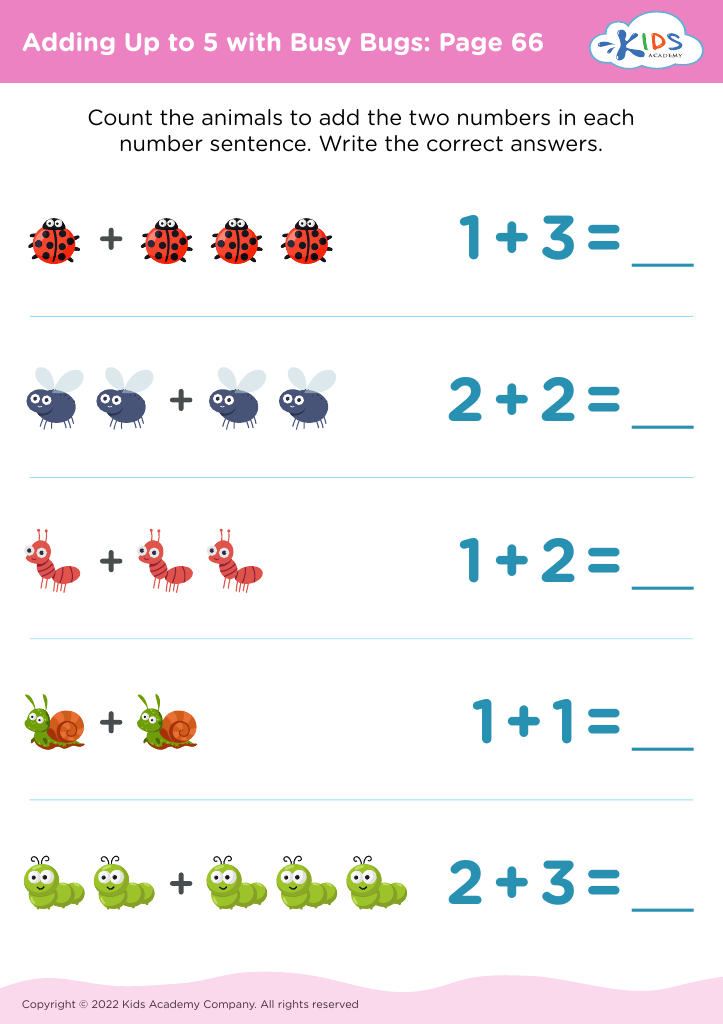
Adding Up to 5 with Busy Bugs: Page 66
Worksheet
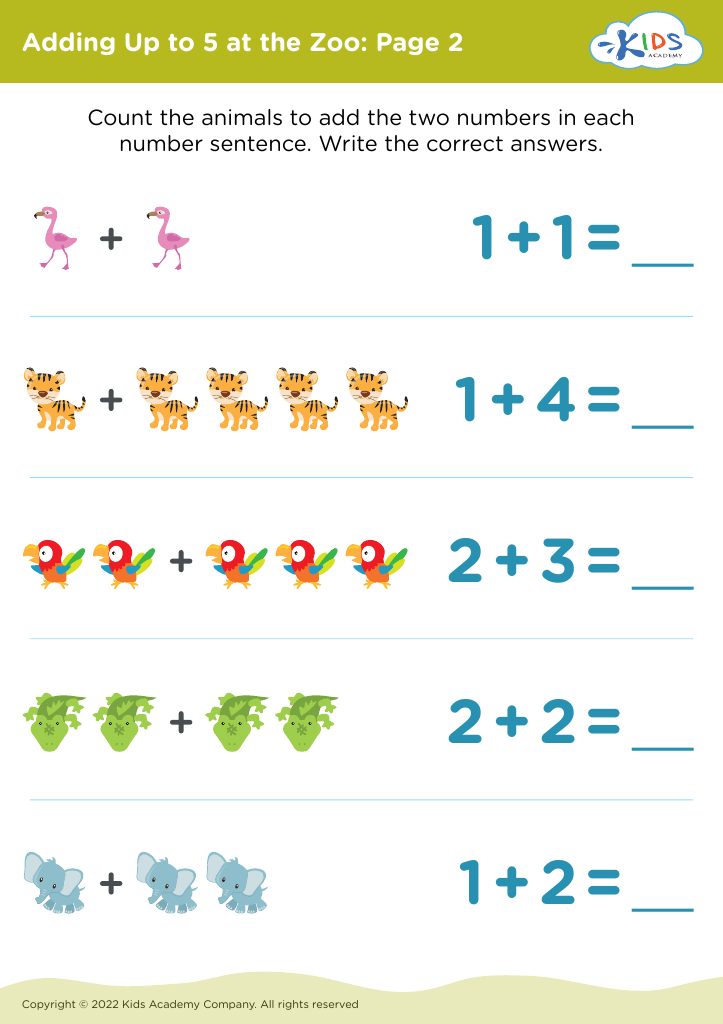
Adding Up to 5 at the Zoo: Page 2

Adding Up to 5 at the Zoo: Page 2

Adding Up to 5 at the Zoo: Page 2
Worksheet
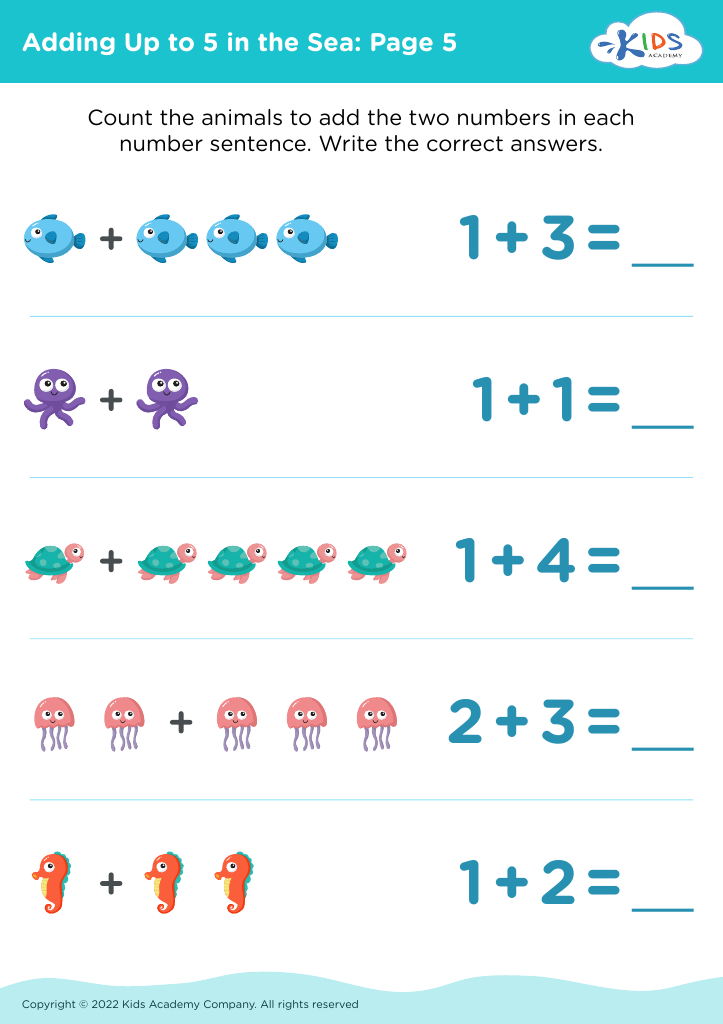
Adding Up to 5 in the Sea: Page 5

Adding Up to 5 in the Sea: Page 5

Adding Up to 5 in the Sea: Page 5
Worksheet
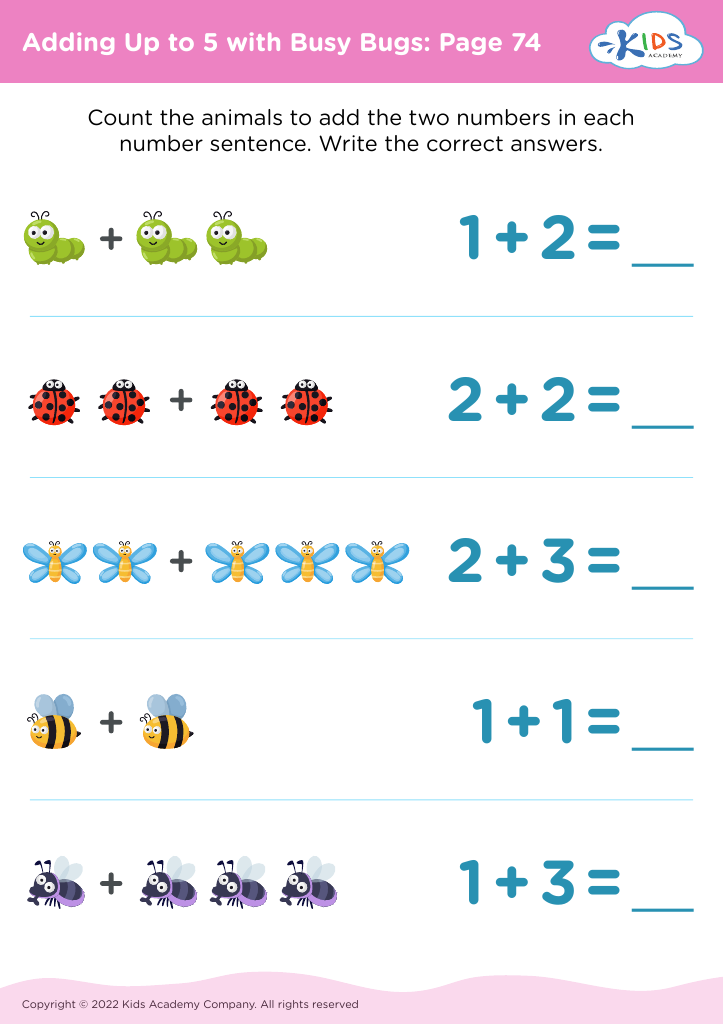
Adding Up to 5 with Busy Bugs: Page 74
Worksheet
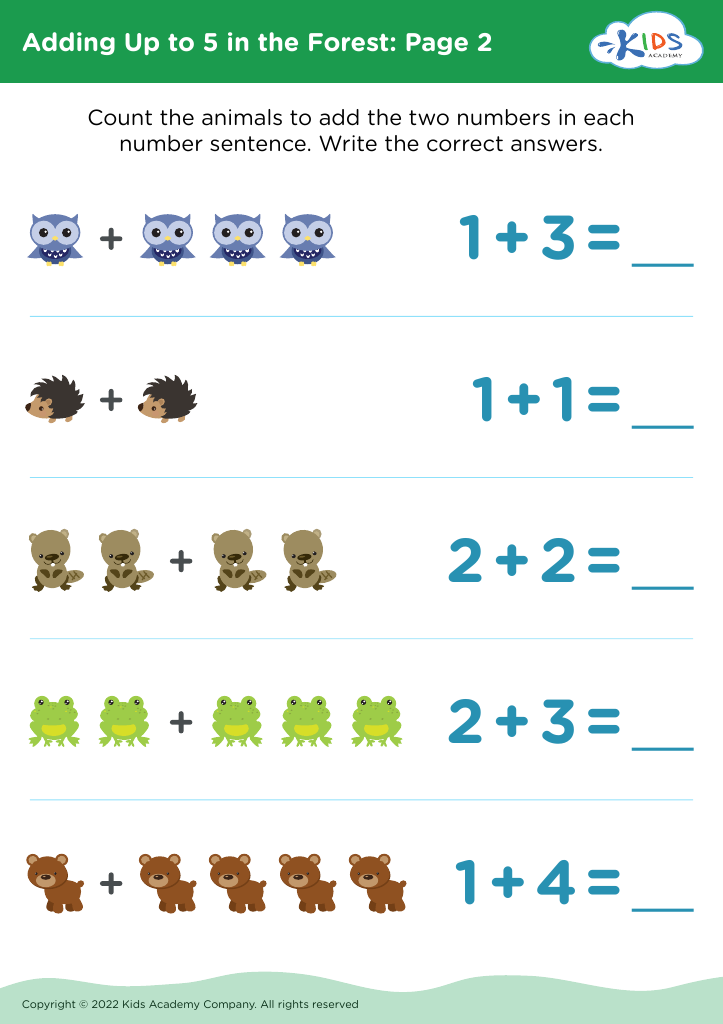
Adding Up to 5 in the Forest: Page 2
Worksheet
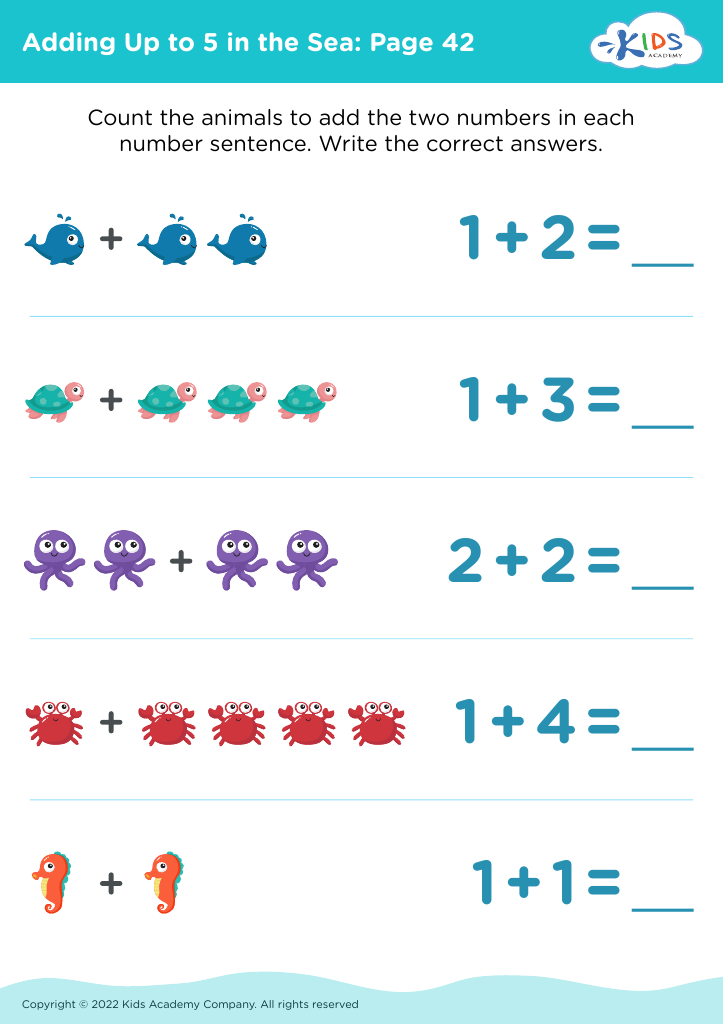
Adding Up to 5 in the Sea: Page 42
Worksheet
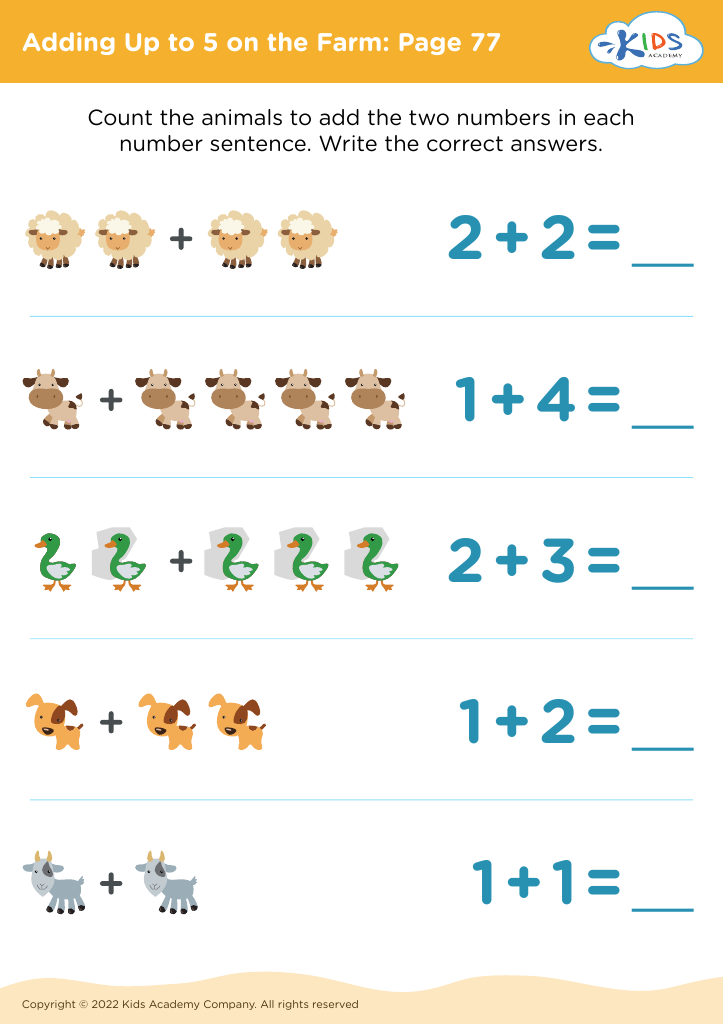
Adding Up to 5 on the Farm: Page 77
Worksheet
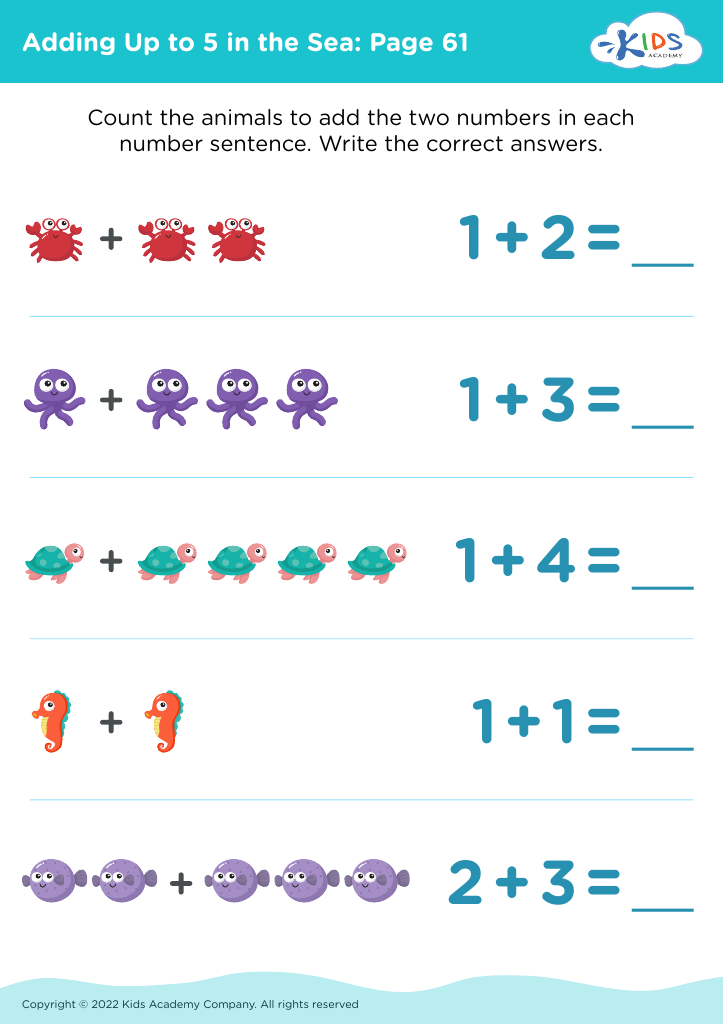
Adding Up to 5 in the Sea: Page 61
Worksheet
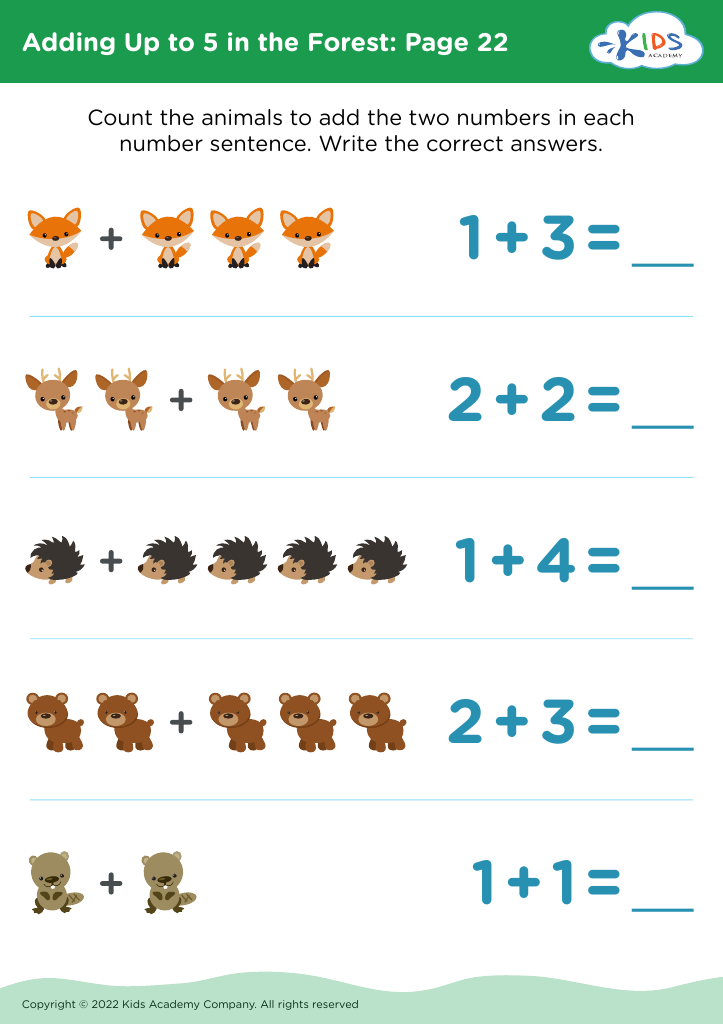
Adding Up to 5 in the Forest: Page 22
Worksheet
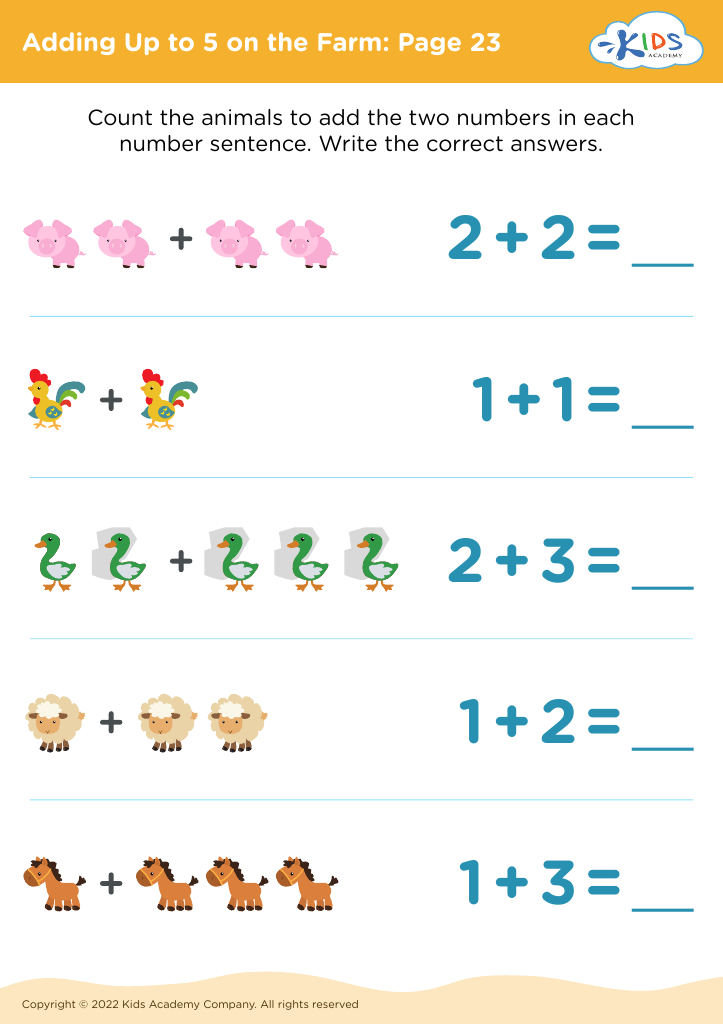
Adding Up to 5 on the Farm: Page 23
Worksheet
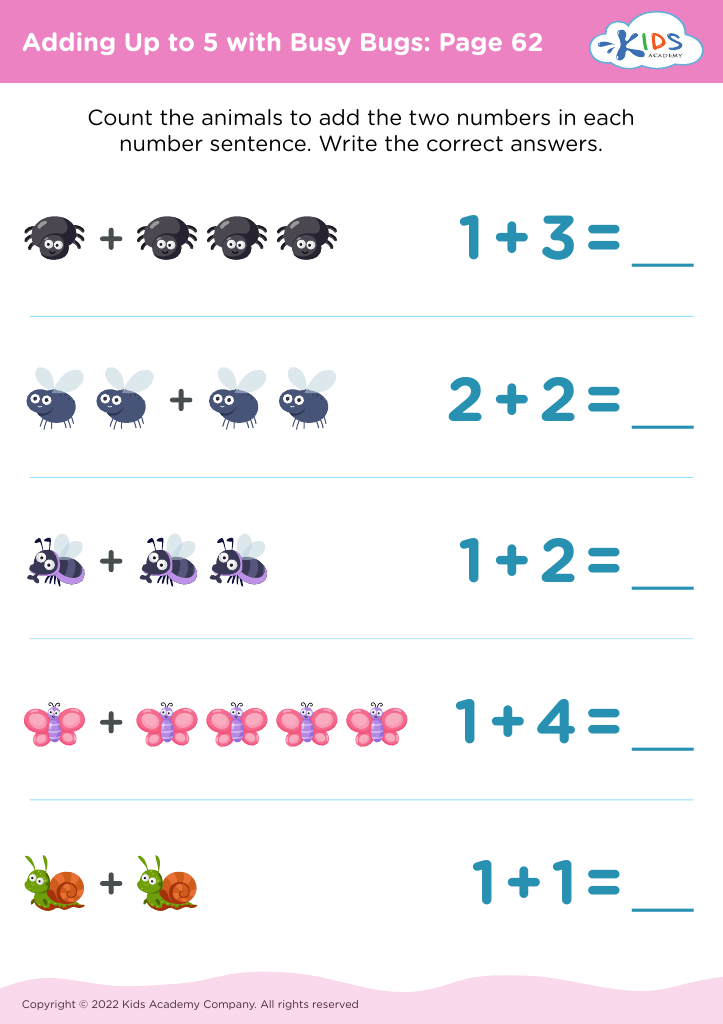
Adding Up to 5 with Busy Bugs: Page 62
Worksheet
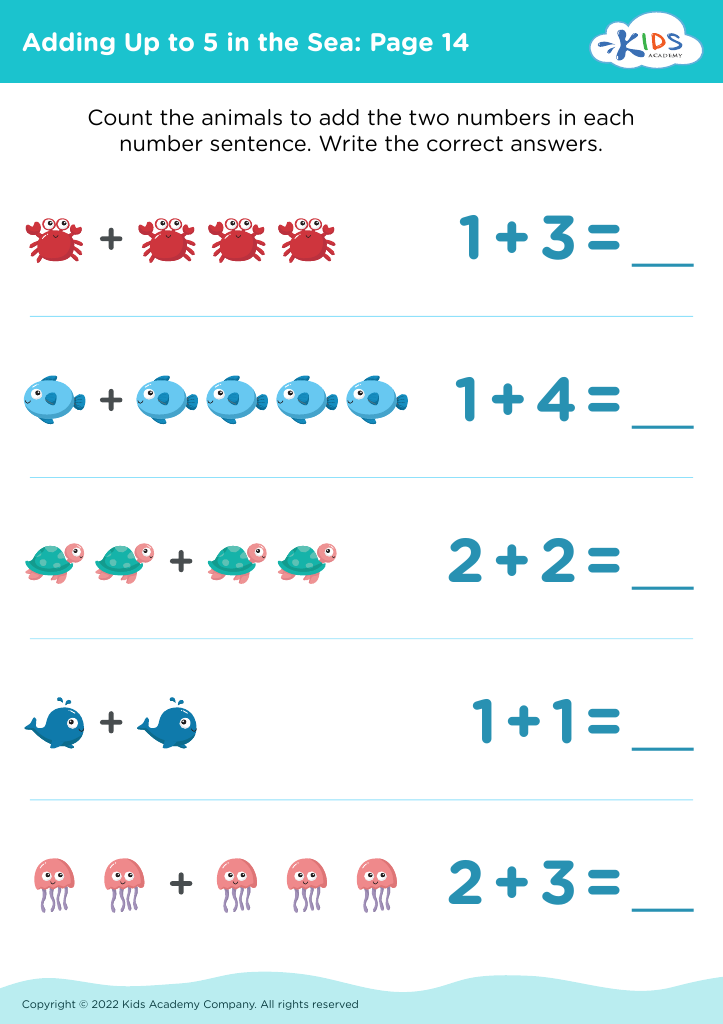
Adding Up to 5 in the Sea: Page 14
Worksheet
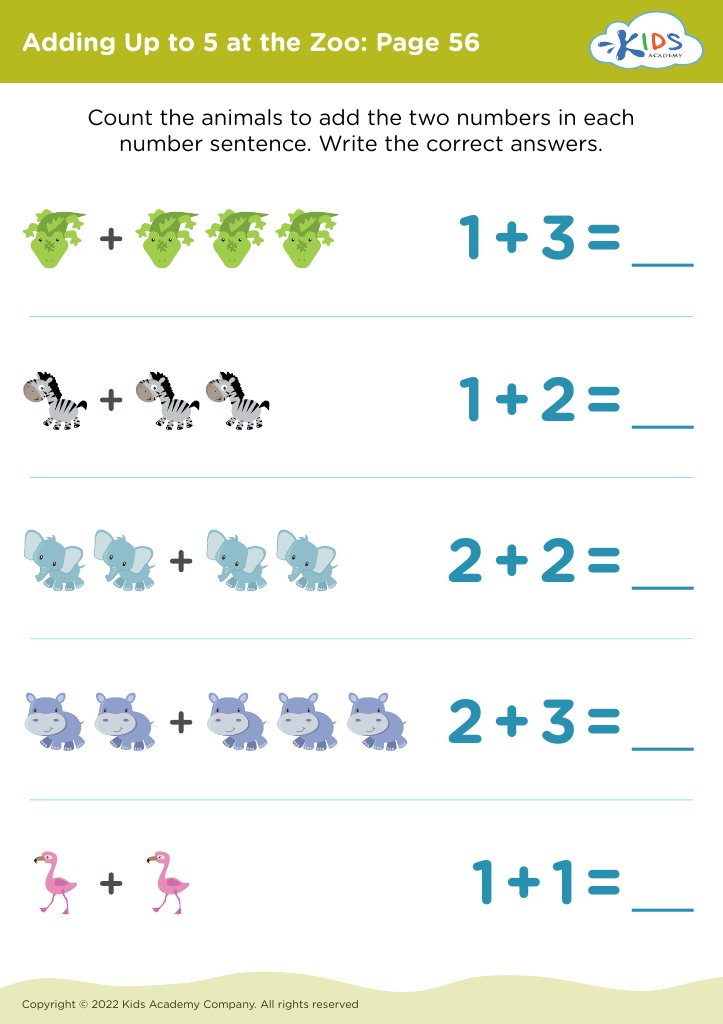
Adding Up to 5 at the Zoo: Page 56
Worksheet


Understanding number recognition and basic addition at an early age is crucial for children's cognitive and mathematical development. For young learners aged 4-6, number recognition is the foundation of their future mathematical learning. Recognizing and understanding numbers help children identify quantities and compare them, which are essential skills for problem-solving in everyday life.

When parents and teachers prioritize number recognition, they are essentially setting children up for success in more complex mathematical concepts. Simple activities like counting objects, recognizing numbers in daily routines, or playing numerical games make learning engaging and meaningful.

Addition, being one of the basic arithmetic operations, introduces children to the concept of combining quantities and understanding simple accumulation and change, fostering logical thinking and reasoning. For example, when a child understands that 2 apples plus 3 apples make 5 apples, they develop an elementary understanding of addition that will support their learning of more complicated mathematics.

By supporting number recognition and addition through fun, age-appropriate activities, caregivers create a positive learning environment that encourages curiosity and confidence in their numerical abilities. These early skills not only benefit future academic pursuits but also aid in everyday problem-solving, critical thinking, and lifelong learning, making early number sense crucial for holistic development.