Numeracy development Addition Worksheets for Ages 4-6
3 filtered results
-
From - To
Boost your child's numeracy skills with our engaging Addition Worksheets designed specifically for ages 4-6! These worksheets provide a fun and interactive way for young learners to grasp foundational math concepts. Featuring colorful illustrations and age-appropriate activities, they help children practice essential addition skills through various problem types, including visual aids, number lines, and simple equations. Our printable resources are perfect for use at home or in preschool classrooms. Empower your child’s mathematical journey as they build confidence and competence in addition, laying a strong foundation for future learning. Explore our comprehensive numeracy development worksheets today!
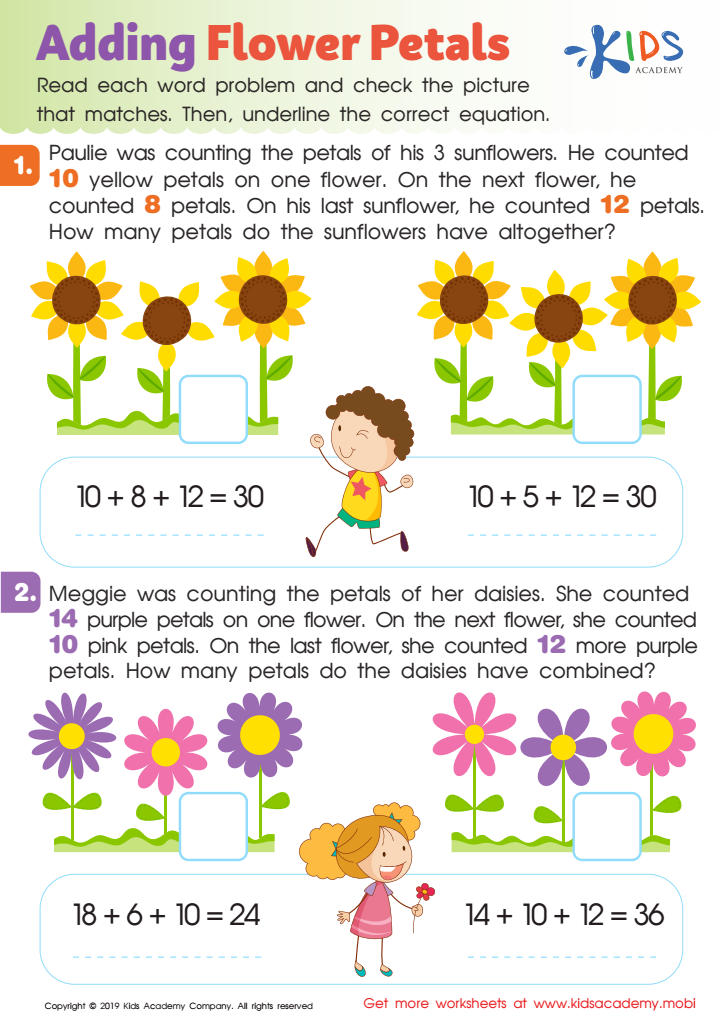
Adding Flower Petals Worksheet
 Assign to My Students
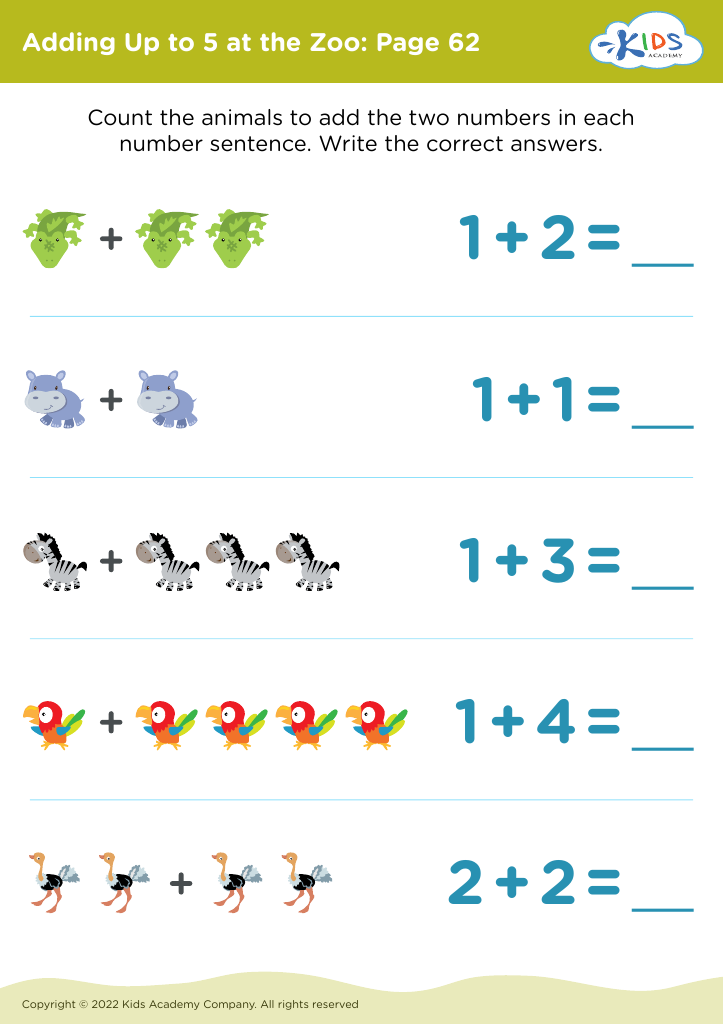
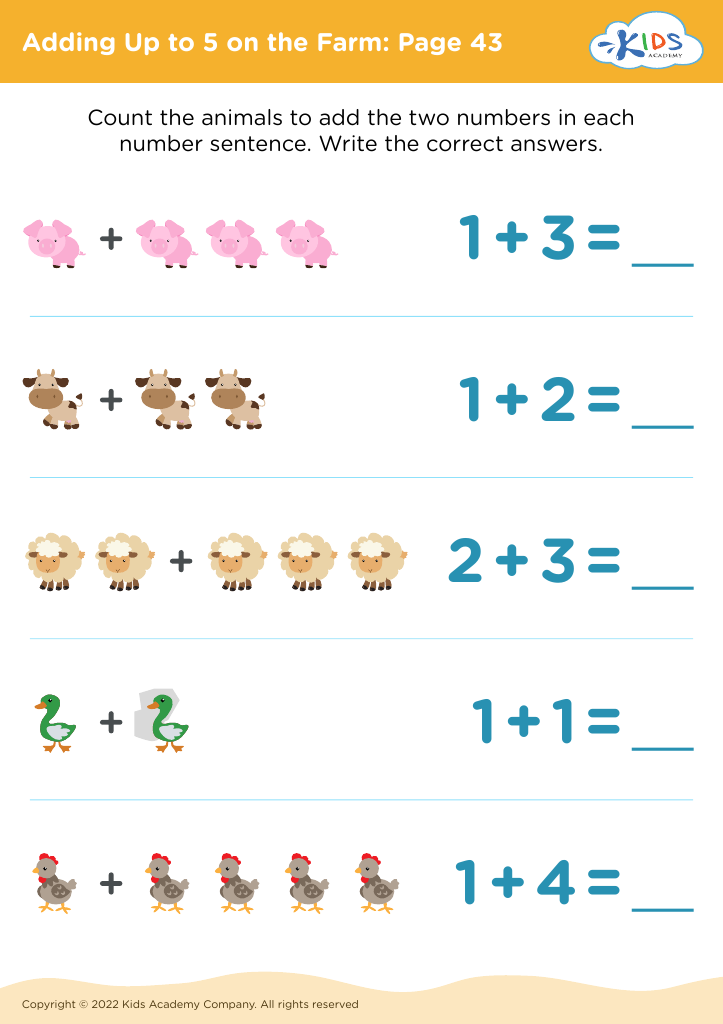








Numeracy development, particularly in addition, is a critical foundational skill for children aged 4 to 6. During these formative years, children's brains are highly adaptable, and introducing them to basic mathematical concepts can significantly influence their future academic success. Early understanding of addition equips children with problem-solving skills, enhances their logical thinking, and lays the groundwork for more complex mathematical concepts in later years.
Parents and teachers play a pivotal role in fostering numeracy skills through engaging and playful activities. By embedding addition in daily experiences—such as counting toys, sharing snacks, or playing simple board games—children can visualize and practice mathematical concepts in a fun and relatable context. This not only builds confidence but also encourages a positive attitude towards math.
Moreover, mastering addition early helps children excel in standardized assessments and builds a base for future learning in subjects that heavily rely on math. The strategies developed during this stage can enhance cognitive skills and boost self-esteem. Ultimately, prioritizing numeracy development in young children equips them with essential skills that transcend the classroom, influencing their critical thinking and decision-making abilities throughout their lives. Thus, both parents and teachers should actively engage in nurturing these essential skills.








