Understanding skip-counting Counting Worksheets for Ages 4-6
3 filtered results
-
From - To
Discover the engaging world of skip-counting with our specially designed worksheets for ages 4-6. At Kids Academy, our printable worksheets focus on developing early math skills. Skip-counting helps strengthen number sense and introduces young learners to the basics of multiplication and patterns in numbers. Created with fun illustrations and interactive exercises, these worksheets make learning skip-counting enjoyable and effective. Ideal for preschool and kindergarten children, they provide a solid foundation for future math success. Start building your child's confidence in math today with our expertly crafted skip-counting worksheets.
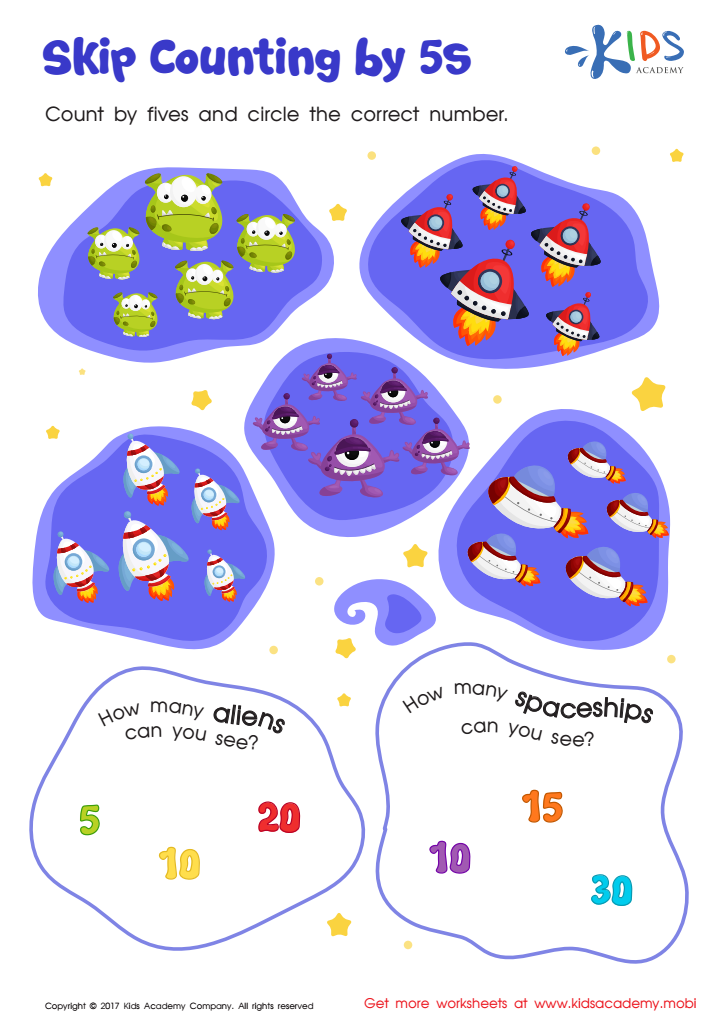
Skip Counting by 5s: Aliens and Spaceships Printable
 Assign to My Students

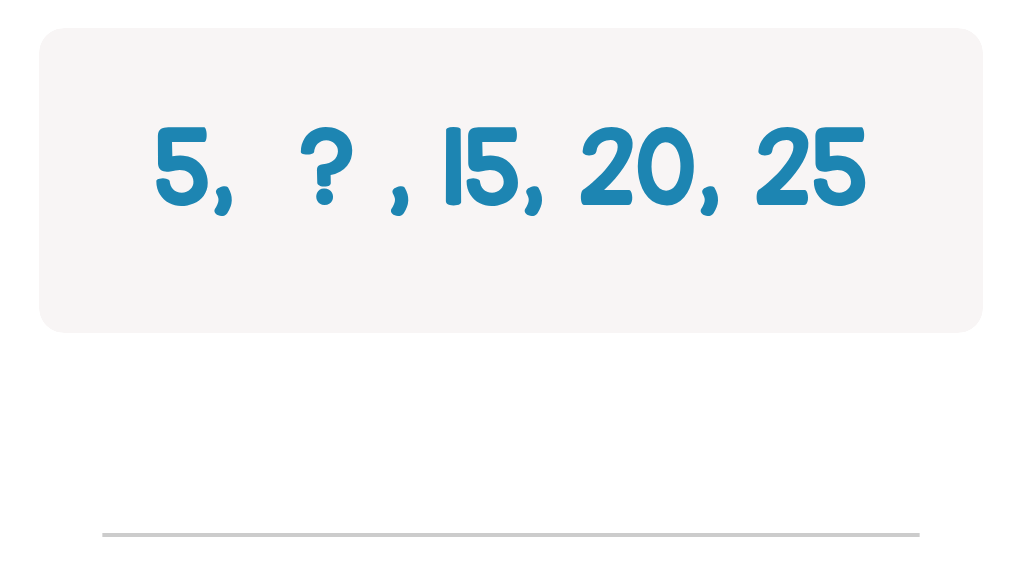
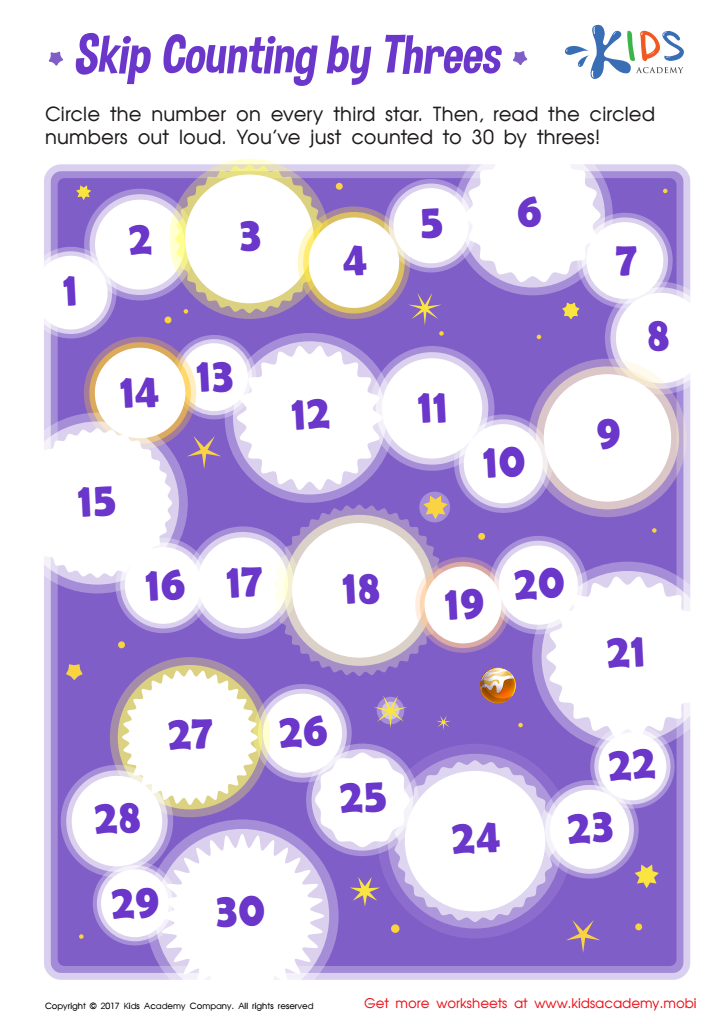
Skip Counting By Three Printable
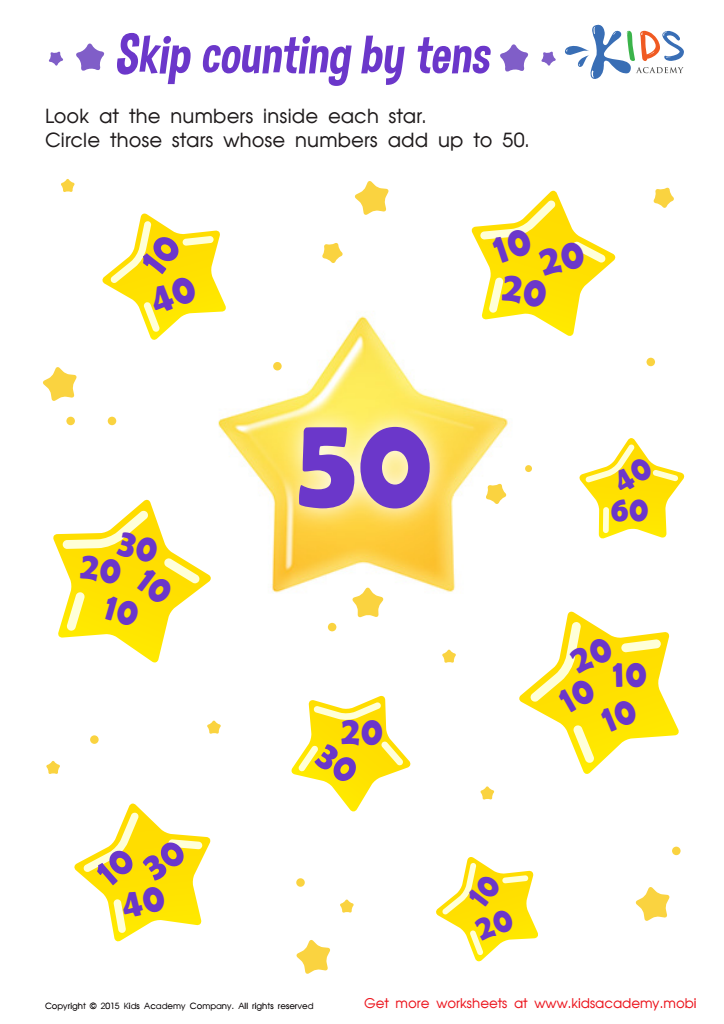
Learn Dozens: Skip Counting by Tens Printable








Understanding skip-counting is fundamental for young children, particularly those aged 4-6, because it lays the groundwork for essential mathematical concepts. Skip-counting—counting by 2s, 5s, or 10s—not only enables children to develop number sense but also helps them recognize patterns. This significantly improves their ability to undertake more complex mathematical tasks in the future, such as addition, subtraction, multiplication, and division.
For parents, encouraging skip-counting can turn simple, everyday activities into valuable learning opportunities. Games, songs, and rhythmic activities that incorporate skip-counting can make learning fun and engaging for children.
Teachers who focus on skip-counting provide students with the skills to quickly and accurately count larger groups of objects, a crucial ability for problem-solving and the development of logical reasoning. Furthermore, it supports the transition from counting objects one-by-one to understanding and using number lines, which is vital for their progression in mathematics.
Lastly, mastering skip-counting early contributes to a child's confidence and positive attitude toward mathematics. It encourages a strong foundation, reducing the intimidation often associated with more abstract mathematical concepts later on. Therefore, parents and teachers should prioritize skip-counting to ensure a robust mathematical base and a seamless learning progression for young children.








