Basic geometry Geometry Worksheets for Ages 4-6
3 filtered results
-
From - To
Welcome to our Basic Geometry Worksheets for Ages 4-6! Designed specifically for young learners, these engaging worksheets introduce foundational geometric concepts through fun and interactive activities. Children will explore shapes, sizes, and spatial relationships, fostering essential math skills in a playful manner. Our worksheets incorporate colorful visuals and straightforward instructions, making learning enjoyable for kids and easy for parents and teachers to implement. From identifying shapes to understanding simple patterns, these resources are perfect for enhancing early math education. Download and watch your little ones develop a fascination for geometry while building their confidence and skills in mathematics!
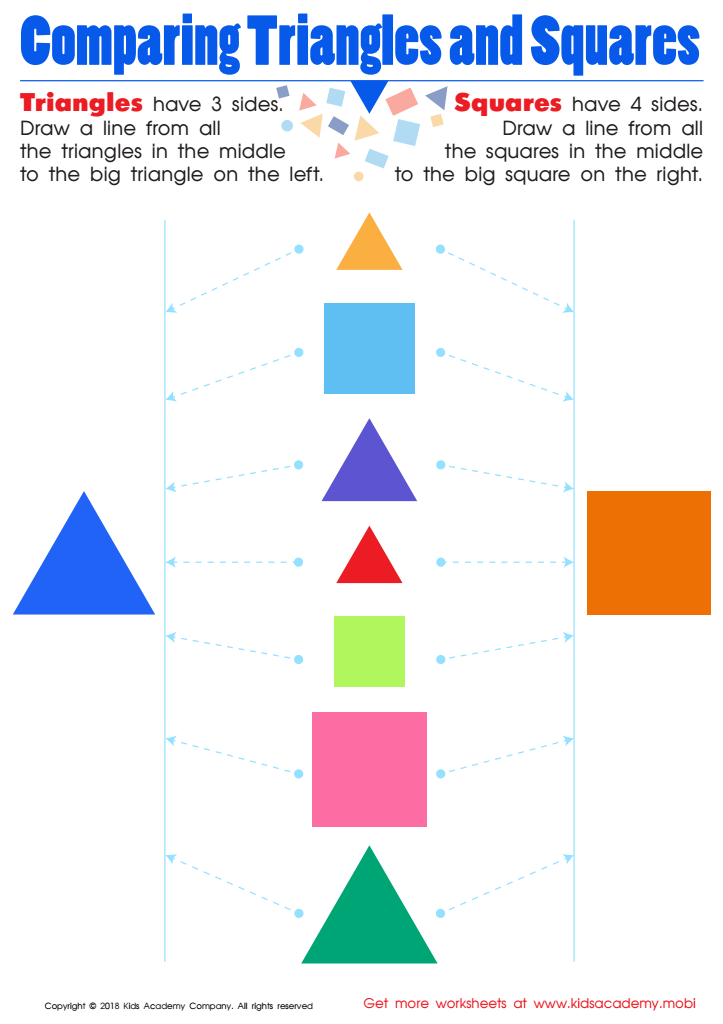
Comparing Triangles Squares Worksheet
 Assign to My Students











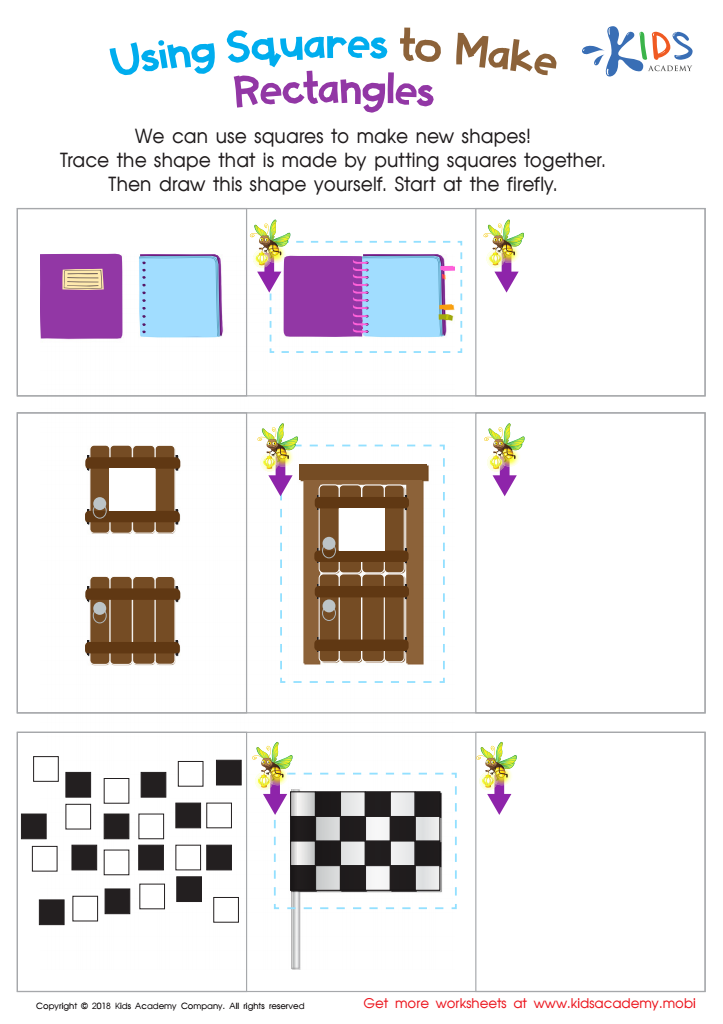
Using Squares to Make Rectangles Worksheet
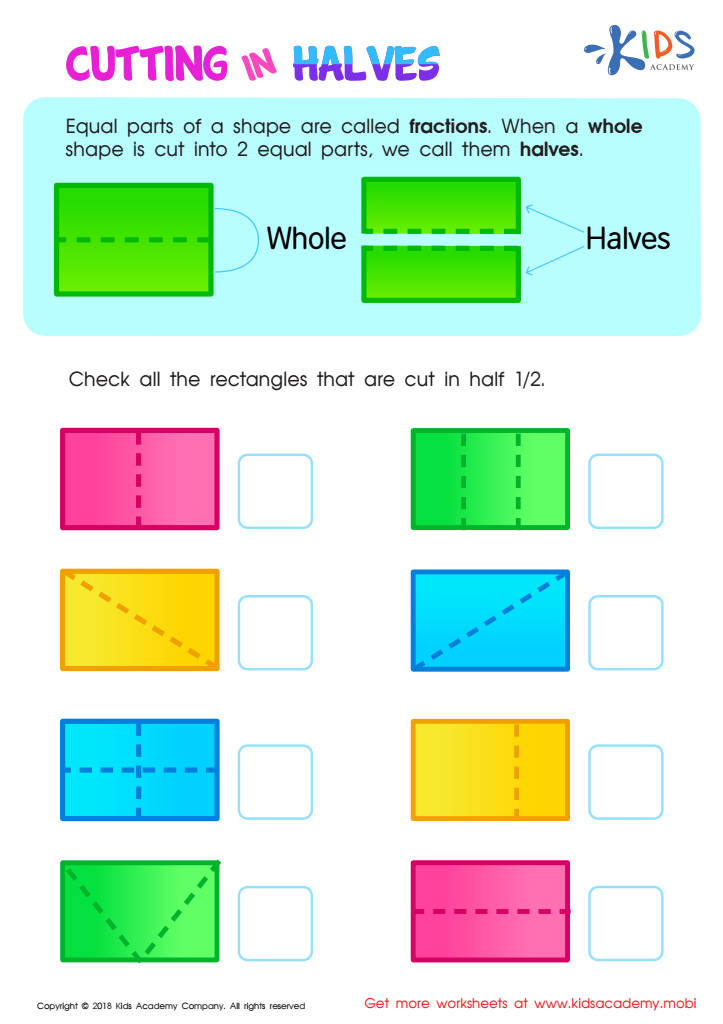
Cutting in Halves Worksheet








Basic geometry is vital for young learners aged 4-6, as it lays a foundation for critical thinking and problem-solving skills. Engaging with shapes, sizes, and spatial relationships enhances cognitive development, fostering children’s ability to recognize patterns and make connections in their environment. Understanding basic geometric concepts aids in the development of fine motor skills through hands-on activities like drawing, building, and sorting shapes, which also encourage creativity.
Moreover, geometry intersects with everyday life; by recognizing shapes and their properties, children develop practical skills that are essential for later mathematical concepts. For instance, identifying shapes in the home or neighborhood cultivates observation skills and nurtures a sense of curiosity. It helps them to understand and describe their world, making learning relevant and meaningful.
Parents and teachers play a crucial role in creating opportunities for exploration and play that introduces geometry naturally and engagingly. By introducing geometry through games and interactive activities, they foster a positive attitude toward math and learning. Ultimately, caring about basic geometry not only enriches a child’s educational journey but also equips them with essential tools for future academic success and real-life applications, setting the stage for lifelong learning.








