Recognizing shapes Geometry Worksheets for Ages 4-6
3 filtered results
-
From - To
Discover our captivating "Recognizing Shapes Geometry Worksheets for Ages 4-6" to effectively introduce young learners to the world of shapes. Engaging activities, vibrant illustrations, and playful tasks are designed to spark interest and support early math skills development. These worksheets help kids identify and differentiate between basic shapes like circles, squares, triangles, and rectangles, using familiar objects and fun challenges. Ideal for parents and educators, our worksheets ensure a solid foundation in geometry through hands-on learning experiences. Visit us to make shape recognition enjoyable and educational for your child!
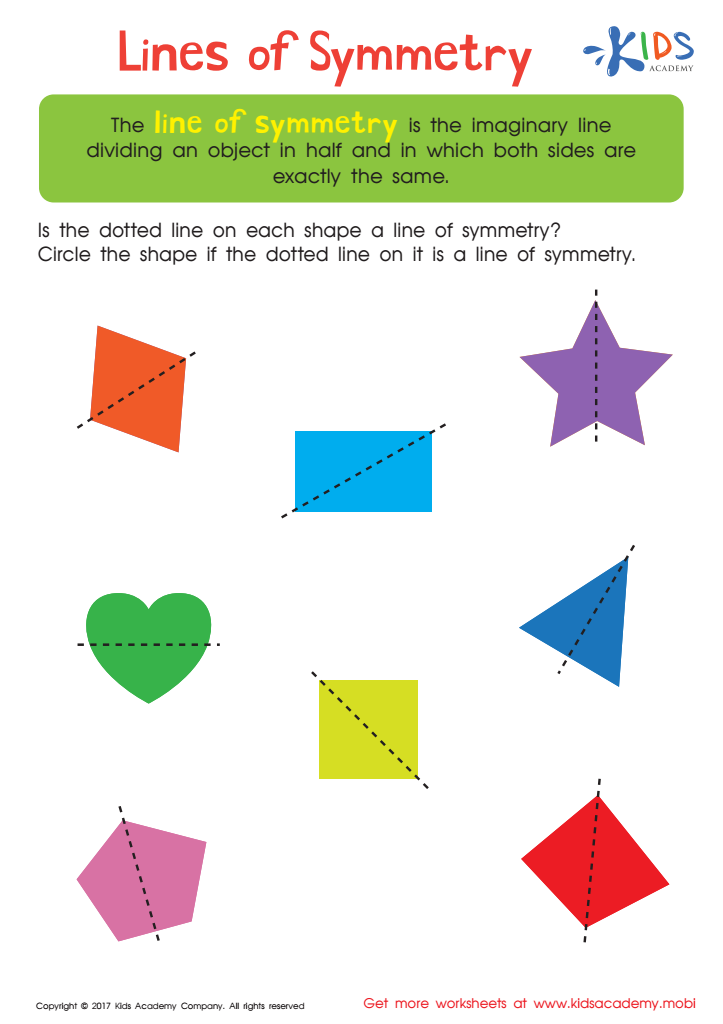
Lines of Symmetry Printable
 Assign to My Students











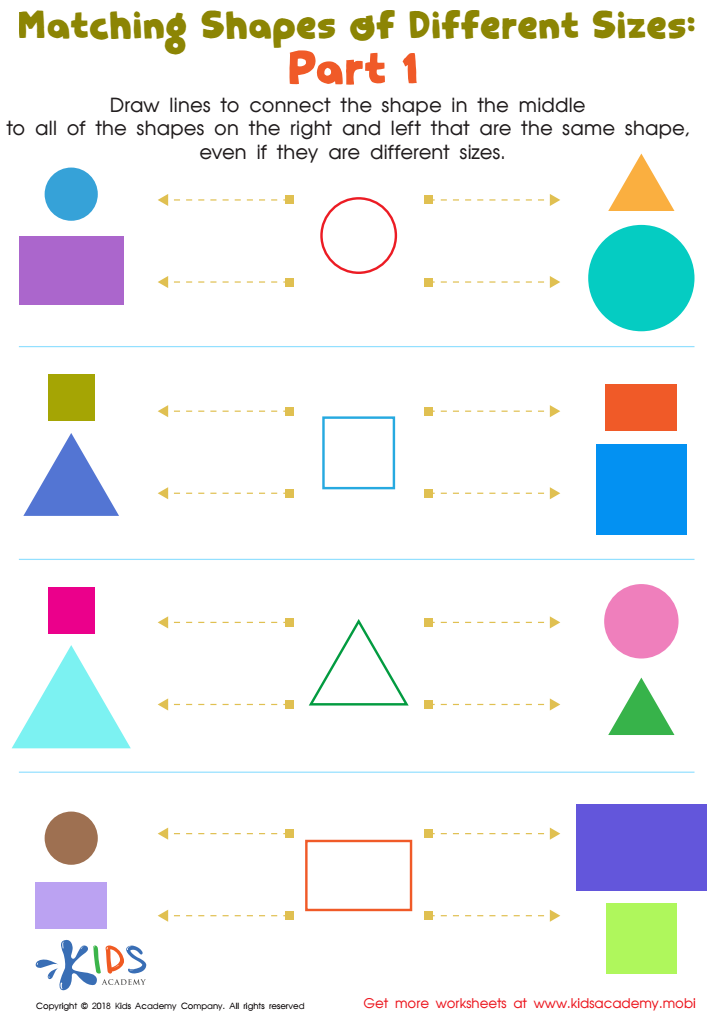
Geometry: part 1 Worksheet
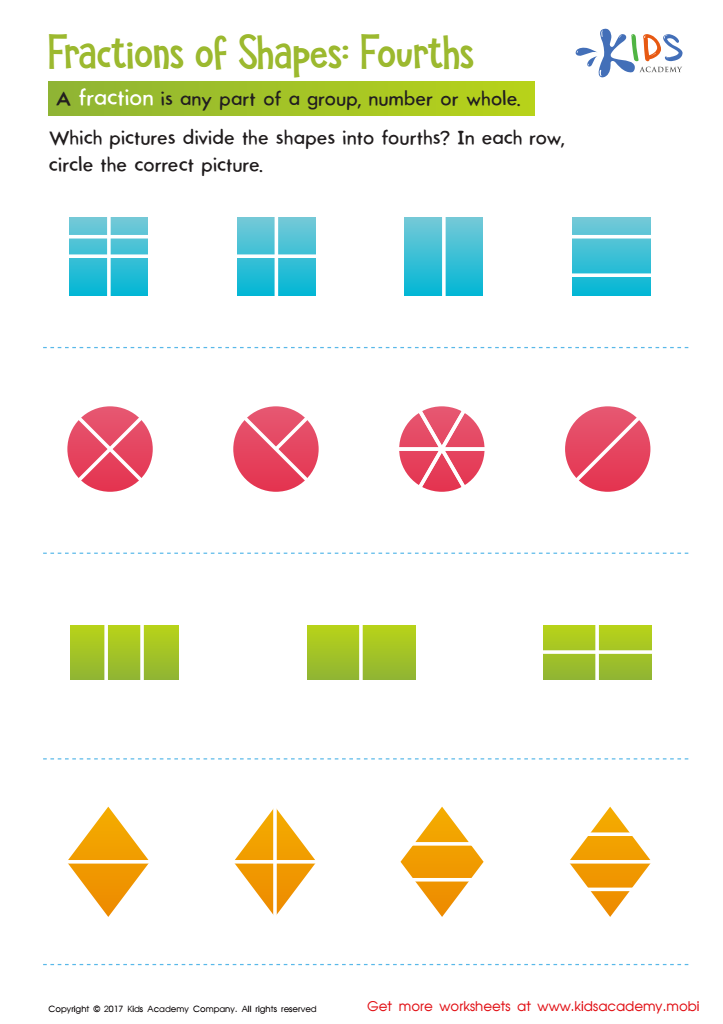
Fractions of Shapes Worksheet








Recognizing shapes is a foundational skill in geometry that plays a critical role in the cognitive and perceptual development of children aged 4-6. For these young learners, shapes are more than just circles and squares; they are fundamental building blocks that help them make sense of the world around them. Understanding shapes aids in developing spatial awareness, allowing children to navigate their environment efficiently and safely.
Moreover, early shape recognition is closely linked to language development and communication skills. When children learn to identify and describe shapes, they also expand their vocabulary and enhance their ability to articulate thoughts and observations. This sets the stage for effective communication and comprehension in later academic years.
Mastering geometric shapes also lays the groundwork for more advanced mathematical concepts. Many early math skills, such as counting, pattern recognition, and graphing, often incorporate shapes. Therefore, a solid grasp of geometric figures boosts a child’s confidence and proficiency in mathematics, making future learning endeavors less daunting.
In addition, engaging with shapes through hands-on activities fosters critical thinking, problem-solving, and creativity. Whether manipulating blocks or drawing shapes, children develop fine motor skills and an understanding of symmetry, order, and relationships between objects. These are essential skills that extend beyond the classroom, equipping children for a lifetime of learning and exploration.








