Basic addition practice Numbers Worksheets for Ages 4-6
5 filtered results
-
From - To
Discover our engaging Basic Addition Practice Worksheets, tailored for children aged 4-6! These worksheets are designed to introduce young learners to the fundamentals of addition through fun and interactive activities. With vibrant illustrations and age-appropriate exercises, children will build their math skills while enjoying their learning experience. Our worksheets help develop number recognition, counting skills, and simple equation solving, laying a strong foundation for future math success. Perfect for home or classroom use, these resources make practicing addition both exciting and effective. Visit us today to download and inspire a love for math in your little ones!
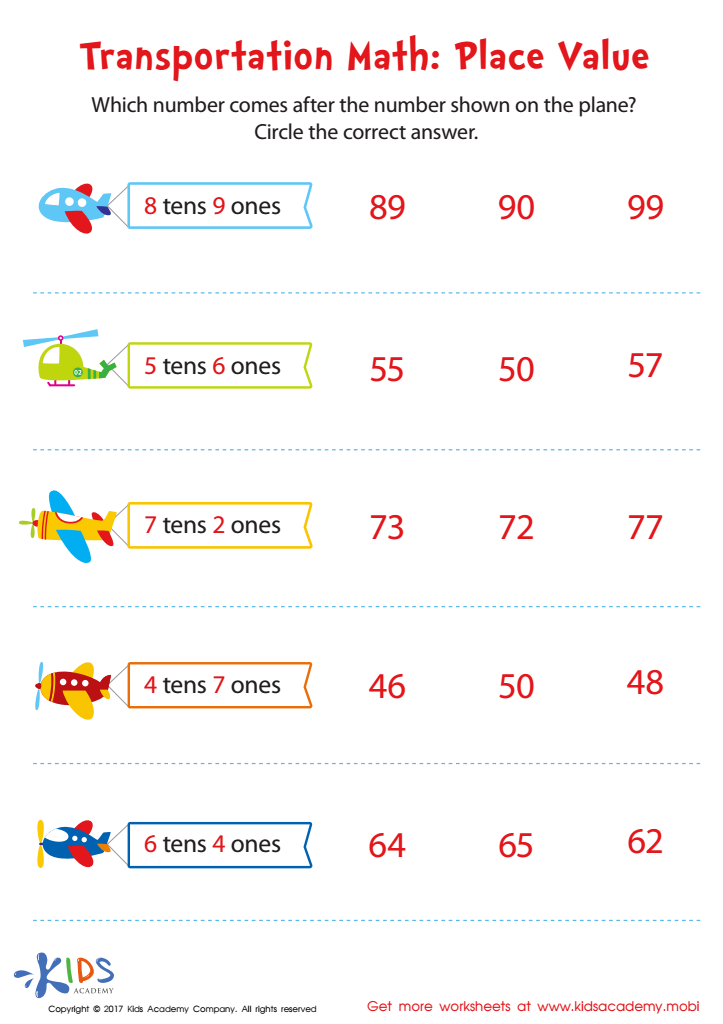
Transportation Math Printable
 Assign to My Students
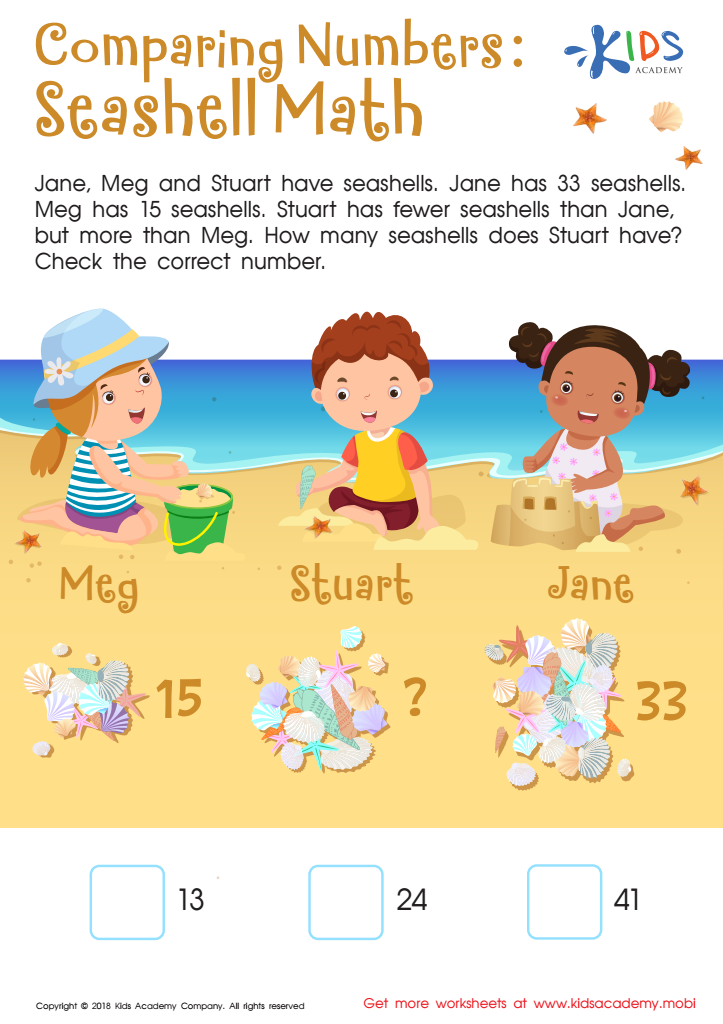
Seashell Collectors Worksheet
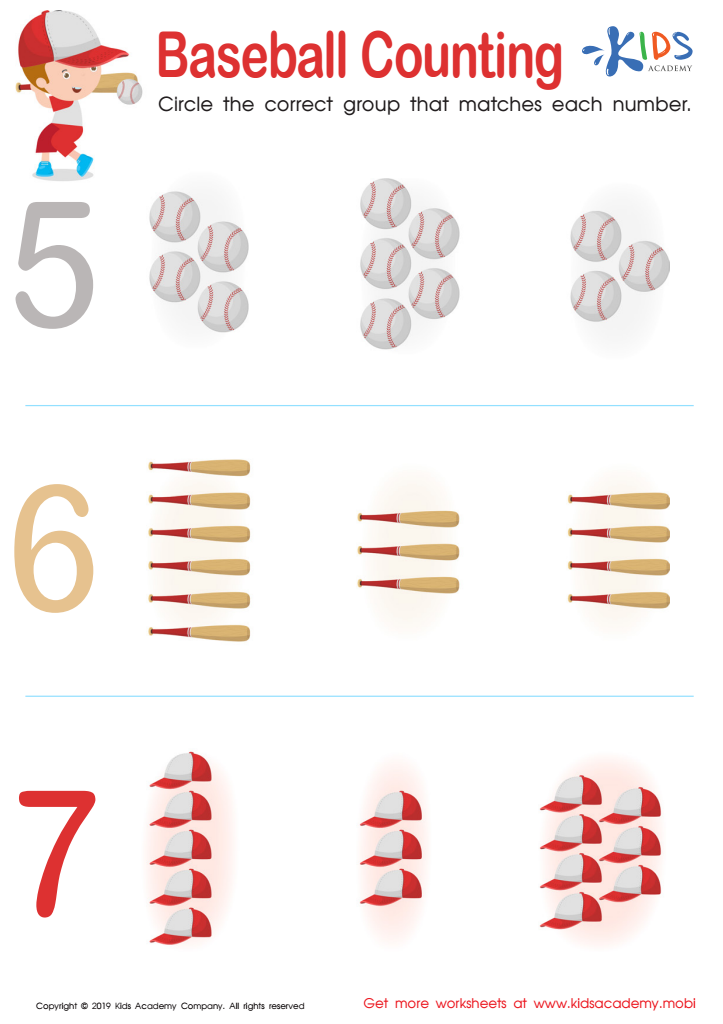
Baseball Counting Worksheet
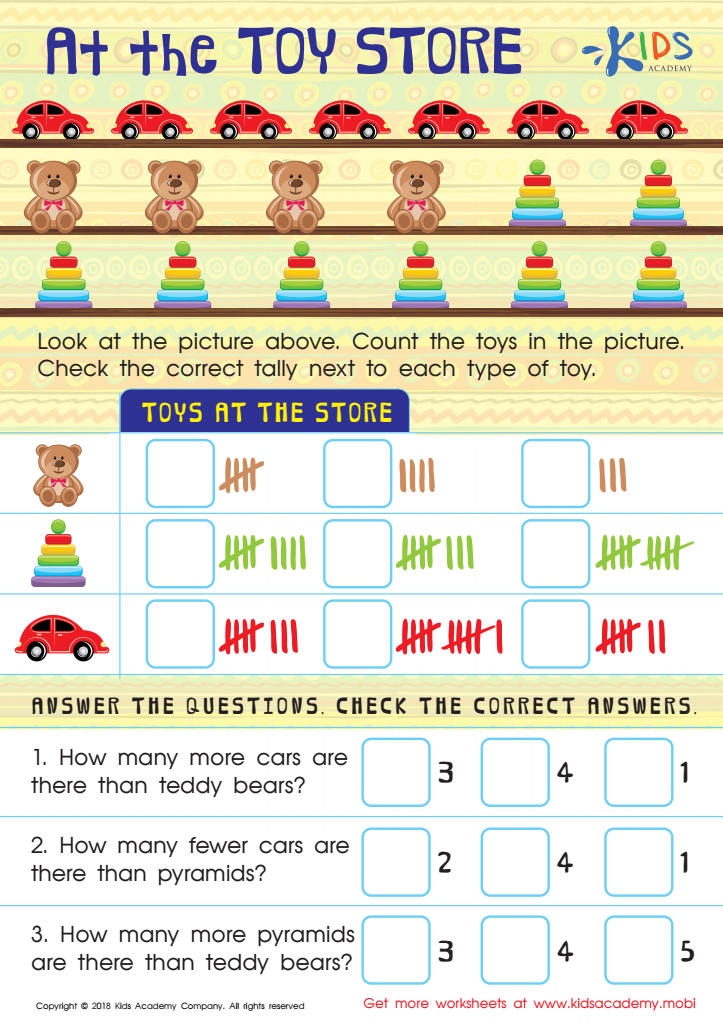
Tally Chart: At the Toy Store Worksheet
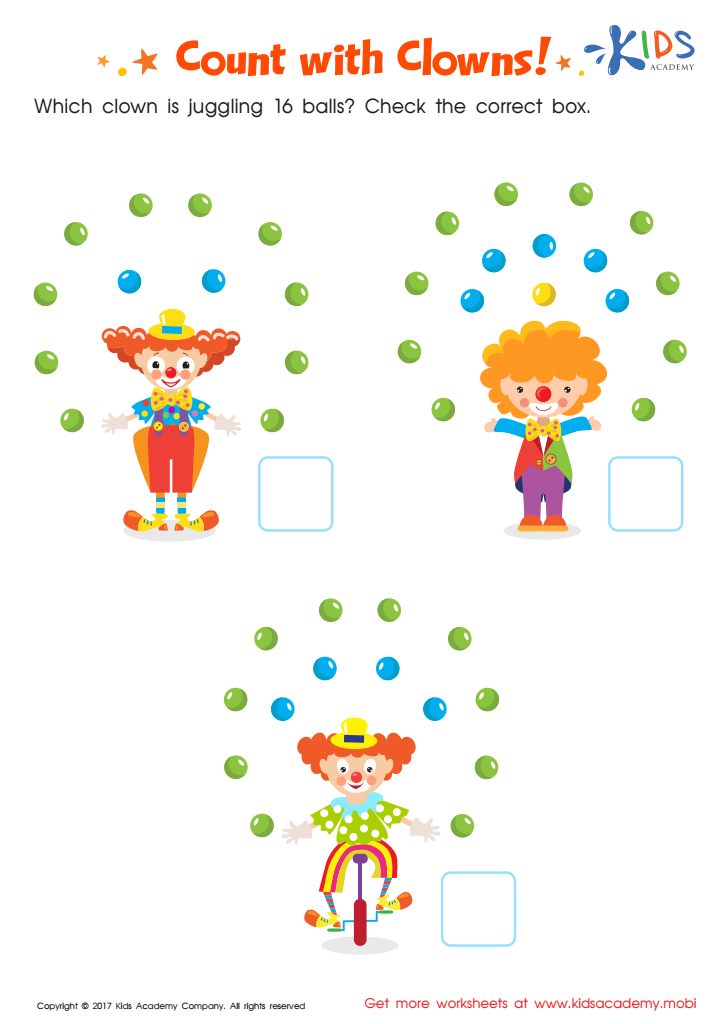
Count with Clowns Worksheet








Basic addition practice for children aged 4-6 is crucial for several reasons. At this developmental stage, children are not only learning foundational math skills but are also building cognitive abilities that benefit them across all subjects. Mastering basic addition promotes number sense, helping children understand the concepts of quantity and how numbers relate to one another.
Moreover, engaging in early addition practice prepares students for future math challenges. When children grasp simple addition, they become more confident in problem-solving, setting the groundwork for more complex arithmetic skills down the line. Early mathematics experiences can also foster a positive attitude toward learning, reinforcing the idea that math is a fun and essential part of life.
Parents and teachers play a key role in this learning process. By providing support and encouragement, they help children develop perseverance and resilience when faced with challenging tasks. Furthermore, integrating playful activities that involve addition can make learning enjoyable, enhancing retention and comprehension.
Ultimately, prioritizing basic addition practice not only aids in academic success but also nurtures critical thinking skills and mathematical confidence, equipping young learners for a successful educational journey.








