Associative learning Math Worksheets for Ages 4-6
3 filtered results
-
From - To
Discover engaging Associative Learning Math Worksheets for ages 4-6 at Kids Academy! Our expertly crafted worksheets are designed to make early math concepts enjoyable and easy to grasp. By pairing numbers, shapes, and patterns, children enhance problem-solving skills and build a strong foundation for future math success. With vibrant, kid-friendly illustrations and step-by-step instructions, these worksheets capture young learners' attention and make learning fun. Perfect for preschoolers and kindergarteners, our resources support at-home practice and classroom activities. Explore the collection and help your child develop confidence and proficiency in math today! Visit Kids Academy to learn more.
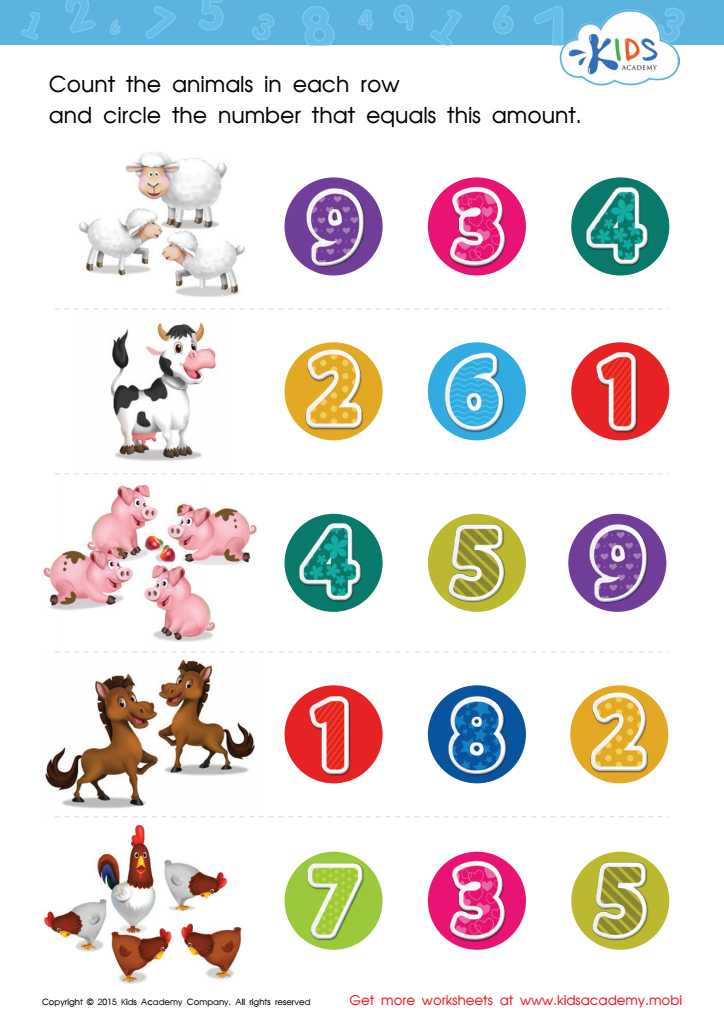
Count and Match 1 – 5 Math Worksheet
 Assign to My Students
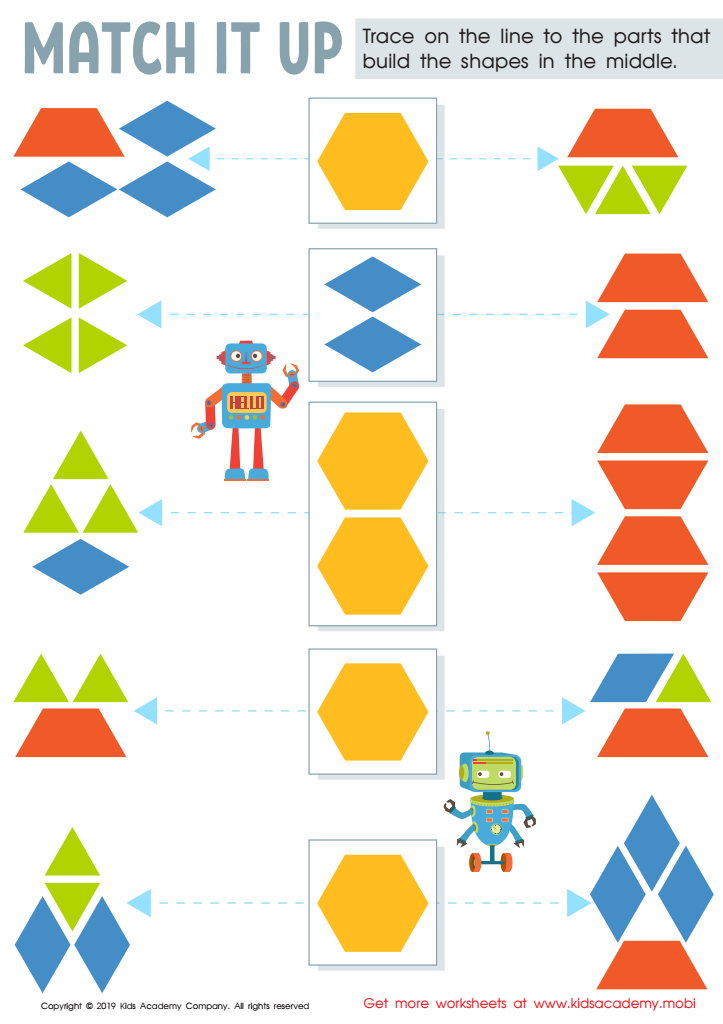
Match It up Worksheet
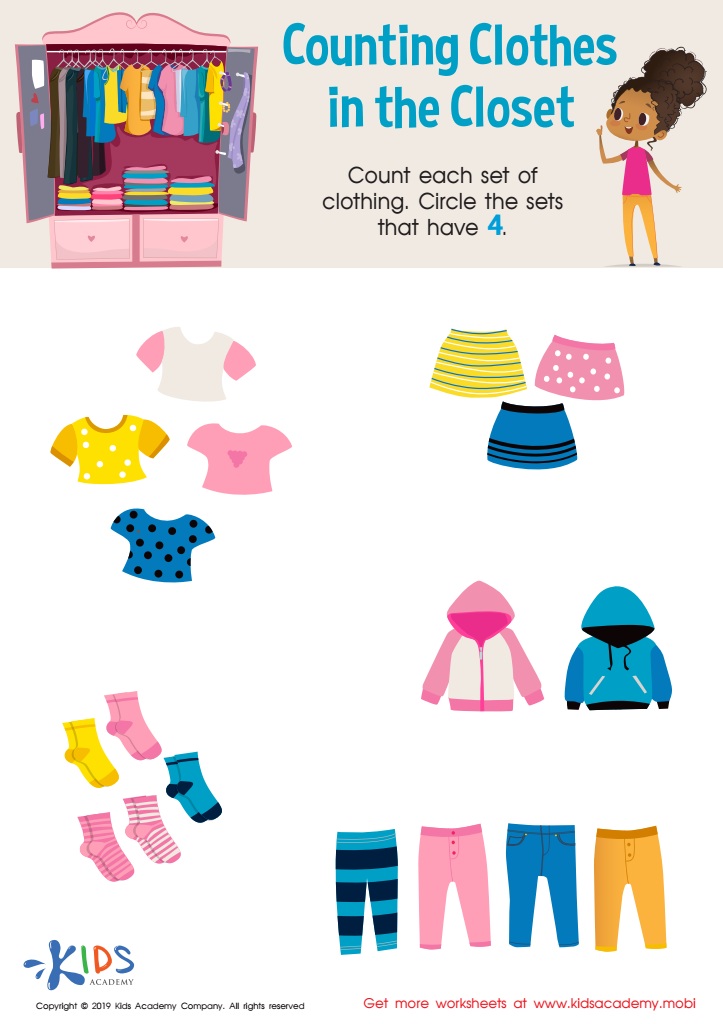
Counting Clothes Worksheet








Associative learning in mathematics is crucial for children aged 4-6 because it lays the foundation for understanding more complex mathematical concepts later in life. This method emphasizes making connections between ideas, numbers, and patterns. By associating familiar objects, activities, or stories with math concepts, young learners find the abstract nature of math more relatable and enjoyable.
Firstly, children in this age group are naturally curious and capable of grasping basic mathematical ideas through play and interaction. Encouraging associative learning exploits their innate curiosity, turning everyday situations into learning opportunities. For instance, counting steps, sorting toys by color, or baking together can seamlessly integrate math into their daily routine.
Secondly, associative learning enhances memory and recall. When children form connections between numbers and tangible objects or situations, they are more likely to remember mathematical concepts. This approach also strengthens cognitive skills such as pattern recognition, problem-solving, and logical thinking.
Lastly, fostering a positive attitude toward math early on can reduce anxiety related to the subject as they grow. Associative learning makes math feel less intimidating and more like a fun part of life, encouraging a lifelong interest in the subject.
By investing in associative learning strategies, parents and teachers provide a supportive environment where foundational math skills can thrive in a natural and enjoyable manner.








