Comparative skills Math Worksheets for Ages 4-6
3 filtered results
-
From - To
Unlock the potential of young minds with our engaging and fun Comparative Skills Math Worksheets for Ages 4-6. Tailored to enhance early learners’ ability to compare numbers, sizes, and patterns, these printable worksheets are designed by educational experts to align with early childhood development milestones. Kids will enjoy interactive activities featuring colorful images and enjoyable tasks that make learning a delightful experience. Our worksheets not only foster foundational math skills but also boost critical thinking and problem-solving abilities, making math an exciting adventure. Perfect for preschoolers and kindergarteners, set the stage for lifelong numeracy success today!
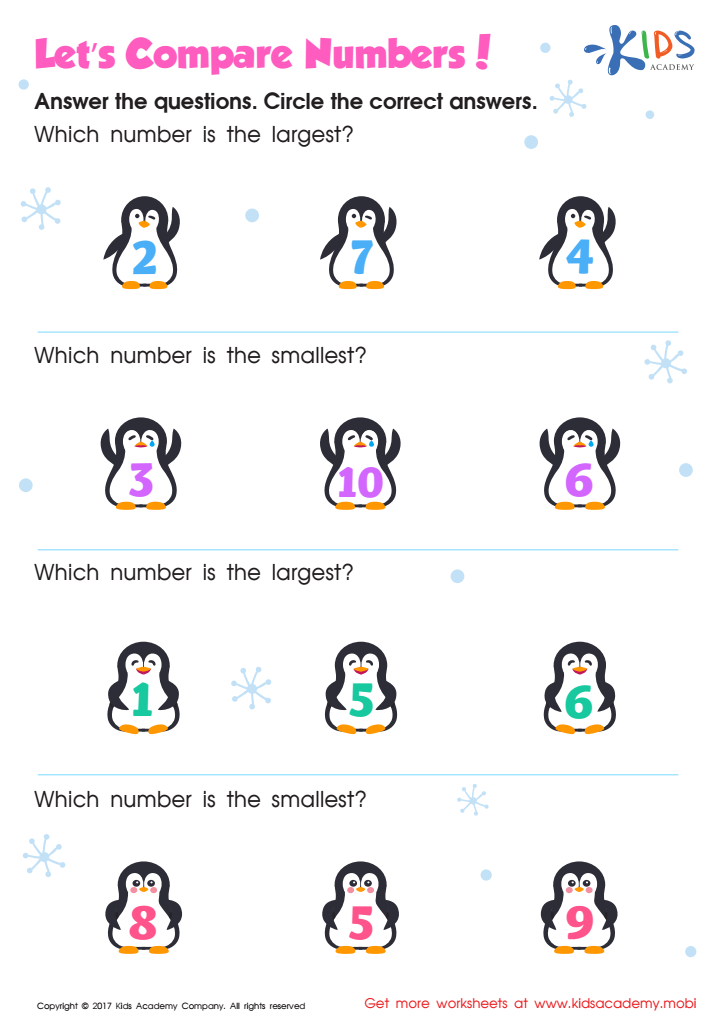
Comparing Numbers 1–10 Worksheet Kindergarten
 Assign to My Students
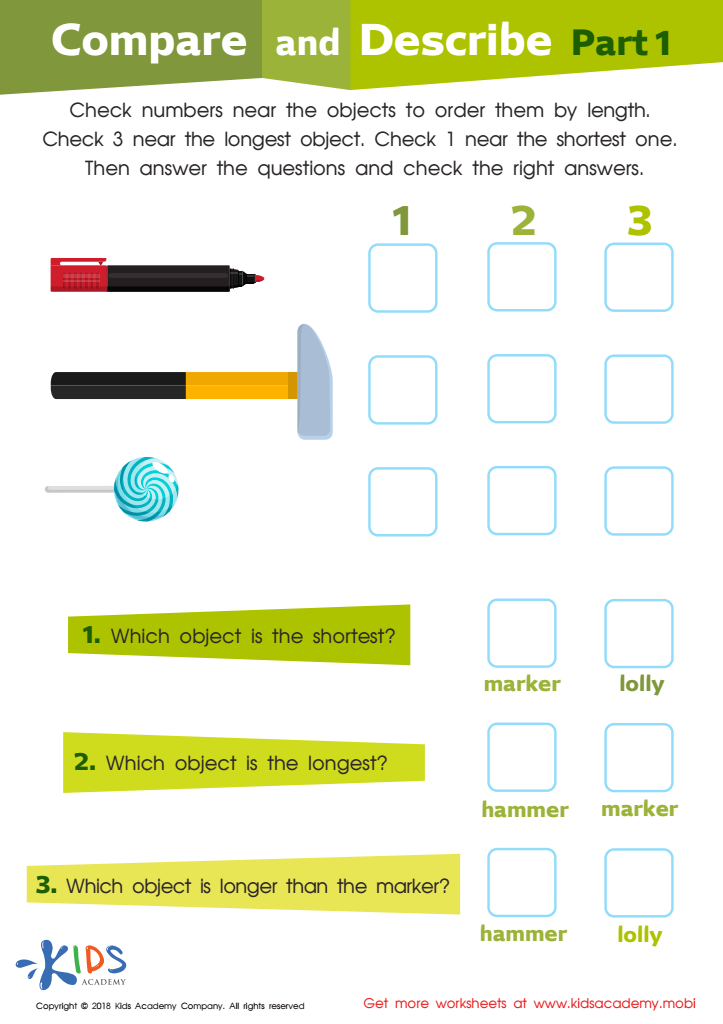
Compare and Describe: Part 1 Worksheet
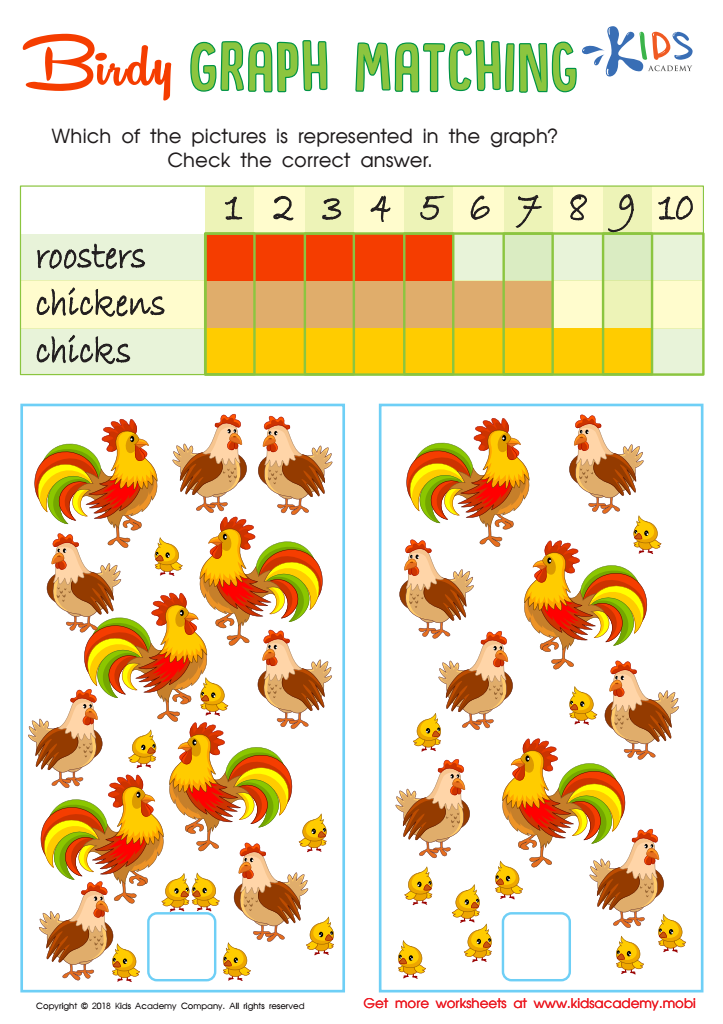
Birdy Graph Matching Worksheet







Comparative skills in math are fundamental for young children, typically ages 4-6, as they lay the groundwork for critical thinking and problem-solving abilities. These skills involve understanding concepts such as "more than," "less than," "bigger," "smaller," "heavier," and "lighter." When children can compare quantities, they develop a sense of number and magnitude, which is crucial for their future success in math.
Parents and teachers should care about fostering these skills because they directly impact a child's ability to grasp more complex mathematical concepts later on, such as addition, subtraction, and measurement. These skills also promote cognitive development as children learn to make distinctions and observe differences, enhancing their analytical capabilities.
Moreover, everyday comparisons help children in practical, real-world situations, such as determining who has more toys, which container holds more water, or which path is shorter. Being adept with these concepts boosts a child's confidence and curiosity in exploring their environment.
Educational research suggests that early mathematics skills are strong predictors of later academic success, not just in math but across various subjects. Therefore, by encouraging and nurturing comparative math skills at an early age, parents and teachers play a vital role in laying a solid, broad foundation for a child’s educational journey.








