Comparing object weights Math Worksheets for Ages 4-6
3 filtered results
-
From - To
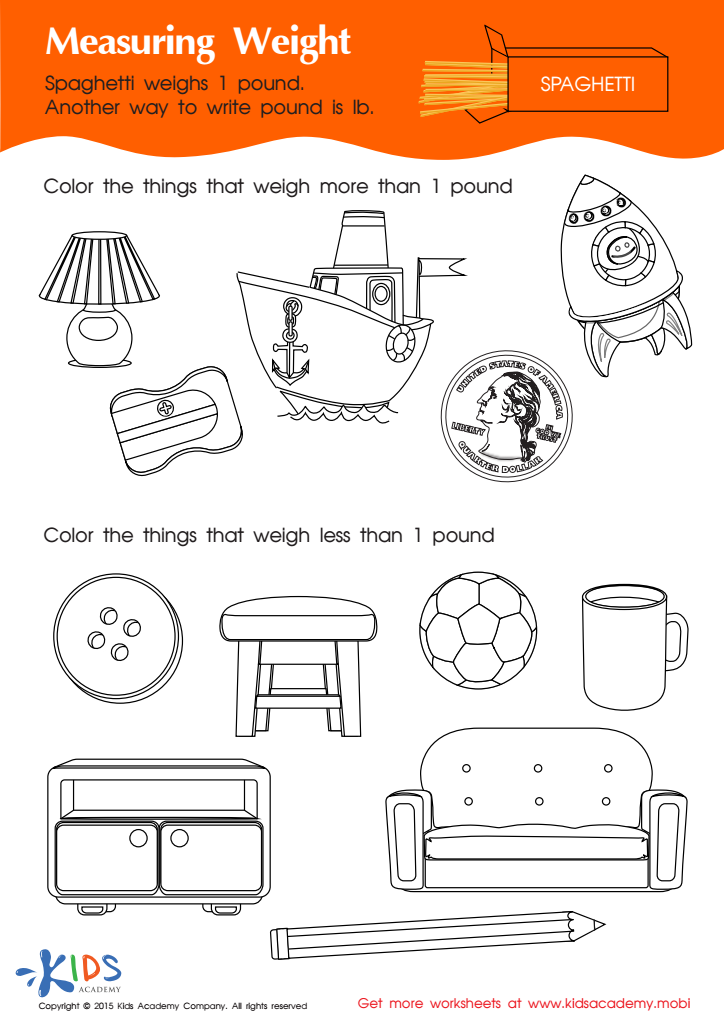
Discover engaging "Comparing Object Weights" math worksheets designed for ages 4-6 at Kids Academy. These worksheets provide young learners with fun, hands-on activities to develop crucial math skills by comparing and estimating object weights. Vibrant visuals and age-appropriate challenges encourage kids to observe, infer, and record their findings, fostering a strong foundation in measurement. Perfect for classroom or home use, our expertly crafted worksheets help children learn through play, boosting their confidence and interest in math. Start exploring today and watch your little ones excel in understanding weights and balances!
 Assign to My Students
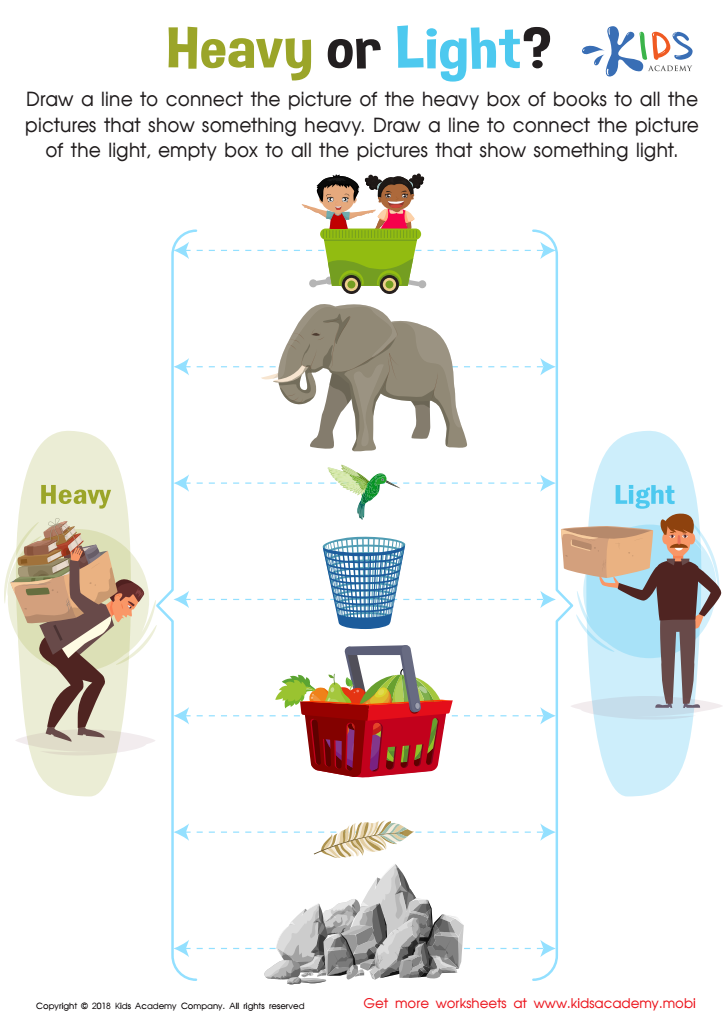
Heavy or Light? Worksheet
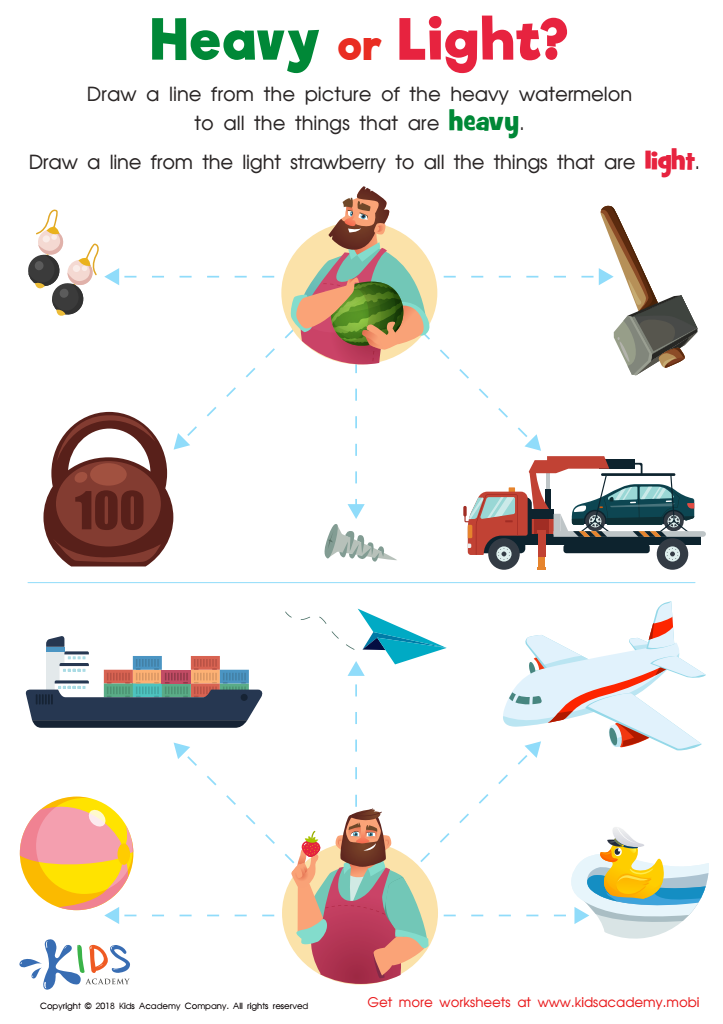
Heavy or Light? Worksheet





Comparing object weights is an essential skill for young children as it lays the groundwork for several key areas of development. At ages 4-6, children are naturally curious and start to explore the world around them. Introducing them to the concept of weight comparison helps them develop critical thinking and problem-solving skills. When children compare weights, they practice observation, estimation, and analysis, all fundamental for their overall cognitive development.
This process also enhances their mathematical vocabulary. Terms like "heavier," "lighter," "equal," and "balance" become part of their lexicon, facilitating better communication skills. Such early math concepts prepare them for more advanced arithmetic and science topics in later years. Furthermore, comparing weights sparks natural curiosity and encourages inquiry-based learning. When children ask questions like, "What makes this apple heavier than this banana?" they engage more deeply with their learning process.
Importantly, this activity can be seamlessly integrated into everyday play, making learning fun and interactive. Whether it's using scales in the classroom, playing with toys at home, or even cooking in the kitchen, numerous everyday scenarios can teach these weight concepts. For parents and teachers, fostering these skills early can ensure a strong foundation for future academic success and a lifelong love of learning.








