Counting objects Math Worksheets for Ages 4-6
12 filtered results
-
From - To
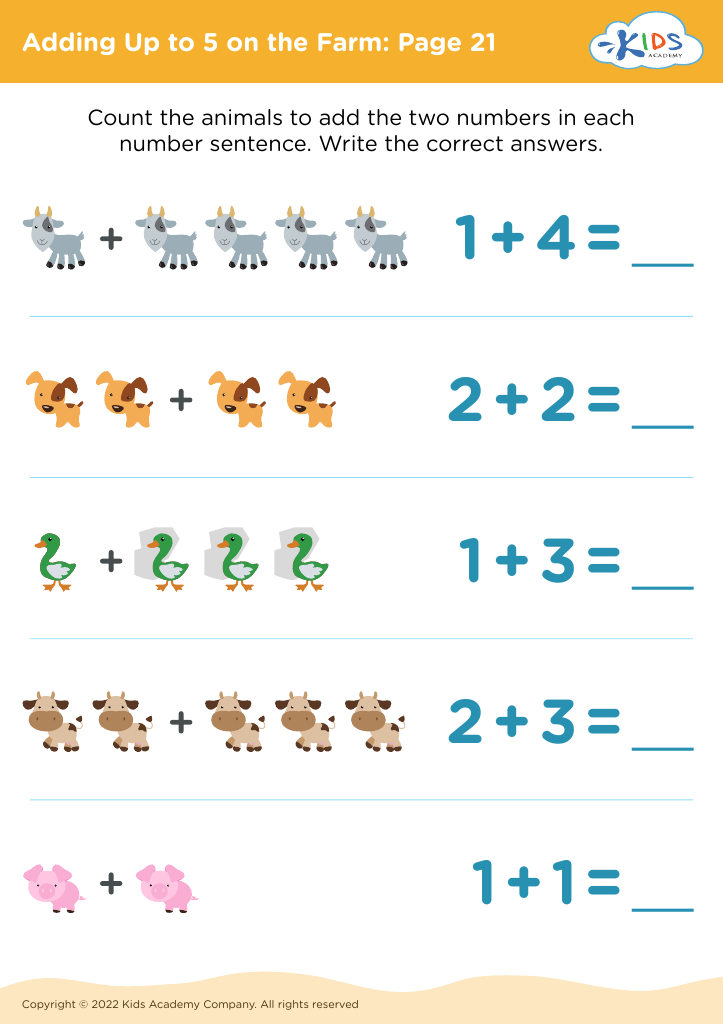
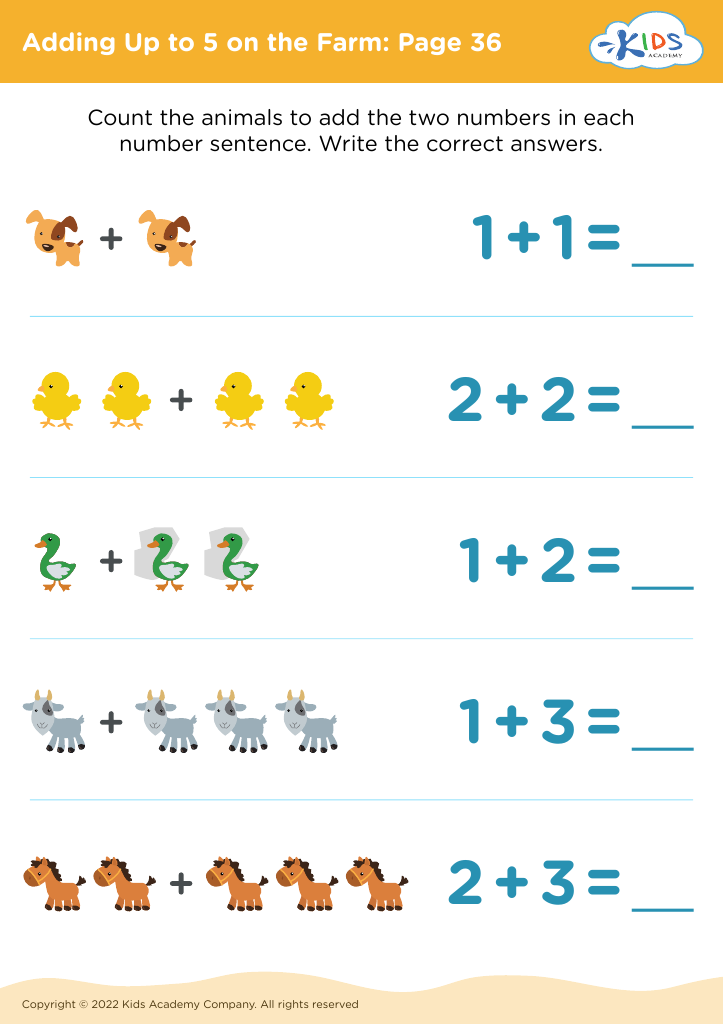
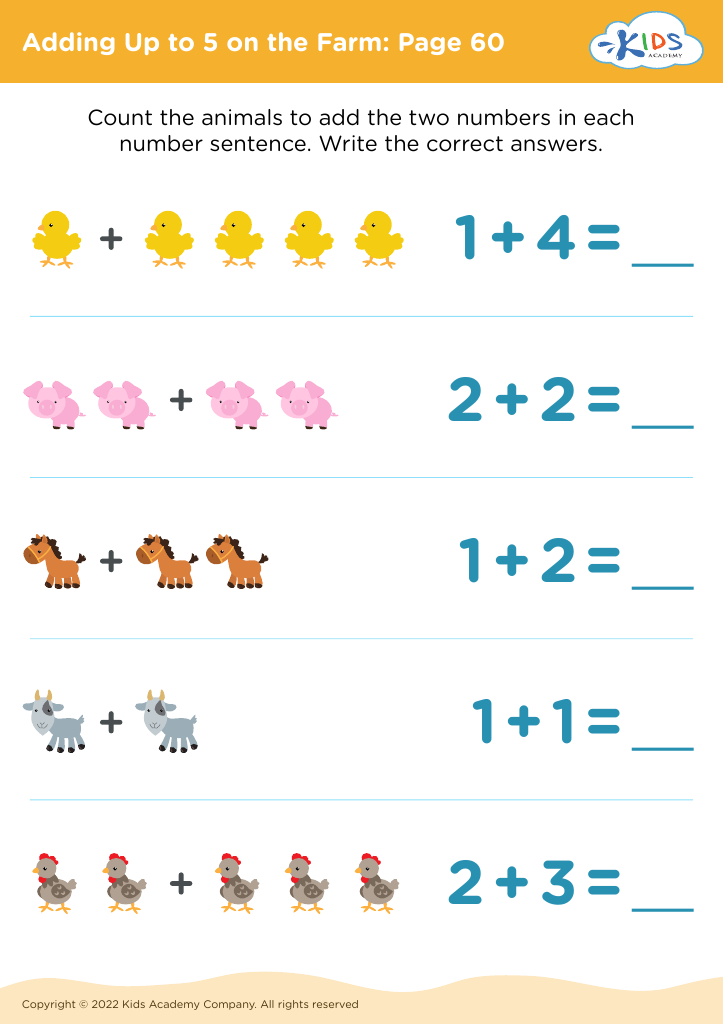
Discover our engaging Counting Objects Math Worksheets designed specifically for children aged 4-6! These worksheets provide a fun and interactive way for young learners to enhance their counting skills through vibrant illustrations and engaging activities. Kids can practice recognizing and counting various objects, making math both enjoyable and educational. Each worksheet is crafted to boost fine motor skills and encourage number recognition in a playful context. Ideal for parents and educators, our resources support early mathematical development and foster a love for learning. Explore our collection and help your child build a strong foundation in counting today!
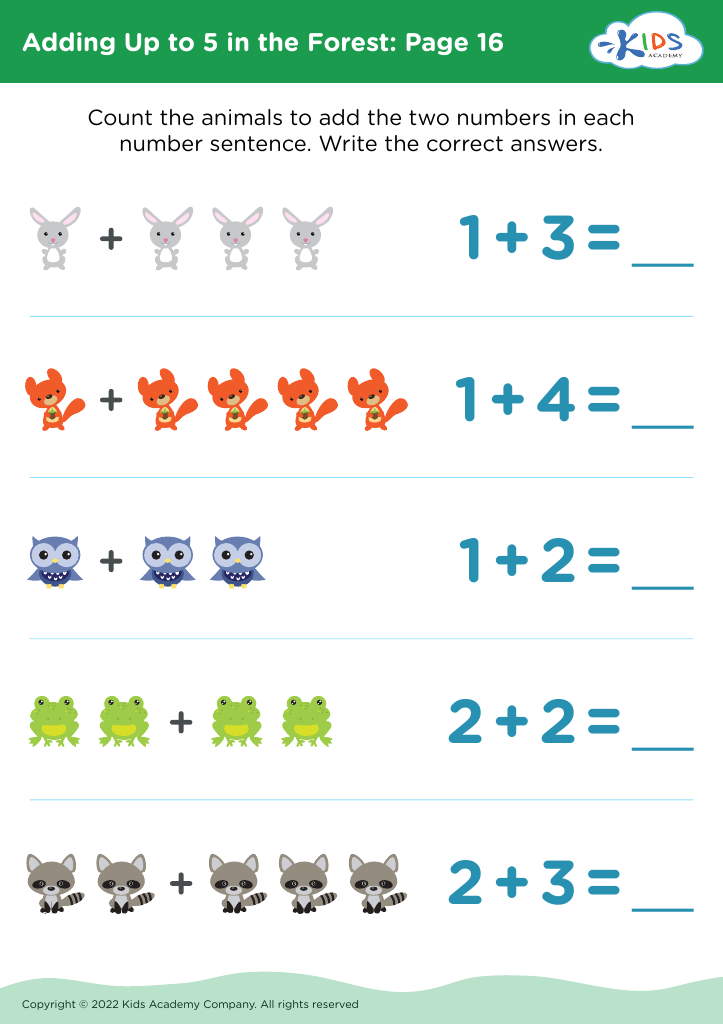
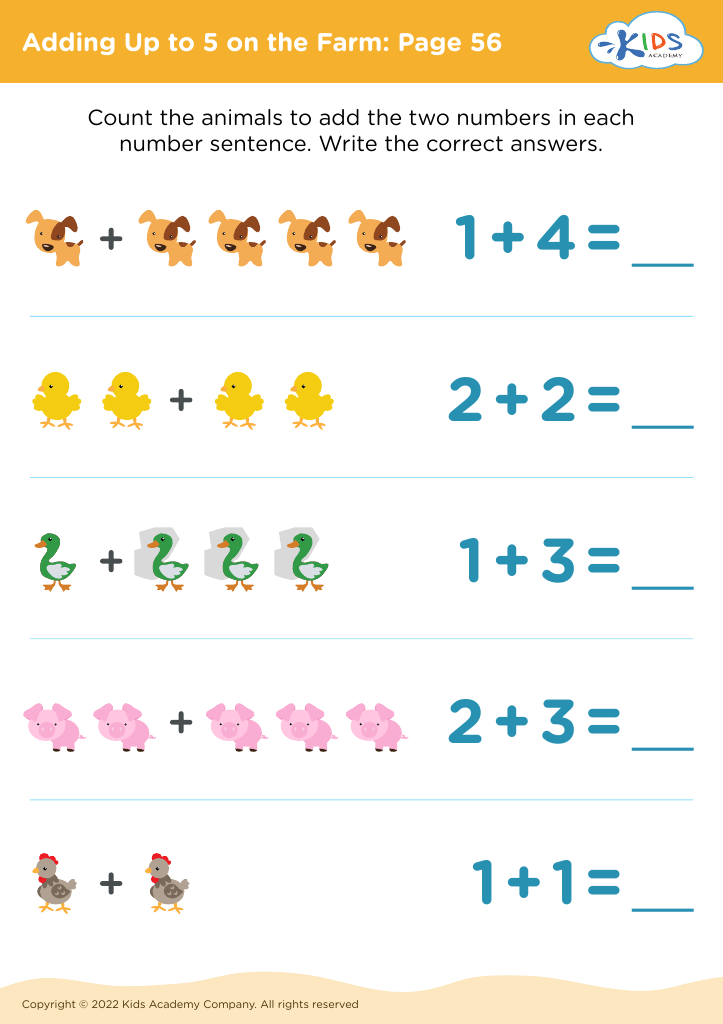
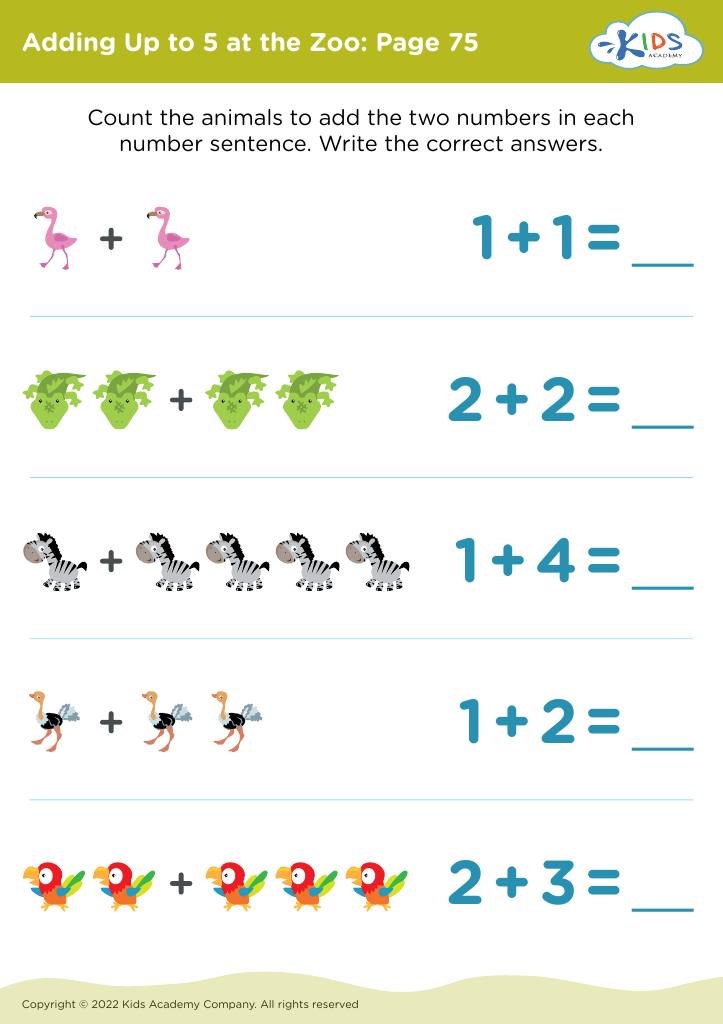
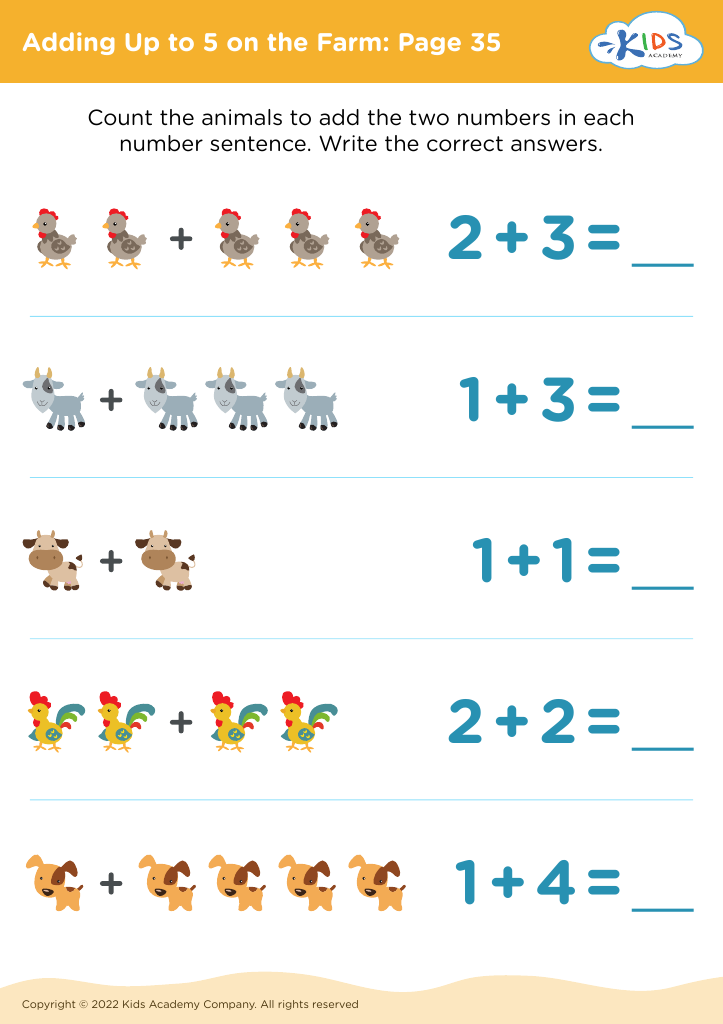
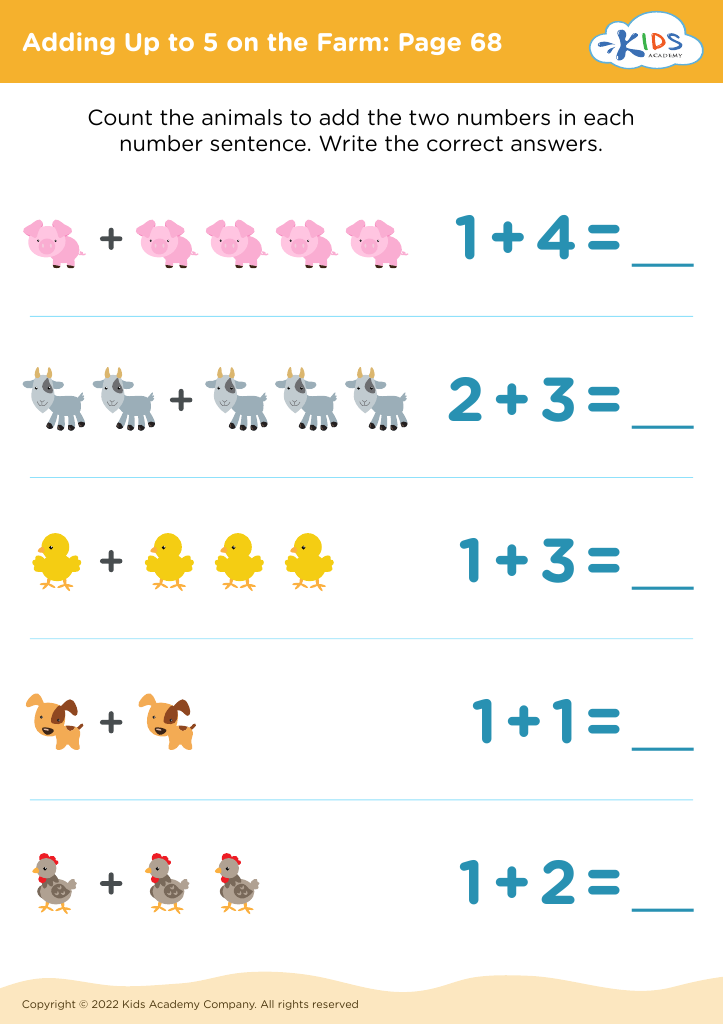
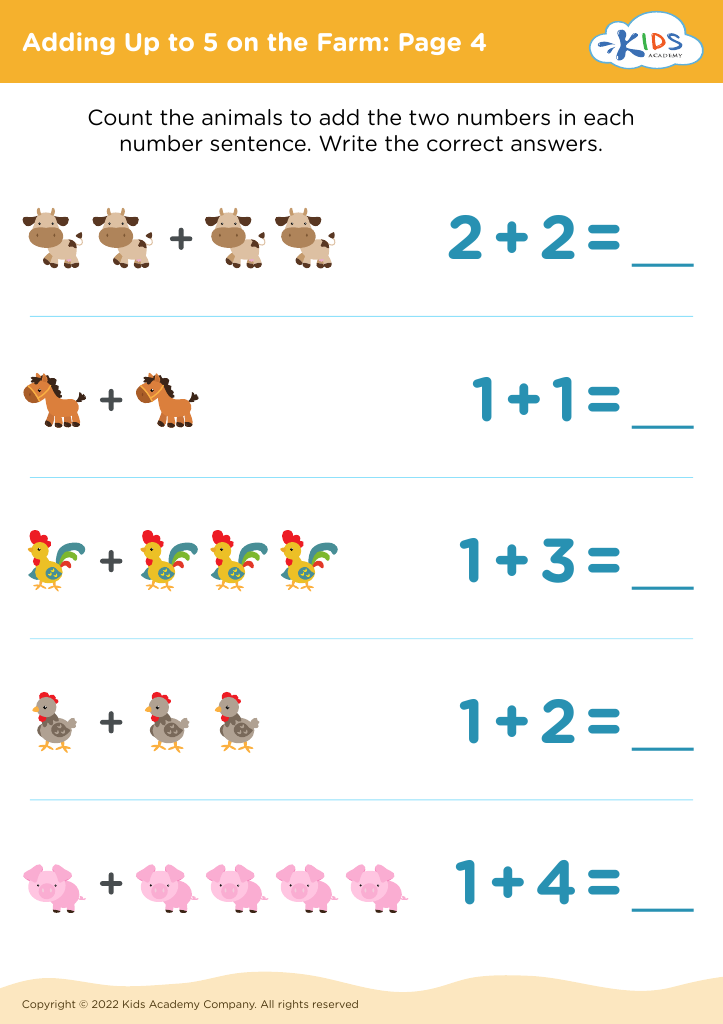
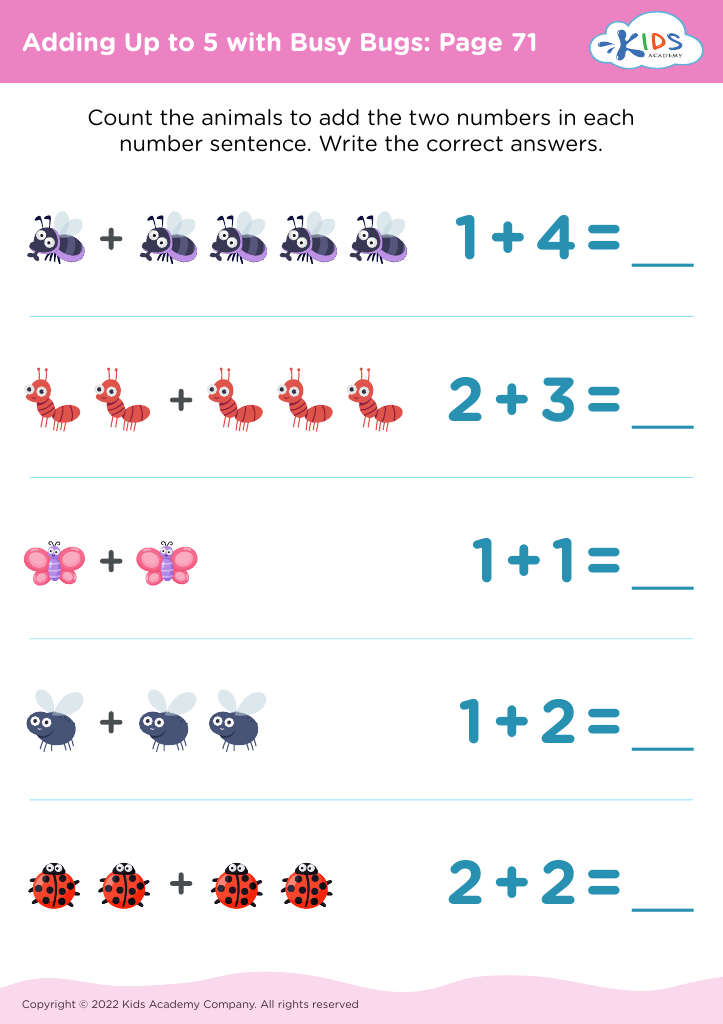
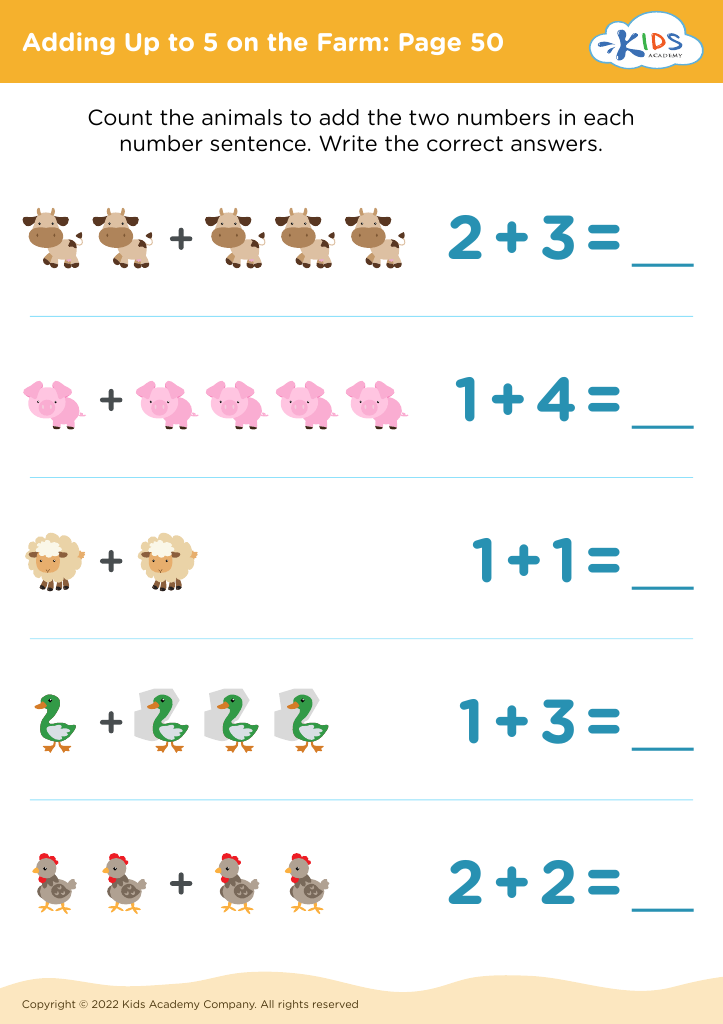
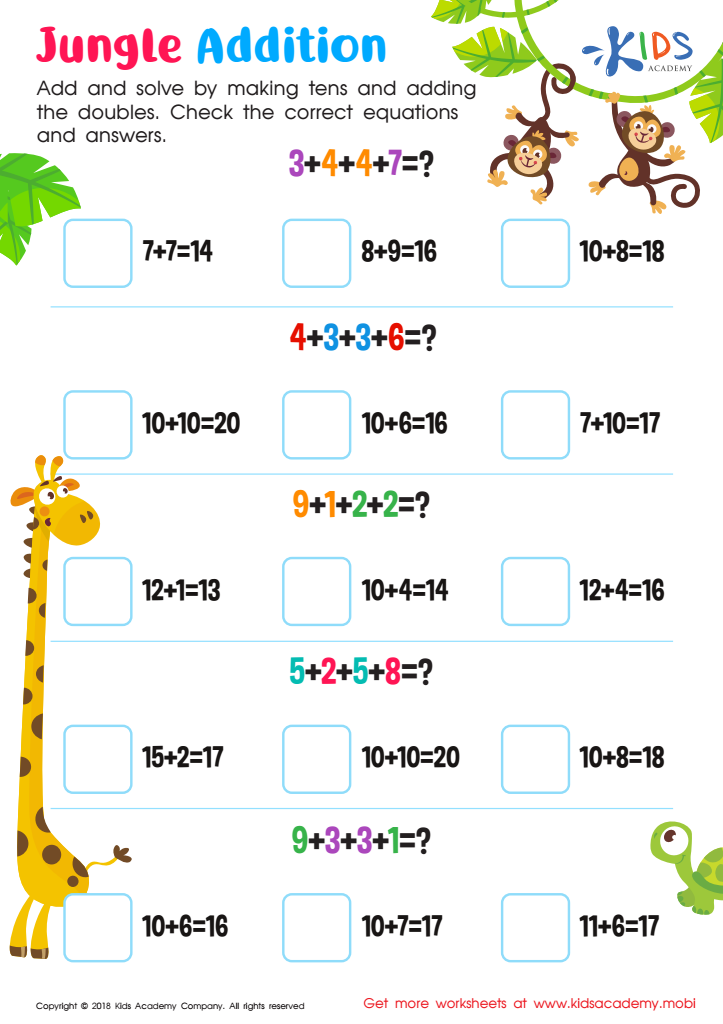
Jungle Addition Worksheet
 Assign to My Students




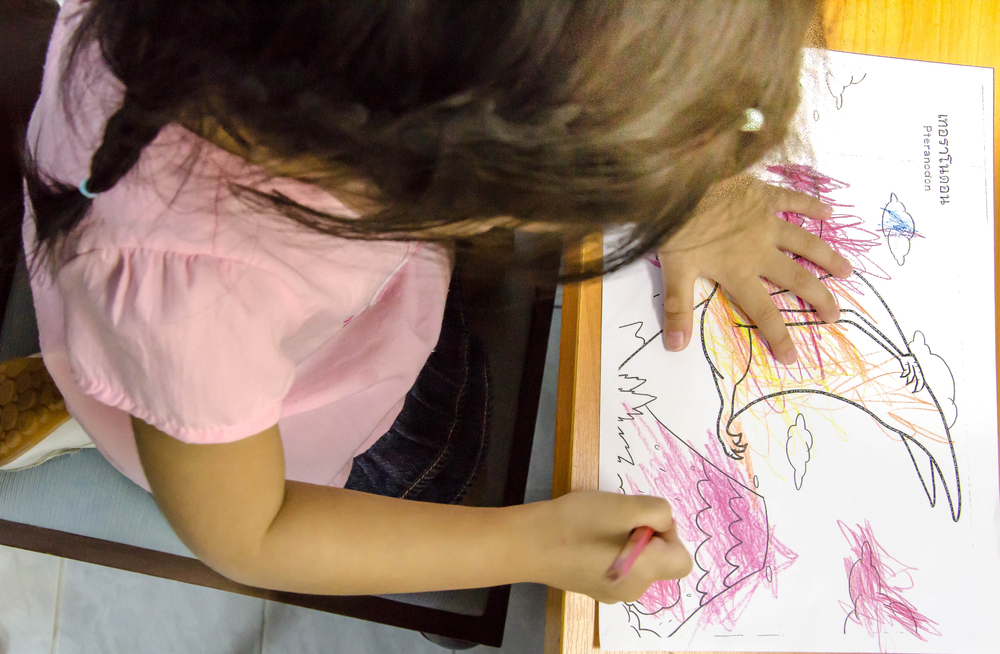



Counting objects is a fundamental skill crucial for young children aged 4-6, laying the groundwork for future mathematical understanding. During this vital developmental stage, children begin to grasp numerical concepts and relationships through hands-on experiences. By engaging in counting activities, children learn not only numbers but also the concepts of quantity, one-to-one correspondence, and grouping.
Parents and teachers should care about this skill because it fosters cognitive development, critical for problem-solving and analytical thinking later in life. Mastering counting enhances children's ability to recognize patterns, identify larger mathematical concepts, and develop spatial reasoning. Furthermore, early counting experiences can be linked to various aspects of everyday life, making math relatable and relevant.
Counting also promotes positive attitudes towards math. When children experience success in basic counting, they gain confidence, nurturing a lifelong enthusiasm for learning. Activities like counting objects in the environment, using manipulatives, or engaging in games help make learning enjoyable, ensuring children associate joy with math.
In summary, emphasizing counting during ages 4-6 sets the stage for academic success, boosts confidence, and encourages critical thinking, making it essential for parents and teachers to prioritize this activity.








