Developing analytical thinking Math Worksheets for Ages 4-6
3 filtered results
-
From - To
Enhance your child's analytical thinking skills with our engaging math worksheets designed for ages 4-6. These age-appropriate activities introduce foundational concepts through fun, interactive exercises that stimulate critical thinking and problem-solving abilities. Our worksheets include puzzles, patterns, number games, and logic challenges tailored for young learners. By practicing these skills, children will not only improve their math proficiency but also develop the cognitive abilities necessary for future academic success. Explore our collection today and help your child build confidence and competence in math while fostering a love for learning through playful exploration!
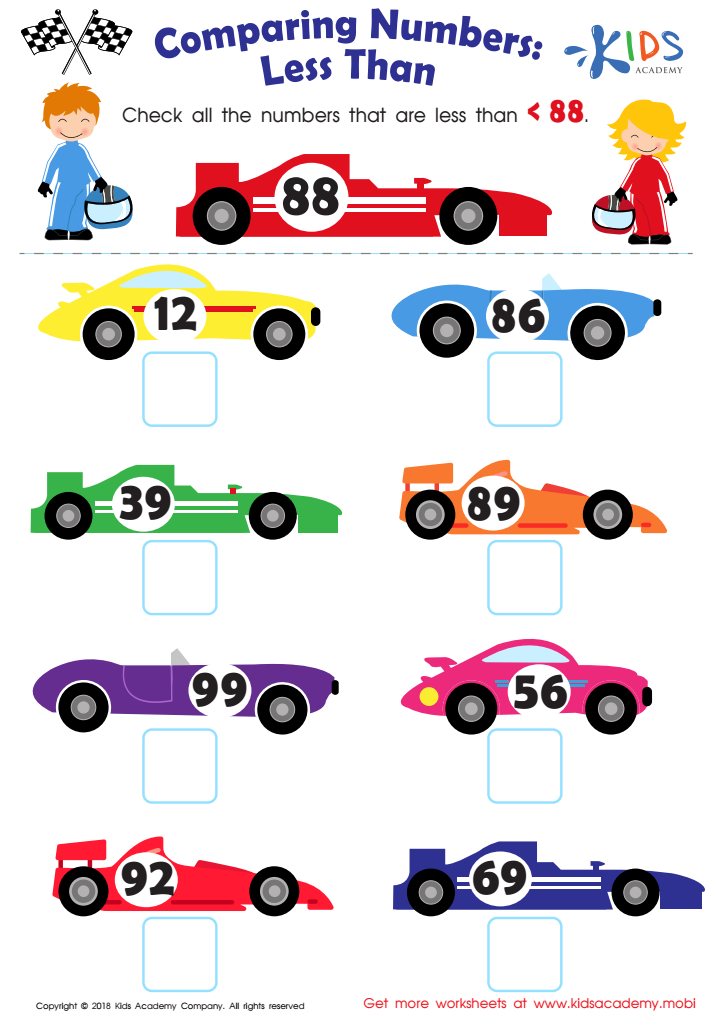
Less Than Worksheet
 Assign to My Students
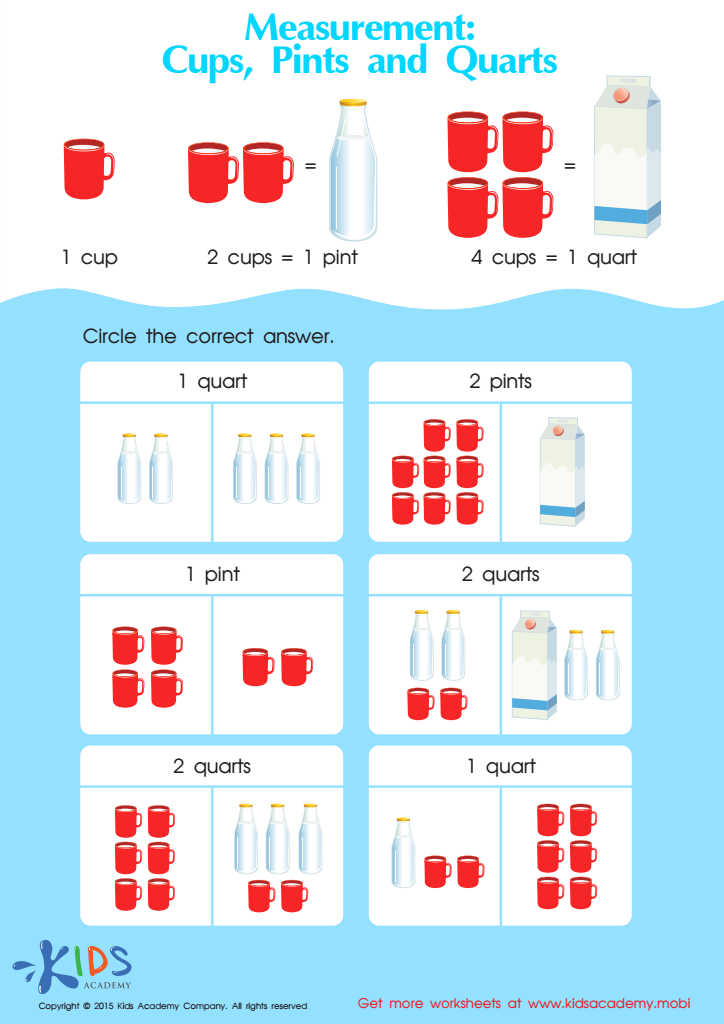
Cups, Pints and Quarts Worksheet
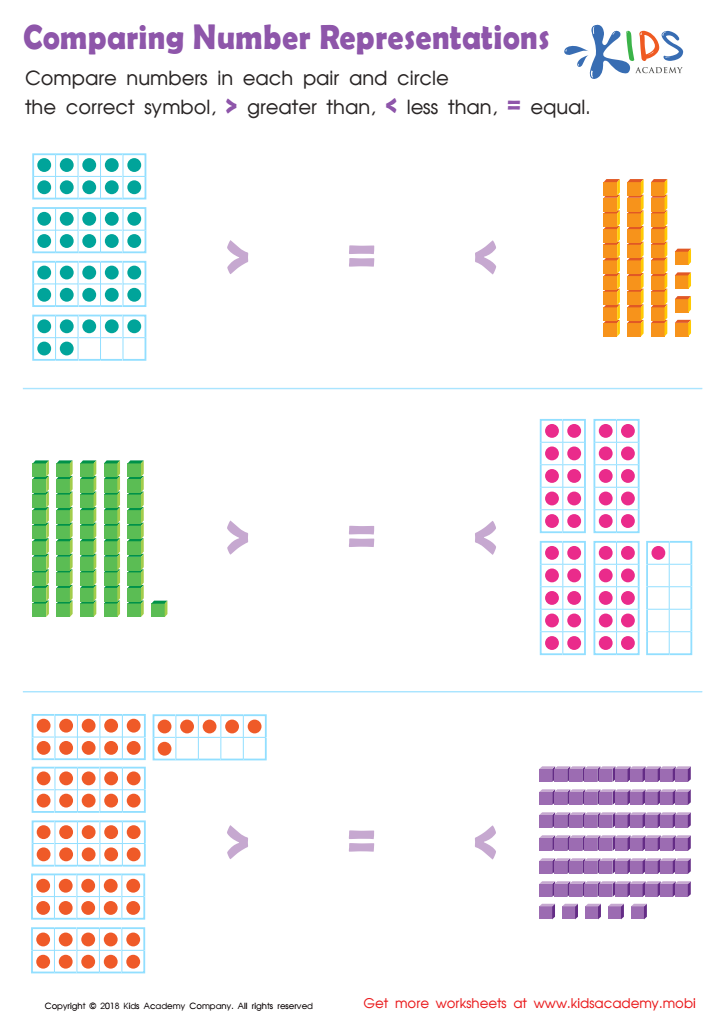
Comparing Number Representations Worksheet








Developing analytical thinking in math for ages 4-6 is crucial because it lays the foundation for future learning and problem-solving skills. At this age, children are naturally curious and eager to explore their surroundings. By introducing basic mathematical concepts through fun and engaging activities, parents and teachers can nurture their analytical thinking skills, which promotes logical reasoning and critical analysis.
Early exposure to math helps children understand patterns, relationships, and the concept of numbers, which are vital in everyday life. Strong analytical thinking abilities allow children to tackle challenges both in academics and life situations. They learn to analyze problems, think creatively, and develop effective strategies for solutions—skills that are essential in this increasingly complex world.
Additionally, fostering analytical thinking can boost children's confidence in their cognitive abilities, reducing math anxiety as they grow older. It encourages a growth mindset, where children see challenges as opportunities to learn and improve. Therefore, parents and teachers play a vital role in supporting children’s early mathematical experiences, ultimately influencing their academic trajectories and lifelong skills in reasoning, decision-making, and innovation. Investing in developing analytical thinking at a young age is an investment in children's future success and adaptability.








