
Environmental awareness Math Worksheets for Ages 4-6
3 filtered results
Difficulty Level
Grade
Age
-
From - To
Subject
Activity
Standards
Enhance your child's learning experience with our Environmental Awareness Math Worksheets designed specifically for ages 4 to 6. These engaging worksheets combine fundamental math skills with essential environmental concepts, introducing young learners to concepts such as recycling, nature conservation, and biodiversity. Children will enjoy counting, matching, and problem-solving while fostering a sense of responsibility towards the environment. Our colorful and interactive worksheets encourage creativity and hands-on learning, making math an exciting adventure. Help your little ones build critical thinking skills and a deep respect for nature with our thoughtfully crafted math activities. Start nurturing environmentally conscious math minds today!
Favorites
With answer key
Interactive
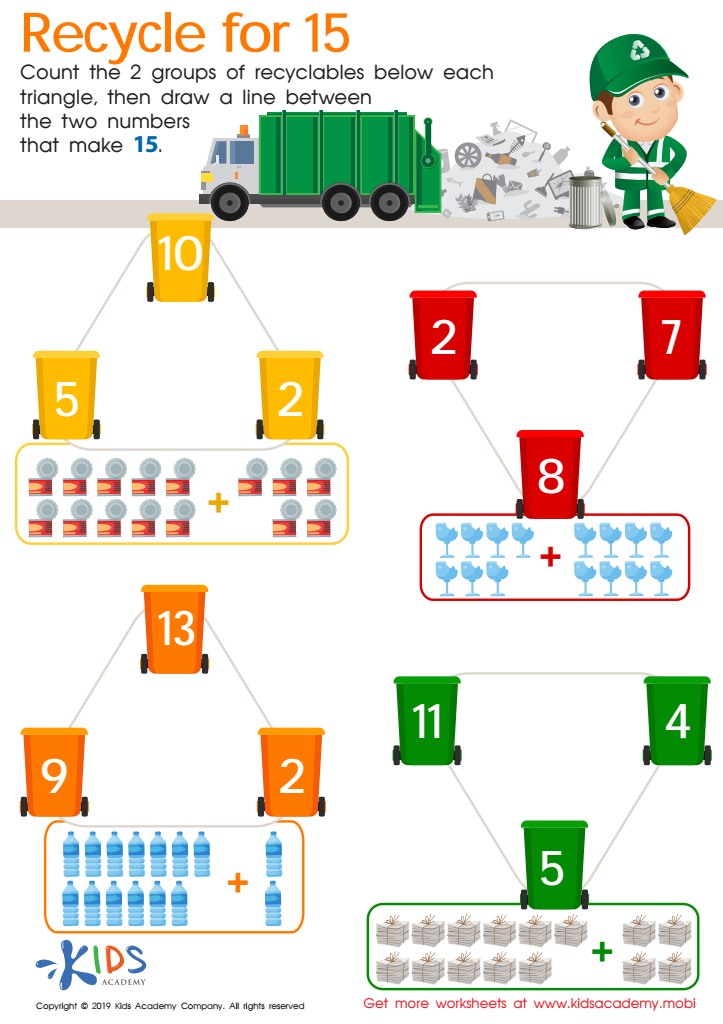
Recycle for 15 Worksheet
Recycle to help the planet! Have students count the recyclables and draw a line between the two numbers that make 15. This will help them understand the importance of recycling.
 Assign to My Students
Recycle for 15 Worksheet
Worksheet
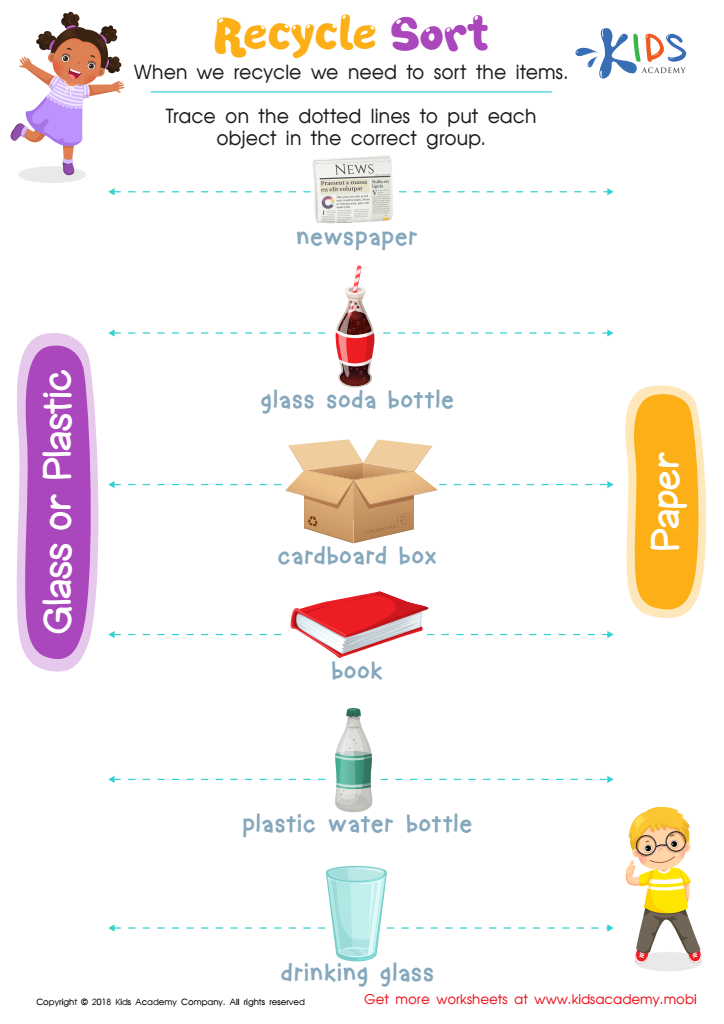
Recycle Sort Worksheet
Help your children become eco-warriors while they develop critical thinking and fine motor skills with this free downloadable worksheet! Engaging pictures and matching words, plus fun and bright colors, will have kids analyzing and sorting recyclables into paper or glass/plastic groups using traceable lines.
Recycle Sort Worksheet
Worksheet
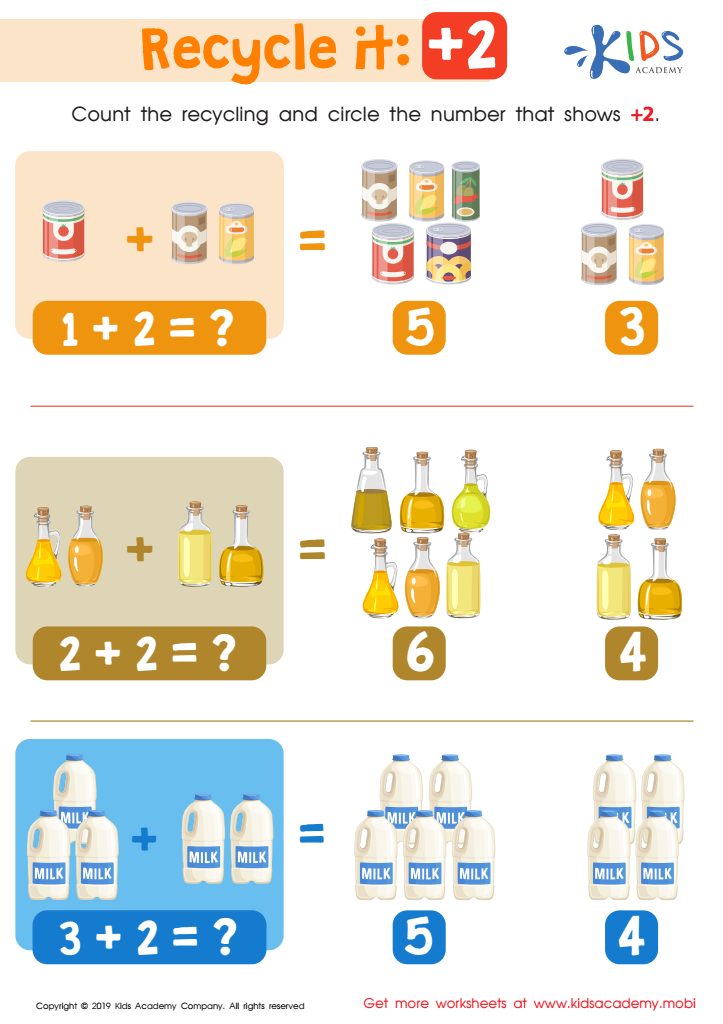
Recycle It: +2 Worksheet
Your kindergartners likely count everything they see, which is great for practice. Give them simple exercises such as in this worksheet to stimulate their minds. Ask them to count the recycling cans and then circle the number that shows +2.
Recycle It: +2 Worksheet
Worksheet
Join Kids Academy for Free
Who is primarily going to use this learning content?



.jpg)



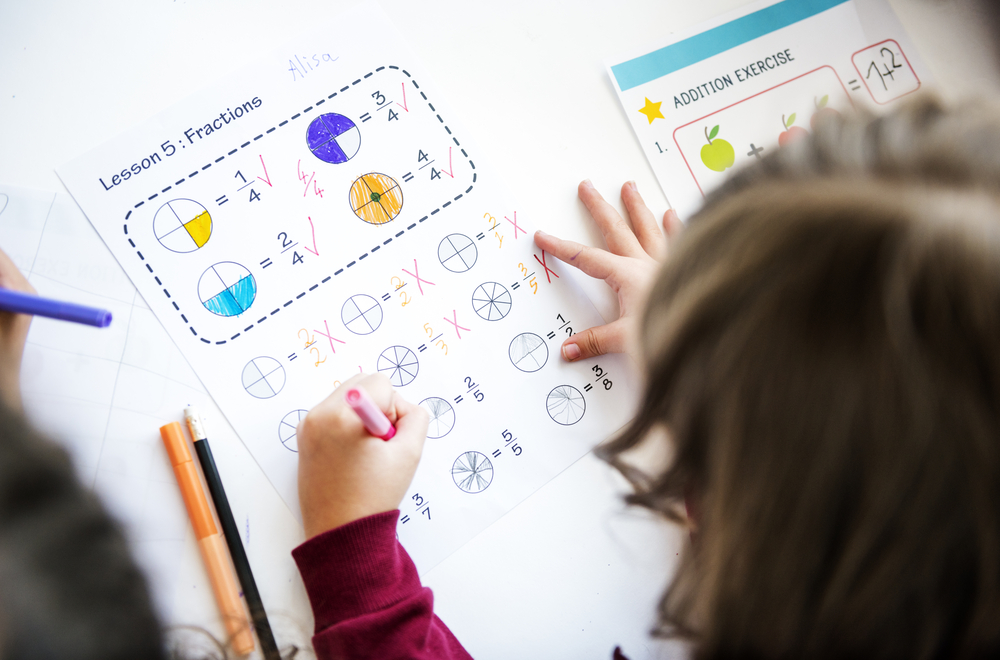
Environmental awareness in math for children ages 4-6 is crucial for fostering early conservation values and promoting a sense of responsibility toward our planet. At this young age, children are naturally curious about their surroundings, and integrating environmental themes into math lessons can enhance their understanding of these important concepts. For example, using nature-related examples in counting (e.g., counting leaves, animals, or water droplets) can make math more relatable and engaging.
Moreover, learning about the environment through math can help children make connections between numbers and their real-world applications. This not only strengthens their mathematical skills but also nurtures critical thinking, as children begin to understand concepts like resource consumption and sustainability. Teachers and parents can model positive behaviors by incorporating discussions around recycling, biodiversity, and conservation into math activities.
When children early on learn to value and protect their environment, they are more likely to grow into environmentally-conscious adults. By embedding environmental awareness into math education, parents and teachers play a key role in shaping a generation equipped to tackle the pressing ecological challenges we face today. This holistic approach not only prepares children academically but also instills lifelong habits of care and stewardship for the earth.








