
Fine motor skills (drawing) Math Worksheets for Ages 4-6
4 filtered results
Difficulty Level
Grade
Age
-
From - To
Subject
Activity
Standards
Enhance your child's fine motor skills with our engaging drawing math worksheets designed specifically for ages 4-6. These thoughtfully crafted activities help young learners develop essential motor skills while exploring early math concepts. Each worksheet encourages creativity and precision, allowing children to practice hand-eye coordination and strengthen their drawing abilities. From counting objects to solving simple math problems, these worksheets provide fun and interactive learning experiences. Ideal for home or classroom use, our resources ensure that your child gains confidence and enthusiasm in both fine motor skills and mathematics. Discover the joy of learning through play with our fine motor skills drawing worksheets!
Favorites
With answer key
Interactive
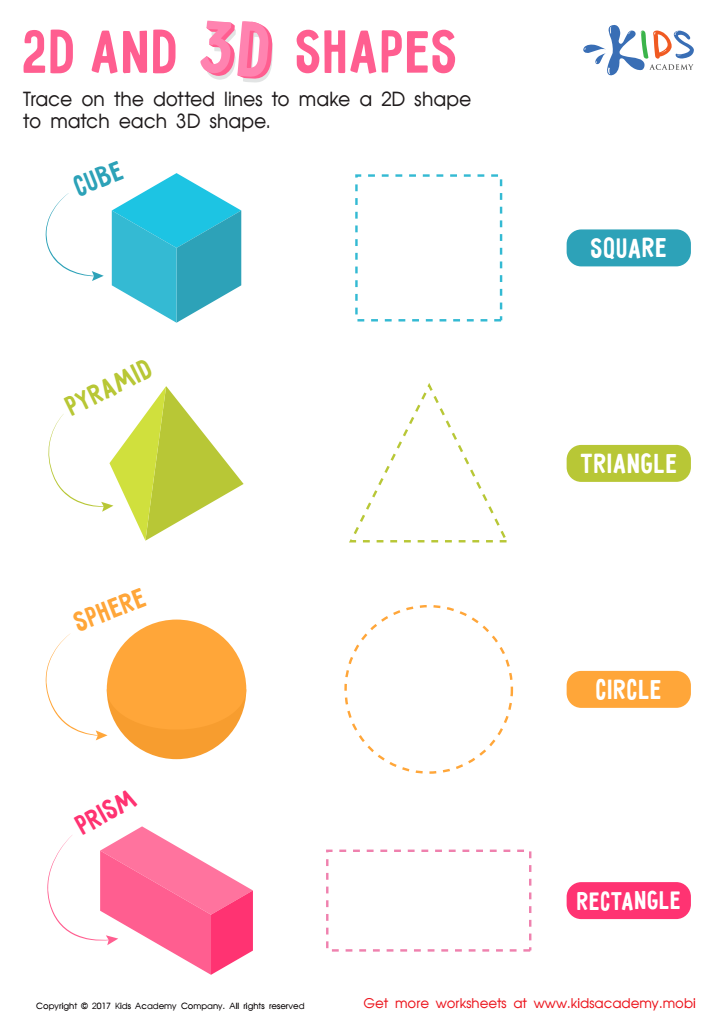
2D and 3D Shapes Worksheet
Introduce your child to 3D and 2D with this traceable worksheet. With dotted lines, help them trace and make a 2D shape for each 3D shape: square, triangle, rectangle, and circle. Show them there's more than one way to draw! You may have taken them to a 3D movie, or they've seen some fantastic 3D art. Now they can wonder no more.
 Assign to My Students
2D and 3D Shapes Worksheet
Worksheet
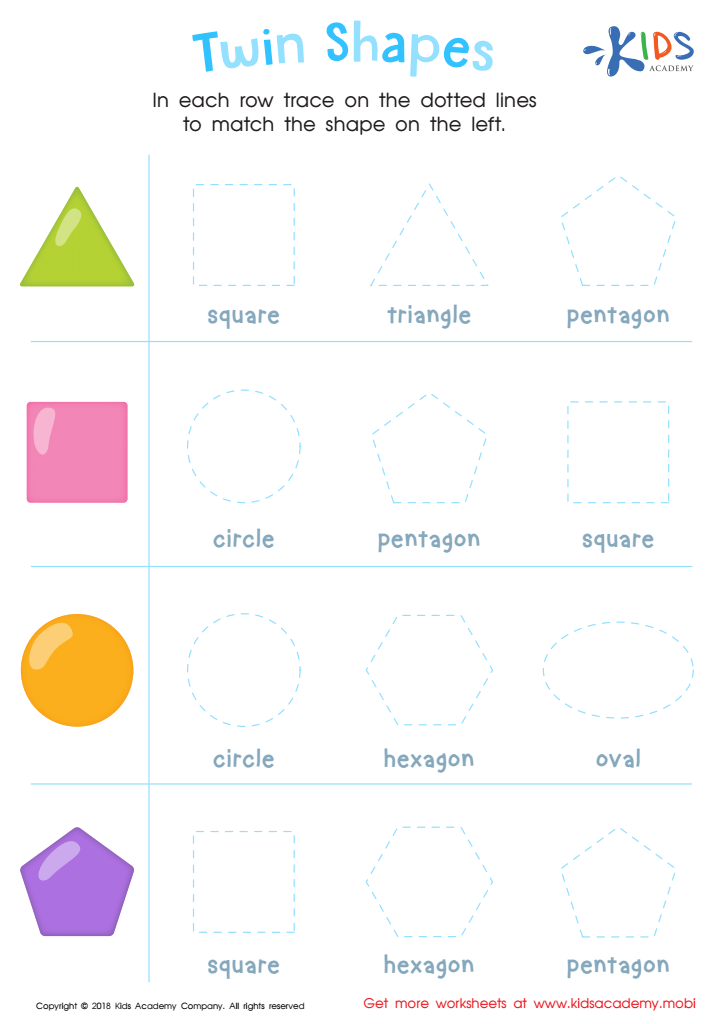
Twin Shapes Dot-to-Dot Worksheet
Test your child's ability to copy with this worksheet. Ask them to find and name the four shapes on the left. Then, they must match each with the dotted lines on the right. Help your child with all four shapes in this fun exercise.
Twin Shapes Dot-to-Dot Worksheet
Worksheet
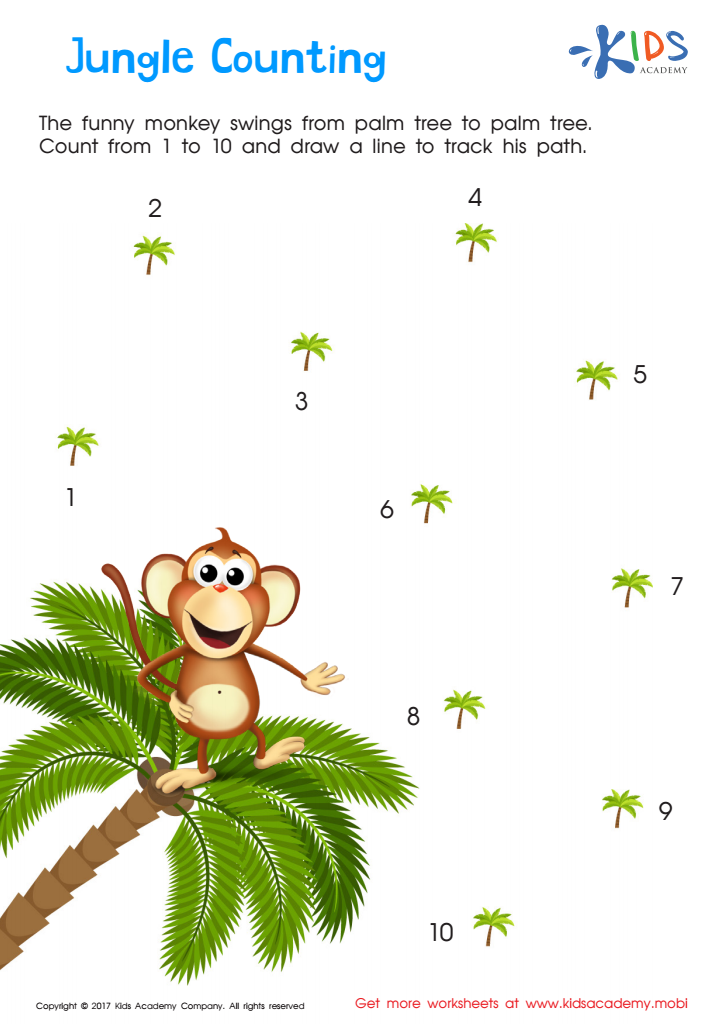
Jungle Counting Connect Dots Worksheet
Help your child count from 1-10 and practice problem solving skills with this dot to dot worksheet. Your child will enjoy helping the cute monkey swing from tree to tree while honing their math skills. Let them have a jungle-themed counting adventure!
Jungle Counting Connect Dots Worksheet
Worksheet
Join Kids Academy for Free
Who is primarily going to use this learning content?







Fine motor skills, particularly those acquired through activities like drawing, are crucial for children aged 4-6. At this developmental stage, children refine their hand-eye coordination, dexterity, and control, which are foundational for more complex tasks in future learning. Drawing helps young learners grasp mathematical concepts as well. When children engage in drawing shapes, lines, and patterns, they develop spatial awareness—an essential skill in mathematics.
Furthermore, drawing encourages creativity, expression, and problem-solving skills, which are all important for cognitive development. As children practice drawing numbers or simple math concepts, they reinforce their understanding through a hands-on activity that makes learning more engaging.
For parents and teachers, fostering these skills is vital. Not only do fine motor activities and drawing support math readiness, but they also promote perseverance and attention to detail. These qualities are not only essential for academic success but also serve as critical life skills.
By prioritizing fine motor skills and math through drawing during these early years, adults can lay a solid foundation for children, promoting positive attitudes towards learning and paving the way for future achievements in school and beyond.








