Recognizing shapes Math Worksheets for Ages 4-6
4 filtered results
-
From - To
Our "Recognizing Shapes Math Worksheets for Ages 4-6" offer a fun and interactive way for young learners to explore geometry. Designed to boost early math skills, these printable activities help children identify and differentiate shapes, enhancing their understanding of geometric concepts. Engaging exercises feature colorful illustrations and simple instructions, making learning enjoyable for little ones. Perfect for home or classroom use, these worksheets support cognitive development, hand-eye coordination, and problem-solving skills. Give your child a head start in math with our expertly crafted recognition activities, tailored specifically for young curious minds and their foundational learning needs.
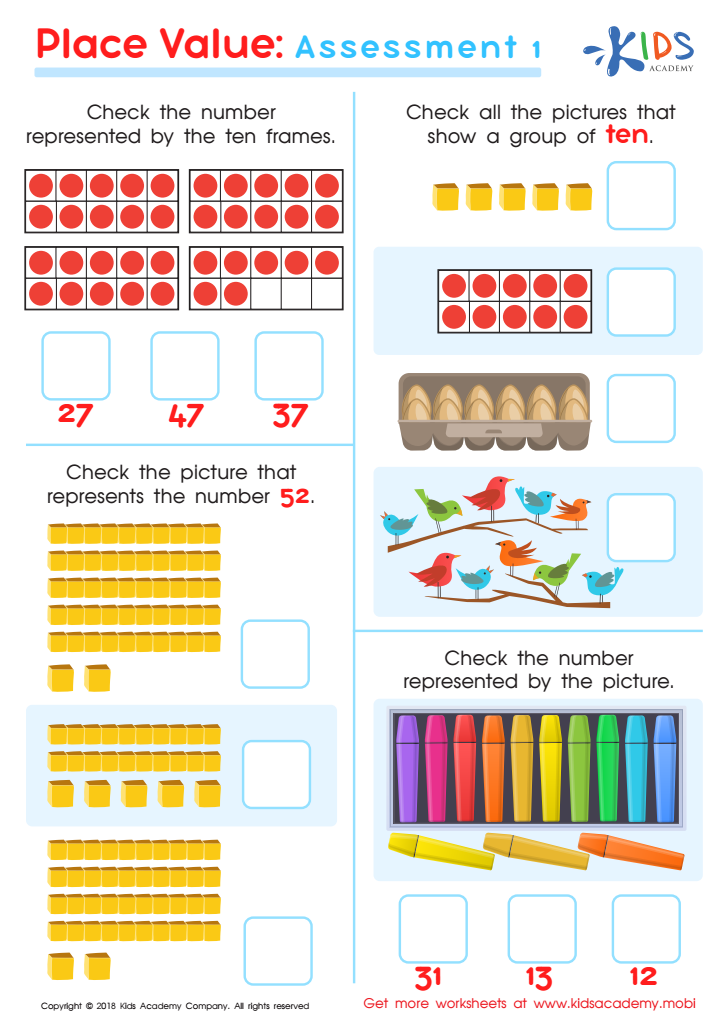
Place Value: Assessment 1 Worksheet
 Assign to My Students
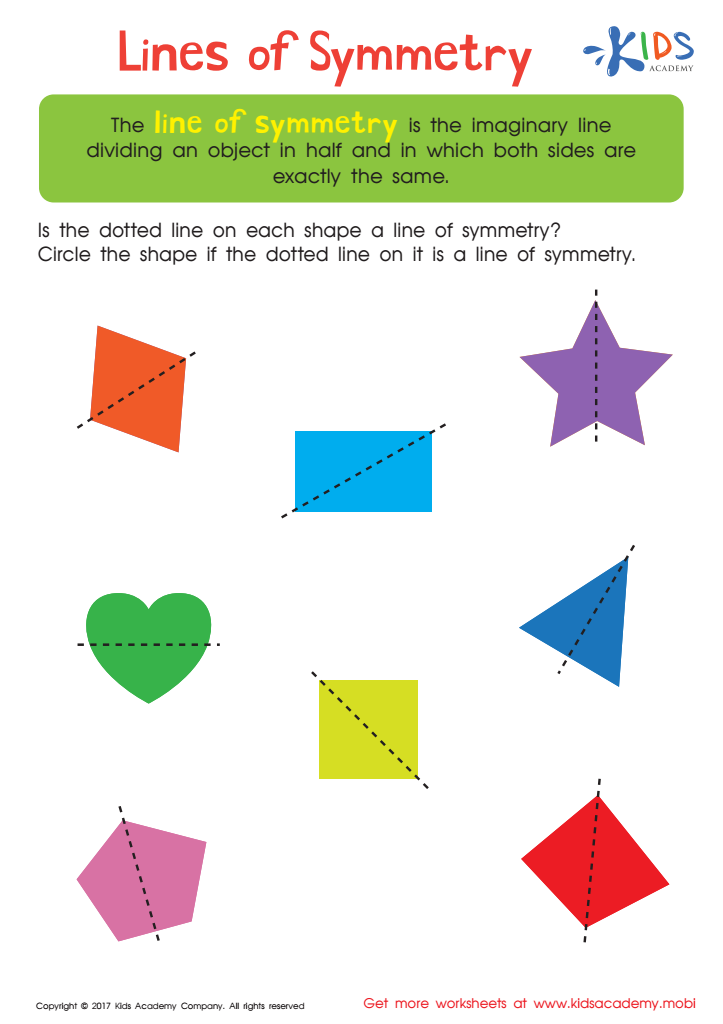
Lines of Symmetry Printable
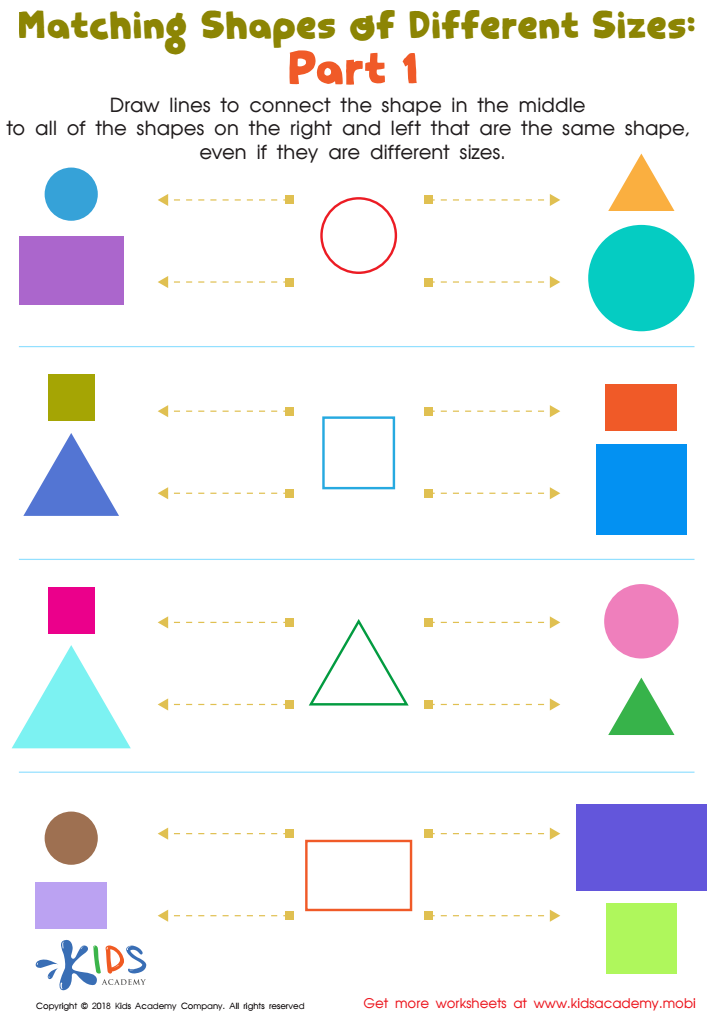
Geometry: part 1 Worksheet
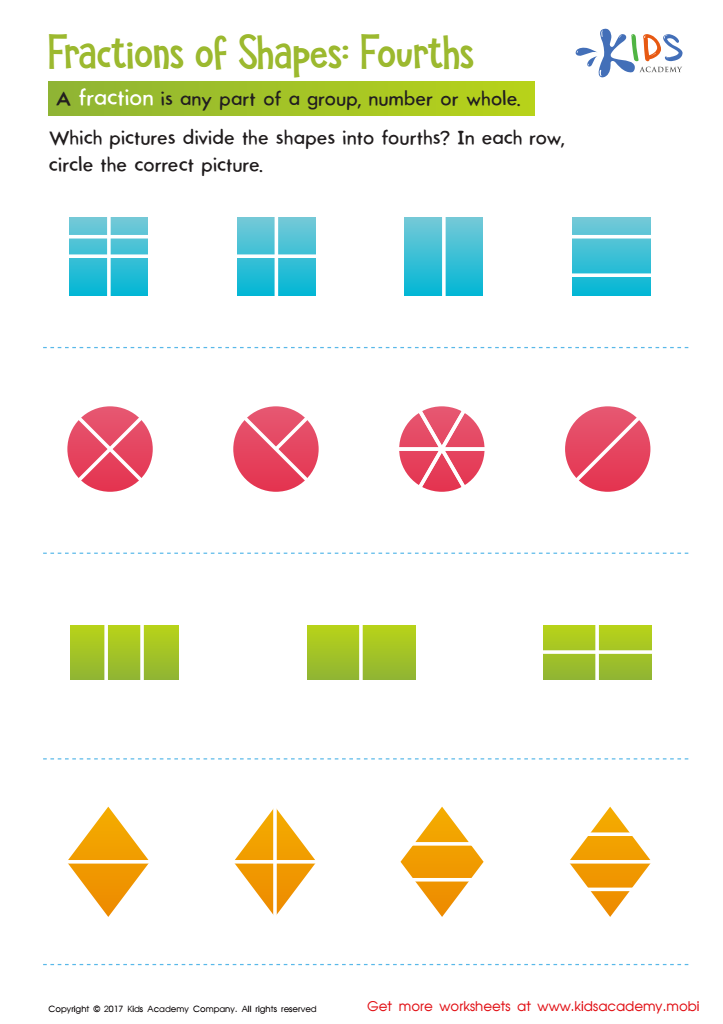
Fractions of Shapes Worksheet


.jpg)



Recognizing shapes at ages 4-6 is crucial as it lays the foundation for a plethora of cognitive and developmental skills. At this early age, children are like sponges, readily absorbing new information. Engaging them in recognizing shapes helps in honing their spatial awareness—an essential skill for reading and writing. For example, learning the difference between a square and a rectangle is an early exploration of noticing details, which is valuable for distinguishing between letters and numbers.
Moreover, shape recognition enhances problem-solving and critical thinking. When children identify and compare different shapes, they learn to categorize and organize information, which is critical for logical reasoning and mathematical thinking.
Shapes also form the basis for more complex geometry and math skills. For instance, understanding shapes helps children grasp basic math concepts like symmetry, geometrical properties, area, and perimeter. Phonic awareness and vocabulary can be enriched through shape-related terminology, which boosts language development.
Lastly, recognizing shapes contributes to social skills. When children discuss their observations about shapes with peers or adults, they improve their communication skills, teamwork, and ability to follow instructions.
Therefore, parents and teachers should prioritize shape recognition activities. Integrating fun and interactive learning methods can help spark a lifelong interest in mathematics and bolster a well-rounded academic foundation.








