Understanding fractions Math Worksheets for Ages 4-6 - Page 2
27 filtered results
-
From - To
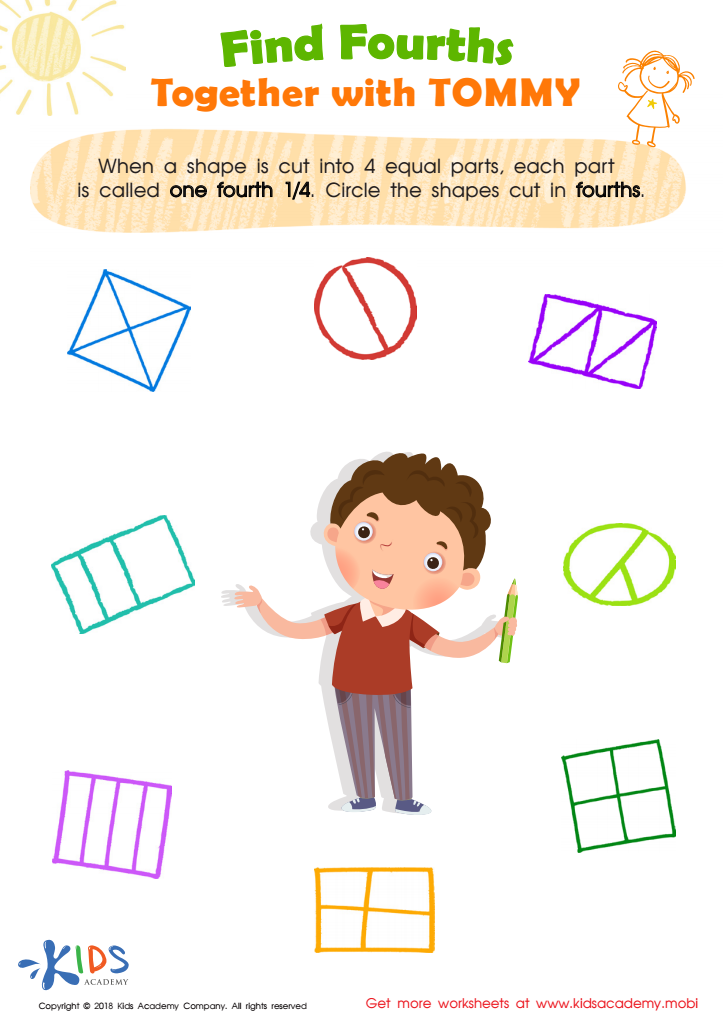
Find Fourths Together with Tommy Worksheet
 Assign to My Students
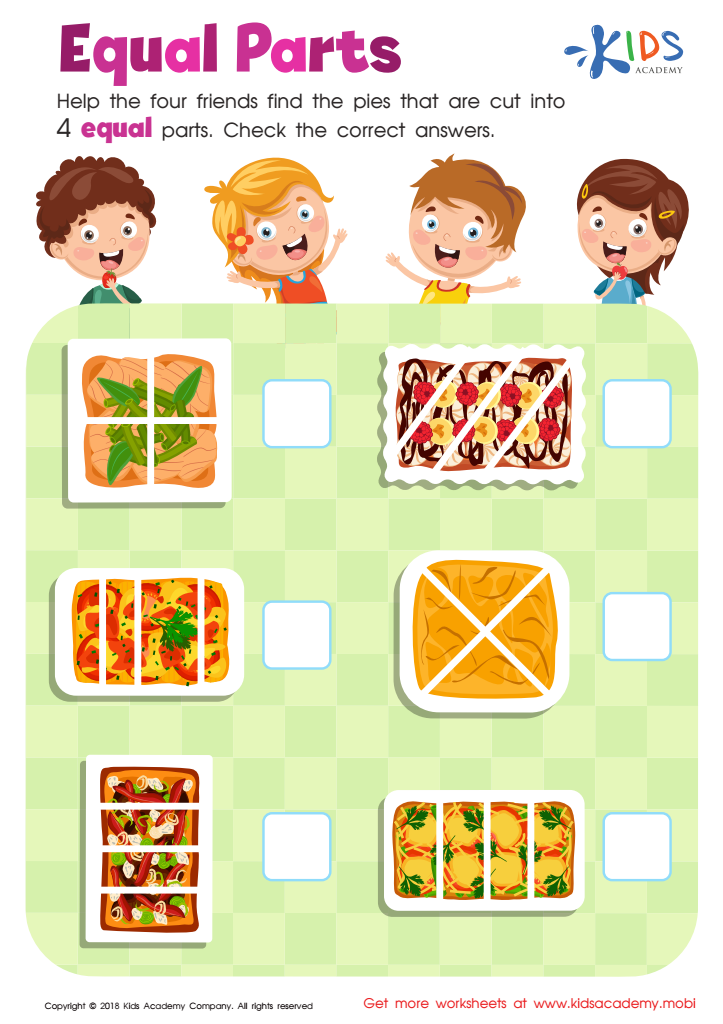
Equal Parts: Food Worksheet
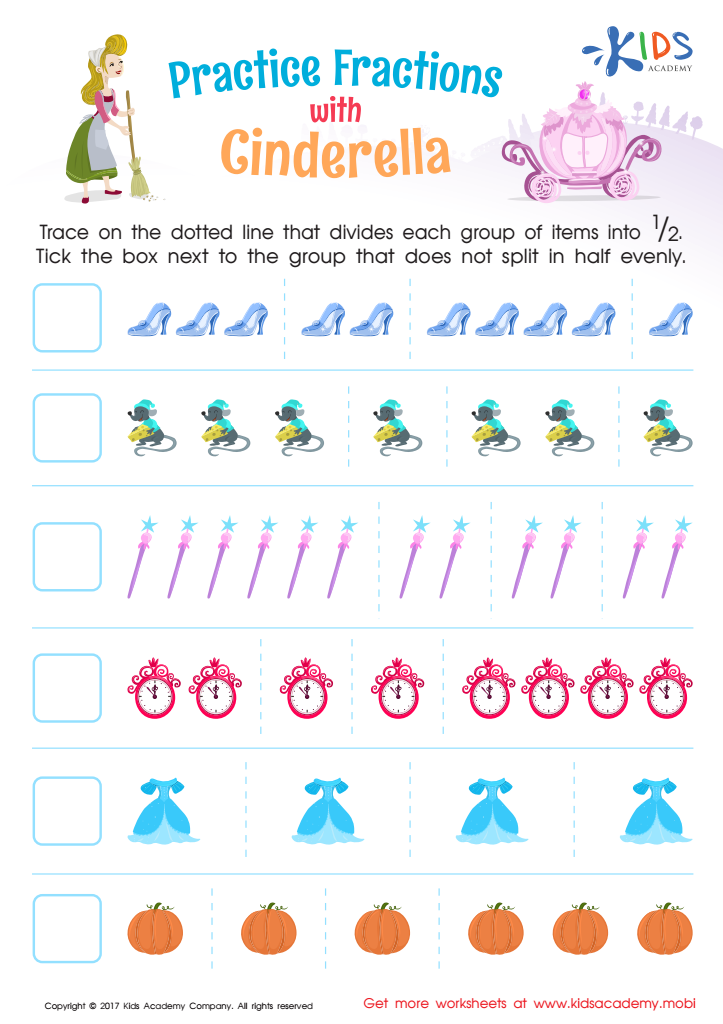
Fractions: Cinderella Printable








Understanding fractions is crucial for young children aged 4-6 because it lays the groundwork for essential mathematical concepts and critical thinking skills. At this stage, children are developing their awareness of quantities and relationships between parts and wholes. Introducing fractions in a playful and engaging manner can help them grasp these ideas intuitively.
Learning about fractions can enhance children's abilities to compare sizes, understand divisions, and develop problem-solving skills. When parents or teachers focus on this topic, they enable children to recognize fractions in everyday situations, such as sharing food or measuring ingredients during cooking activities. These experiences provide practical context, making abstract concepts more relatable.
Additionally, fostering a solid foundation in fractions can prevent learning difficulties later on. Mathematics builds on earlier concepts, and if children are not comfortable with the idea of parts and wholes, it might hinder their progress in more complex subjects like addition, subtraction, or even geometry.
Moreover, understanding fractions enhances children's critical thinking and reasoning capabilities. Not only does this empower them in math but also in life skills. Hence, effective early exposure to fractions can create confident learners who enjoy exploring and mastering mathematical concepts as they grow.








