Understanding Math Concepts Math Worksheets for Ages 4-6
3 filtered results
-
From - To
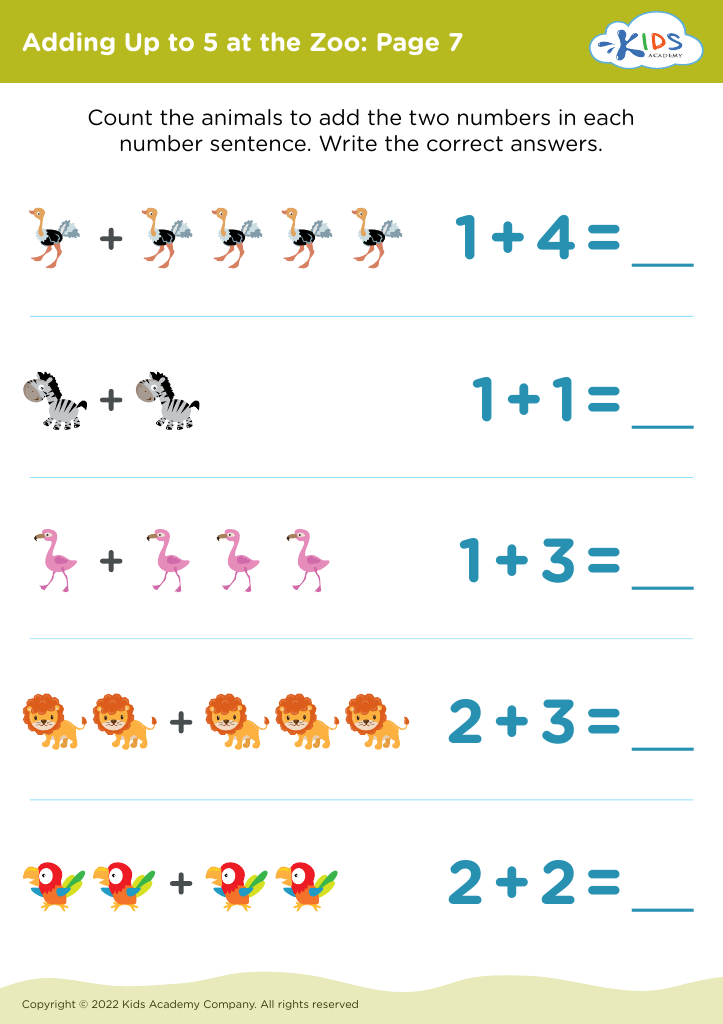
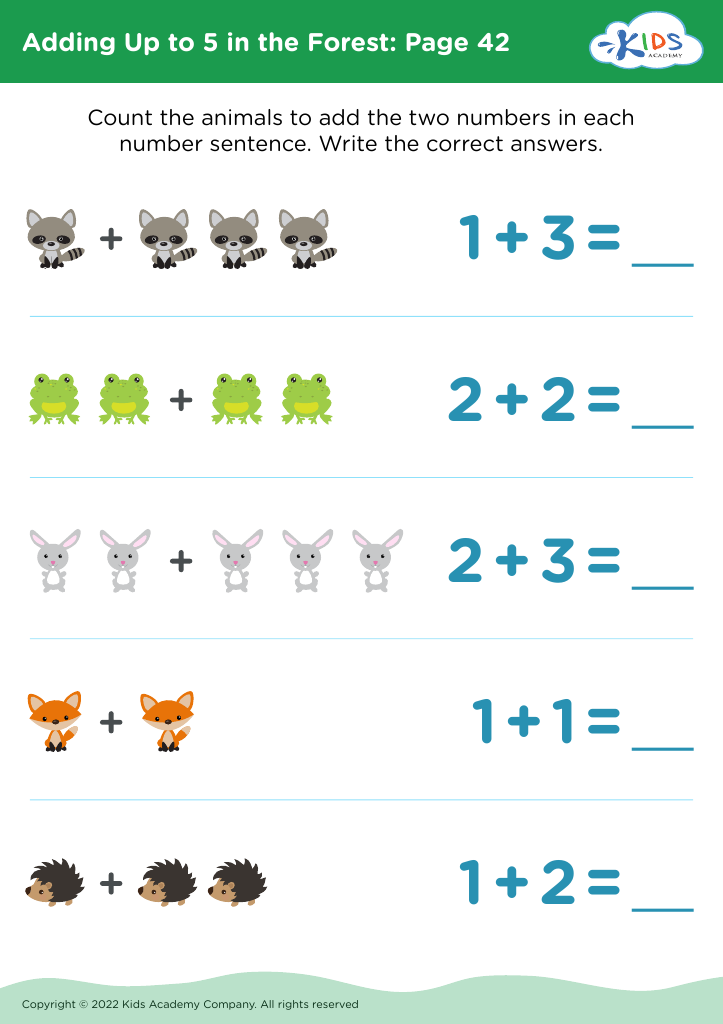
Explore our engaging "Understanding Math Concepts Math Worksheets" designed specifically for children ages 4-6. These worksheets help young learners grasp essential math skills in a fun and interactive way. By focusing on foundational concepts such as counting, number recognition, and simple addition and subtraction, our resources provide a solid base for future math success. Each worksheet includes colorful visuals and captivating activities that not only maintain children's interest but also promote critical thinking. Perfect for at-home learning or classroom use, these worksheets make mastering math concepts enjoyable for early learners. Start your child's math journey today with our comprehensive collection!
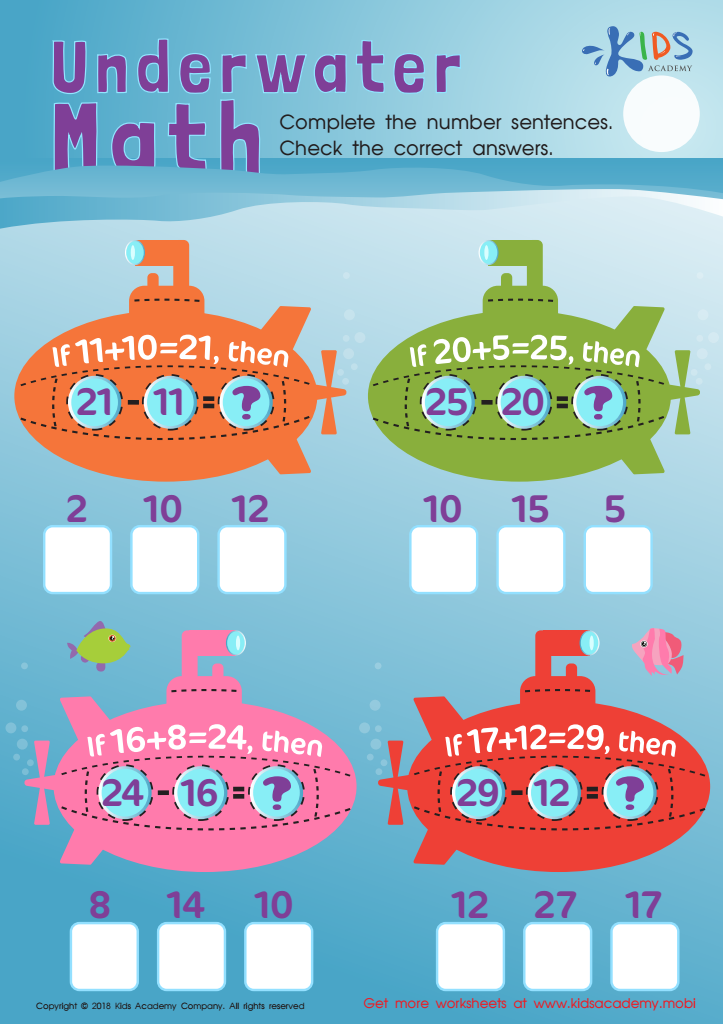
Addition and Subtraction: Underwater Math Worksheet
 Assign to My Students








Understanding math concepts in early childhood, particularly for ages 4-6, is crucial for several reasons. During this developmental stage, children’s brains are highly receptive to acquiring new skills, and foundational math concepts lay the groundwork for future academic success. Early exposure to math fosters critical thinking, problem-solving skills, and logical reasoning, all essential for navigating more complex math challenges later on.
Furthermore, engaging with math helps build confidence and a positive attitude toward learning. When parents and teachers emphasize understanding rather than rote memorization, children are more likely to develop a genuine interest in math. This understanding nurtures a love for exploration and discovery, which is vital as they encounter various subjects throughout their education.
Additionally, math is not just about numbers; it intertwines with everyday life, enhancing numerical literacy, measurement skills, and an understanding of patterns. These skills are instrumental in real-world applications, providing children with practical tools they will use throughout their lives.
For parents and teachers, focusing on early math concepts promotes overall cognitive development. Supporting young learners as they explore and grasp these foundational skills ultimately leads to better academic outcomes and lifelong success. Investing in math understanding at this stage is a direct investment in a child’s future.








