Understanding number patterns Math Worksheets for Ages 4-6
4 filtered results
-
From - To
Our "Understanding Number Patterns" math worksheets are expertly designed for children ages 4-6, providing a solid foundation in essential early math skills. These engaging and fun activities help young learners recognize, follow, and predict simple sequences, fostering critical thinking and problem-solving abilities. Through colorful illustrations and interactive exercises, kids can easily grasp concepts such as counting, skip counting, and basic addition. Perfect for both classroom and home use, our worksheets offer a comprehensive approach to early math education, ensuring children build the confidence and skills needed for future mathematical success. Start your child's learning journey today!
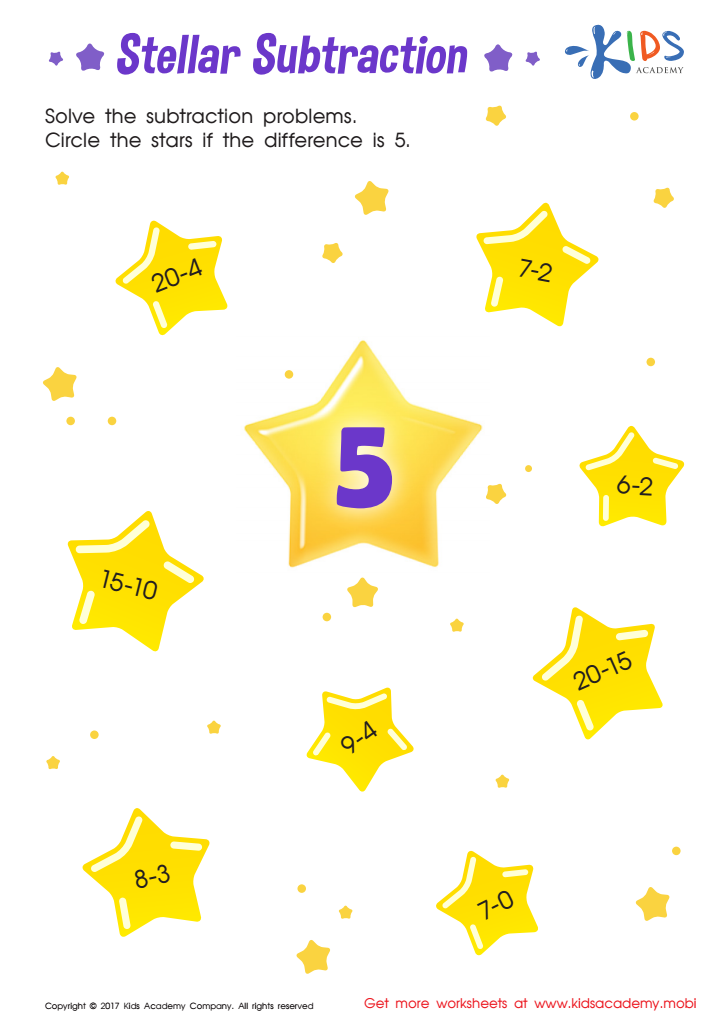
 Assign to My Students
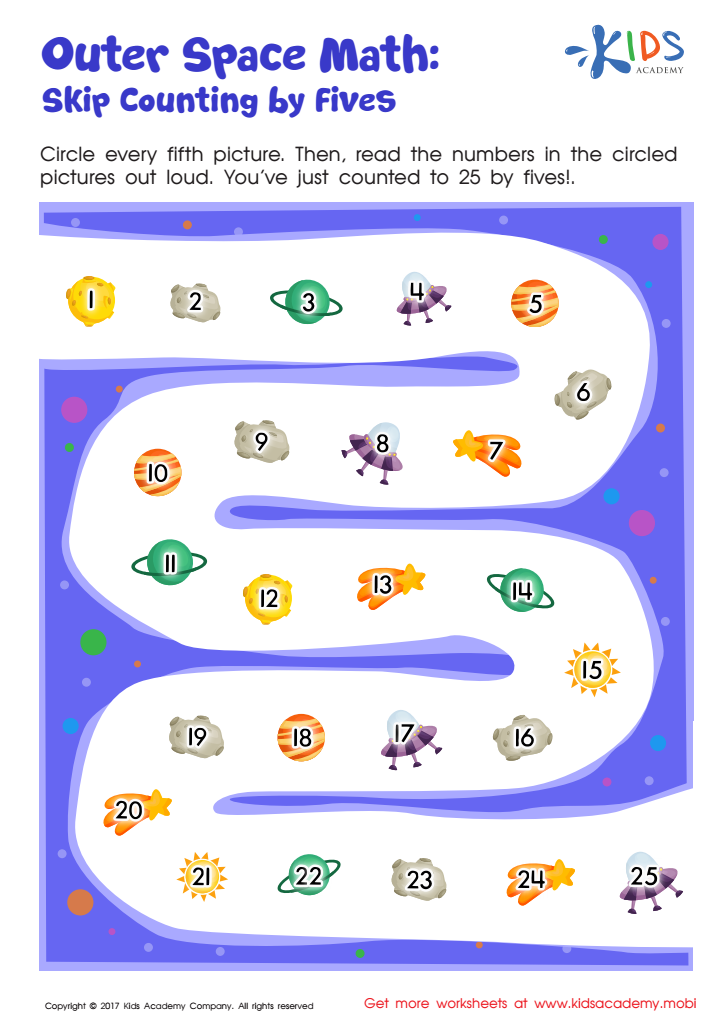
Skip Counting by 5s: Outer Space Math Printable
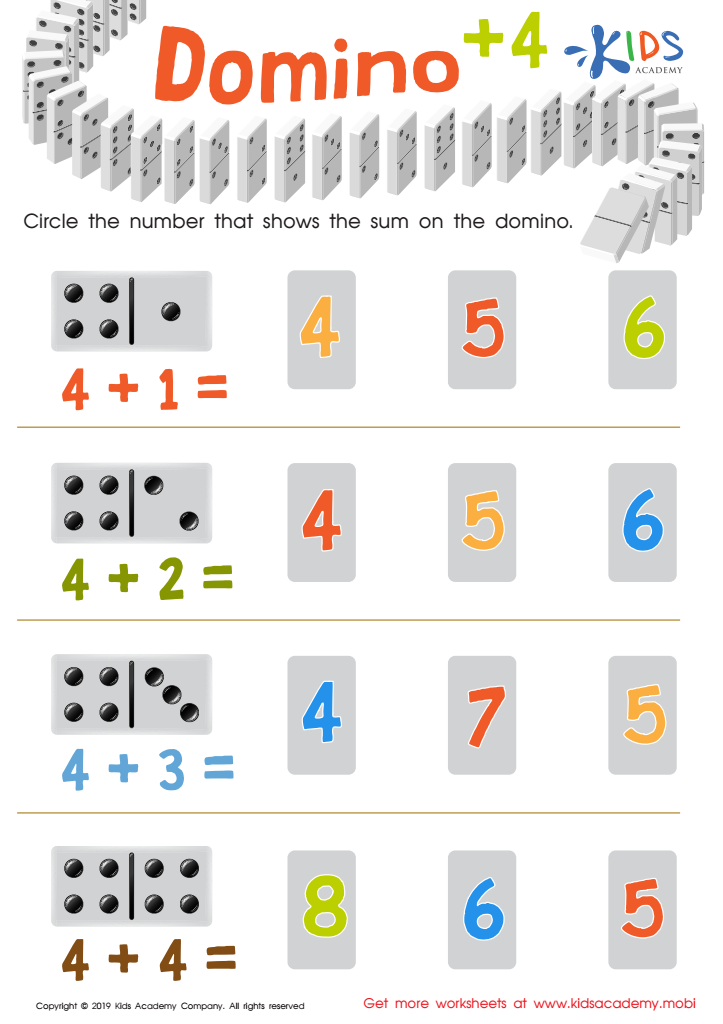
Domino +4 Worksheet
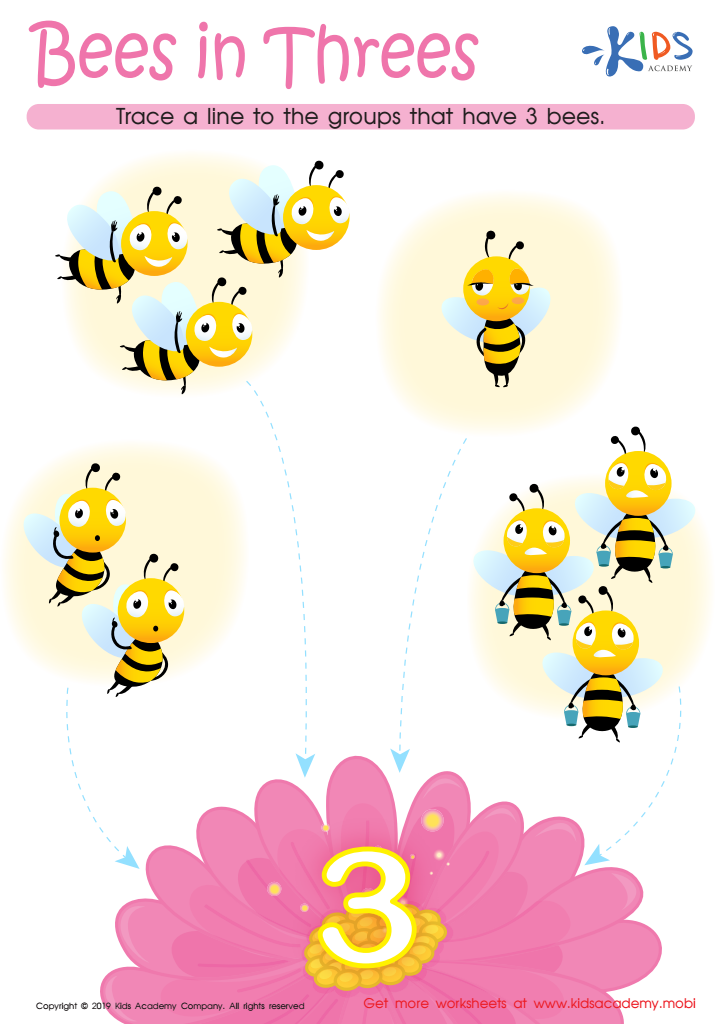
Bees in Threes Worksheet








Understanding number patterns at an early age is foundational for young learners' overall mathematical development. This early exposure opens up critical thinking and problem-solving skills that will be essential throughout their education.
Firstly, recognizing patterns helps children develop early numeracy skills. At ages 4-6, kids can start to understand concepts like sequencing and organizing. Seeing simple patterns such as alternating colors or shapes, or counting by twos and fives, instills a sense of order and predictability. These are fundamental skills when tackling more complex mathematics in later years.
Moreover, grasping number patterns strengthens their ability to make predictions and connections. They start to see relationships between numbers, which forms the basis for future algebraic thinking. Activities that highlight patterns, such as counting buttons, arranging blocks, or clapping rhythms, enhance these conceptual links.
Finally, engaging with number patterns boosts children's confidence in their math ability. Understand meaningful connections fosters a sense of achievement, encouraging a positive attitude towards math. For parents and teachers, nurturing this early enthusiasm and competence in understanding patterns not only builds a strong mathematical foundation but also instills a lifelong appreciation for learning and analytical thinking.
In essence, early focus on pattern recognition is pivotal for holistic cognitive development and future academic success in mathematics.








