Visual perception Math Worksheets for Ages 4-6 - Page 3
52 filtered results
-
From - To
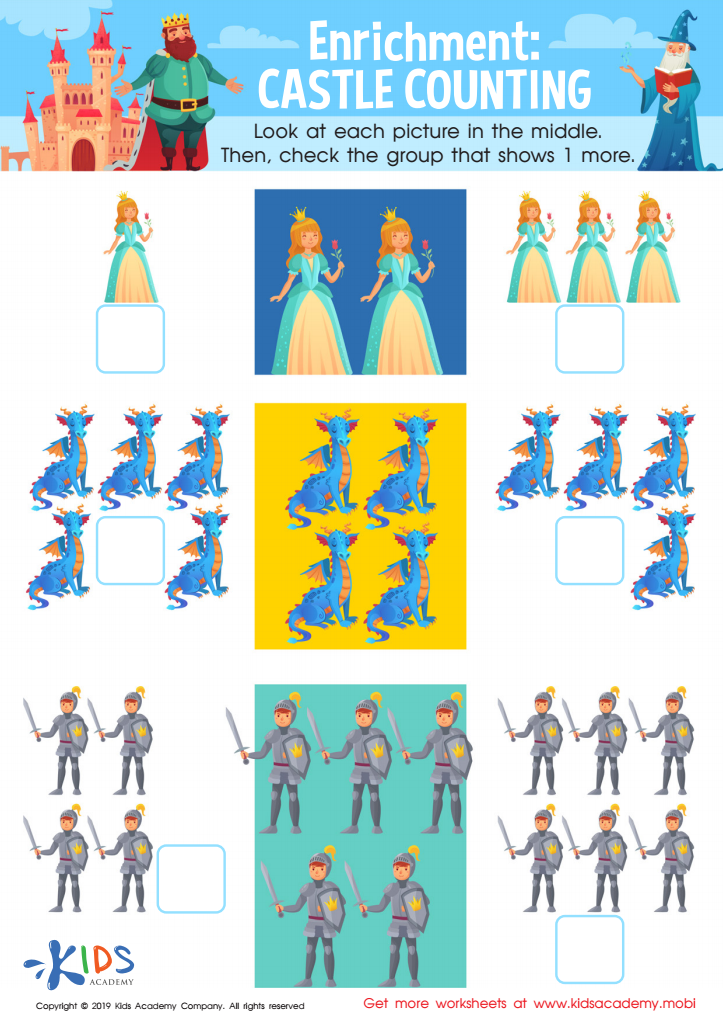
Enrichment: Castle Counting Worksheet
 Assign to My Students

Count and Match Vegetables 1 – 5 Math Worksheet
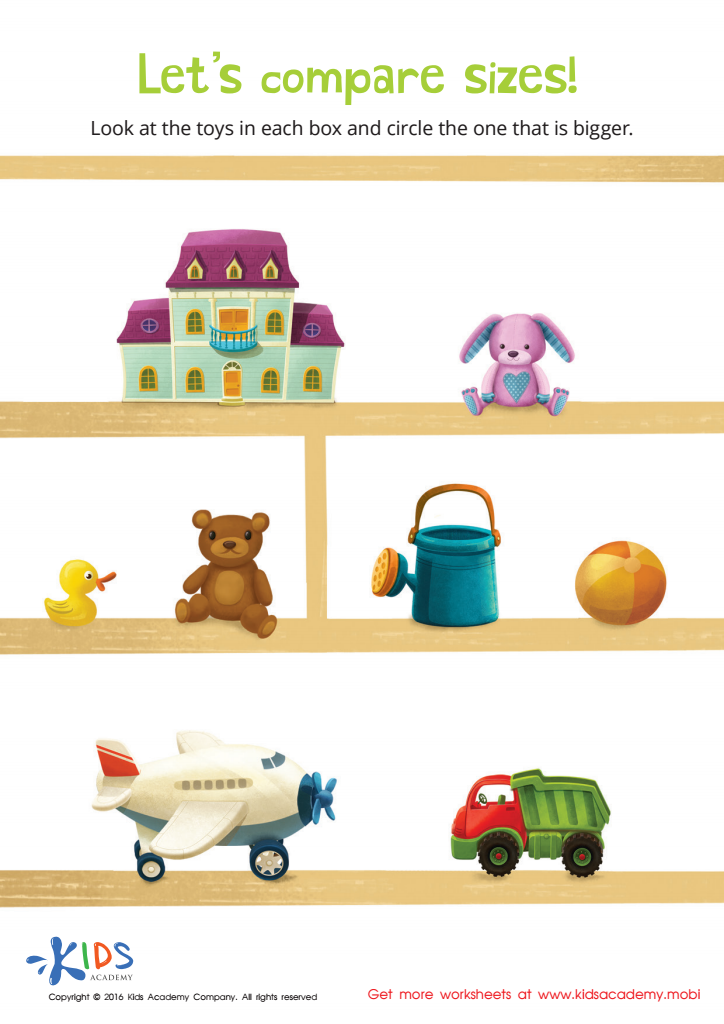
Classifying by Size Sorting Worksheet








Visual perception skills are foundational for young children's overall learning and development, especially in understanding mathematical concepts. For children aged 4-6, these skills play a crucial role in how they interpret and respond to the visual information around them. Visual perception encompasses identifying shapes, patterns, spatial relationships, and differentiating sizes, all of which are essential for early math learning.
For instance, recognizing visual patterns helps children comprehend basic arithmetic sequences, while identifying different shapes aids in building geometric understanding. These skills underpin more complex math concepts, ensuring a strong mathematical foundation. Children with well-developed visual perception can better follow instructions, solve problems, and understand spatial positioning, which directly impact their academic performance and confidence.
Additionally, early proficiency in visual perception aids in other critical developmental areas, such as reading. It improves fine motor skills, eye-hand coordination, and visual memory. Parents and teachers should thus integrate activities that strengthen these skills—like puzzles, sorting games, drawing, and building blocks—into daily routines. By prioritizing visual perception in early years, adults set the stage for sustained academic success and a positive attitude towards learning, fostering both cognitive and practical life skills.








