Weather identification Math Worksheets for Ages 4-6
3 filtered results
-
From - To
Discover our engaging Weather Identification Math Worksheets designed specifically for children ages 4-6! Perfect for early learners, these worksheets combine essential math skills with fun weather concepts, helping kids identify different weather types while practicing counting, sorting, and pattern recognition. Through colorful illustrations and interactive exercises, young learners can explore various weather conditions like sunny, rainy, and snowy while developing their numeracy skills. These resources cater to various learning styles, ensuring that every child can enjoy hands-on learning experiences. Start your child’s journey in STEM education today with our thoughtfully designed worksheets that make learning about the weather both fun and educational!
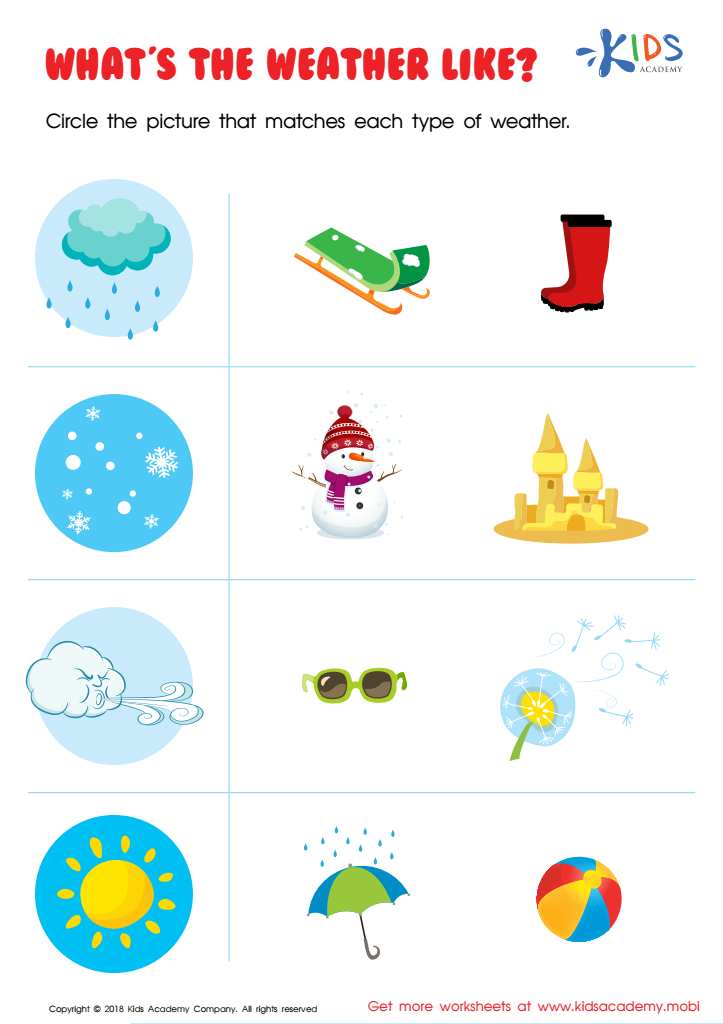
What's the Weather Like? Worksheet
 Assign to My Students
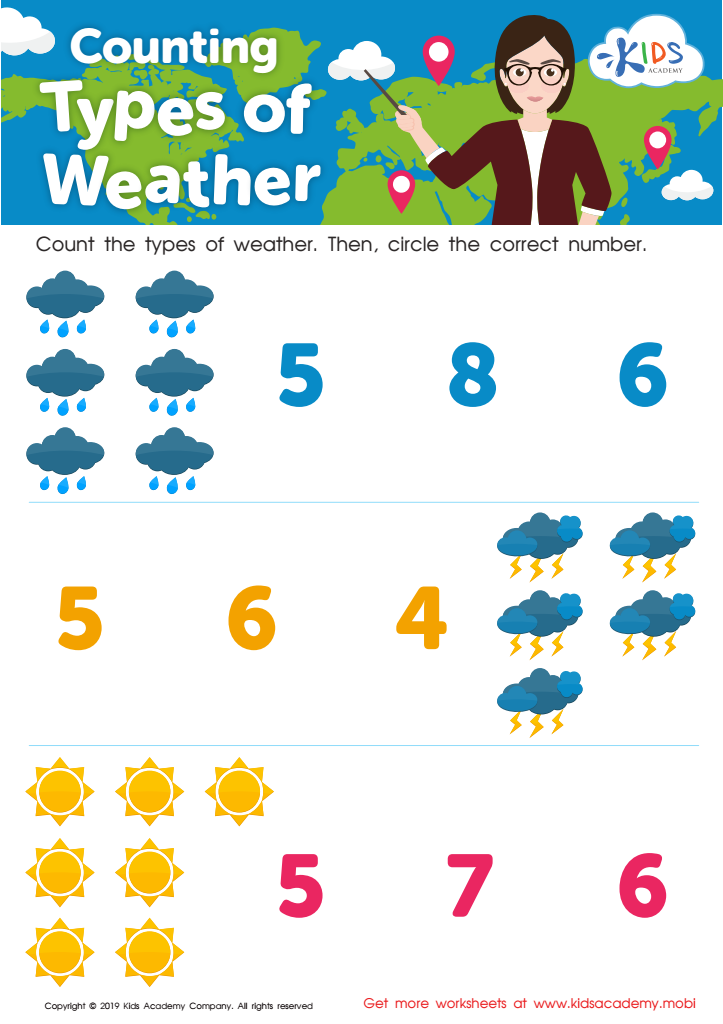
Counting Types of Weather Worksheet
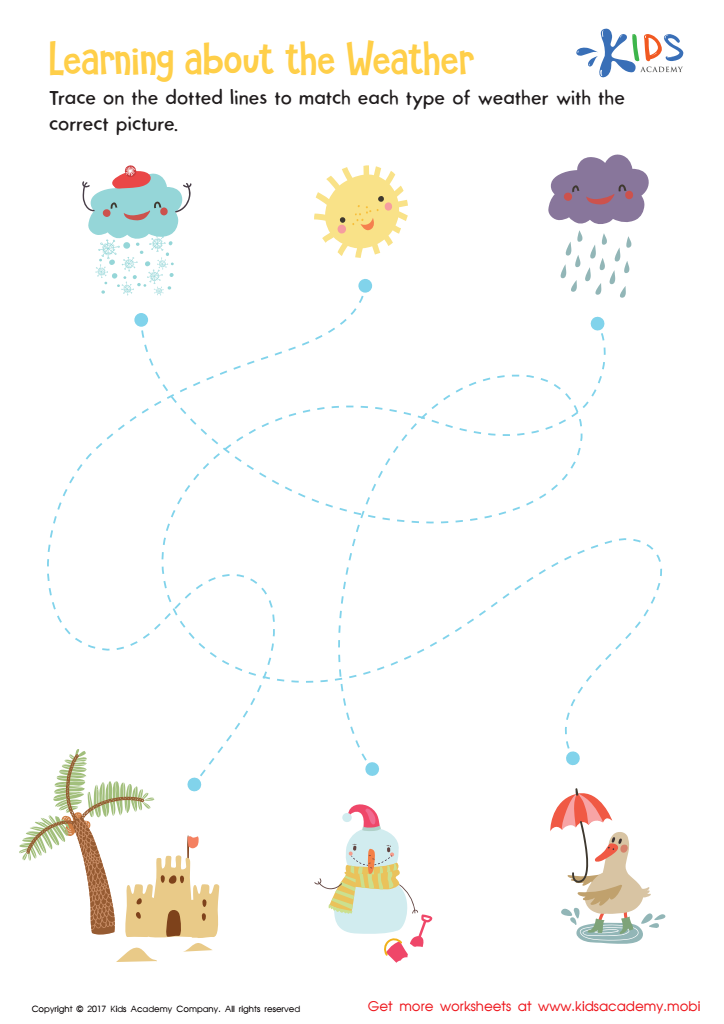



.jpg)




Weather identification math activities for children ages 4-6 are vital for several reasons. Firstly, they establish a strong foundation in both math and science, encouraging curiosity about the world around them. By engaging in weather identification, children learn to observe and categorize weather patterns, developing critical thinking skills as they compare different kinds, such as sunny, rainy, or snowy weather.
Incorporating math, such as counting raindrops or measuring temperature, allows children to relate mathematical concepts to real-life situations. This dual focus on weather and math makes learning more engaging and meaningful. Additionally, mastering weather concepts aids in the development of language skills as children learn new vocabulary associated with climate and meteorological phenomena.
Furthermore, understanding the weather helps promote practical safety awareness. Children learn to dress appropriately or prepare for changes in their environment, fostering independence and responsibility. This combination of practical knowledge, cognitive skills, and language development equips young learners with essential tools for navigating their world. Thus, parents and teachers who emphasize weather identification math confirm the importance of integrated learning—supporting not only mathematical proficiency but also scientific literacy and critical thinking from an early age.








