Color Identification Matching Worksheets for Ages 4-6
3 filtered results
-
From - To
Discover fun and educational Color Identification Matching Worksheets designed for children aged 4-6. These engaging worksheets from Kids Academy help young learners develop essential color recognition and matching skills, fostering cognitive development and enhancing visual perception. Perfect for preschool and kindergarten students, the color-based activities provide a playful yet structured way for kids to learn. Children match colors through a variety of interactive exercises, ensuring a solid foundation in color differentiation. Ideal for use at home or in the classroom, these worksheets offer an excellent resource for parents and educators aiming to support early learning milestones.
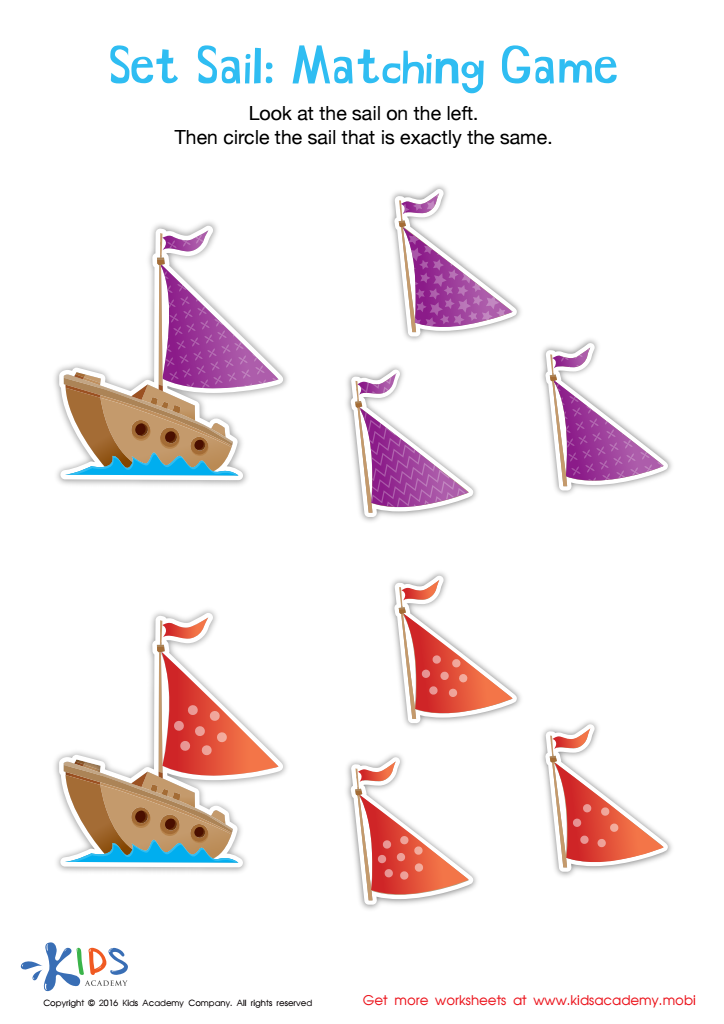
Set Sail Worksheet
 Assign to My Students
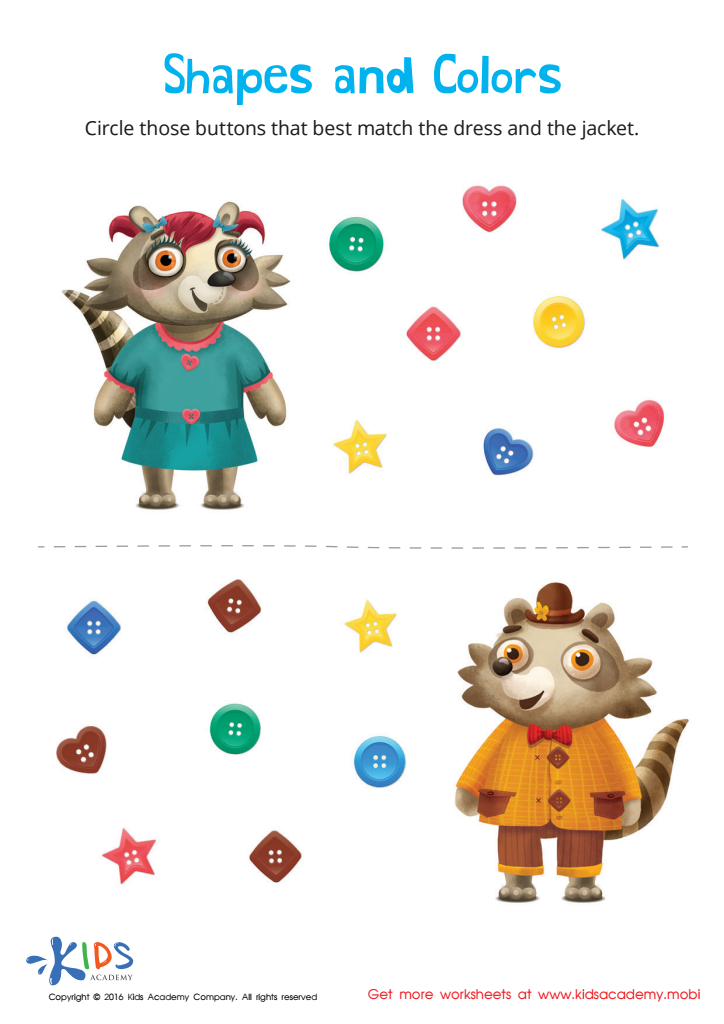
Matching: Shapes and Colors Worksheet







Color identification and matching are essential skills for young children aged 4-6, as they play a crucial role in their cognitive, social, and emotional development. When parents and teachers pay attention to these skills, they are helping children build a solid foundation for their future learning experiences.
Firstly, color identification enhances cognitive development. Being able to identify and distinguish between different colors sharpens a child's observational skills, memory, and attention to detail. These cognitive abilities are not only vital for more complex learning tasks like reading and math, but also for everyday problem-solving.
Secondly, improved language development is another key benefit. When children learn to name and discuss colors, they expand their vocabulary and practice descriptive language skills. This improves their overall ability to communicate effectively, helping them express their thoughts and emotions more clearly.
Socially and emotionally, mastering color identification contributes to a child's self-esteem and confidence. Successfully recognizing and matching colors provides a sense of achievement, which fosters a positive attitude toward learning in general. Additionally, these activities often involve cooperative play, helping children develop teamwork and social interaction skills.
Lastly, color identification is a fun and engaging way for children to explore their environment. By understanding color concepts, children can better appreciate the world around them, enriching their sensory experiences and imaginative play. This ultimately leads to a more well-rounded and curious young learner.








