Critical Thinking Matching Worksheets for Ages 4-6
4 filtered results
-
From - To
Unlock the power of critical thinking with our engaging matching worksheets designed for children aged 4-6. At Kids Academy, our expertly crafted activities promote essential cognitive skills, aiding young learners in recognizing patterns, discerning relationships, and enhancing problem-solving abilities. Each worksheet bridges fun and education, helping children develop their analytical skills in an interactive way. Perfect for preschoolers and kindergarteners, these printable resources align with early learning standards and support developmental growth, ensuring your child builds a solid foundation for future education. Foster a love of learning and critical thinking in young minds with Kids Academy worksheets!
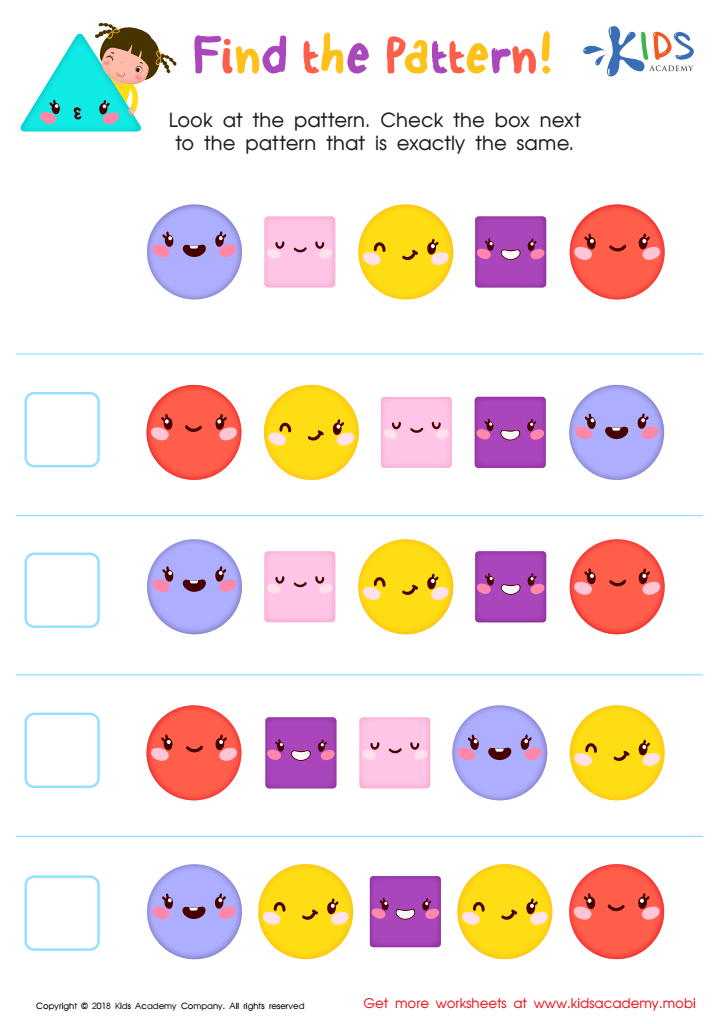
Find the Pattern Worksheet
 Assign to My Students
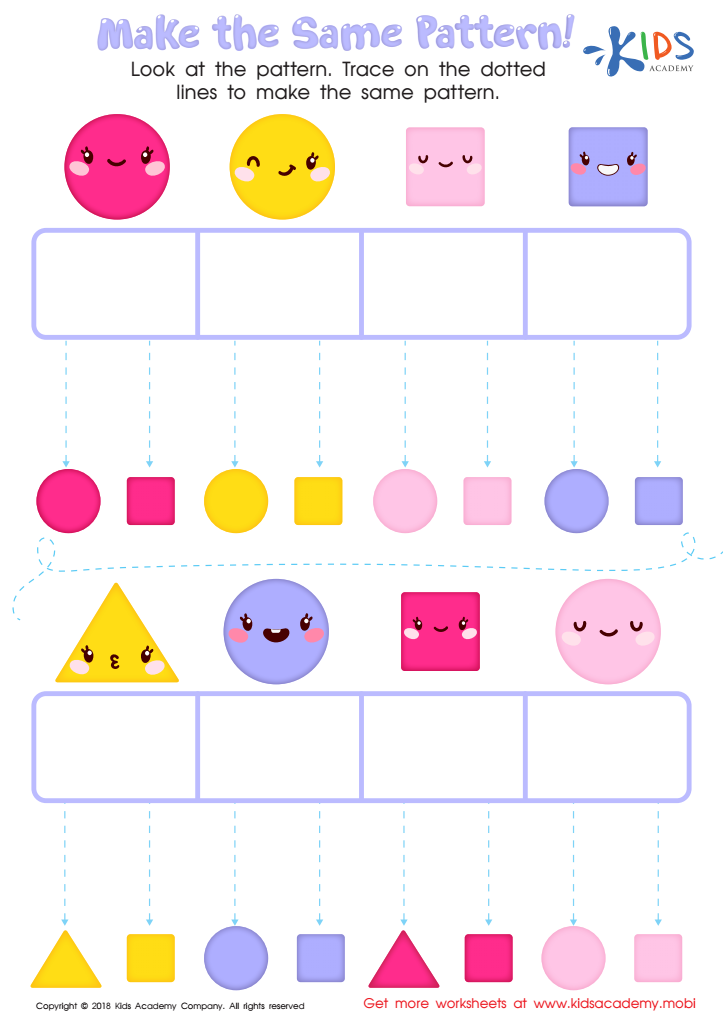
Make the Same Pattern Worksheet

The Four Seasons Worksheet







Parents and teachers should prioritize critical thinking matching for children ages 4-6 because it builds essential cognitive skills at a critical stage in their development. Young children are naturally curious and thrive on activities that challenge their thinking and problem-solving abilities. Engaging in critical thinking matching activities, such as finding pairs or identifying patterns, helps to nurture their ability to think logically and make connections.
At this early age, children's brains are highly plastic and receptive to learning. Critical thinking exercises strengthen their reasoning abilities, developing skills that are foundational for later learning in subjects such as math, reading, and science. Additionally, these activities enhance children's concentration and memory, as they need to remember rules and details to effectively complete matching games.
Furthermore, critical thinking encourages children to approach problems with an open mind and consider multiple solutions, fostering creativity and independent thinking. These are crucial life skills that go beyond academic success, assisting children in making informed decisions and interacting thoughtfully with the world around them.
Incorporating critical thinking matching games into early education also has social benefits. Children learn to take turns, follow rules, and even collaborate with peers, fostering cooperative play and improving social skills. Overall, these practices prepare young children for a lifetime of effective thinking and learning.








