Visual discrimination Sorting Worksheets for Ages 4-6
3 filtered results
-
From - To
Enhance your child's visual discrimination skills with our engaging sorting worksheets tailored for ages 4-6. Designed to develop critical thinking and observational abilities, these worksheets help young learners identify differences and categorize objects by size, shape, color, and more. Perfect for preschool and kindergarten, each activity is crafted to make learning fun and interactive. Encouraging early math skills, these printables provide a strong foundation for future academic success. Support your child's educational journey with our expertly designed visual discrimination sorting worksheets, ensuring they gain confidence and essential skills for their learning adventure.
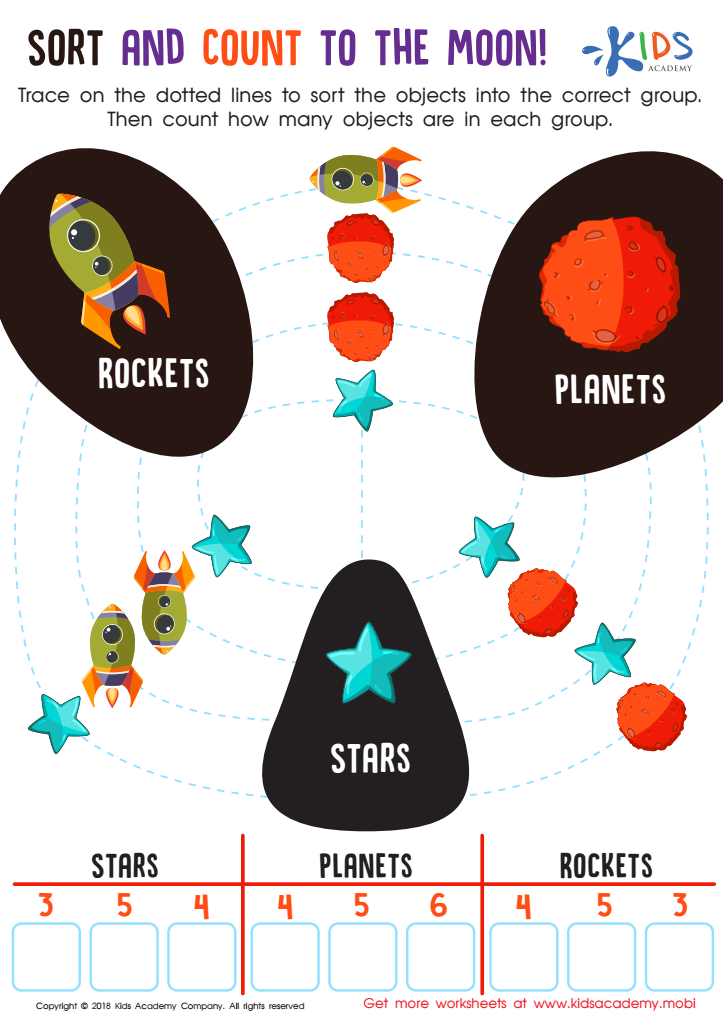
Sort and Count to the Moon Worksheet
 Assign to My Students
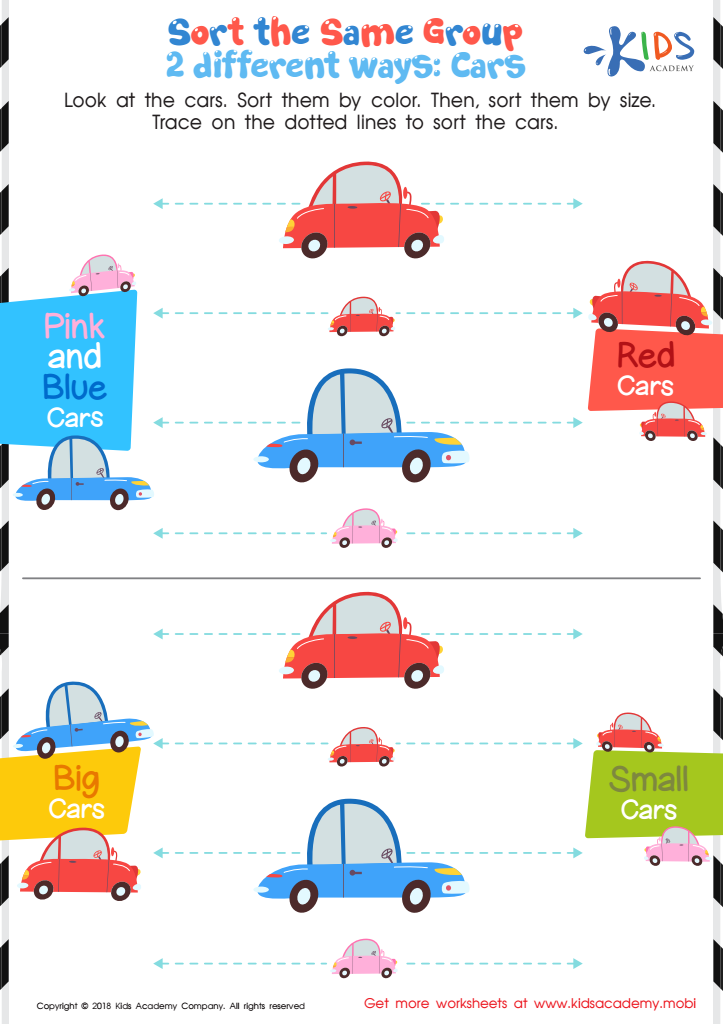
Sort the Same Group 2 Different Ways: Cars Worksheet
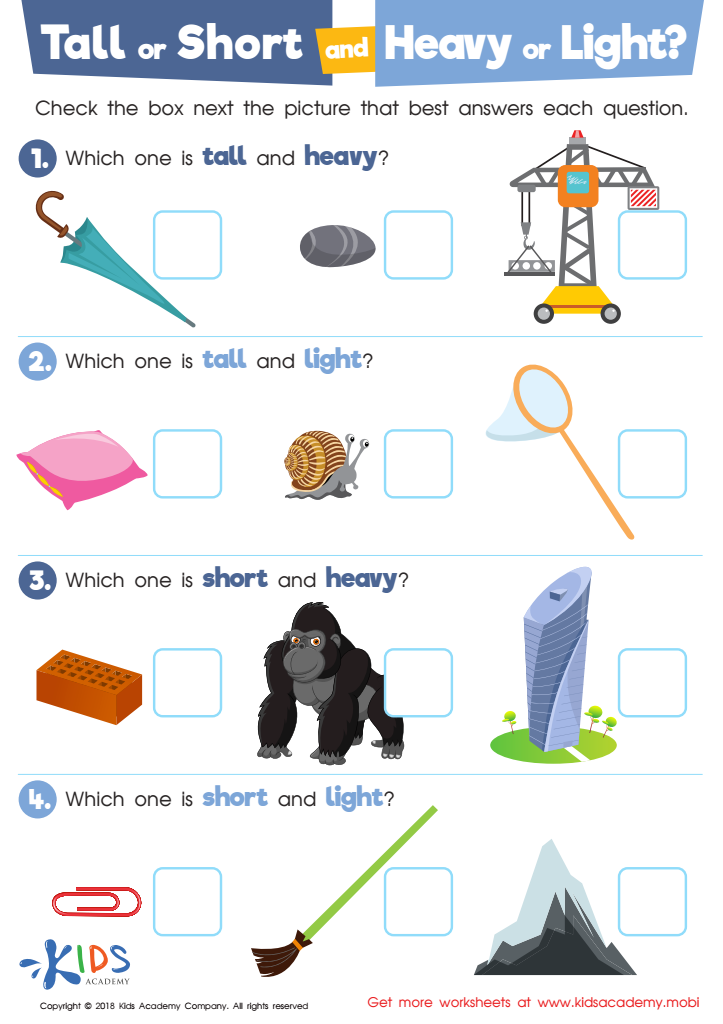
Tall or Short and Heavy or Light? Worksheet








Visual discrimination sorting is a crucial skill for young children, especially between the ages of 4 and 6, as it forms the foundation for many other important cognitive abilities and academic skills. Visual discrimination is the ability to recognize differences and similarities in shapes, patterns, and objects. This skill is essential for learning to read, write, and develop mathematical understanding.
When parents or teachers emphasize visual discrimination sorting, they help children improve their attention to detail, which is critical for letter and number recognition. Distinguishing between similar-looking letters, like 'b' and 'd' or '6' and '9,' is essential for early literacy and numeracy. Additionally, this practice enhances memory and cognitive development. Children learn to categorize and organize information systematically, which is important for problem-solving and logical reasoning.
Furthermore, visual discrimination activities can improve fine motor skills. Sorting tasks often involve manipulating small objects, helping children develop hand-eye coordination and dexterity, vital for writing and everyday tasks.
In summary, prioritizing visual discrimination sorting for young children not only supports their academic growth but also fosters essential cognitive and motor skills. By engaging in these activities, parents and teachers set children on a path to successful learning experiences and holistic development.








