Basic Math Skills Subtraction Worksheets for Ages 4-6
9 filtered results
-
From - To
Boost your child's early math skills with our engaging subtraction worksheets designed specifically for ages 4-6. These worksheets offer a fun and interactive way for young learners to grasp the concept of subtraction through colorful visuals and various exercises. Each activity is crafted to reinforce essential math skills while promoting problem-solving abilities. Ideal for home or classroom use, our worksheets cater to little learners, ensuring they build a solid foundation in mathematics. Encourage your child's academic growth and confidence in math with our easy-to-follow, printable subtraction worksheets today! Start their exciting journey into the world of numbers!
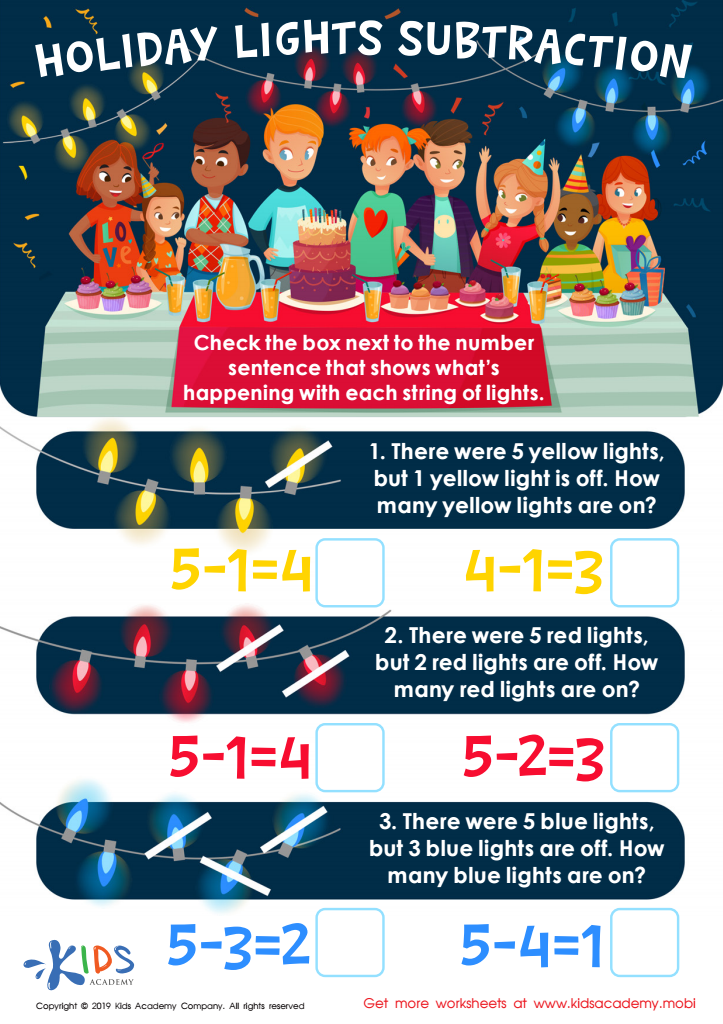
Holiday Lights Subtraction Worksheet
 Assign to My Students
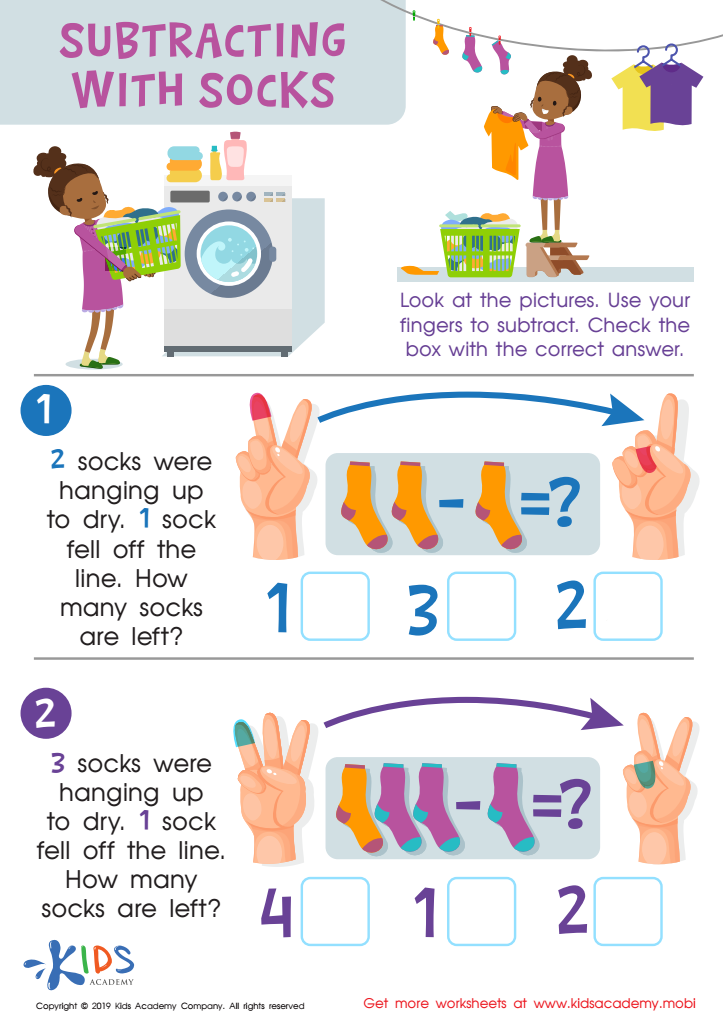
Subtracting Socks Worksheet
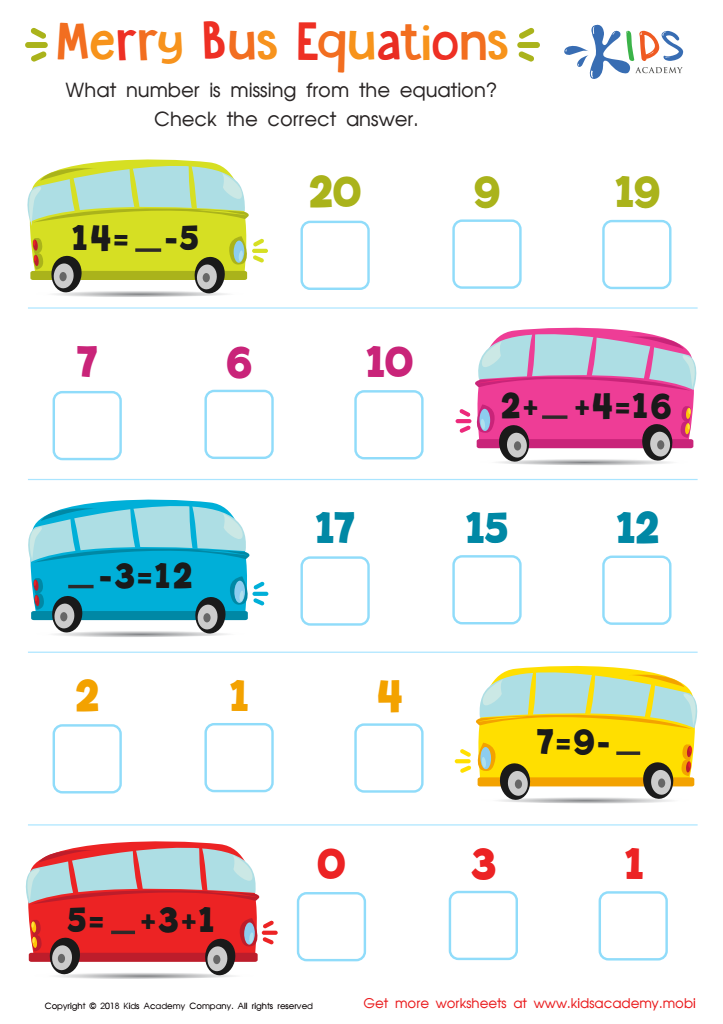
Merry Bus Equations Worksheet
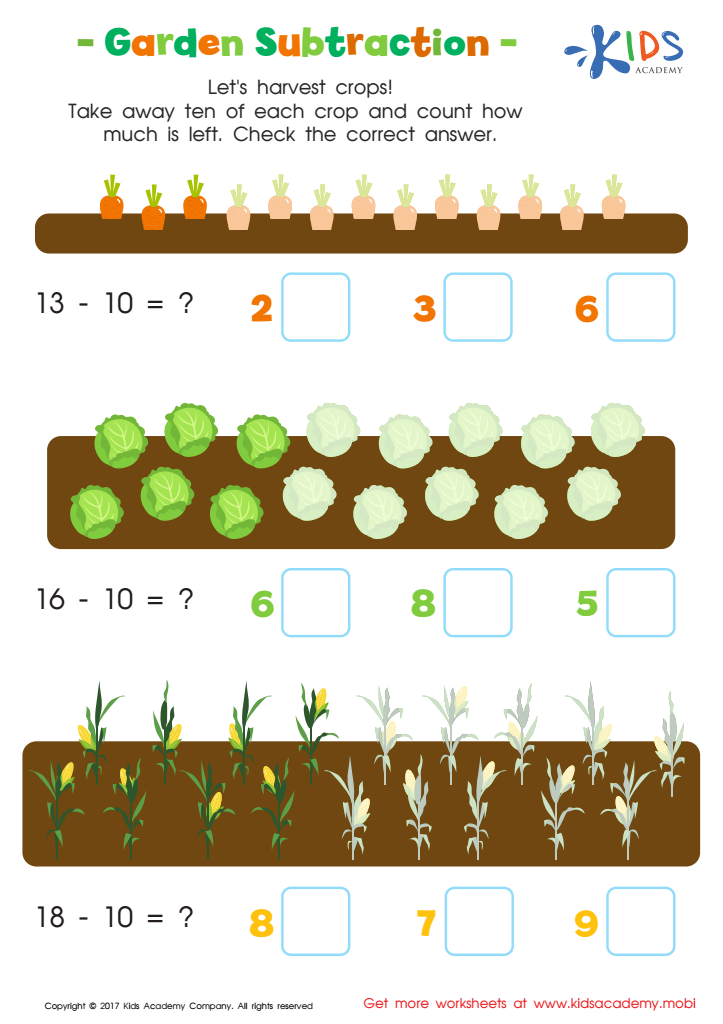
Garden Subtraction Worksheet
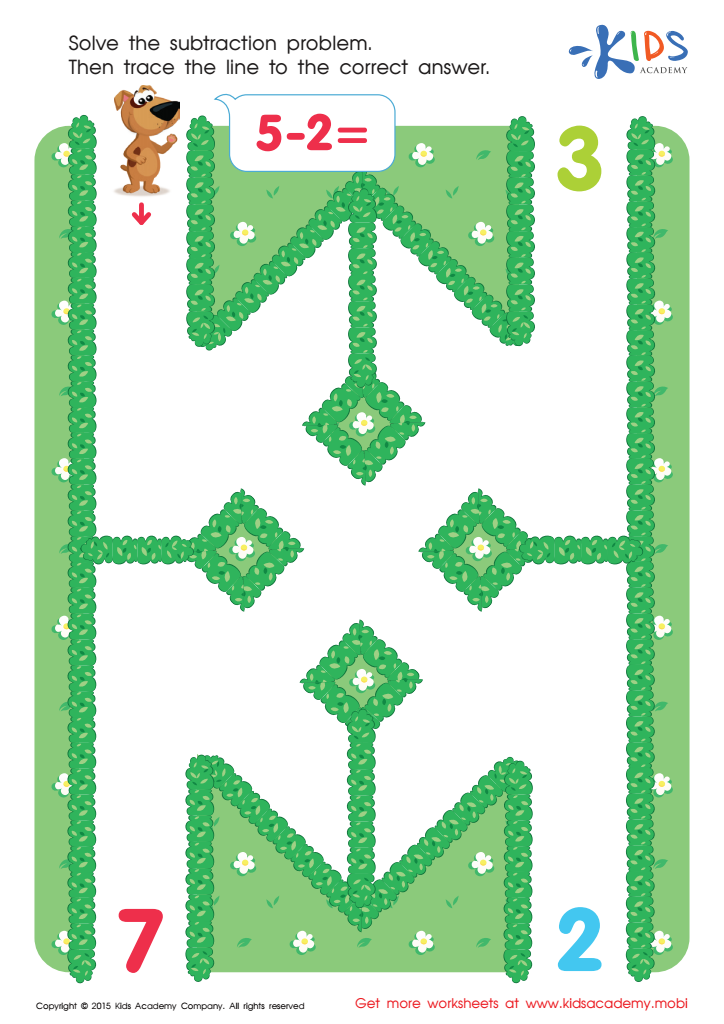
Five Minus Two Worksheet
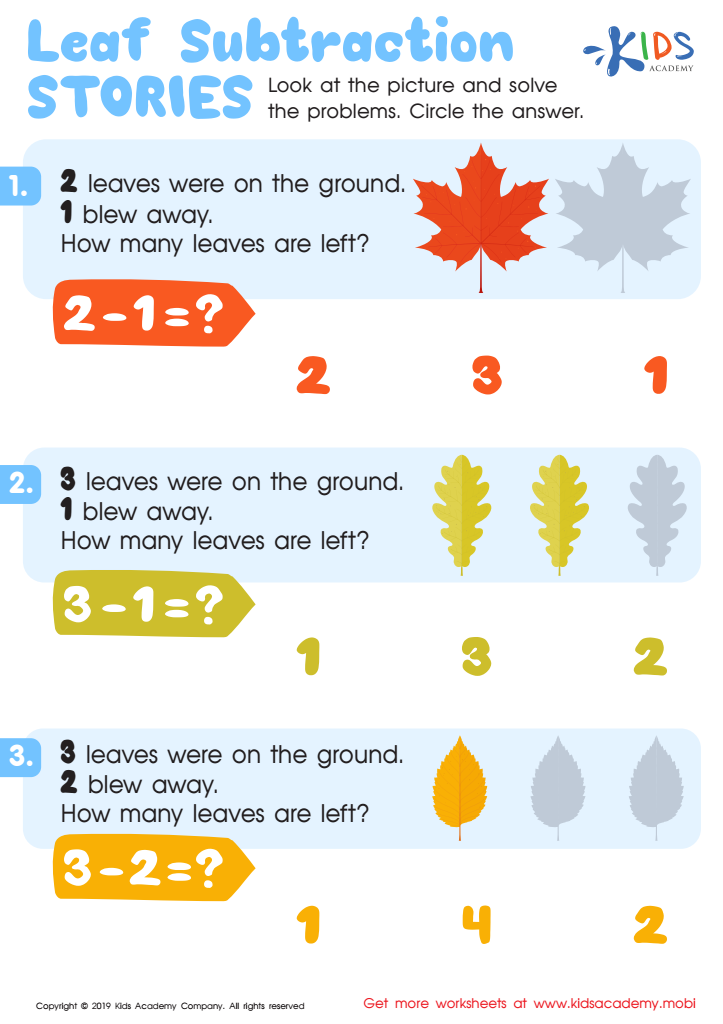
Leaf Subtraction Stories Worksheet
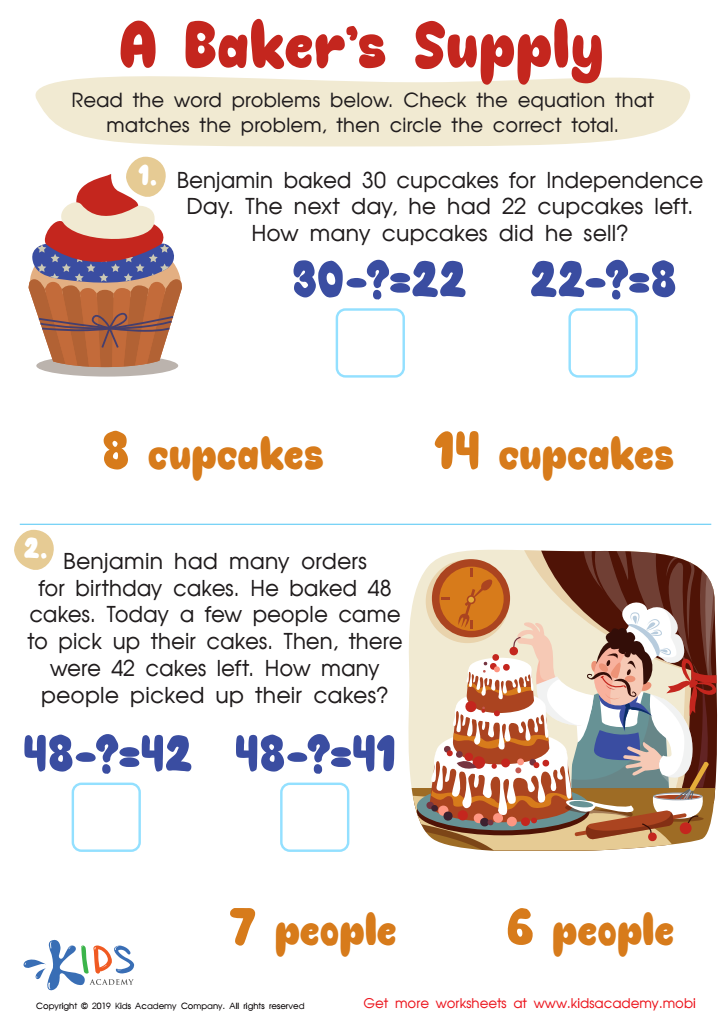
A Baker's Supply Worksheet
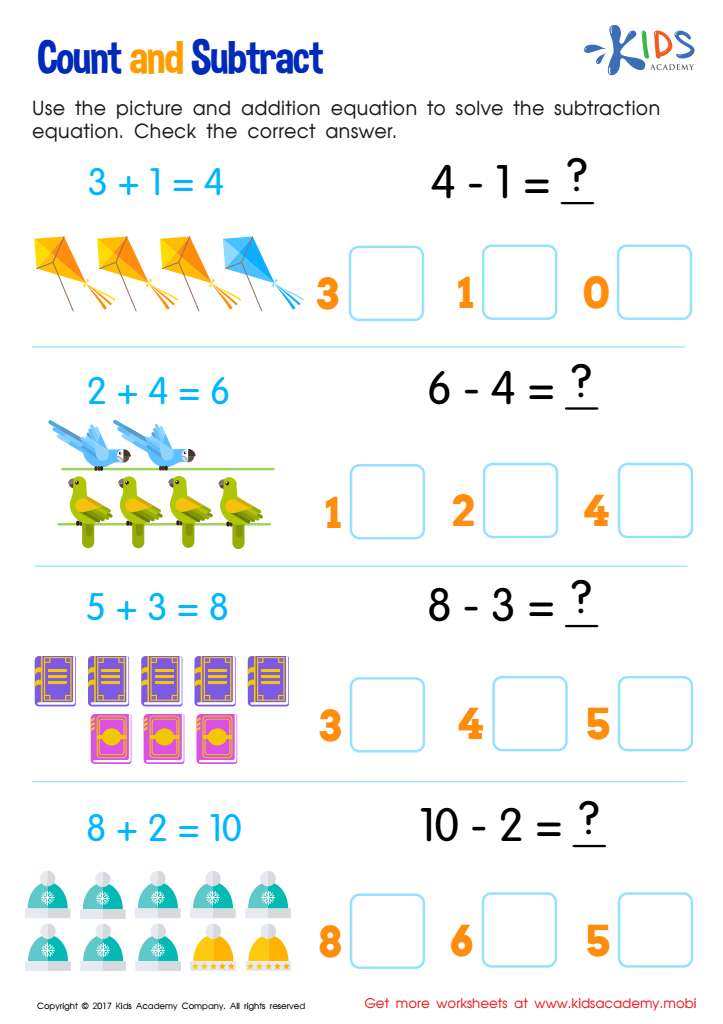
Count and Subtract Worksheet
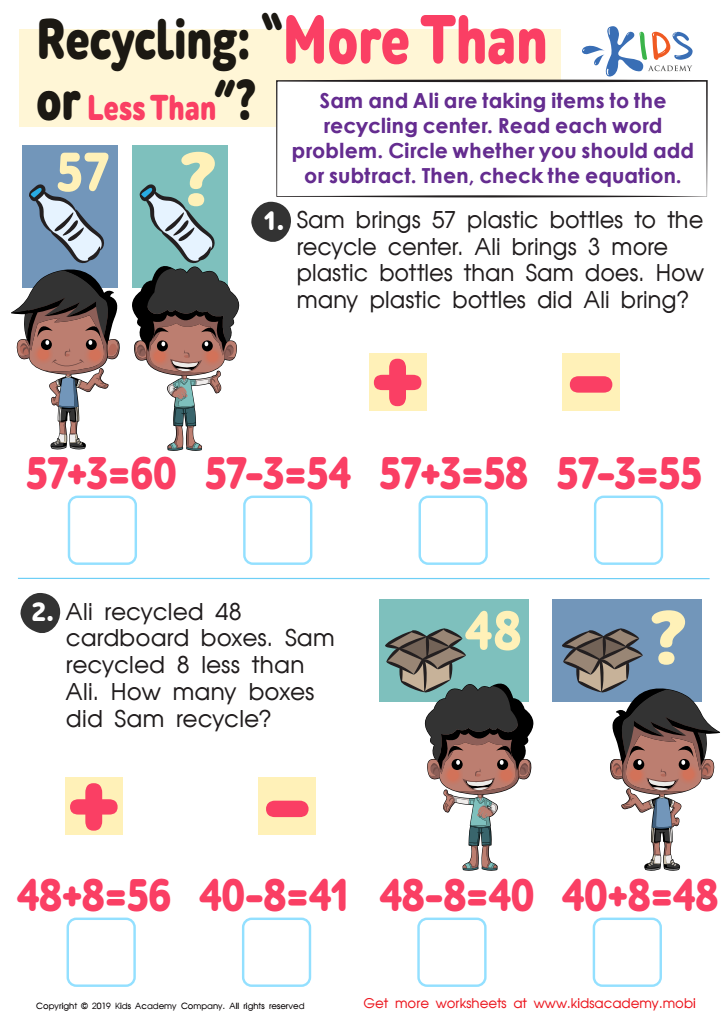
Recycling - More or Less Worksheet








Basic math skills, particularly subtraction, are foundational for children's cognitive development and overall academic success. For children aged 4-6, understanding subtraction isn’t just about numbers; it enhances critical thinking and problem-solving abilities. At this early stage, learning to subtract helps kids develop an essential understanding of quantity and contrasts, which fosters numeracy skills.
Parents and teachers should care about promoting subtraction because it supports various key life skills, such as logical reasoning and spatial awareness. Engaging children in subtraction activities encourages them to think independently and learn cause-and-effect relationships, which is paramount for their brain development.
Moreover, building a strong mathematical foundation early on sets the stage for more complex concepts in later years. Children who grasp subtraction find it easier to tackle addition, multiplication, and division down the road. Furthermore, early learning positively influences their confidence and interest in mathematics, paving the way for academic achievement.
Encouraging subtraction through fun activities, games, and hands-on practice makes learning enjoyable. Thus, investing time and effort into nurturing basic subtraction skills equips children with tools that are vital for lifelong learning and personal development, making it a priority for both parents and teachers.








