Cognitive Development Subtraction Worksheets for Ages 4-6
4 filtered results
-
From - To
Discover our engaging Cognitive Development Subtraction Worksheets designed specifically for children aged 4-6! These interactive worksheets aim to enhance early math skills while fostering cognitive growth. Through colorful visuals and age-appropriate exercises, kids will grasp the fundamentals of subtraction, improving their problem-solving abilities and understanding of numerical concepts. Our thoughtfully crafted activities promote critical thinking, number recognition, and subtraction strategies, making learning both fun and effective. Perfect for parents and teachers, these worksheets provide a comprehensive tool to track progress and reinforce skills. Start your child's journey in mastering subtraction today and lay a strong foundation for future math success!
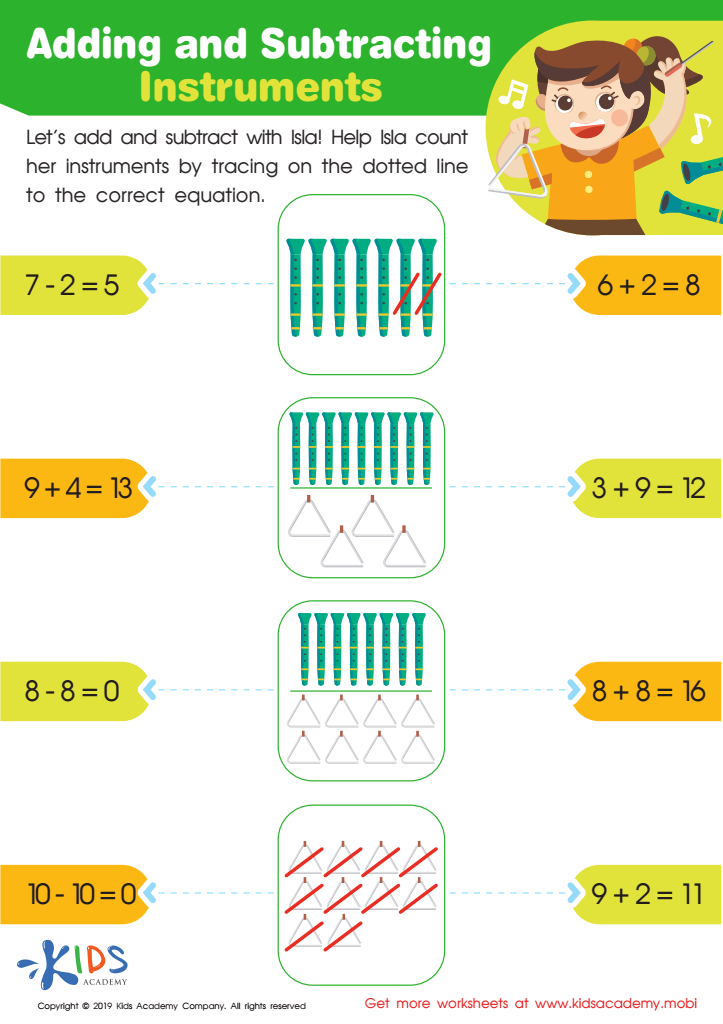
Adding and Subtracting: Instruments Worksheet
 Assign to My Students
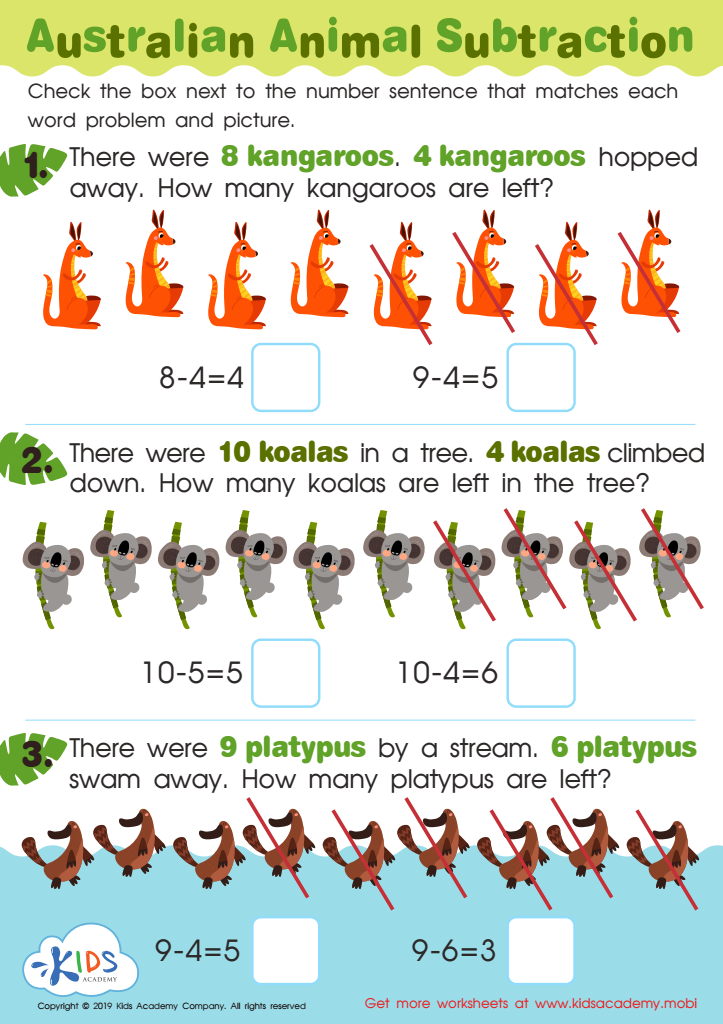
Australian Animal Subtraction Worksheet
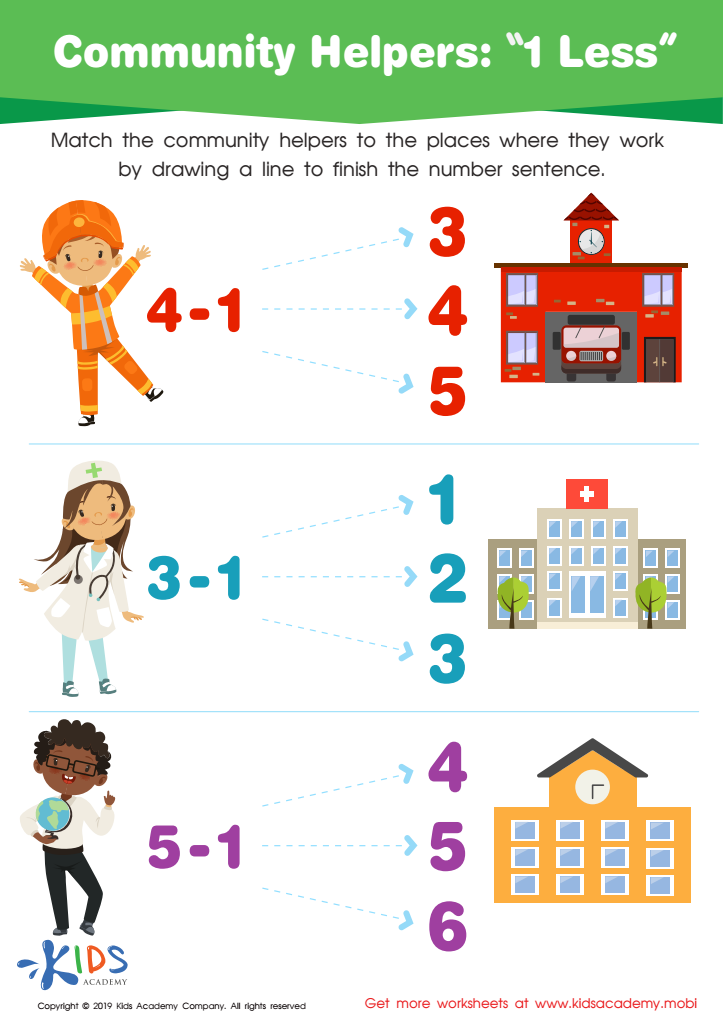
Community Helpers: 1 less Worksheet
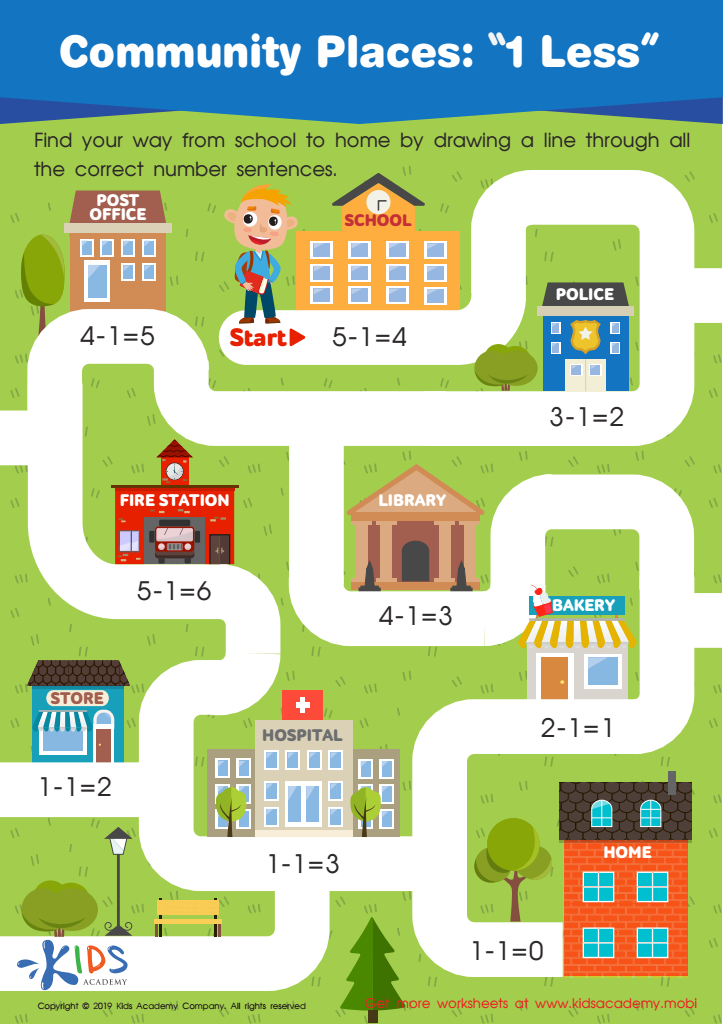
Community Places: 1 Less Worksheet








Cognitive development in early childhood lays the foundation for a child’s future learning and problem-solving abilities. Subtraction, as a fundamental math skill, is crucial for children aged 4-6 because it promotes critical thinking, reasoning, and the ability to understand relationships between numbers. At this age, children are naturally curious and ready to explore concepts of quantity, making it an ideal time to introduce basic subtraction.
Engaging in subtractive reasoning helps children develop essential cognitive skills, such as recognizing patterns, understanding numerical values, and enhancing memory, which are vital for their overall academic progress. Through playful activities and hands-on learning, teachers and parents can create enjoyable experiences that not only foster a love for math but also encourage perseverance and resilience when faced with challenges.
Additionally, a strong grasp of subtraction can enhance a child's confidence in their mathematical abilities, instilling a positive attitude toward learning. As they master these foundational skills, children set the stage for more complex problem-solving and analytical skills in the future. By prioritizing cognitive development in subtraction, parents and teachers actively participate in nurturing well-rounded, skilled learners ready to tackle academic challenges ahead.








