Shape identification Tracing Shapes Worksheets for Ages 4-6
3 filtered results
-
From - To
Welcome to our Shape Identification Tracing Shapes Worksheets for Ages 4-6! Perfect for young learners, these engaging worksheets are designed to help preschoolers and kindergarteners master shape recognition through fun tracing activities. Children will practice identifying and tracing various shapes like circles, squares, triangles, and more, all while developing fine motor skills and hand-eye coordination. Our user-friendly worksheets are easy to print and ideal for home or classroom use. Encourage creativity and confidence in your little ones as they explore the exciting world of shapes! Download our worksheets today and watch your child’s understanding of shapes flourish!
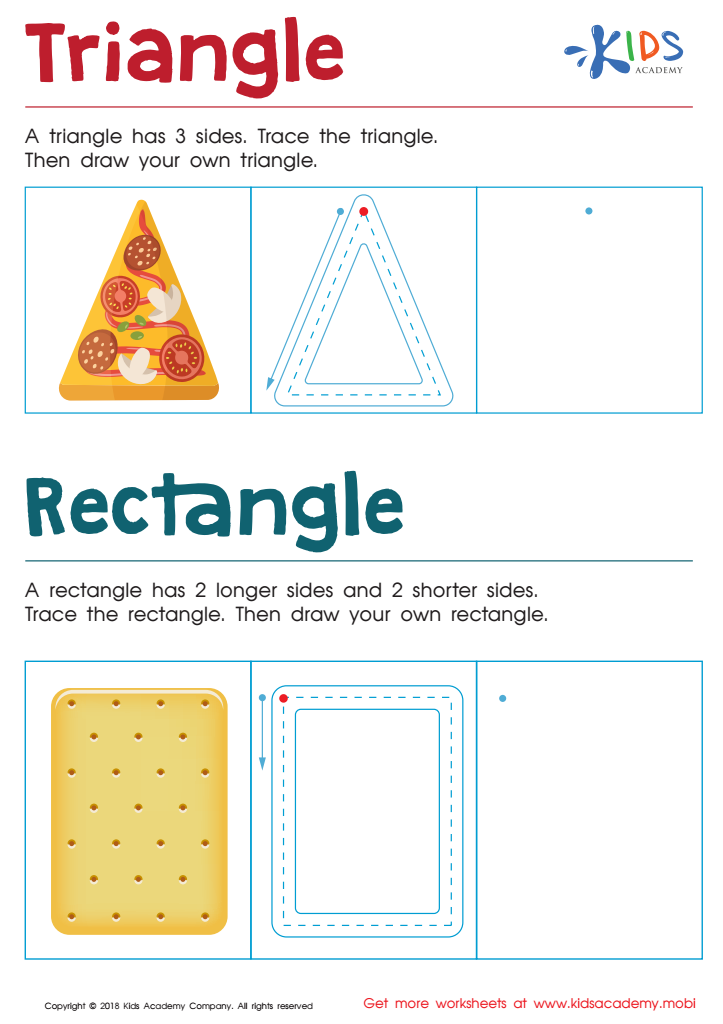
Triangle Rectangle Worksheet
 Assign to My Students
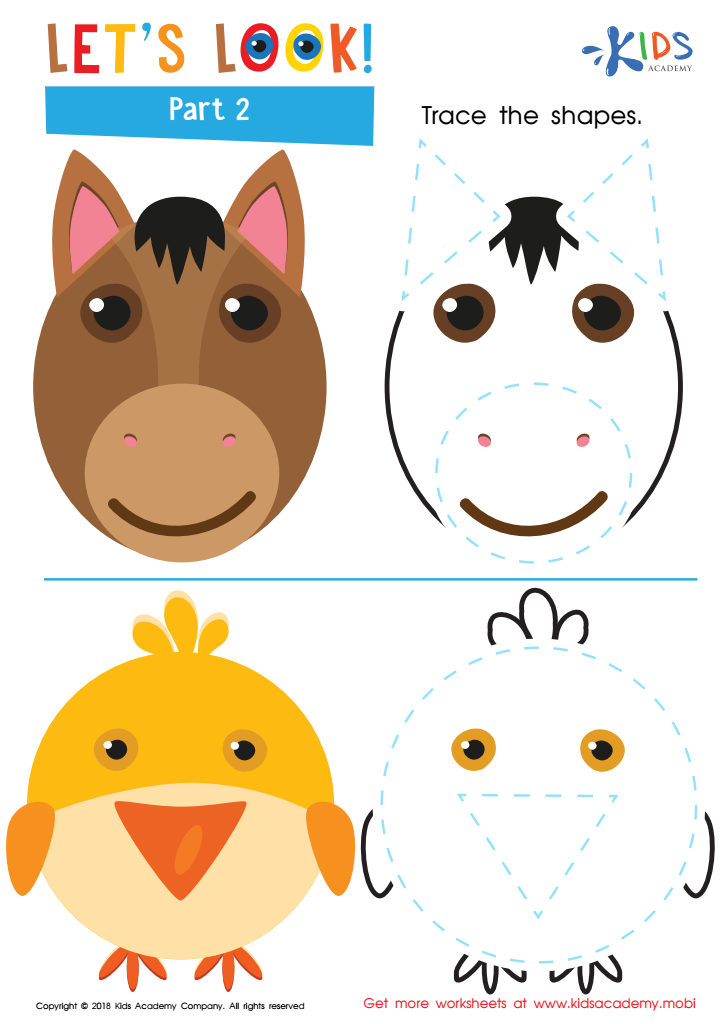
Let's Look! Part 2 Worksheet
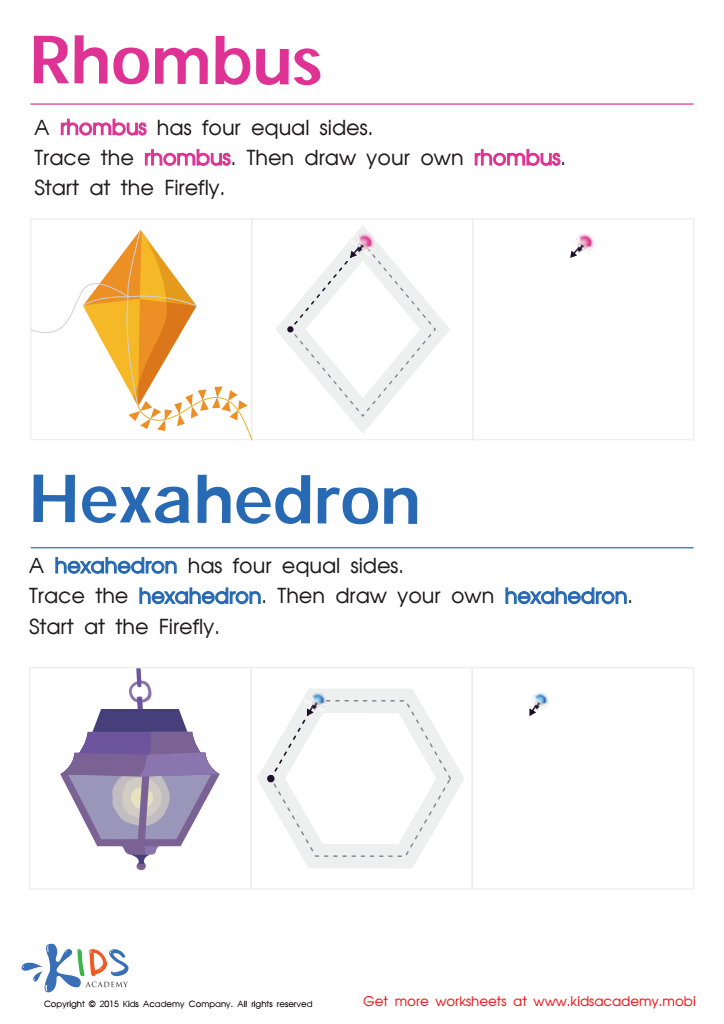
Draw a Rhombus And a Hexahedron Printable








Shape identification and tracing shapes are vital activities for children ages 4-6, as they form the foundation for numerous cognitive and motor skills. Firstly, recognizing and naming shapes enhances children's spatial awareness, helping them understand the world around them. This understanding is crucial for subjects such as mathematics, where concepts of geometry start to take shape.
Tracing shapes is not only fun but also develops fine motor skills, which are essential for writing, grasping objects, and performing tasks requiring coordination. Through tracing, children learn to control writing instruments, improving their hand-eye coordination and dexterity. Furthermore, shape activities can stimulate creativity and critical thinking, as children explore how shapes can combine to form new objects or patterns, paving the way for problem-solving skills.
Additionally, these activities promote early literacy by introducing vocabulary related to shapes, reinforcing language development. Engaging in shape identification also fosters social skills as children often participate in group activities, enabling them to communicate and collaborate.
Teachers and parents should prioritize shape identification and tracing not just for their educational benefits, but also for the integral role they play in a child's overall growth, preparing them for more complex learning tasks in the future.