Counting skills Word Problems Worksheets for Ages 4-6
12 filtered results
-
From - To
Help young learners develop essential counting skills with our engaging Counting Skills Word Problems Worksheets for Ages 4-6. Specially designed for early grade students, these colorful and interactive worksheets introduce simple word problems that enhance both counting and critical thinking abilities. Each worksheet is packed with fun illustrations and easy-to-understand scenarios that keep kids motivated and eager to learn. Perfect for reinforcing classroom learning or extra practice at home, these worksheets support the development of foundational math skills. Equip your child with the tools they need for math success through engaging and meaningful activities!
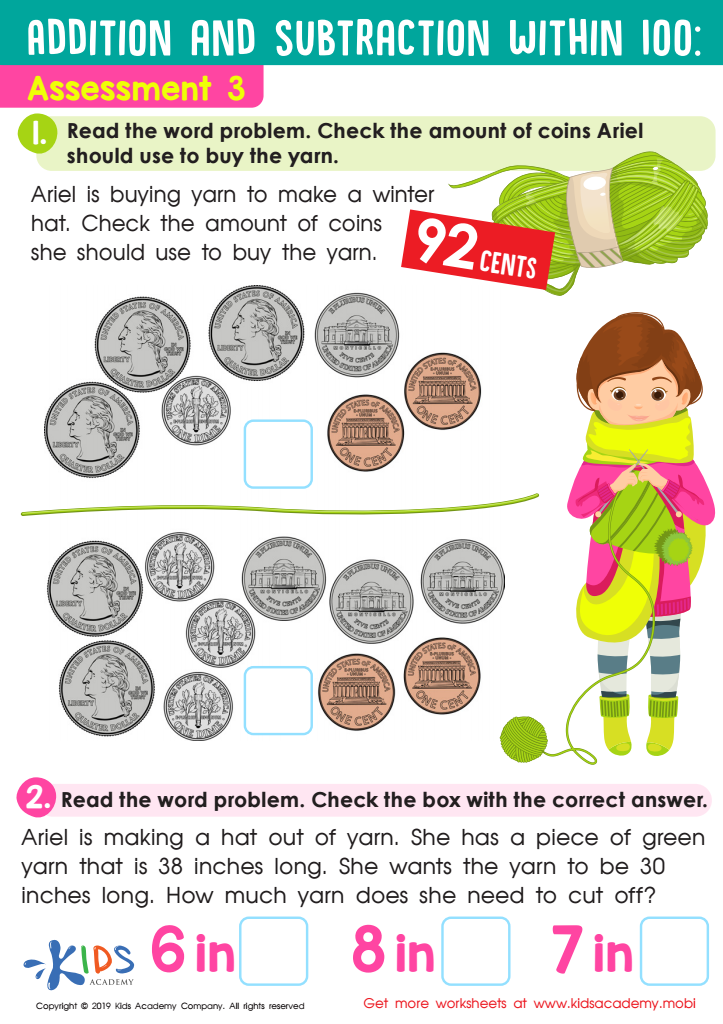
Assessment 3 Math Worksheet
 Assign to My Students
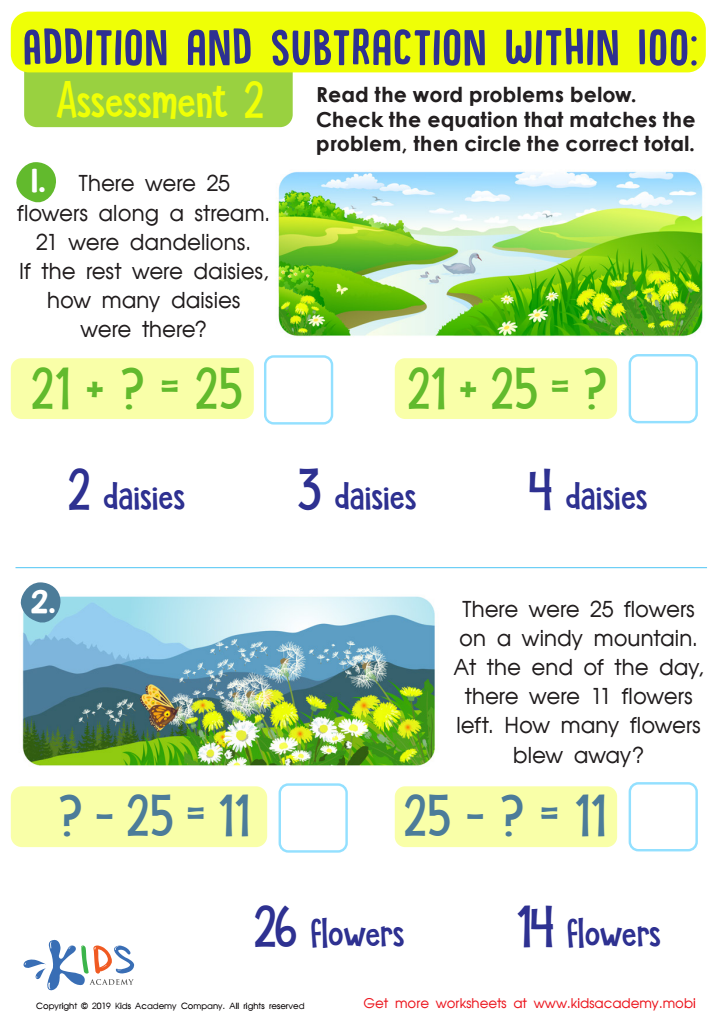
Assessment 2 Math Worksheet
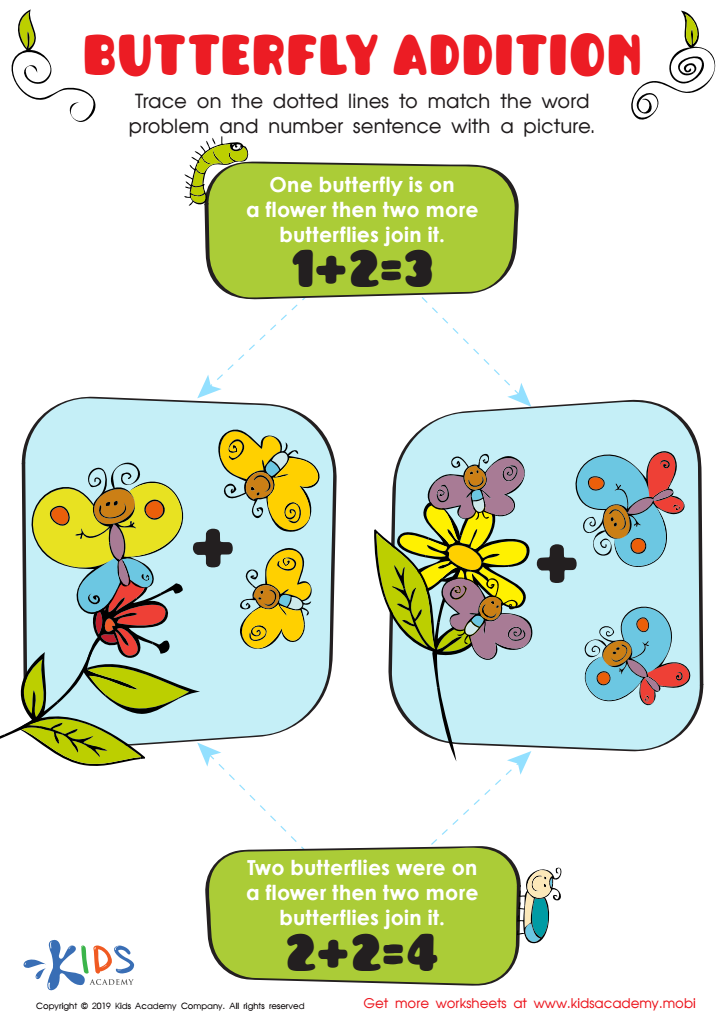
Butterfly Addition Worksheet
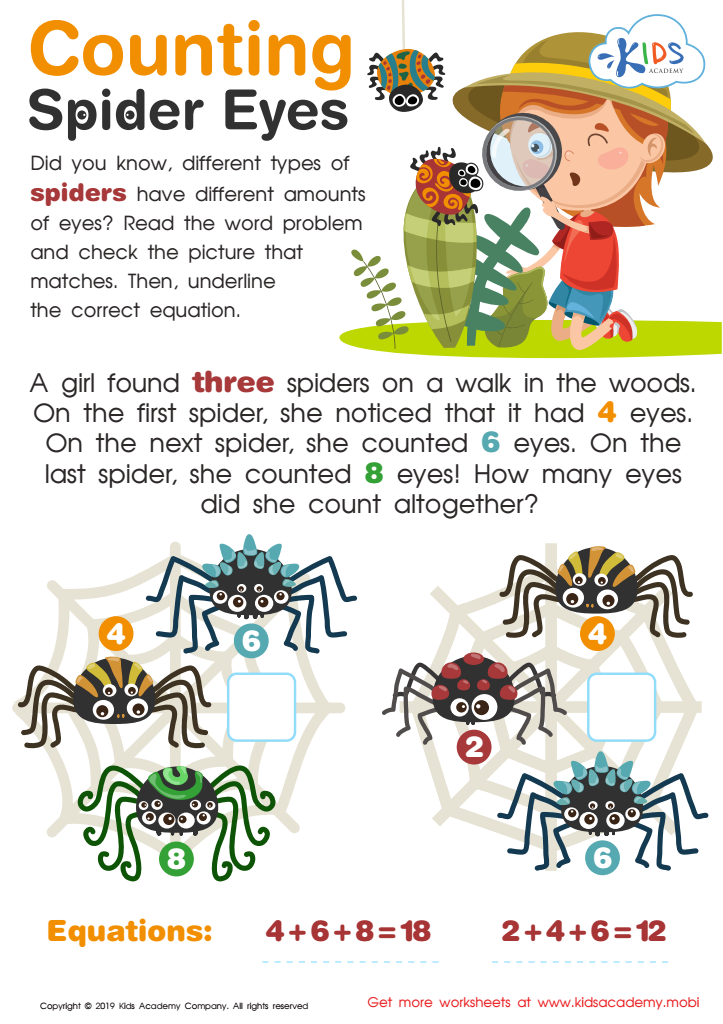
Counting Spider Eyes Worksheet
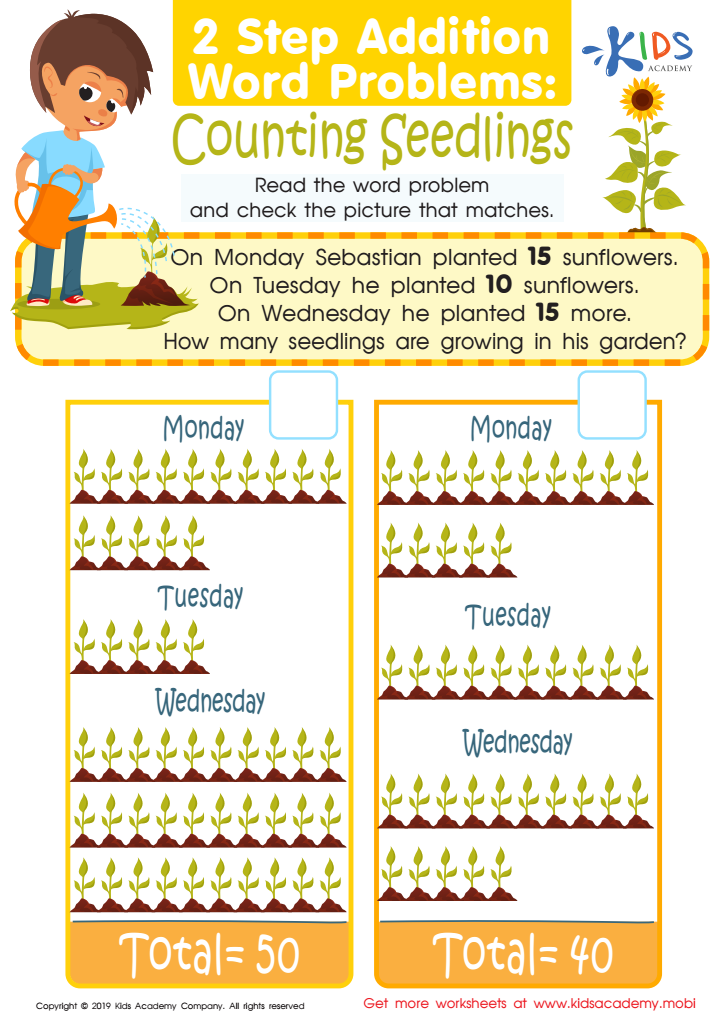
Counting Seedlings Worksheet
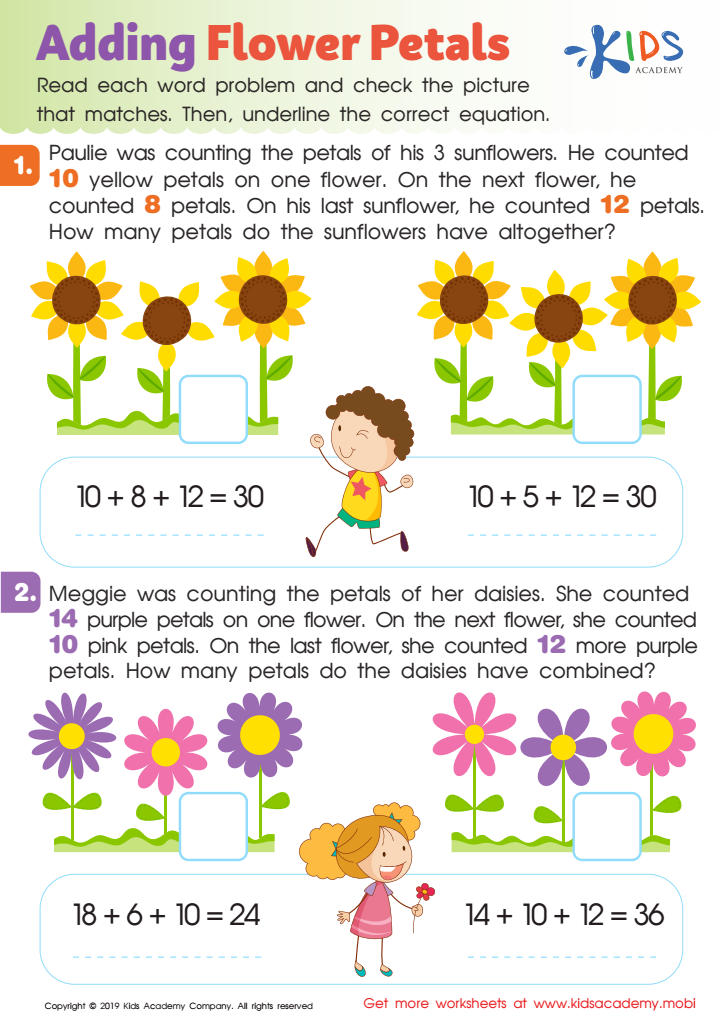
Adding Flower Petals Worksheet
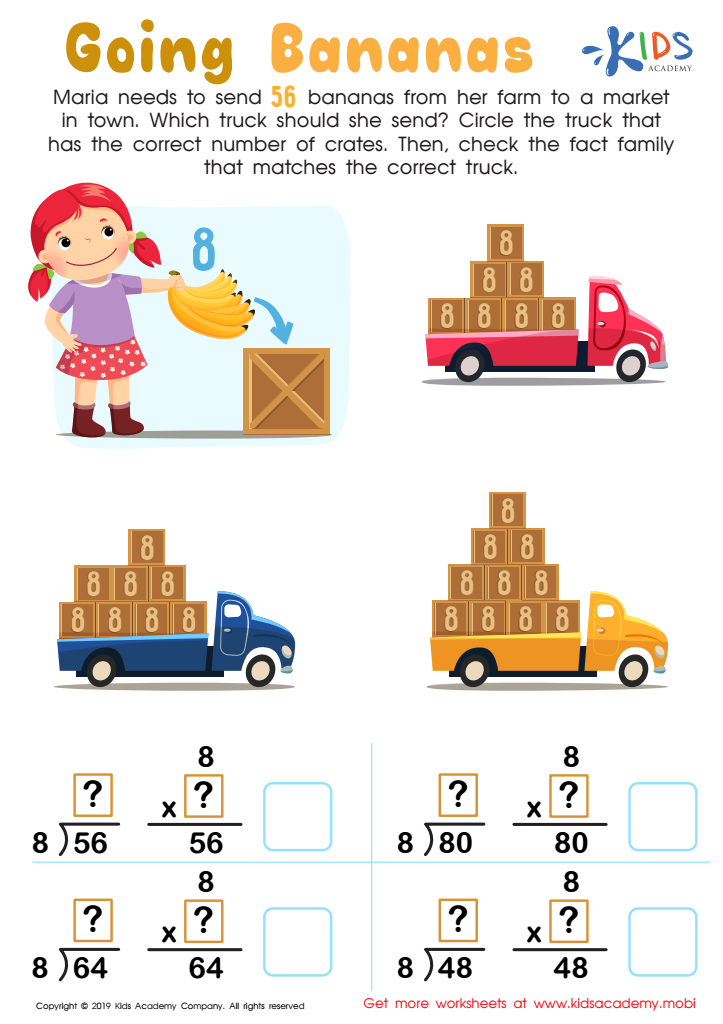
Going Bananas Worksheet
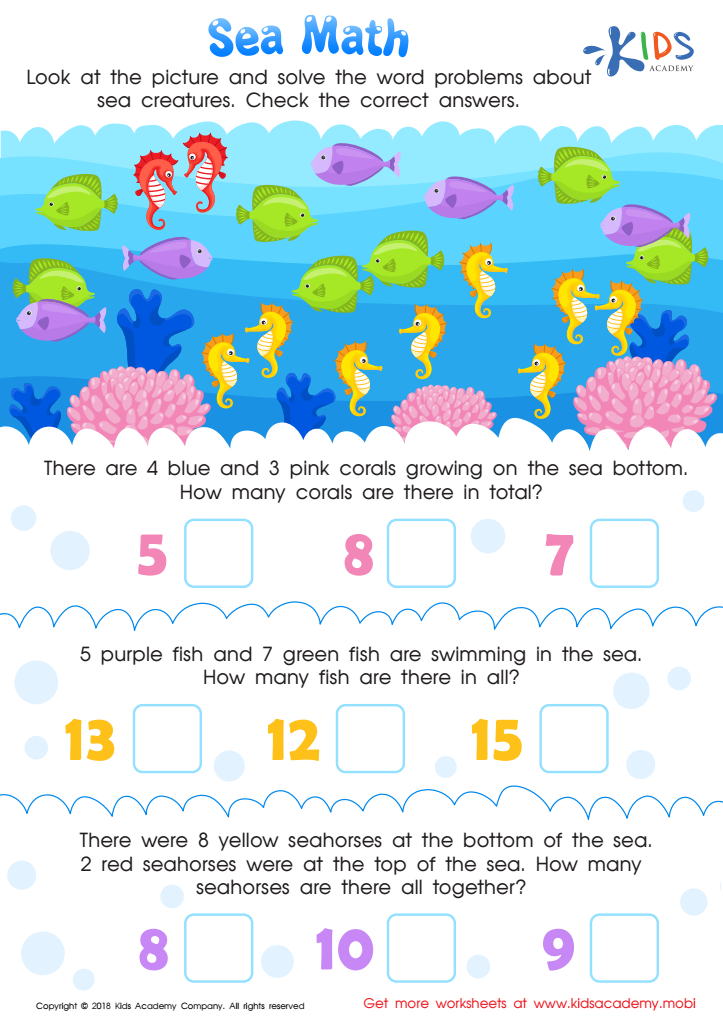
Sea Math Worksheet
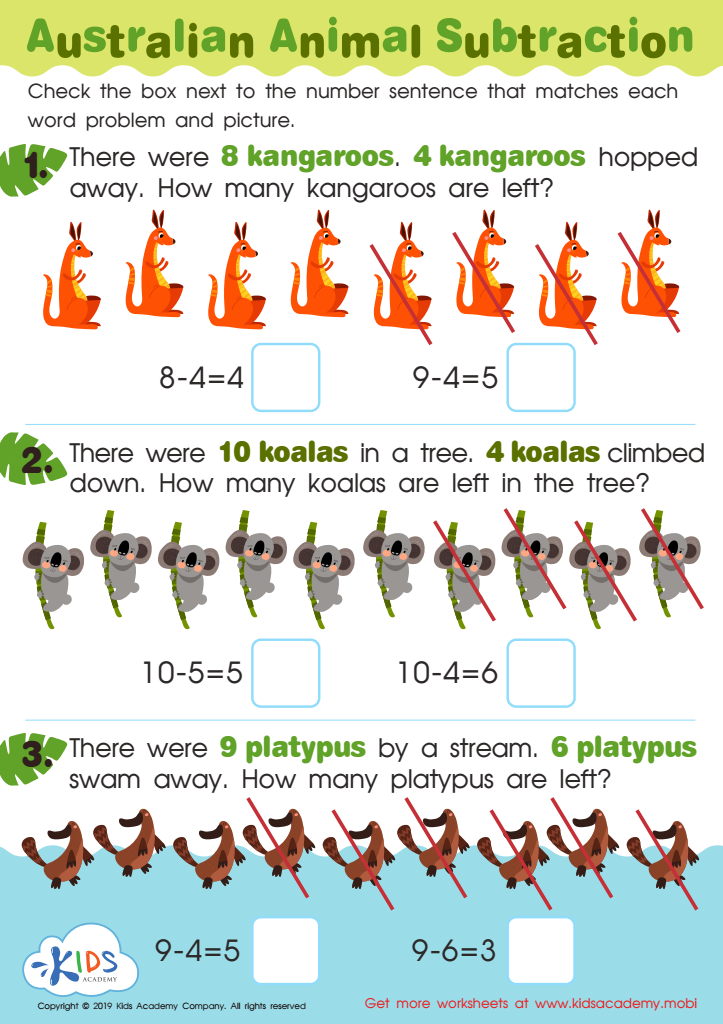
Australian Animal Subtraction Worksheet
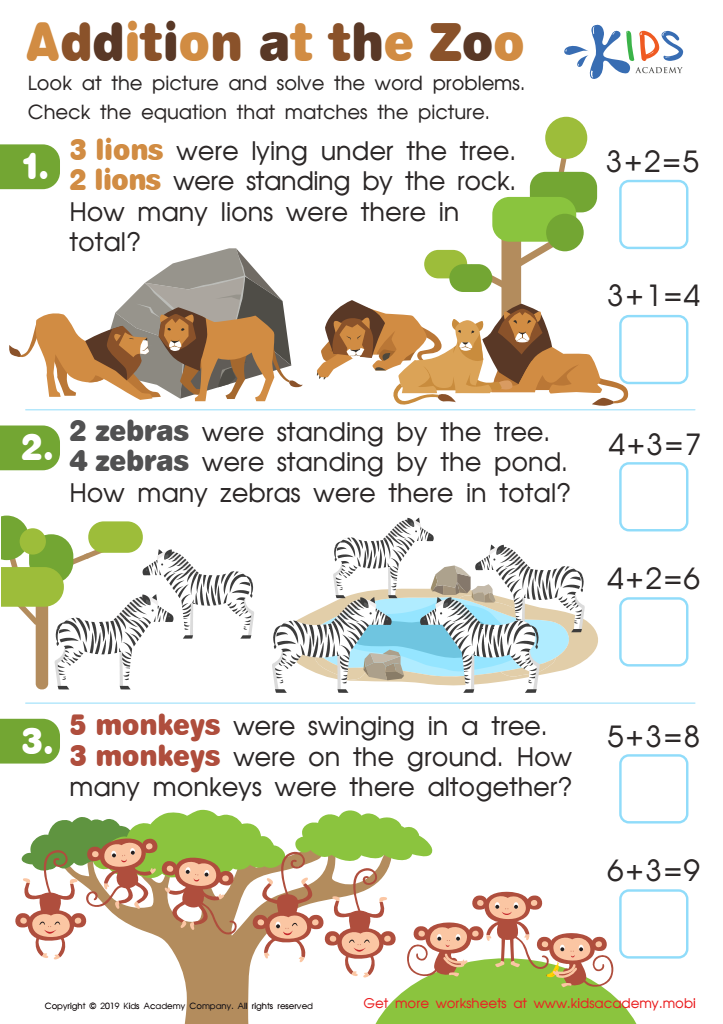
Addition at the Zoo Worksheet
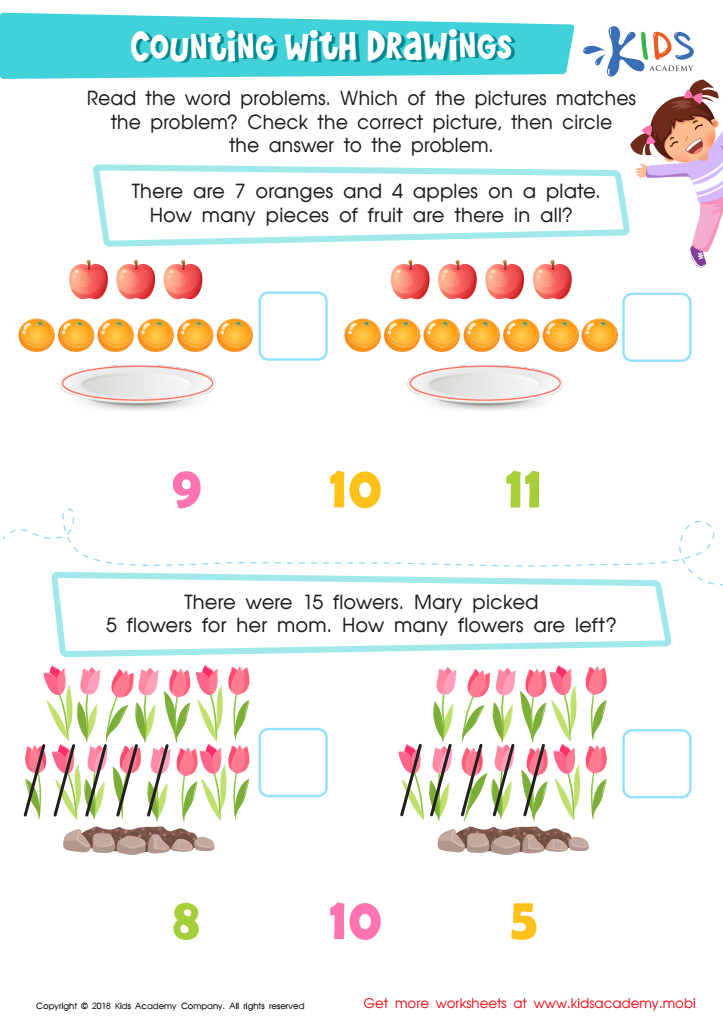
Counting with Drawings:Fruits & Flowers Worksheet
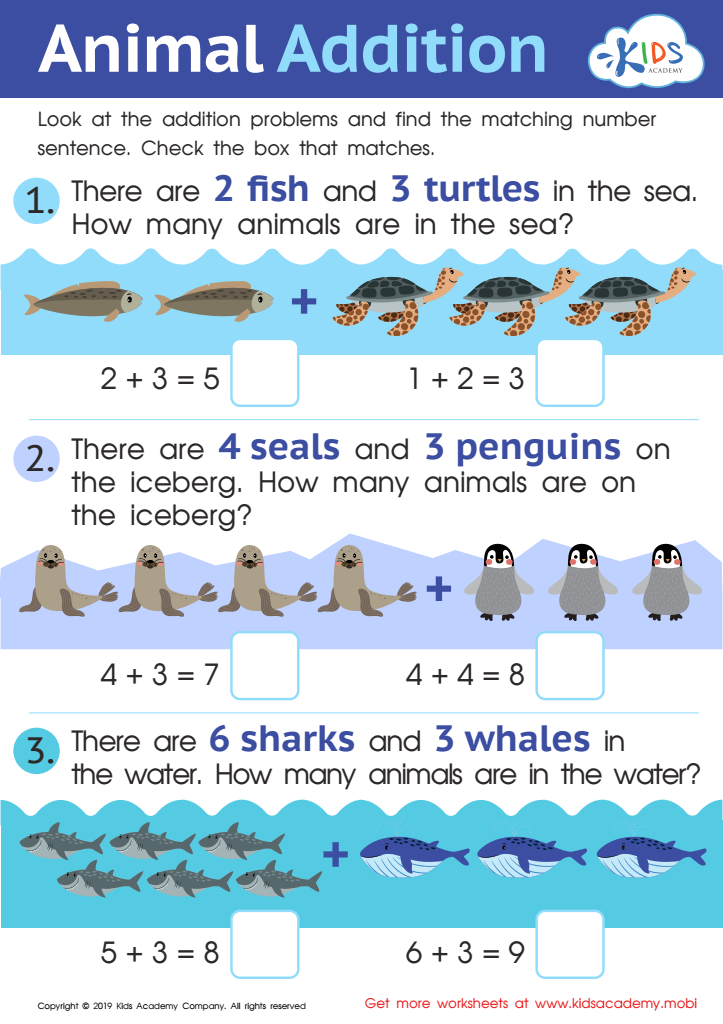
Animal Addition Worksheet








Counting skills word problems for ages 4-6 are essential for early childhood development because they lay the foundation for future mathematical thinking. At this age, children are rapidly developing their cognitive abilities, and exposing them to counting scenarios helps sharpen their numerical literacy. When parents and teachers integrate word problems into learning, children practice not only counting but also comprehension and critical thinking.
Solving counting-based word problems requires children to listen, process information, and determine the necessary steps to find a solution. This multi-step activity enhances their problem-solving skills and fosters patience and perseverance. It simultaneously promotes language development, as they must understand and interpret verbal instructions or scenarios.
Furthermore, word problems present counting as part of everyday contexts, making math relevant and practical. This relativity helps children see the value of math in real-life situations, increasing their motivation and interest.
Besides cognitive benefits, there’s an emotional angle: successfully solving a problem can build a child’s confidence and create a positive experience with learning.
In sum, incorporating counting word problems in early education nurtures critical cognitive and language skills, grounds them in real-world applications, and fortifies children's confidence and curiosity, which are pivotal in creating lifelong learners.








