Improve counting skills Building Vocabulary Worksheets for Ages 4-6
4 filtered results
-
From - To
Enhance your child's counting abilities with our engaging "Improve Counting Skills Building Vocabulary Worksheets" designed for ages 4-6. These interactive worksheets combine fun visuals and practical exercises to make learning enjoyable. Kids will practice number recognition, counting, and vocabulary related to numbers, all while developing essential foundational skills. With vibrant illustrations and age-appropriate activities, children can easily grasp counting concepts and vocabulary in a playful environment. These worksheets are perfect for at-home learning or classroom use, ensuring that young learners gain confidence as they progress. Access our resources today to support your child's mathematical growth while building their language skills!
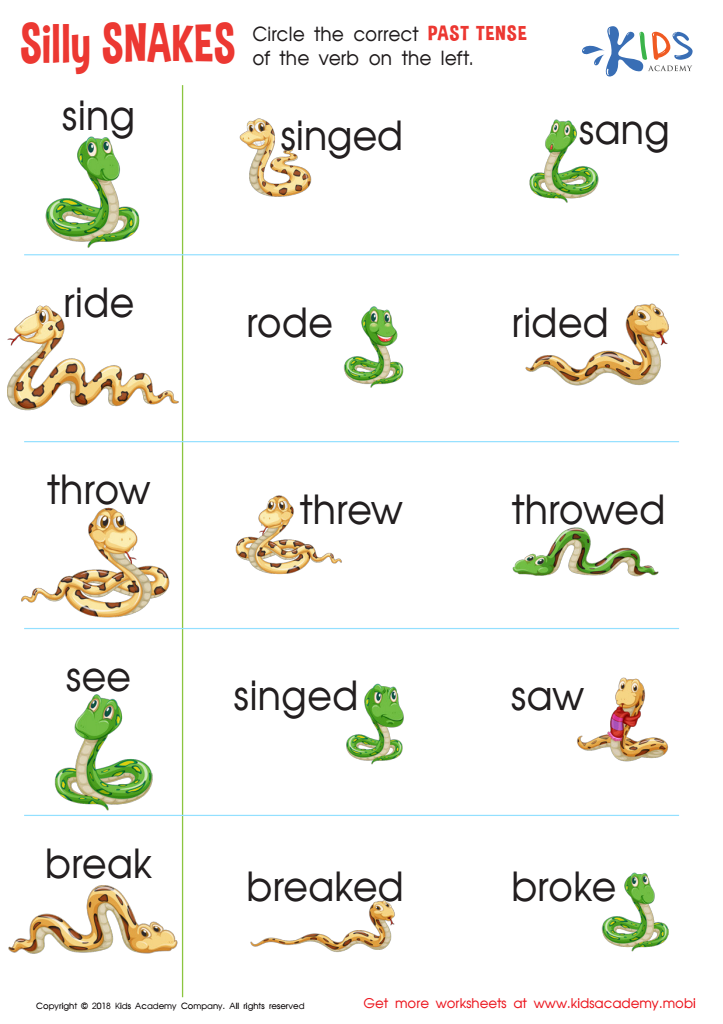
Silly Snakes Worksheet
 Assign to My Students














.jpg)




Improving counting skills and building vocabulary for children aged 4-6 is vital for their early development and future success. At this age, children are like sponges, absorbing information and developing crucial cognitive and social skills. Counting skills lay the foundation for mathematical understanding. By grasping numbers and their relationships, children gain confidence and motivation to engage with more complex math concepts in later years. Moreover, counting helps enhance problem-solving skills and critical thinking.
Building vocabulary is just as essential. A rich vocabulary supports literacy development, enabling children to express themselves clearly and understand instructions, stories, and conversations. Vocabulary growth influences cognitive advancement, self-esteem, and social interactions, allowing children to communicate effectively with peers and adults. As children with stronger language skills are better able to share ideas, cooperate with others, and resolve conflicts, promoting vocabulary development share in classroom culture.
By prioritizing these foundational skills, parents and teachers empower young learners to become confident, capable learners equipped with the tools necessary for lifelong academic success. Ultimately, investing in counting and vocabulary development during these formative years paves the way for greater academic achievements and social competence as children progress in their educational journeys.








